You've finally dialed in your Yunnan SO espresso. Your customers love it. Your inventory system says you have six weeks of green coffee left. You email your supplier in Baoshan for another container. And the reply comes back: "Apologies, current harvest is finished. New crop available in 4 months." Your stomach drops. You didn't plan for a four-month gap. Now you're scrambling. You're wondering: Is this a one-time thing? Or does Yunnan coffee have a seasonal clock I need to understand to run my business properly?
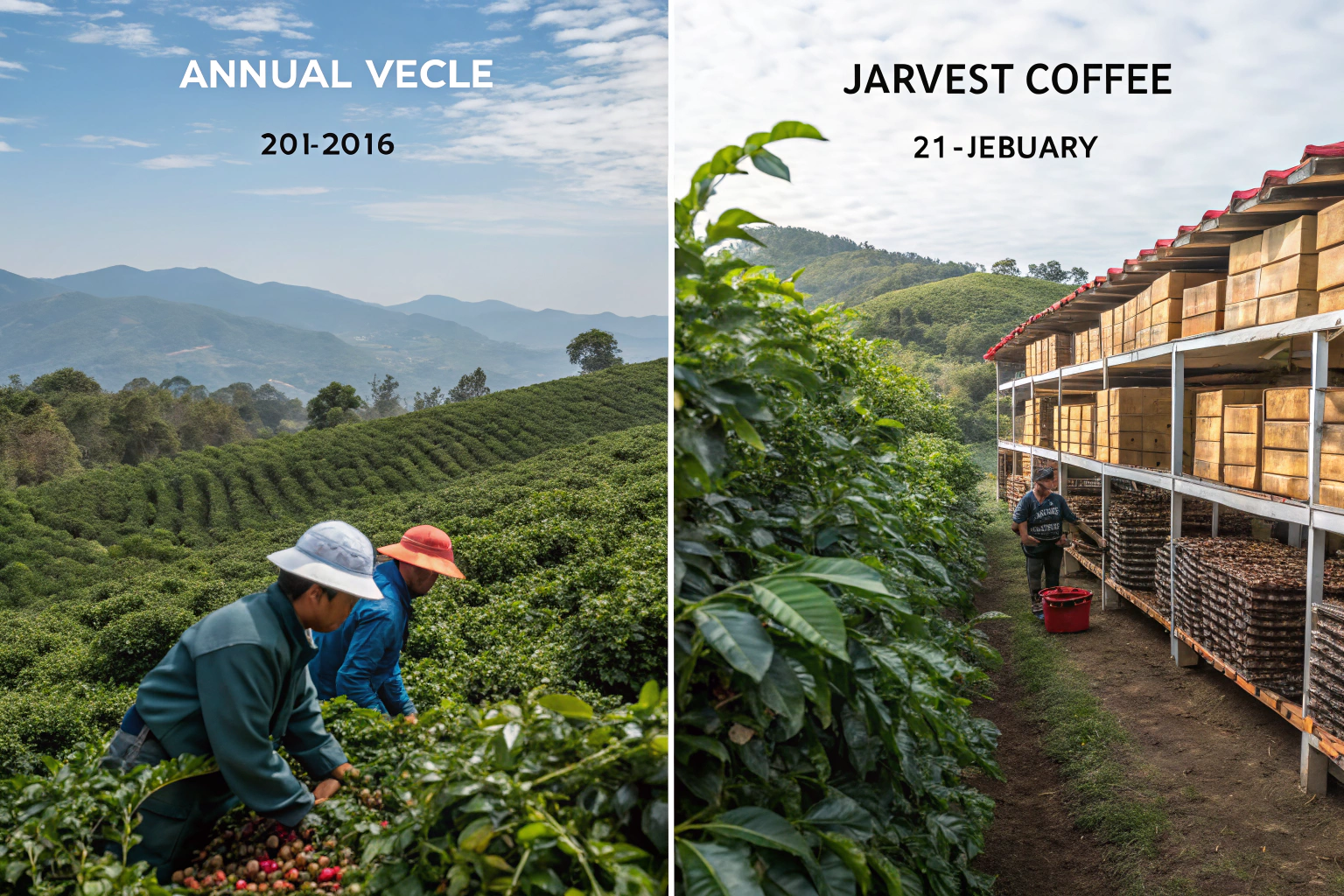
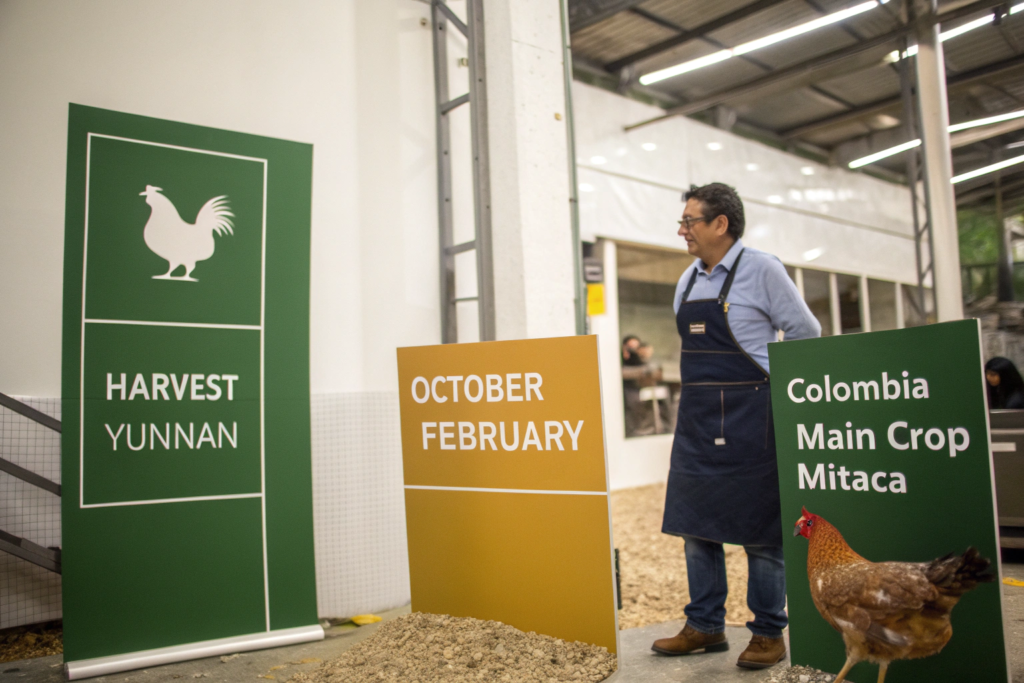
Yunnan coffee operates on a single, distinct annual harvest cycle, with the main crop harvest running from late October through February. Unlike Colombia, which has two harvests (mitaca and main crop), or some equatorial origins with continuous flowering, Yunnan's subtropical latitude and distinct wet/dry seasons create a concentrated harvest window. This means fresh-crop Yunnan Arabica is most abundant and at peak quality from January through May. From June through September, the available coffee is past-crop (stored from the previous harvest), which, if properly stored in climate-controlled warehouses, maintains its quality but may exhibit slightly muted acidity compared to fresh crop.
I'm not going to sugarcoat this. Understanding the Yunnan harvest calendar is not optional. It's essential for any roaster who wants to make this origin a core part of their blend program. At Shanghai Fumao, I manage 10,000 acres and a warehouse full of past-crop coffee. Let me walk you through the real rhythm of the year so you can plan your inventory like a pro and never get caught off guard again.
When Exactly Is the Yunnan Coffee Harvest and Why Does It Matter for My Inventory?
The Yunnan coffee year is not a flat line. It's a wave. The wave peaks in the winter months and then recedes. If you don't understand the shape of that wave, you'll find yourself swimming against the current.
The Yunnan Arabica harvest begins in late October at lower elevations and progresses upward, finishing in the highest farms by February. The wet milling and drying process takes an additional 4-8 weeks. This means "fresh crop" coffee is typically ready for export sampling in March and April, with container shipments of new crop arriving in destination ports from May through July. For a roaster, this calendar dictates the optimal times to contract new crop (January-March), receive fresh crop (May-July), and manage past-crop inventory (August-December).
What Months Offer the Absolute Peak Quality for Yunnan Arabica?
The absolute peak cup quality for Yunnan Arabica is found in shipments that arrive between May and July. This is the coffee that was harvested during the dry, cool winter months and processed under ideal conditions.
The cherries harvested in December and January, from the mid-to-high elevations around 1,400 meters, are often the sweetest and most complex. They benefit from the cool nights and dry days that concentrate sugars. By the time this coffee is milled, rested, and shipped, it lands in your roastery in that May-July window. This is the coffee that will show the brightest acidity and the cleanest finish. If you're planning a limited-edition single-origin release, this is the window to target. At Shanghai Fumao, we cup every day-old lot and fresh-crop lot side-by-side. The difference is subtle but real. The fresh-crop coffee has a "pop" that fades slightly over time. This is true for any origin, not just Yunnan. You can learn more about the science of green coffee aging from research published by World Coffee Research.
How Should I Adjust My Contracting Schedule to Match the Harvest?
If you wait until June to ask for fresh-crop Yunnan, you're too late. The best lots have already been contracted. The smart buyers are signing contracts in January and February.
They cup samples from the early harvest, select their lots, and lock in their volume for shipment in April, May, and June. This forward contracting is how you guarantee access to the best quality. If you need coffee to arrive in October or November, you need to understand that you will be receiving past-crop coffee. That's not a bad thing—if it's been stored properly. But it requires a conversation with your supplier. You need to ask: "How has this coffee been stored? What is the current moisture and water activity? Can I see a recent cupping score?" A reputable supplier will have this data and will be transparent about the coffee's age. We at Shanghai Fumao store our past-crop coffee in climate-controlled, dark warehouses with strict humidity control. We re-test moisture and cup quality every 60 days. So when a buyer needs coffee in October, we can provide it with confidence.
Does China's Domestic Coffee Consumption Boom Create Export Shortages?
For decades, China exported almost all of its coffee. The domestic market was tea. That has changed. Dramatically. The rise of coffee culture in China's cities is one of the most significant shifts in the global coffee landscape. And it has a direct impact on the beans available for export.
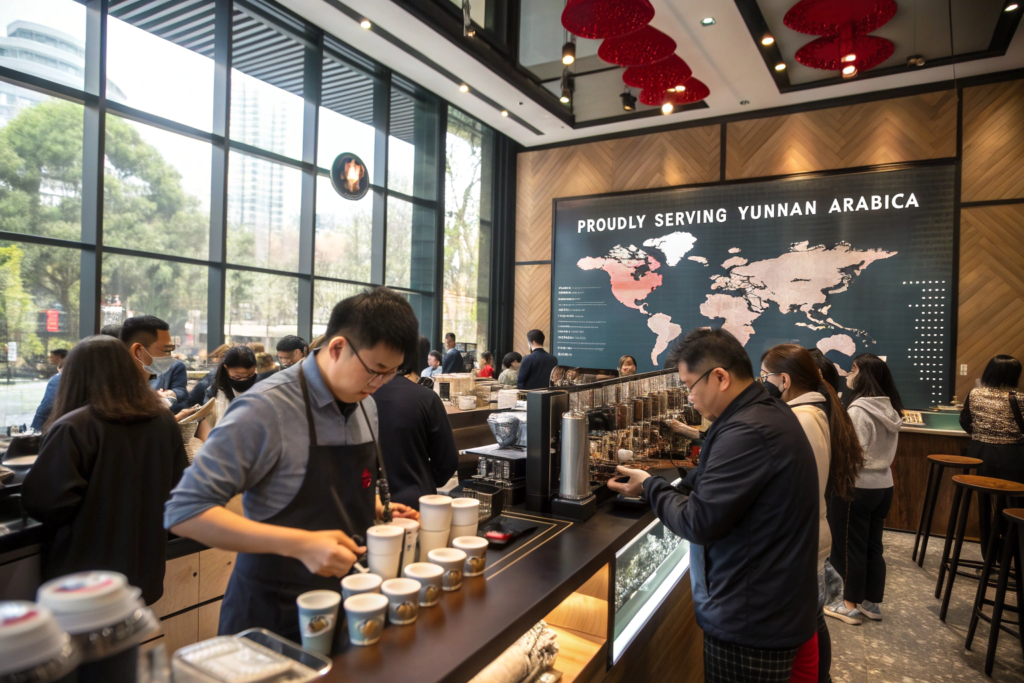
China's domestic coffee consumption has grown at double-digit rates annually for over a decade, creating a massive new demand stream for Yunnan coffee. This domestic demand absorbs a significant and increasing portion of the annual harvest, particularly the lower-grade and mid-grade lots used by large commercial chains. While this does not typically create a "shortage" of high-quality Specialty Grade export lots, it does create competition for the overall supply and contributes to a firming of the FOB price floor. The coffee that stays in China is coffee that is not available for export, tightening the global supply of Yunnan Arabica.
What Kind of Yunnan Coffee Stays in China?
The massive growth of chains like Luckin Coffee and Starbucks in China has created a huge demand for commercial-grade Yunnan Arabica. This is coffee that might score 78-82 points.
This coffee is perfect for milk-based beverages and espresso blends. It doesn't need to be 85 points. It just needs to be clean, consistent, and affordable. This demand provides a reliable income stream for many Yunnan farmers. It's a positive development for the rural economy. But it does mean that the volume of commercial-grade Yunnan coffee available for export is smaller than it was a decade ago. The higher-quality, Specialty Grade lots—the 83+ point coffees—are still primarily destined for export, because that's where the premium price is realized. So, for a buyer like Ron, who is focused on quality, the domestic boom is less about a shortage of his coffee and more about a general firming of the price baseline. The floor price for all Yunnan coffee has risen because there's a hungry domestic market ready to buy what the export market doesn't take.
Could Future Domestic Growth Eventually Limit Specialty Export Availability?
This is a question I think about a lot. If the Chinese specialty coffee consumer develops a taste for 84+ point Yunnan coffee and is willing to pay international prices for it... yes, that could create more competition.
Currently, the premium specialty market within China is still developing. The consumer palate is maturing rapidly. It's possible that in 5-10 years, the very best lots from Yunnan will be fought over by domestic roasters and international buyers alike. This is already happening with origins like Brazil and Colombia, where the best coffees often stay in-country. For now, the export window for top-tier Yunnan coffee is wide open. The domestic market is a net positive for the industry—it provides stability and investment—but it's a factor that any long-term buyer should be aware of. You can track the growth of China's coffee market through reports from organizations like the International Coffee Organization and market research firms. The trend line is steeply upward.
How Does Yunnan's Single Harvest Compare to Dual-Harvest Origins Like Colombia?
The single harvest is the defining logistical characteristic of Yunnan coffee. It's a concentrated period of intense activity followed by a long period of storage and shipping. This is fundamentally different from origins with more spread-out production.
Yunnan's single annual harvest creates a "feast or famine" supply dynamic that contrasts sharply with the more continuous supply flow from dual-harvest origins like Colombia or Kenya. This means Yunnan has a distinct "fresh crop" arrival window (May-July) and a longer "past-crop" availability window (August-April). For a roaster, this requires more deliberate inventory planning. You can't just order fresh Yunnan coffee in October. You must either buy and store it yourself during the arrival window or trust a supplier with proven past-crop storage protocols.
What Are the Quality Risks of "Past-Crop" Yunnan Coffee?
The risk is "fading." Over time, green coffee loses its volatile aromatic compounds. The acidity softens. The cup can taste "baggy," "woody," or "flat."
The speed at which this happens depends entirely on storage conditions. Coffee stored in a hot, humid warehouse near the port will fade fast. Coffee stored in a cool, dry, dark warehouse at origin can maintain 90% of its quality for 9-12 months. This is why the supplier's storage infrastructure is so critical. At Shanghai Fumao, our warehouse in Baoshan is at elevation. The climate is naturally cool. We use GrainPro bags inside the jute sacks to create a hermetic barrier. We monitor temperature and humidity daily. I would put our 8-month-old past-crop Catimor up against a 3-month-old coffee from a poorly stored origin any day of the week. The key for the buyer is to ask the question: "Show me your storage." Don't just accept the coffee's age. Ask how it has been treated. You can read more about green coffee storage best practices from the Specialty Coffee Association's research on the topic.
How Can I Use Yunnan Coffee in My Blends During the "Off-Season"?
This is where Yunnan shines. The profile of a well-stored Yunnan Arabica—chocolate, nuts, heavy body—actually benefits from a slight mellowing of acidity.
In a blend, a past-crop Yunnan can be an excellent, smooth base note. It provides body and sweetness without the sharp, sometimes aggressive acidity that can clash with other components. Many roasters I work with prefer Yunnan coffee that has rested for 4-6 months for their espresso blends. They find it integrates better and produces a rounder, more balanced shot. So, the "off-season" for fresh-crop single-origin Yunnan is the "on-season" for a mellow, chocolatey blender. It's about using the coffee appropriately for its stage of life. A skilled roaster understands this and adjusts their blend percentages and roast profiles to match the coffee's current characteristics.
What Weather Patterns in Yunnan Could Disrupt Future Harvests?
No origin is immune to climate change. Yunnan has been relatively fortunate compared to Brazil or Vietnam. But the weather patterns are shifting. And any serious buyer needs to understand the specific climate risks that could impact supply.
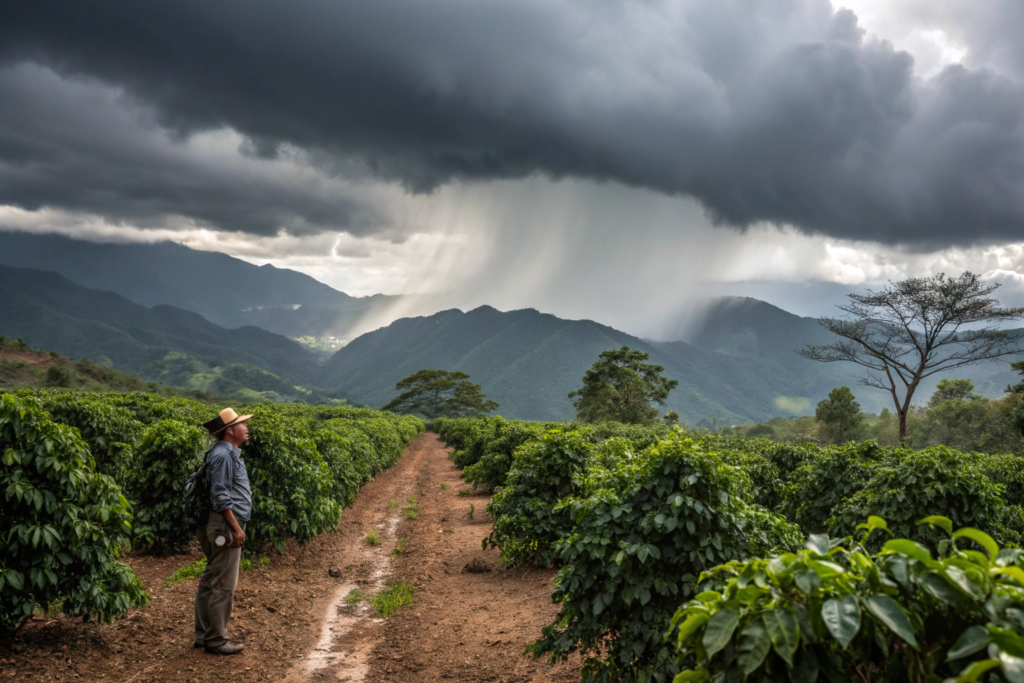
Yunnan's primary climate risks are not frost (due to its latitude) but rather irregular rainfall patterns. The key risk is a delayed or insufficient rainy season (typically May-October) which can stress trees and reduce cherry development, followed by excessive rain during the harvest period (November-February) which can disrupt picking and drying. While Yunnan has been less prone to catastrophic climate events than some other origins, the increasing unpredictability of the monsoon is a factor that buyers should monitor.
Is Frost a Risk for Yunnan Coffee Farms?
No. This is one of Yunnan's biggest natural advantages. The province sits at a latitude of around 25° North. It's protected from the cold polar air masses that occasionally devastate Brazilian coffee farms in Minas Gerais.
The Baoshan growing region rarely, if ever, sees freezing temperatures. The climate is more accurately described as subtropical highland. Winters are cool and dry, which is ideal for harvest. Summers are warm and wet, which is ideal for vegetative growth. This frost-free advantage is a major reason why Yunnan is attracting long-term investment. It's a climate refuge for Arabica in a warming world. You can verify the historical climate data for Baoshan through meteorological databases and see that the risk profile is fundamentally different from Brazil. This climate stability is a key part of the "reliability" story for Yunnan coffee.
How Does the Timing of the Monsoon Rains Affect Harvest Quality?
The harvest happens during the dry season. That's by design. The cherries ripen and are picked under clear, sunny skies. The parchment dries on raised beds without fear of rain.
The risk comes if the rainy season extends longer than usual. If heavy rains arrive in November, when picking is supposed to be underway, it's a problem. Cherries can split on the tree. Wet conditions promote mold and fungus. Drying becomes a challenge. This is a rare but real risk. A delayed end to the monsoon can create quality issues for the early harvest. Conversely, a drought during the summer growing season can stress the trees and reduce the size and density of the beans. While Yunnan has abundant water resources compared to many regions, localized drought is a concern. At Shanghai Fumao, we mitigate this risk through irrigation in critical blocks and by maintaining a buffer stock from previous harvests. Diversification of supply and strong storage protocols are the best defenses against weather uncertainty.
Conclusion
So, are there seasonal shortages of Yunnan coffee? Not in the sense of a sudden disappearance of all coffee. But there is a distinct seasonal rhythm that every buyer must respect. The fresh crop flows from May to July. The past-crop sustains the market for the rest of the year.
Understanding this rhythm is the difference between a smooth, predictable sourcing program and a panicked scramble for replacement beans. The key is to plan ahead. Contract your fresh-crop volume in the winter. Understand the quality profile of past-crop coffee and how to use it effectively in your blends. And most importantly, partner with a supplier who has the scale and the infrastructure to store coffee properly and provide transparent quality data year-round.
If you're building Yunnan into your core program and want to map out a purchasing schedule that aligns with the harvest calendar, I'm happy to walk you through a detailed 12-month plan. My email is cathy@beanofcoffee.com.