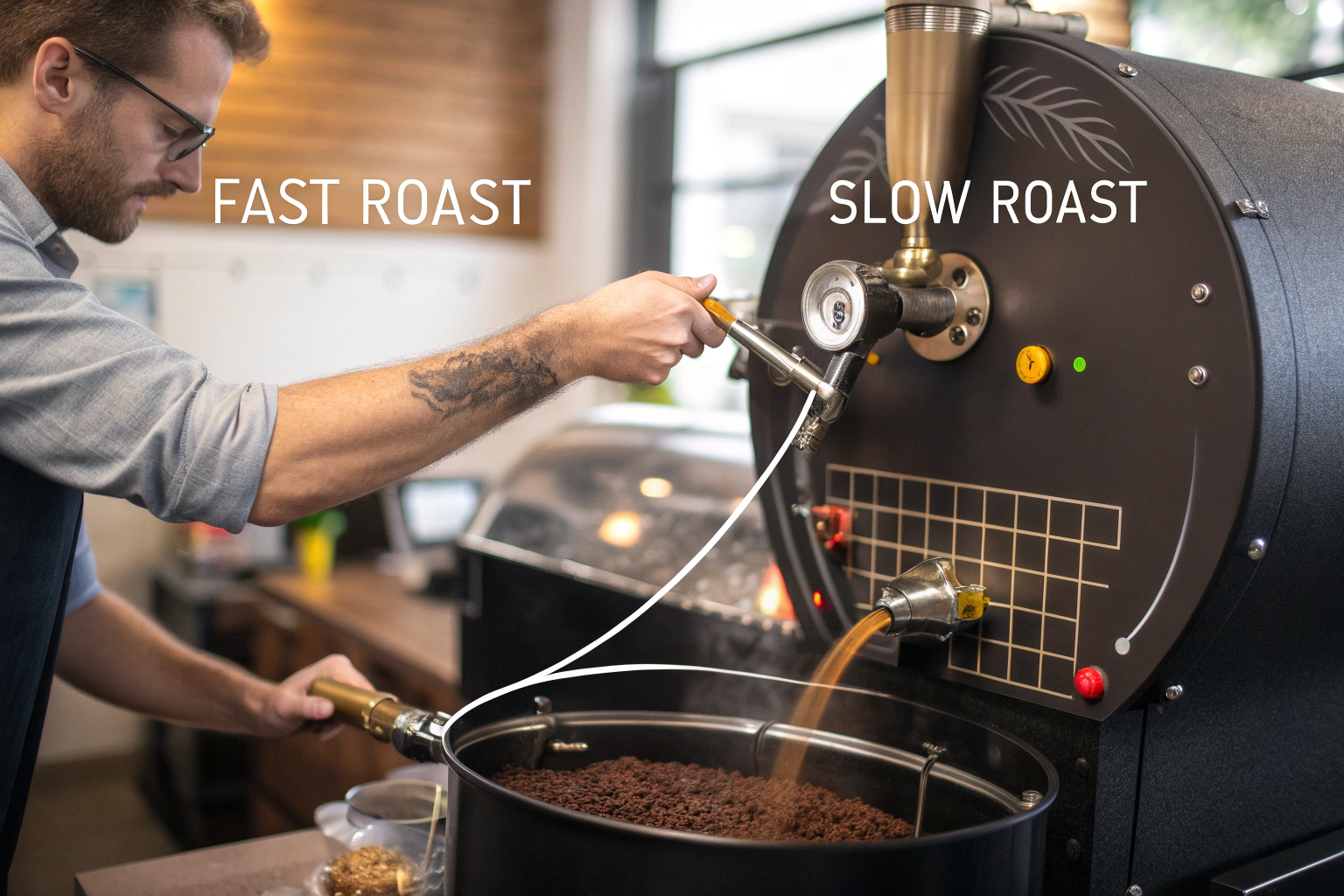
As a coffee buyer, you've mastered the variables of origin, processing, and varietal. But there's another crucial layer: the roast. You're like my client, Ron; you've tasted two coffees from the exact same lot, roasted by different companies, and they taste worlds apart. One is bright and acidic, the other is rich and sweet. You're left wondering, "What did the roaster do?" A major part of that answer lies in the roasting speed. This knowledge gap is a pain point; without it, you can't fully articulate your needs to a roaster or understand the full potential of the green beans you buy.
Let's demystify this. Roasting speed, or the total time of the roast, has a profound and predictable impact on a coffee's final flavor profile. In short, a fast roast (typically 8-11 minutes) tends to highlight a coffee's bright, vibrant acidity and delicate floral or fruity notes. A slow roast (typically 12-15+ minutes) tends to develop deeper sweetness, a heavier body, and more complex notes of chocolate, caramel, and spice.
As someone who has spent years cultivating our Shanghai Fumao coffee in Yunnan, I am obsessed with how roasting unlocks the potential we create in the field. The roaster is the final artist, and their control of time and temperature is their brush. In this article, I'll break down the differences between fast and slow roasting, what happens inside the bean during each, and how this knowledge can empower you to source and specify the exact coffee profile your business needs.
What Defines a "Fast Roast" and Its Flavor Profile?
You're cupping a coffee that explodes with a vibrant, almost electric acidity. It's intensely floral, with a light, tea-like body. You're trying to find coffees like this for your filter coffee program, but they seem elusive. You need to understand how a roaster achieves this specific, lively profile.
A fast roast is defined by its short duration, typically lasting between 8 and 11 minutes. The roaster applies high heat early in the process to quickly move the coffee through its drying and browning stages, reaching "first crack" rapidly. The goal of a fast roast is preservation. It seeks to preserve the delicate, volatile aromatic compounds and the bright organic acids that are inherent in the green coffee bean.
The resulting flavor profile is one of high energy. Fast-roasted coffees are known for their pronounced acidity, lighter body, and prominent floral and bright fruit notes. Think of flavors like jasmine, lemon, bergamot, or green apple. Because the coffee spends less time exposed to high heat, there's less caramelization of sugars and less degradation of the original acids. It's a technique often used for high-quality washed coffees from origins like Ethiopia or Kenya to showcase their unique, dazzling character.
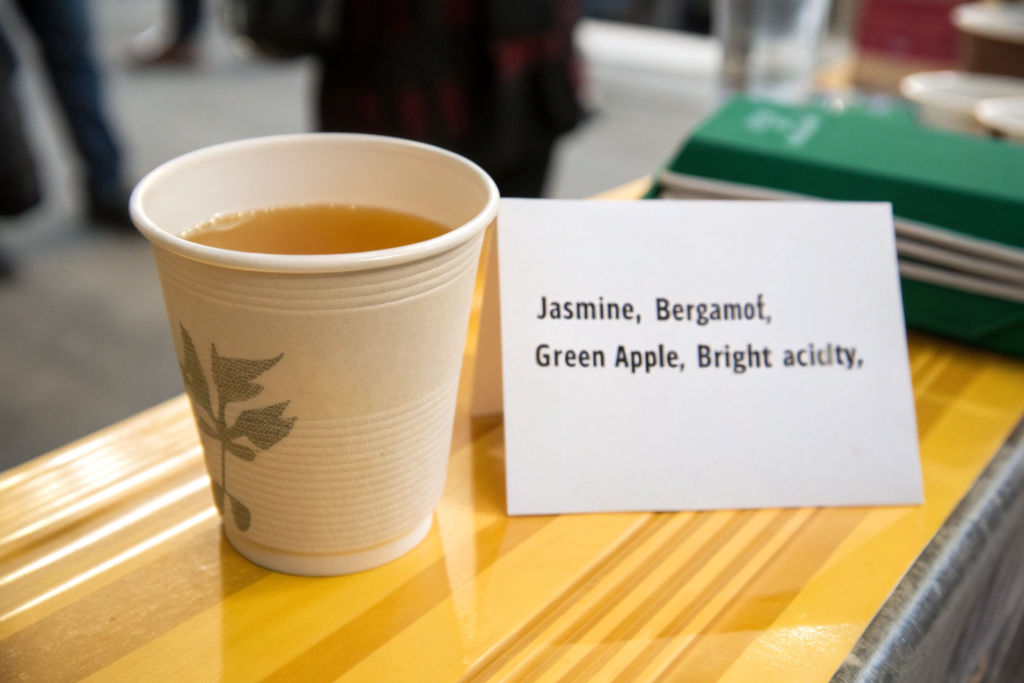
How Does a Fast Roast Preserve Acidity?
Organic acids, such as citric and malic acid, are responsible for the bright, fruity notes in coffee. These acids are delicate and begin to break down and transform into other compounds as the roast progresses. A fast roast gets the coffee to its final temperature and out of the roaster quickly, giving these acids less time to degrade. This effectively "locks in" that vibrant, sparkling quality that is the hallmark of this roasting style.
Why is the Body Lighter?
"Body" or mouthfeel is largely influenced by the presence of oils and soluble solids in the brew. A longer roast time allows for more breakdown of the bean's structure, which can release more oils and create more soluble compounds, leading to a heavier feeling in the mouth. A fast roast minimizes this structural breakdown, resulting in a lighter, more delicate, and often described as "tea-like" body.
What Characterizes a "Slow Roast" and Its Flavors?
Now, picture the opposite. You taste a coffee that is deeply sweet, rich, and comforting. It has a heavy, syrupy body and powerful notes of chocolate and caramel. It's the perfect base for your house espresso blend that needs to stand up to milk. You need to find a coffee roasted this way, but how do you describe it beyond just "dark"?
A slow roast is all about development and transformation, typically lasting 12 to 15 minutes, or even longer. The roaster uses a more gentle application of heat, extending the time the coffee spends in the crucial Maillard and caramelization stages. The goal is not to preserve the original compounds, but to transform them, creating deep, complex, and soluble flavors.
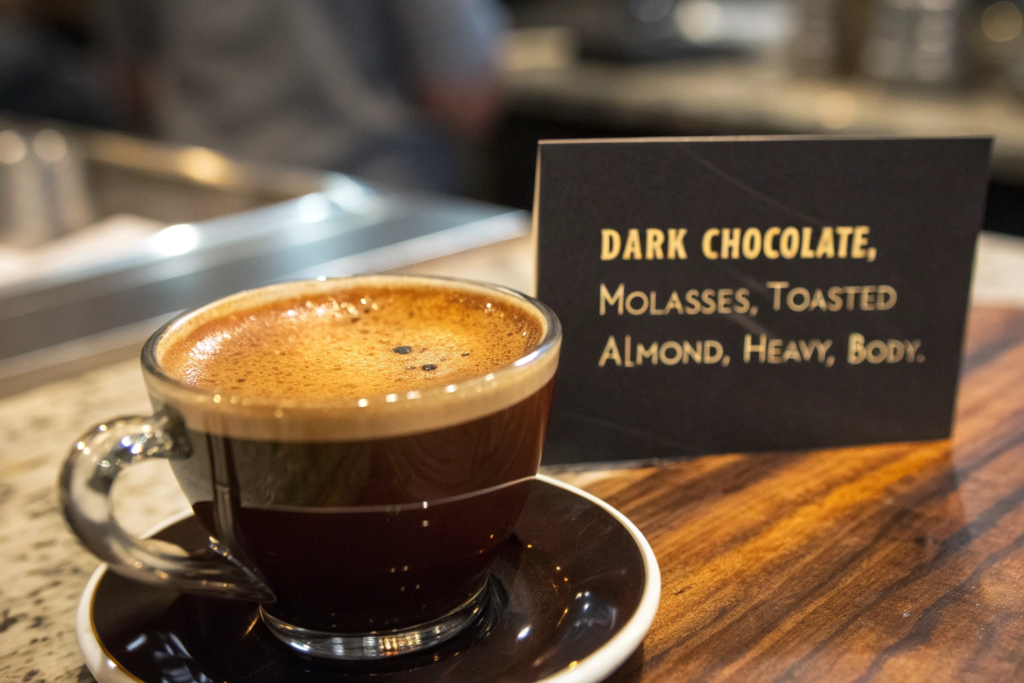
The flavor profile of a slow-roasted coffee is one of richness and depth. It is characterized by a lower perceived acidity, a much heavier body, and dominant notes of chocolate, caramel, nuts, and spice. During the extended roast time, the bright organic acids are mellowed, and the sugars have ample time to caramelize, creating the deep sweetness that defines this style. This is a fantastic approach for coffees intended for espresso, as the developed sweetness and heavy body create a rich, satisfying shot.
What is the Maillard Reaction and Why is it Important Here?
The Maillard reaction is a complex chemical reaction between amino acids and reducing sugars that gives browned food its distinctive flavor. In coffee, it's responsible for creating hundreds of new aromatic compounds, contributing notes of toast, nuts, and malt. A slower roast extends the time the beans spend in the temperature range where this reaction is most active (around 300-350°F or 150-175°C), leading to a greater development of these deep, savory flavors.
How is Sweetness Developed in a Slow Roast?
Sweetness in a slow roast comes primarily from caramelization. As the roast progresses past the Maillard stage, the sugars within the bean begin to break down and reform into the complex, sweet, and slightly bitter compounds we know as caramel. A longer roast allows for a deeper level of caramelization, converting more of the bean's simple sugars into these rich, complex ones. This is why slow-roasted coffees often have notes of molasses, brown sugar, or dark caramel.
How Does Roasting Speed Affect Green Bean Selection?
So, you understand the different profiles. But does the roaster just pick a speed at random? No. The choice of roasting speed is deeply connected to the green coffee itself. As a buyer, understanding this link is your next level of expertise. It helps you predict which of your purchased coffees will shine in a fast roast versus a slow one.
The roaster must match the roasting strategy to the bean's physical characteristics, especially its density, processing method, and intrinsic flavor. High-density, high-altitude beans (like a washed Kenyan) can handle the high heat of a fast roast. Their tight cellular structure allows them to absorb energy without scorching, beautifully showcasing their inherent brightness.
Conversely, lower-density or more delicate beans (like many natural-processed coffees) often benefit from a slower, gentler roast. Applying intense heat too quickly can scorch the outside of these beans before the inside is properly developed. A slower approach allows heat to penetrate evenly, fully developing the deep, fruity sweetness that is the hallmark of a great natural. At Shanghai Fumao, we provide our roasting partners with the density and moisture specs of our beans so they can make these exact calculations.
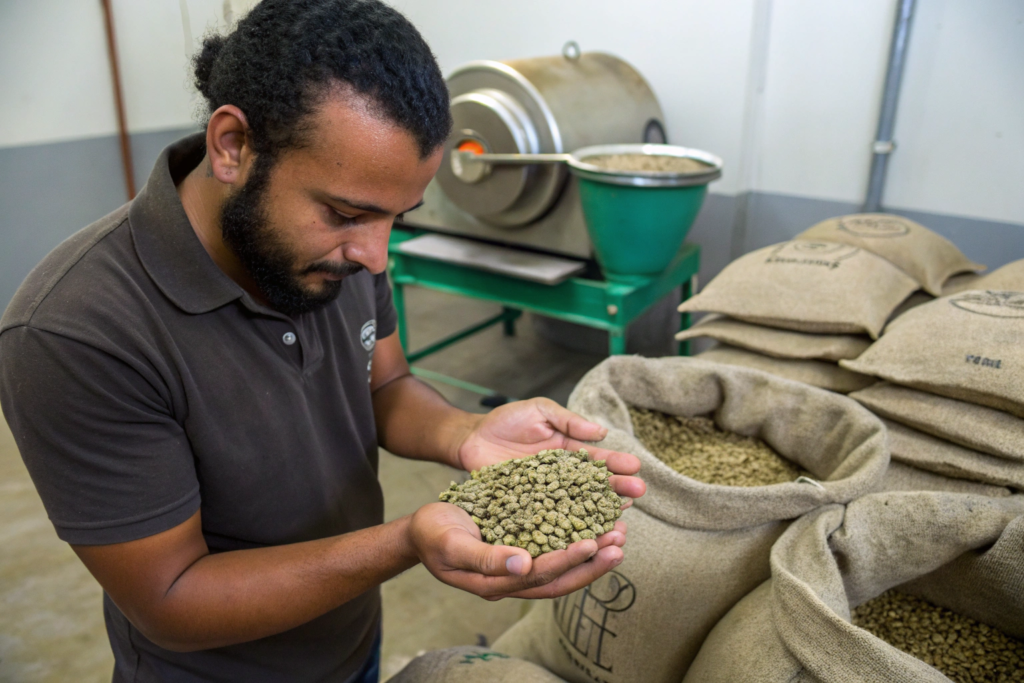
Why is Bean Density So Crucial?
Bean density, a result of high altitude and slow maturation, determines how a bean absorbs and transfers heat. Dense beans have more mass packed into a smaller volume, meaning they have more thermal stability and require more energy to penetrate. They can take an aggressive, fast roast. Less dense beans are more porous and fragile; they require a gentler touch to prevent tipping (scorched ends) or facing (scorched flat sides).
How Does Processing Method Influence Roasting Speed?
The processing method has a huge impact. Natural and honey-processed coffees have a higher concentration of sugars on the outside of the bean, making them much more prone to scorching. They almost always require a gentler, often slower, roasting approach to caramelize those sugars beautifully without burning them. Washed coffees, being clean of fruit sugars, are more versatile and can be roasted very fast to highlight acidity or slowed down to build body.
How Can You Use This Knowledge as a Buyer?
This information is more than just trivia; it's a powerful tool. You're no longer just a buyer of green beans; you're a strategic partner who can guide the final product. You're worried about miscommunication with your roaster or not getting the exact profile you paid for. This knowledge solves that.
You can now articulate your needs with precision. Instead of saying "I want something bright," you can say, "For this washed Ethiopian lot, I'm looking for a relatively fast roast that highlights its floral notes and citric acidity." Instead of "I need a good espresso base," you can say, "For this Brazilian pulped natural, let's try a slower roast to really develop the chocolate notes and heavy body."
This level of communication transforms your relationship with your roaster from a simple service transaction into a true collaboration. It also allows you to better evaluate potential green bean purchases. When you cup a new coffee, you can now think, "This bean has incredible acidity; it would be amazing with a fast roast," or "The sweetness in this green bean is immense; a slow roast would make it a perfect espresso component." You can find more on this collaborative approach in resources like Roast Magazine's guides for roasters.
How Do You Talk to Your Roaster About the "Roast Curve"?
The "roast curve" is the graph that tracks bean temperature over time. You don't need to be an expert, but you can use basic language. Ask your roaster, "Could we look at the roast curve for that last batch?" You can point to the total time and say, "I'm finding it a little too acidic; could we try extending the total roast time by a minute to build more sweetness?" This shows you are an engaged and knowledgeable partner.
Can You Ask for Sample Roasts?
Yes, for a significant purchase, it is perfectly reasonable to ask a potential roasting partner to provide two sample roasts of the same coffee: a faster one and a slower one. This allows you to taste the full potential of the green bean and decide which profile best suits your brand and your customers. It's a practical way to ensure you are perfectly aligned before committing to a large production run.
Conclusion
The speed of a coffee roast is not a minor detail; it is a fundamental choice that shapes the very soul of the final cup. It's the roaster's decision to either preserve and polish the bean's bright, inherent qualities through a fast roast, or to transform and develop its components into deep, rich, and sweet flavors through a slow roast. Neither path is superior; they are simply different artistic interpretations of the same raw material.
By understanding the impact of roasting speed, you elevate yourself from a mere buyer to a true coffee professional. You gain the vocabulary to collaborate effectively with roasters, the insight to purchase green beans more strategically, and the ability to curate a coffee program that is precise, diverse, and perfectly aligned with your vision.
If you are looking for a green coffee supplier who understands this final, critical step and who can provide you with beans that have the potential to shine in any roast profile, we are here to help. Our Yunnan coffees are versatile and full of potential. Please reach out to my colleague, Cathy Cai, at cathy@beanofcoffee.com to discuss how our beans can become the star of your next great roast.