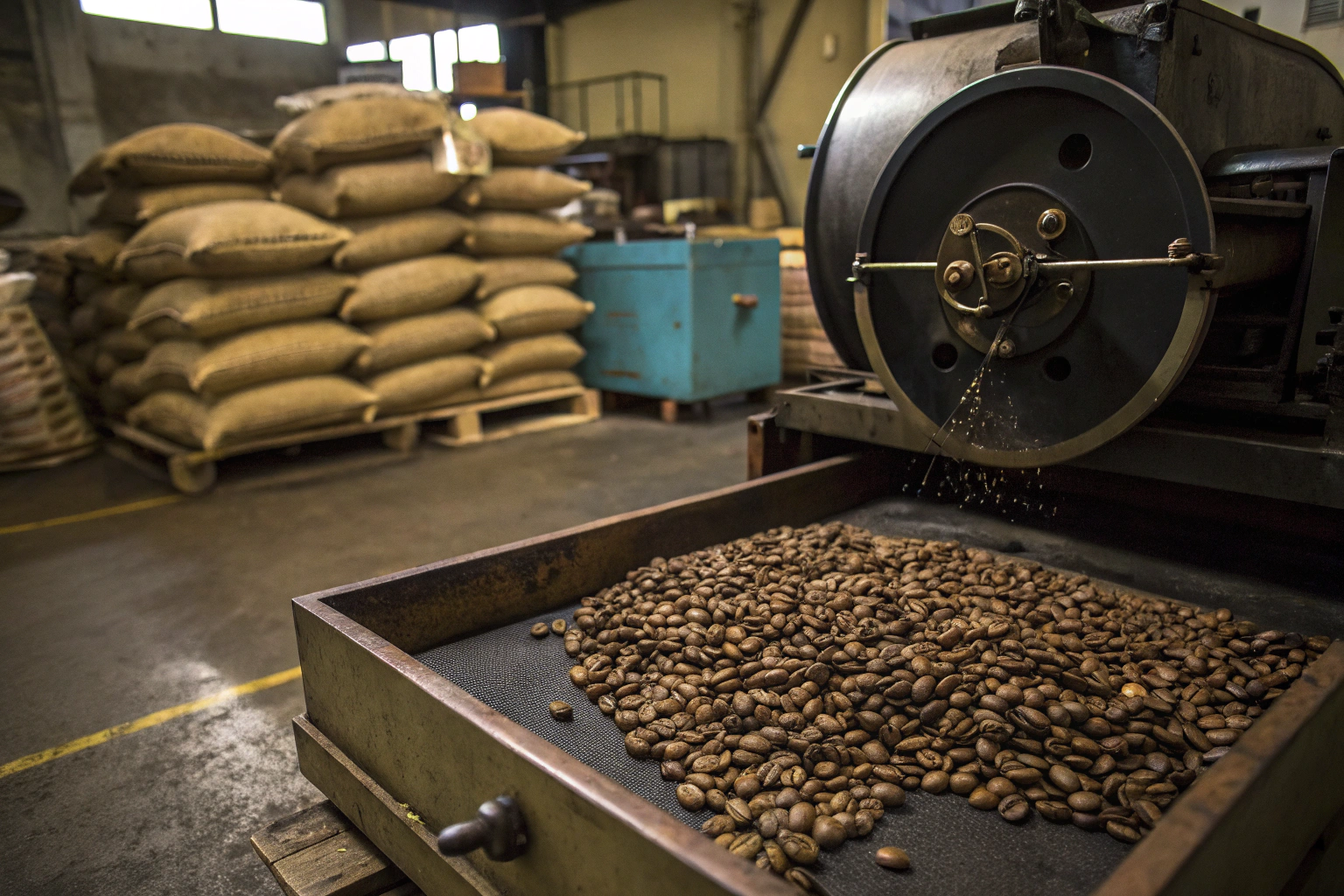
You order a pallet of screen 18 beans. That's what the contract says. The sample was perfect. But when the roaster starts the drum, you hear that uneven popping sound—some beans cracking at minute 7, some still silent at minute 10. You know what that means. The screen size lied. And now your roast profile is garbage. You've got half baked beans and half burnt oil slicks. It's a nightmare that costs you product and, worse, reputation. And you're standing there wondering: Can anyone actually guarantee the size of a natural product like a coffee bean?
Yes, plantations with integrated dry milling and optical sorting technology can guarantee bean size consistency to a tolerance of 95% retention on a specified screen size. The key differentiator is whether the plantation controls the entire post-harvest process, particularly the gravity table and color sorter calibration, rather than outsourcing milling to a third-party toll service. Without that control, screen size is just a hopeful suggestion written on a burlap sack.
But here's the reality most buyers miss. A coffee cherry is not a machine part. It grows on a tree. It gets rain, wind, and sun. So guaranteeing size isn't about forcing nature to be uniform. It's about having the right equipment and the right process to sort out the outliers ruthlessly. And that process? It starts way before the bean hits the vibrating screen.
Why Does Bean Screen Size Even Matter for My Roast Consistency?
If you're roasting on a Probat or a Diedrich, you know heat transfer is a physics problem. A small bean has less mass. It heats faster. A big bean has more mass. It heats slower. If you mix them in the same batch, you can't land the curve. You get a "mottled" roast. It's a rookie mistake. But it's a mistake that happens because the green buyer didn't check the screen size deviation report.
Screen size matters because it dictates the thermal momentum of the bean mass during roasting. Consistent bean diameter and density ensure that when you apply a specific amount of BTUs, every individual bean in the drum reacts within a narrow, predictable window. This eliminates the need for roasters to "roast to the middle," which compromises both acidity development and body sweetness.
How Do Chinese Plantations Like Ours Ensure 90%+ Retention on a #18 Screen?
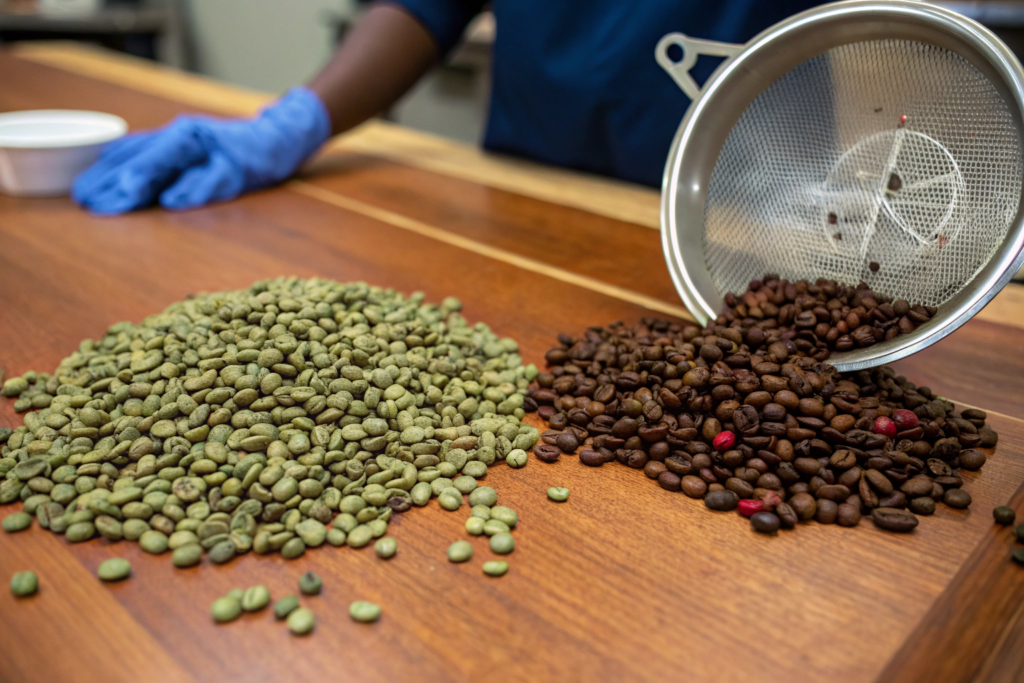
You can't do this with hand-sorting. It's impossible. Imagine 40,000 pounds of coffee spread out on a patio. You'd need an army of people with tweezers. So, the answer is industrial machinery calibrated by someone who cares about the result.
At our facility in Baoshan, the process is straightforward. After the parchment is removed, the green bean falls into a multi-deck gravity separator. This is not rocket science. It's basic physics. The lighter, smaller beans float on a cushion of air and exit stage left. The dense, heavy beans sink and exit stage right. But here's the trick that a lot of mills skip: We slow down the feed rate. We run the machine at 70% of its "maximum" capacity. Why? Because when you push volume, the separation gets sloppy. A small detail that matters: We check the screens every four hours for wear and tear. A torn screen? That container's value just dropped. You can check the official standards for this through the SCA Green Coffee Grading Protocols which define exactly what a "defect" is. We aim for zero primary defects based on that book.
What's the Difference Between Screen Size and Bean Density in a Roaster's Eye?
This is a huge misunderstanding. You can have a big, fluffy bean that screens at 18 but is full of air and low altitude. Or you can have a tight, dense bean that screens at 16 but roasts like a rock. Which is better? The dense one.
Another way to look at this is comparing a Styrofoam ball to a marble. They could be the same size. But if you throw them in a fire, the Styrofoam melts instantly. The marble gets hot and stays hot. That's density. Our high-altitude Catimor from Yunnan tends to be extremely hard. It's SHG (Strictly Hard Bean) quality in terms of density. This means when we guarantee a screen 18, we're also implicitly guaranteeing a density that can handle a high charge temperature without tipping or scorching. It's a hidden layer of consistency that you don't see in the spec sheet until you taste the cup.
What Machinery and Tech Actually "Guarantee" a Clean, Uniform Green Coffee Lot?
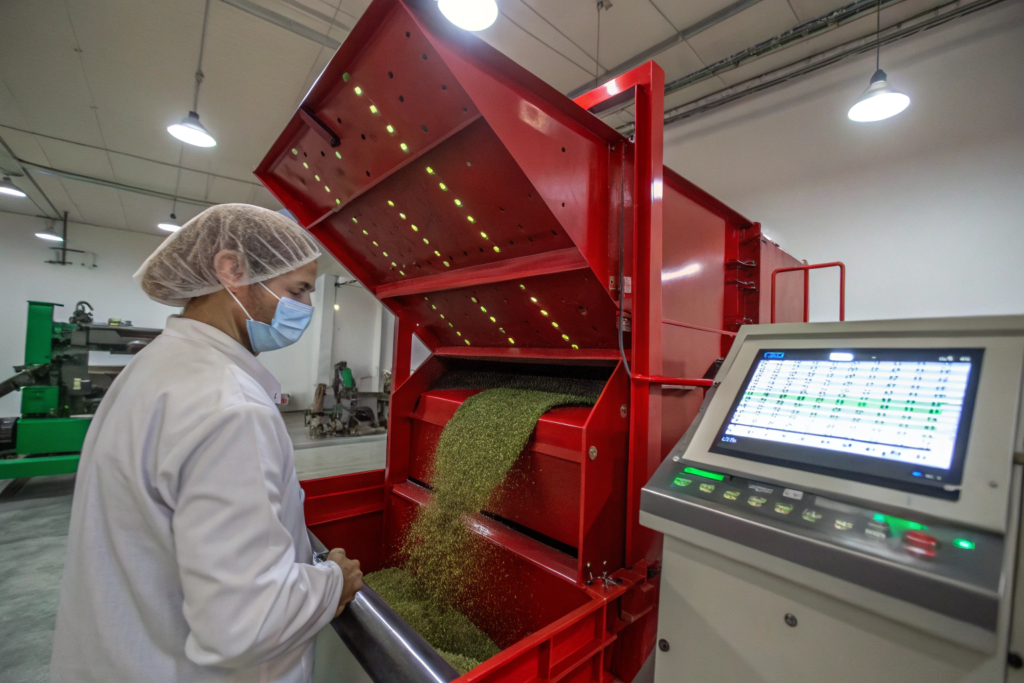
Let's talk about the secret weapon. It's not a secret, really. It's a machine that costs more than a nice house in California. It's called an Optical Sorter. Or a Color Sorter. If you're buying from a plantation that doesn't own one of these, they are not guaranteeing size. They are guessing size based on vibration. And vibration doesn't catch the black bean that is exactly 18/64 of an inch but is totally rotten inside.
Optical sorting technology uses high-resolution cameras and precise air jets to remove defective beans based on RGB color values. It is the only method that guarantees the removal of 'quakers' (under-ripe beans) and 'sours' that are identical in size to premium beans but ruin the cup profile. Combined with a de-stoner and a magnet, this tech stack provides the reliability and safety that large-scale commercial roasters depend on.
Let's break down the assembly line so you know what questions to ask your next supplier.
How Does an Optical Sorter Catch Defects That a Gravity Table Misses?
A gravity table is great at sorting by weight. A heavy rock goes one way. A light leaf goes another. But what about a bean that is the exact same weight and size as a good bean, but it's brown instead of green? Or it has a tiny black spot of mold? The gravity table is blind to that.
The optical sorter works like this: Beans fall in a single-file curtain. Strobe lights flash. Cameras snap 40,000 pictures per second. The software is programmed to know the exact shade of "Yunnan Green." If a bean is too dark, too white, or too red, the computer signals a jet of compressed air to blast it out of the stream. It's brutal. It's accurate. And it's the only way I can sleep at night knowing a container of Shanghai Fumao beans won't have a moldy surprise. You can read more about this tech evolution on Perfect Daily Grind which covers how technology is changing the green coffee trade.
Why Is the "De-Stoner" the Unsung Hero of Reliable Roasting Equipment?
You might laugh, but I treat the de-stoner with more respect than the roaster sometimes. A tiny piece of gravel from a mountain road in Yunnan looks exactly like a coffee bean to a gravity table. But to your grinder? It's a grenade.
A detail you might not think about: When we process 10,000 acres of coffee, we're bringing in cherries that were dried on patios. Sometimes a small pebble sneaks in. We use a fluidized bed de-stoner. It's a box that shakes and blows air up. The heavy stones sink to the bottom and walk up an incline. The lighter beans float on top. We also run the entire batch under a rare-earth magnet. I don't care how clean the farm looks. Metal fatigue happens. A tiny screw falls off a cart. That's why Shanghai Fumao runs the magnet not once, but twice. If you want to understand the critical nature of foreign matter control in food safety, the FDA Defect Levels Handbook is the grim reality check. We aim for zero defects, period.
Can You Maintain Size Consistency Across 10,000 Acres of Different Micro-Climates?
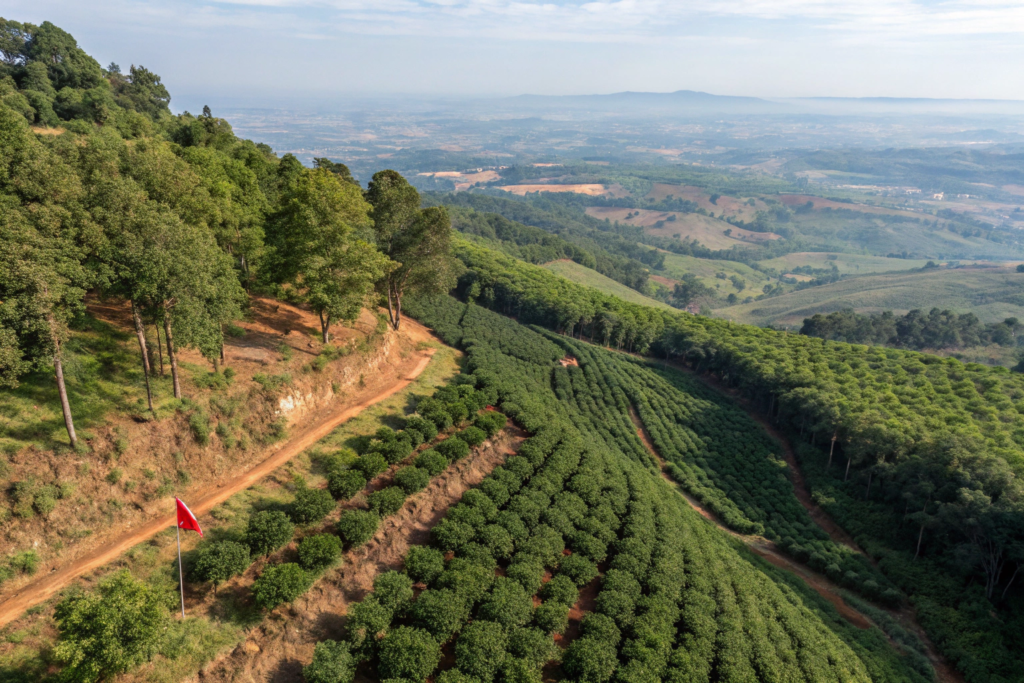
Here's the real challenge. If you have a tiny 5-acre farm in Costa Rica, everything gets the same rain. Everything is the same altitude. Consistency is easier. But when you're dealing with 10,000 acres spread across Baoshan, you have different elevations. You have different soil types. One plot might get more morning sun than the plot half a mile away. How do you guarantee the same bean size from the valley floor and the mountain peak?
Consistency across a large estate is achieved through a process called 'lot homogenization' combined with GPS-based block tracking. This involves picking and processing similar elevation blocks together, cupping them separately, and then strategically blending them at the dry mill to hit a target screen size and flavor profile. It is the difference between a wild, inconsistent forest and a managed, predictable orchard. This is where the skill of the farm manager meets the science of the lab.
Does a 1,400-Meter Catimor Bean Look Different From a 1,200-Meter Bean?
Yes. Unequivocally, yes. The 1,400-meter bean is usually smaller in length, but tighter in the center cut. It looks almost "closed." The 1,200-meter bean is often bigger, more open-faced, and lighter in density.
So, how do we guarantee a uniform screen 18 if nature gave us two different shapes? We don't mix them in the roaster bag. At least, not arbitrarily. We separate these elevations during wet milling. We keep the high-elevation lot as a premium Arabica offering. The mid-elevation lot might be used for a specific blend profile. If a buyer wants a specific screen size, we might need to run the high-altitude lot over a smaller screen to let the small, dense beans pass through while retaining the bigger ones. This is where owning the mill gives you the control. You can fine-tune the sieve sizes in real-time based on the harvest inflow. A toll miller won't do that. They just run everything through the same #18 screen and whatever comes out the other side is what you get.
How Do We Prevent "Floater" Beans From Skewing the Batch Weight?
"Floaters" are the bane of a roaster's existence. They are the light, hollow beans that float in water (hence the name). They are usually under-developed. They roast in about 3 minutes flat and catch fire easily.
You can look at a coffee Certification of Analysis report and see a spec for "Density." But that's a lab number. In the field, we do a simple test. We take a 100g sample from the lot and drop it in a bucket of water. If more than 3 beans float, that lot is not ready for export. It goes back for re-sorting. This is a manual check that happens after the optical sorter. It's a belt-and-suspenders approach. Because the optical sorter looks at color, not internal cellular structure. The water test tells you the truth about density. It's an old-school trick that keeps our new-school clients happy.
How Can I Verify Screen Size Claims Without Flying to a Chinese Warehouse?
You've heard the pitch. "Premium AA Grade." "Screen 18." But you've been in this business long enough to know that sometimes the bags get mixed up. Or the buyer for the other company got the good stuff and you got the leftovers. Trust is good. Verification is better. And in 2026, you shouldn't need a passport and a 14-hour flight to verify a bean size.
Verification of screen size can be done remotely through two reliable proxies: requesting a video of the green sample being sieved with a timestamp and date visible, or by sending a 350g pre-shipment sample to a third-party SCA-certified cupping lab in the destination country. If a supplier is unwilling to provide either of these simple, low-cost verification steps, the consistency guarantee is likely unenforceable.
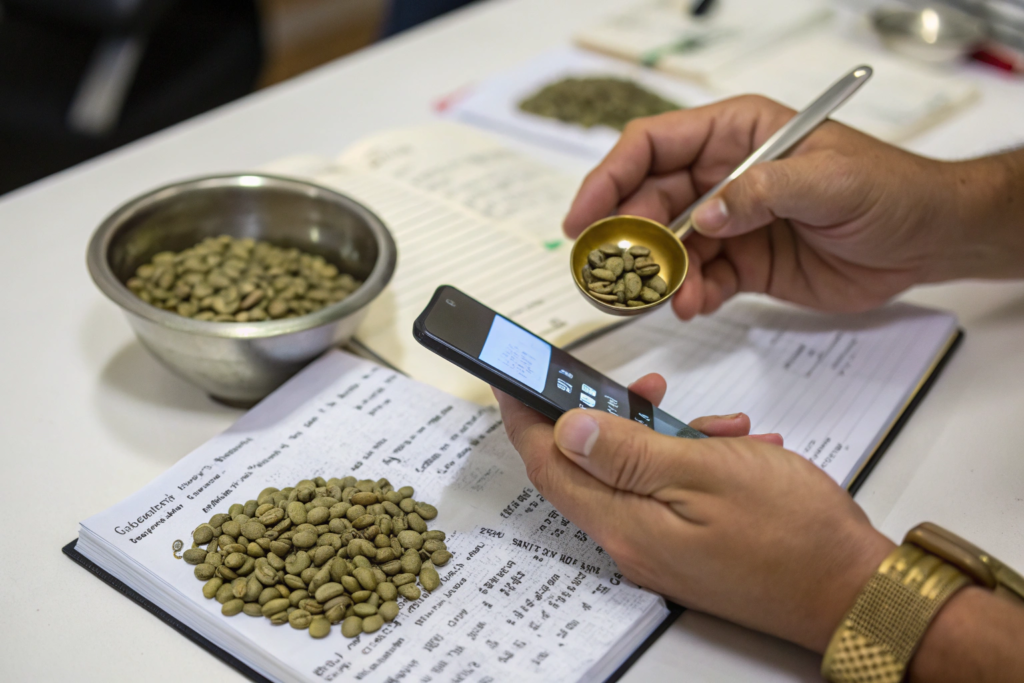
Should I Demand a Video of the Sieve Shaker Test Before Shipment?
Yes. And don't just accept a photo of beans sitting on top of a sieve. Anyone can arrange that. You want a video of the mechanical shaker in motion. You want to see the tray with the undersized beans falling through the holes.
When a client asks for this, I don't get offended. I get my phone out. I put a sticky note with their company name and the date on the shaker. I press record. I let it run for 60 seconds. Then I weigh the retained beans. If the spec says 90% retention, I show the scale reading that proves it. This is the transparency that separates a farm operation from a commodity flipper. If you're dealing with Shanghai Fumao, you'll get that video before you get the invoice. It's just part of the process.
Can a Pre-Shipment Sample in the U.S. Really Predict the Full Container?
It's not perfect. But it's 99% accurate if the sample is drawn correctly. The key phrase is "representative sample." You don't want a hand-picked bag of beauties off the top of a pile. You want a sample drawn with a trier from 10 different bags in the stack.
We encourage buyers to use a service like Coffee Lab International or any local SCA lab near their roastery. We'll courier the 350g green sample directly to the lab. You get an independent report on moisture, water activity, screen size distribution, and defect count. It costs maybe $150. For a $50,000 container of coffee? That's the best insurance policy you can buy. It confirms that the bean size we promised in the email is the bean size you're actually going to receive. It removes the anxiety from the waiting game.
Conclusion
So, back to the original question. Can coffee plantations guarantee consistent bean size? The honest answer is: It depends on who owns the plantation and who owns the mill. Nature grows beans of all shapes and sizes. That's just how it works. But a well-run operation with modern sorting tech and a disciplined quality control team can absolutely guarantee that what ends up in your bag is within a strict, measurable tolerance of your spec.
That's the only guarantee that matters. Not the one on the tree. The one in the container. And that guarantee comes from vertical control, optical sorters, and a willingness to be transparent with videos and lab samples.
If you're looking for a partner who treats screen size not as a suggestion but as a contract requirement, I'd be happy to walk you through our lot tracking system. You can reach out to me directly with any questions about our current harvest sizing or to request a sample kit. My email is cathy@beanofcoffee.com.