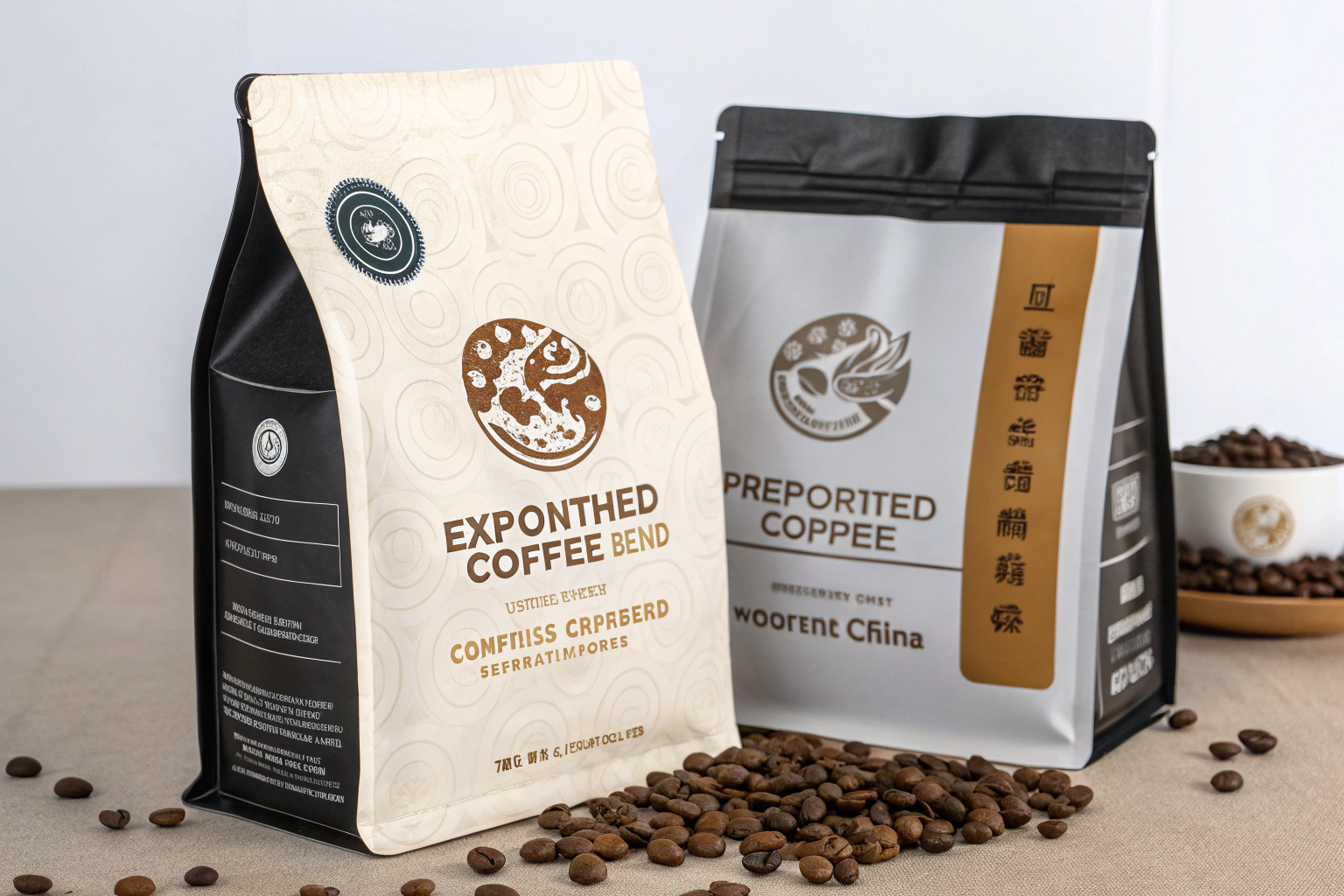
You've built the brand. The logo is perfect. The colors are right. The voice is authentic. You've sourced a great coffee. Now you're picturing the bag on the shelf. Your logo, front and center. A clean, professional package that tells your story. But you're buying wholesale green beans from a farm in China. The logistics of getting your packaging onto their beans suddenly feels complicated. Will it get held up in customs? Will the quality be cheap? Will the cost eat up all your margin? You're asking: Is custom packaging from a Chinese supplier a realistic, profitable option, or a logistical nightmare waiting to happen?
Yes, you can absolutely get custom logo packaging for wholesale coffee beans from a reputable Chinese supplier. The most effective and safe method is to work with a vertically integrated exporter who offers "private label" or "white label" services. This typically involves one of two models: (1) You ship your pre-printed bags and labels to the exporter's facility in China, where they are filled and sealed under supervision. (2) The exporter sources high-quality, customizable packaging locally and manages the printing and filling process on your behalf. Both models are viable and widely used by roasters of all sizes.
At Shanghai Fumao, we've managed custom packaging projects for clients across North America and Europe. I've seen what works beautifully and what creates headaches. Let me walk you through the exact process, the real costs, the common pitfalls, and how to make custom packaging a seamless, brand-building part of your wholesale coffee program.
What Are the Realistic Options for Custom Coffee Packaging from China?
You have options. You're not locked into one rigid, expensive process. The right choice depends on your brand positioning, your budget, and your volume. Understanding the pros and cons of each model is the first step.
The three primary options for custom packaging from a Chinese coffee supplier are: (1) Full Custom Printed Bags: The exporter sources and manages the printing of fully customized bags, often with high-end finishes. This is the premium, hands-off option. (2) Shipper-Supplied Custom Labels: The exporter applies your custom-printed labels to their standard high-quality plain bags. This is a flexible, cost-effective middle ground. (3) Buyer-Provided Bags: You ship your own pre-printed bags and any accessories (like tin ties or valves) to the exporter's facility for filling. This gives you maximum control over the packaging quality and source.
What Are the Pros and Cons of Using the Exporter's Custom Bag Service?
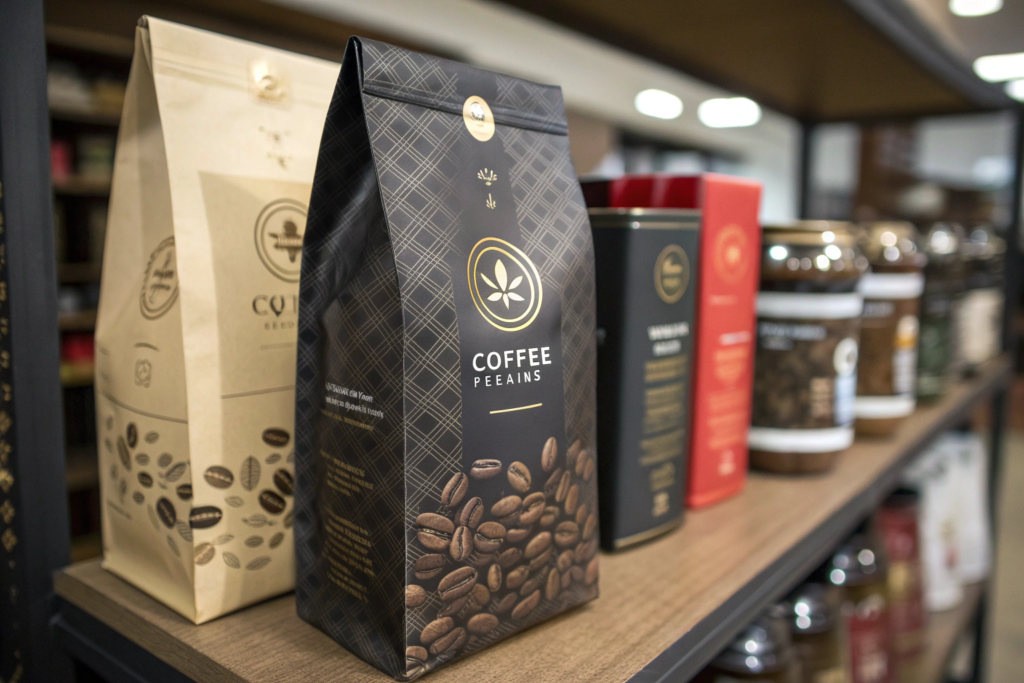
This is the "done for you" option. You provide your artwork files (AI, PDF). The exporter works with their local packaging partner to produce the bags.
Pros:
- Convenience. You manage one vendor. The exporter handles the printing coordination and quality control.
- Cost-Effective. Printing in China is often significantly less expensive than in North America or Europe, especially for larger volumes.
- Logistics. The bags are produced locally and never incur international shipping costs before being filled.
Cons:
- Quality Control Distance. You must rely on the exporter's quality checks. Clear communication and pre-production samples are essential.
- Minimum Order Quantities (MOQs). Custom printing typically requires a minimum run of 1,000 to 5,000 bags, depending on the complexity.
- Lead Time. Printing and producing the bags adds 2-4 weeks to the overall timeline.
At Shanghai Fumao, we have a vetted network of packaging suppliers. We manage this process for clients, providing pre-production digital proofs and final photos of the printed bags before filling. It's a smooth process when managed by an experienced partner.
Is "Shipper-Supplied Labels" a Good Middle Ground?
This is an increasingly popular option. You work with a label printer in your own country to produce high-quality, custom labels (often roll labels). You ship these labels to the exporter.
The exporter then fills their standard, high-quality plain bags (e.g., kraft paper with a valve and tin tie) and applies your label to the bag before sealing the carton. This is the model we use most frequently at Shanghai Fumao.
Pros:
- Lower MOQ for Bags. You can use the exporter's plain bags in smaller quantities.
- Quality Control on Labels. You control the label production and can ensure it meets your brand standards.
- Flexibility. You can easily change label designs for different roasts or seasonal offerings without a massive bag reprint.
Cons:
- International Label Shipping. You must ship the labels to China (relatively inexpensive for a few rolls).
- Application Consistency. You must trust the exporter's team to apply the labels straight and securely. (This is where photos and clear instructions are key).
This model offers an excellent balance of brand control, cost-effectiveness, and flexibility for many small-to-medium roasters.
How Does the Logistics of Private Label Packaging Work from China?
The concept is simple. The execution requires coordination. Understanding the step-by-step logistics demystifies the process and helps you plan your timeline.
The private label logistics process involves six key steps: (1) Artwork Submission: You provide print-ready design files. (2) Pre-Production Sample Approval: The bag supplier provides a digital proof, and ideally, a physical sample of the bag material and print quality. (3) Bag Production: The bags are printed (allow 3-5 weeks). (4) Quality Check: The exporter inspects the finished bags upon delivery. (5) Filling and Sealing: The bags are filled with your specified coffee, heat-sealed, and packed into cartons. (6) Carton Labeling: Each carton is labeled with product information, lot number, and any necessary shipping marks.
What Information Do I Need to Provide for Carton Labels?
This is a detail that first-time private labelers often overlook. You need two levels of labeling: the consumer-facing bag and the logistics-facing carton.
The carton label is essential for your warehouse to identify the product without opening every box. It should include:
- Your Company Name and Logo
- Product Name (e.g., "Smooth Operator Espresso Blend")
- Green Coffee Lot Number (for your internal traceability)
- Net Weight of Carton (e.g., 15 kg / 33 lbs)
- Country of Origin (e.g., "Product of China")
- "Best By" or "Roast By" Date (if applicable, though for green coffee this is often a "Packed On" date)
At Shanghai Fumao, we work with clients to design a simple, clear carton label template. We print these labels in-house and apply them to every carton before it enters the container. This ensures your warehouse team can receive the shipment efficiently.
How Are the Bags Actually Filled and Sealed in China?
This is where the rubber meets the road. The coffee goes from the dry mill into your bag. Quality control at this stage is paramount.
The process at our facility is as follows: The green coffee is run through a final gravity table and optical sorter to ensure it meets the contracted specification. It then moves to a dedicated bagging line. A worker weighs out the precise amount (e.g., 5 lbs, 1 kg) on a calibrated scale. The coffee is poured into your custom bag. The bag is then sealed using a heat sealer. For green coffee, we typically use a simple heat seal across the top. For roasted coffee, we would use a one-way valve bag and a more sophisticated seal. Each bag is inspected for seal integrity. The filled bags are then carefully packed into the master carton. We document this entire process with photos and videos for our private label clients. It provides peace of mind and brand assurance.
What Are the Common Pitfalls with Custom Packaging and How Do I Avoid Them?
Things can go wrong. A blurry logo. A bag that doesn't seal properly. A two-month delay. Most of these pitfalls are predictable and preventable with clear communication and a detailed specification sheet.
The most common custom packaging pitfalls are: (1) Low-resolution artwork leading to blurry, unprofessional printing. (2) Inadequate bag material strength, leading to tearing during filling or transit. (3) Miscommunication about bag dimensions, resulting in bags that don't fit the intended coffee weight. (4) Failure to account for lead times, causing shipment delays. These are all avoided by using vector artwork files, requesting material samples, providing a detailed specification sheet, and building buffer time into the project plan.
Why Does My Logo Look Blurry on the Printed Bag?
This is almost always an artwork file issue. You sent a JPG or PNG image pulled from your website. That's a low-resolution raster image. When scaled up for printing, it becomes pixelated and blurry.
The solution: Always provide vector artwork files. These are files ending in .AI (Adobe Illustrator), .EPS, or .PDF. Vector files are based on mathematical equations, not pixels. They can be scaled to any size without losing quality. Your graphic designer will know exactly what this means. If you don't have a vector file of your logo, it's worth the small investment to have a designer create one. It's the single most important step for ensuring a professional, crisp print. At Shanghai Fumao, we always request vector files and will flag any low-resolution artwork issues during the proofing stage.
How Can I Be Sure the Bags Won't Tear During Filling or Shipping?
Green coffee is heavy and abrasive. A thin, weak bag will tear open during the filling process or, worse, during the jostling of ocean transit. The result is a mess and lost product.
The solution: Specify the bag material and request a sample. A standard kraft paper bag might not be strong enough for a 5lb or 1kg fill. You need a bag with multiple layers—a high-quality outer paper layer for printing, and an inner layer of food-grade LDPE or aluminum foil for strength and freshness. You should also specify the use of GrainPro or similar hermetic liners inside your branded bag for quality preservation during transit. This is standard practice for specialty green coffee. We advise our clients on appropriate bag materials and structures for their specific coffee weight. We can also provide samples of our standard bag constructions for evaluation.
How Does Custom Packaging Affect My Brand Value and Shelf Presence?
This is the "why." Why go through all this trouble? Because the bag is your silent salesperson on a crowded shelf or a customer's kitchen counter. It's the physical embodiment of your brand promise.
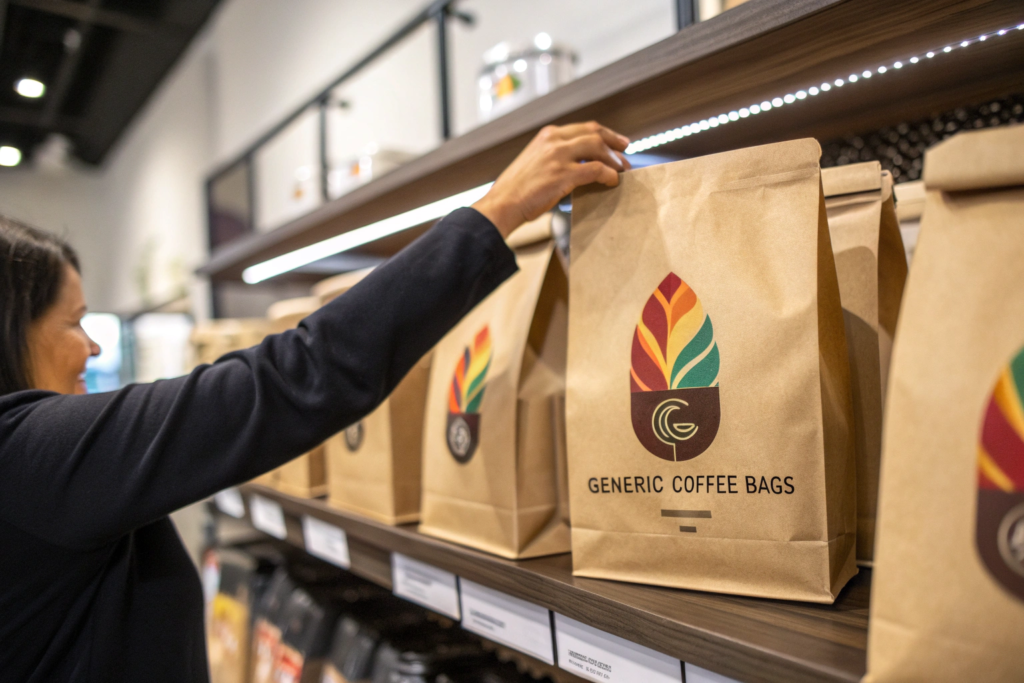
Custom packaging elevates brand value by creating a premium, cohesive, and professional impression. It signals to the consumer that you care about every detail, from the sourcing of the bean to the presentation of the final product. A well-designed bag differentiates your coffee from competitors, justifies a higher price point, and builds brand recognition and loyalty over time. It transforms a commodity into a branded experience.
Can a Better Bag Justify a Higher Retail Price?
Absolutely. Consumer perception of value is heavily influenced by packaging. A beautiful, tactile, well-designed bag suggests a premium product inside.
A roaster selling a generic "Yunnan" coffee in a plain kraft bag with a sticker might be able to charge $14. The same coffee, in a custom-printed bag with a compelling story and a premium finish, can command $18 or $20. The consumer is buying the experience and the trust conveyed by the professional packaging. The incremental cost of the custom bag is often pennies per unit. The incremental retail price is dollars per unit. That's a powerful return on investment. At Shanghai Fumao, we see our private label clients successfully positioning their Yunnan offerings as premium, single-origin products, in part because of the professional packaging we help them execute.
How Does the Unboxing Experience Contribute to Wholesale Account Loyalty?
If you're selling to cafes and other wholesale accounts, the "unboxing" matters. When a cafe owner opens a carton and sees a beautifully packaged, consistent, professional product, it reinforces their decision to buy from you.
It makes their job easier. They can put the bag on their retail shelf with pride. They don't have to explain a messy, generic package to their customers. A seamless, professional private label program makes you an invaluable partner to your wholesale accounts. It reduces their friction and enhances their own brand. It's a powerful retention tool.
Conclusion
Getting custom logo packaging for your wholesale coffee beans from China is not only possible—it's a strategic move that can significantly elevate your brand and your margins. The key is to approach it not as a risky experiment, but as a managed, collaborative process with the right partner.
By understanding your options—from full custom bags to shipper-applied labels—and by communicating clearly with detailed specifications and vector artwork, you can create a packaging experience that rivals any domestic roaster.
If you're ready to explore what custom packaging could look like for your Yunnan coffee program, I'm here to walk you through the options, the costs, and the timelines. Let's put your brand on a bag that tells your story. My email is cathy@beanofcoffee.com.