You see the word "organic" on a spec sheet from a new supplier and you roll your eyes. You've been burned before. The "organic" certification turned out to be a PDF someone made in Microsoft Word. The beans arrived, you sent a sample to the lab, and guess what? Trace pesticides. Now you're stuck with a container of coffee you can't sell to your best accounts. And you're asking yourself: Is anyone in China actually putting organic fertilizer in the ground, or is it all just marketing smoke and mirrors?
Yes, many Chinese coffee plantations, particularly those at higher elevations in Yunnan, use organic fertilizers as a core agronomic practice, driven more by economics and cup quality than by certification marketing. The shift toward composted coffee pulp, sheep manure, and locally produced bio-organic amendments is widespread because synthetic fertilizers are expensive to transport into remote mountain areas and because organic matter is essential for improving the volcanic red soil structure. However, the documentation and certification of this practice is where the real due diligence is required.
Here's the thing most buyers don't realize. Using organic fertilizer in China is not some niche, premium add-on. For a lot of farms in Baoshan, it's just how farming works. The question isn't really "Do they use it?" The question is "Can they prove it, and is it the right kind of organic input?" Let me walk you through what I see every day on our 10,000 acres at Shanghai Fumao. It's less about a sticker on a bag and more about what the farmer is shoveling into the soil in March.
Why Would a Chinese Coffee Farm Choose Organic Fertilizer Over Chemical NPK?
If you've ever driven a truck full of chemical fertilizer up a Yunnan mountain road, you'd understand the choice immediately. The roads are narrow. They switch back every hundred meters. One wrong turn and you're looking at a long drop. The cost of hauling a ton of synthetic urea from Kunming to a farm in Baoshan is sometimes higher than the cost of the fertilizer itself.
The primary driver for organic fertilizer adoption on Chinese coffee farms is logistical cost savings and long-term soil health management. Synthetic NPK requires annual purchase and expensive transport. Organic inputs like composted coffee pulp and animal manure are often available on-farm or from nearby villages, creating a closed-loop system that reduces cash outflow. Additionally, Yunnan's red soil is prone to compaction. Organic matter is critical for maintaining the soil porosity needed for Arabica root development and water retention.
Is It Really About Sustainability or Just About Saving Money on Trucking?
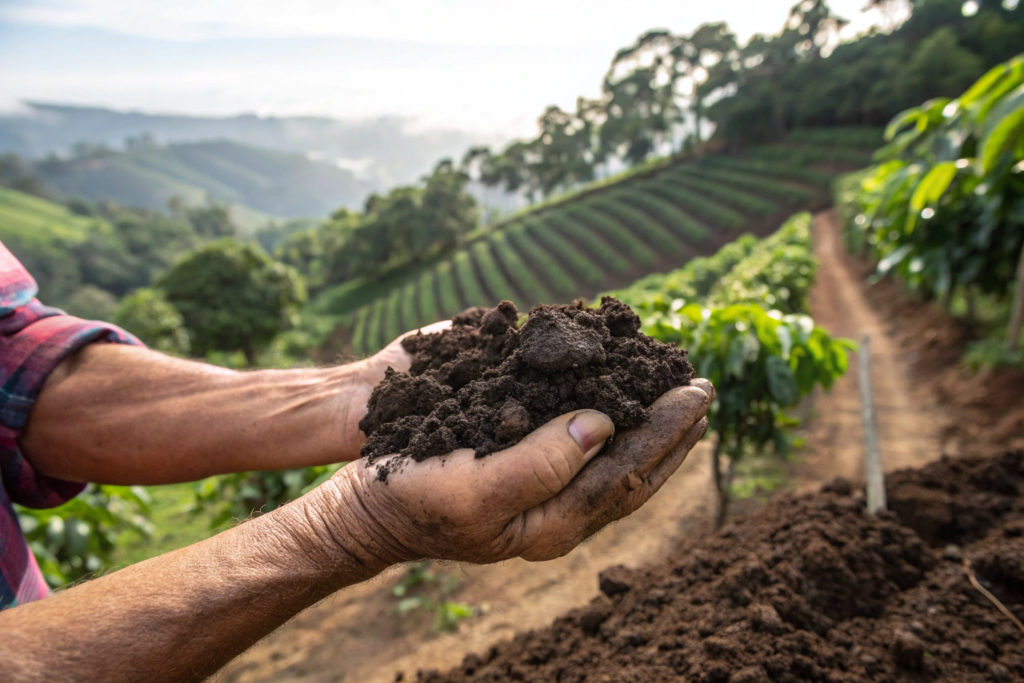
Honestly? It starts with money. But it ends with quality. Let me explain. A bag of compound fertilizer might cost 200 RMB. The truck to get it up the mountain costs 300 RMB. The farmer looks at that math and thinks, "My neighbor has sheep. I have coffee pulp waste from last harvest. Why would I pay 500 RMB for something I can get for a fraction of that?"
So they compost. They mix the sheep manure with the coffee cherry skins and let it sit for six months. It's not glamorous. It smells. But it works. And here's the happy accident: That compost does more than just feed the tree. It feeds the soil life. Over time, the soil gets darker, looser, and holds moisture better during the dry season. The tree gets healthier. The cherry ripens more evenly. The cup score goes up. You can read about the agronomic benefits of this approach in resources like World Coffee Research, which emphasizes soil health as a key factor in quality. So what started as a penny-pinching move on trucking costs becomes a long-term investment in the land. And for a family farm that wants to pass the land to the next generation, that matters.
How Does Sheep Manure Compare to Chemical Fertilizer in the Cup Profile?
This is where the conversation gets interesting for a roaster. Chemical NPK is like a fast-food meal for the tree. It gets a quick shot of nitrogen. The leaves get dark green. The cherry grows fast. But sometimes too fast. The bean inside can be less dense, more hollow.
Organic inputs release nutrients slowly. The tree has to work a little harder. The growth is more balanced. In my experience cupping lots from across our farm, the blocks that receive consistent compost applications tend to have a rounder, sweeter mouthfeel. The acidity is less sharp, more integrated. It's not a night-and-day difference like a varietal change. It's subtle. But in a blind cupping, the compost-fed lots often finish cleaner. A detail you might not consider: Synthetic nitrogen can sometimes stress the tree, making it more susceptible to leaf rust and pests. A healthier tree produces a cleaner bean. You can see data on this relationship between plant health and cup quality in the research archives of the Specialty Coffee Association. It's a real, measurable effect.
What Does "Organic Certification" Actually Mean for a Yunnan Coffee Exporter?
This is where I see buyers get confused. Or worse, get taken advantage of. There is a huge difference between "We use organic methods" and "We are certified organic by an internationally recognized body." The first statement might be true. It might be a lie. The second statement comes with paperwork, audit trails, and serious consequences for fraud.
"Organic Certification" for a Chinese coffee exporter means the farm and processing facility have undergone an annual inspection by a third-party certifier accredited under standards like USDA NOP (National Organic Program) or EU Organic. This audit verifies that no prohibited synthetic pesticides or fertilizers have been applied for at least three years, that buffer zones exist between organic and conventional plots, and that a complete chain of custody is maintained from harvest to export container. It is a legal and contractual guarantee, not a marketing slogan.
Which Certification Logo Should I Trust: USDA NOP, EU Organic, or China Organic?
For a buyer in North America, the only logo that matters for selling the coffee as organic is the USDA Organic seal. Period. If you're in Europe, you need the EU Organic leaf logo. The China Organic standard is improving, but it is not equivalent in the eyes of U.S. or E.U. regulators.
So when a supplier says "We are organic," your first question should be: "Certified by whom?" If they can't show you a valid certificate from an accredited certifier like ECOCERT, CERES, or BCS, then the beans are not organic for import purposes. They are conventional beans grown with some nice practices. And you should pay a conventional price. At Shanghai Fumao, we maintain specific plots that are certified under both USDA NOP and EU standards. It's a separate, fenced area. Separate picking bags. Separate processing days. It costs more to do this. A lot more. That's why certified organic coffee commands a premium. You can verify the accreditation of any certifier through the USDA Organic Integrity Database. Don't take a supplier's word for it. Check the database. It takes two minutes.
How Do I Know the Certification Isn't Just a Fake PDF?
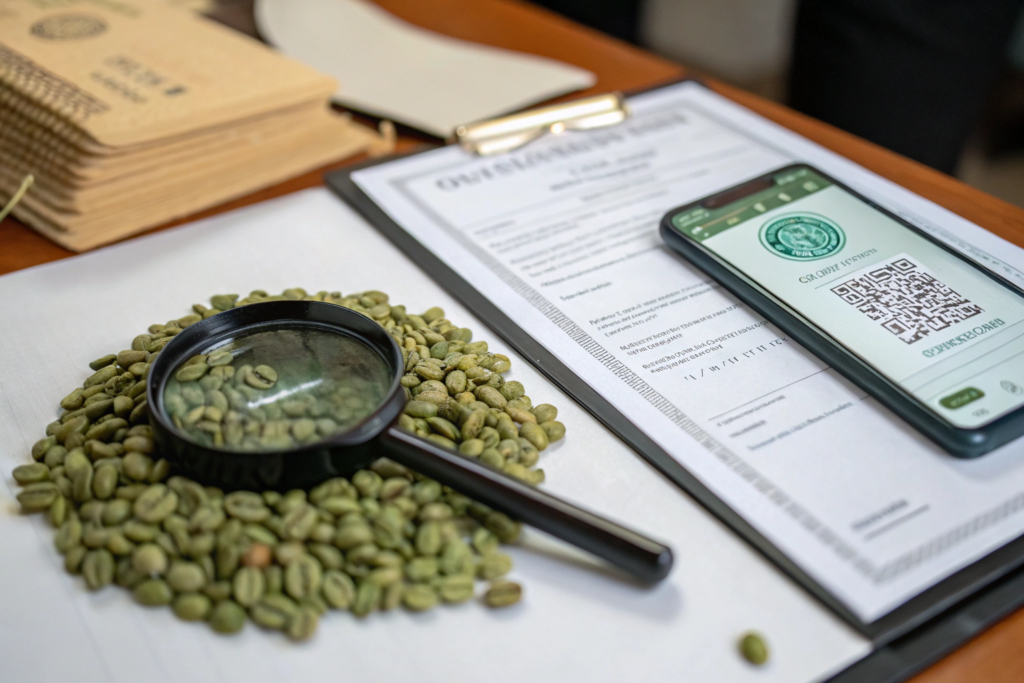
This is a valid fear. Fraud exists in every commodity market. The way to protect yourself is to look for the "Certificate Number" and the "Certifying Agent" name on the document.
Then, go to the certifier's website. Most have a public database search function. Type in the certificate number or the farm name. It should pop up with the exact same scope (e.g., "Green Coffee Production and Export") and an expiration date that is in the future. If it doesn't match, walk away. Another layer of protection is the Transaction Certificate (TC). When a certified organic container ships, the certifier issues a TC that matches the lot number to the Bill of Lading. This closes the paper trail. If a supplier can't provide a TC for the specific container they're selling you, the organic chain is broken. You can learn more about organic fraud prevention from the Organic Trade Association. It's a resource worth bookmarking. Due diligence is your best defense.
How Can I Verify Fertilizer Practices Without an Expensive On-Site Audit?
You're not going to fly to Baoshan. I get it. The flight is long. The hotel options are limited. And your time is better spent selling coffee, not hiking through fields. But you still need to know if the organic claims hold water. So how do you bridge that gap from 8,000 miles away?
Remote verification of organic fertilizer use relies on a combination of real-time visual evidence and independent third-party laboratory analysis. Requesting a live video walkthrough of the compost production area, coupled with a multi-residue pesticide screen (GC-MS/MS) performed on a pre-shipment sample by a lab in the destination country, provides a high degree of confidence. This dual approach verifies both the practice on the ground and the absence of prohibited substances in the bean.
Can a Live Video Walkthrough of the Compost Pile Really Prove Anything?
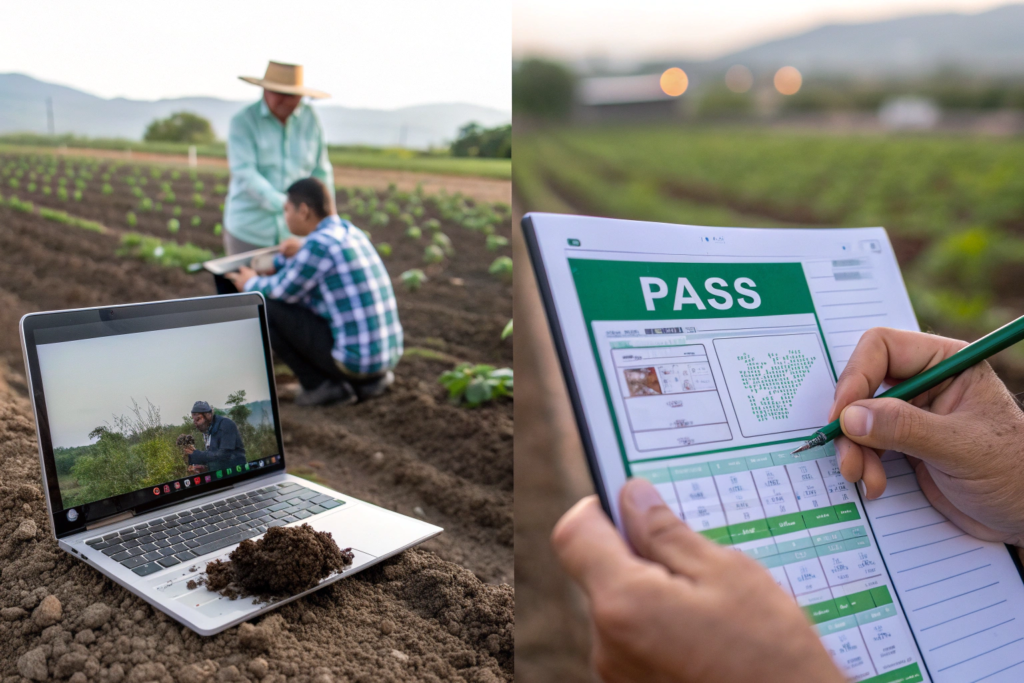
Yes, if you know what to look for. A pile of dirt proves nothing. A pile of actively decomposing coffee pulp mixed with manure, with steam rising off it in the cool morning air, and a farmer who can explain the turning schedule... that proves something.
When a buyer asks me about our fertilizer program, I don't send a glossy brochure. I walk outside with my phone. I switch to video call. I show them the compost windrows. I show them the bags of certified organic inputs we buy for our nursery. I show them the buffer zone between our organic plots and the neighbor's conventional corn field. Is it possible to fake this? Sure, you could stage a movie set. But the level of effort required to fake a live, unscripted walkthrough of a 10,000-acre farm is enormous. Most fraudsters won't bother. They'll just send a fake PDF and hope you don't ask questions. The willingness to be transparent, in real time, is a strong signal of authenticity. This is the kind of direct access that working with a farm like Shanghai Fumao provides. You're not talking to a trader in an office building in Shanghai. You're talking to the person who can point the camera at the compost pile.
What Specific Lab Test Should I Request for Pesticide Residue?
Don't just ask for a "pesticide test." Be specific. You want a "Multi-Residue Screen by GC-MS/MS and LC-MS/MS" that covers at least 400 compounds. The lab should be ISO 17025 accredited.
You want the report to show the Limit of Quantification (LOQ) for each compound. The LOQ should be at or below 0.01 mg/kg (10 ppb) for most pesticides. This is the standard required by the EU and Japan, which are stricter than the U.S. in many cases. If the report shows "Not Detected" for a long list of synthetic chemicals, that's good evidence that synthetic fertilizers and sprays were not used. Why? Because many synthetic fertilizers contain trace contaminants of heavy metals or are applied alongside herbicides. A truly clean lab report is hard to fake. I recommend labs like Eurofins or SGS, which have global networks. You can request that the pre-shipment sample be sent directly to the lab of your choice. We do this routinely for our certified organic clients. It costs a few hundred dollars. For the peace of mind and the ability to confidently label your coffee, it's the best investment you'll make all year.
Are There Cost or Quality Trade-Offs With Organically Grown Chinese Arabica?
This is the bottom-line question for a business owner like Ron. He likes the idea of organic. But he's watching his margins. He needs to know: If I pay more for organic Chinese coffee, am I getting a better bean, or just a better story? And if I don't buy certified organic, am I getting a lower quality bean?
There is a measurable trade-off in yield and cost for certified organic coffee production. Organic yields are typically 10-20% lower per hectare due to slower growth and the absence of synthetic rescue treatments for pests or disease. This reduced yield, combined with the cost of certification audits, accounts for the premium price. However, the quality trade-off is not a simple linear equation. Many roasters find that well-grown organic coffee exhibits greater complexity and cleaner finish, justifying the premium in the cup. The decision hinges on whether your market values the certification label enough to absorb the higher green cost.
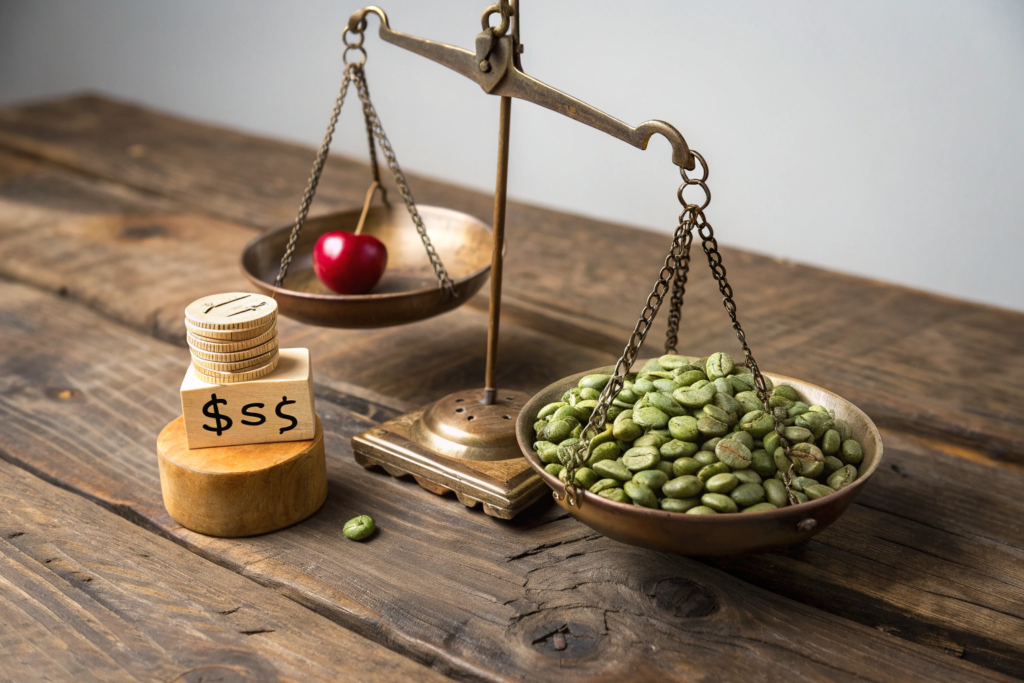
Why Does Certified Organic Cost More Per Pound If the Fertilizer Is "Free" Manure?
The fertilizer itself might be cheaper or locally sourced. That's true. But the yield is lower. A conventional Catimor tree in Yunnan might produce 5 kilograms of cherry. The organic tree next to it, in the same climate, might produce 4 kilograms. Same land. Same labor for picking. Less coffee to sell.
That 20% yield gap is the primary driver of the premium. The farmer needs to recoup the lost volume through a higher price per pound. On top of that, the certification itself costs money. The auditor has to fly to Yunnan, stay in a hotel, and spend days walking the fields and reviewing records. That bill is paid by the farm. And the chain of custody requirements mean more paperwork, more segregated storage, and more time. All of that adds cost. When you buy certified organic from Shanghai Fumao, you're not just paying for a logo. You're paying for a completely separate production system that runs parallel to our conventional operation. It's a boutique within a larger factory. You can see the premium reflected in the market differentials tracked by organizations like the International Trade Centre, which monitors organic commodity pricing. It's a real, structural cost difference.
Does Organic Farming in Yunnan Actually Produce a Better Tasting Catimor?
This is where I have to be honest. The word "Catimor" itself sometimes carries baggage. It's known for being disease-resistant, high-yielding, and... sometimes a bit harsh in the cup. "Woody" or "herbal" are the polite terms.
But here's what I've observed cupping our own lots over the last five years. The organic Catimor, grown at 1,400 meters with compost and shade, consistently outscores the conventional Catimor from the same elevation by a point or two. Why? My theory—and it's just a theory—is that the slower growth from organic nutrition and the healthier soil microbiome allow the tree to express more of the positive attributes of the Catimor genetics (the body, the spice notes) and less of the negative ones (the astringency). It's cleaner. It's sweeter. It still has that characteristic Catimor backbone, but the edges are rounded off. Is it better than a washed Ethiopian Yirgacheffe? No. It's a different product. But for a blender looking for a certified organic base note with integrity and a clean finish, it's a phenomenal tool. You can explore more about the cup quality potential of Catimor in different growing conditions through cupping reports and articles on Perfect Daily Grind. The narrative around this varietal is changing as farming practices improve.
Conclusion
So, do Chinese coffee plantations use organic fertilizers? Absolutely. More than most buyers realize. The practice is deeply embedded in the economics and traditions of Yunnan's mountain agriculture. The real challenge is not the use of organic inputs, but the verification of that use to a standard that you, as a buyer in a competitive market, can trust and leverage.
Whether you need the full USDA NOP certification for your brand, or whether you simply want the assurance of a clean, pesticide-free bean grown with sustainable methods, the key is transparency. The key is asking for the video call. Asking for the lab report. Asking for the proof that separates a real farm partner from a slick trading company.
If you want to dig deeper into our specific fertilizer protocols, our certification status, or just see a live video of our compost operation, I'm always open to a conversation. No filters. No marketing fluff. Just a look at what's happening on the ground in Baoshan. My email is cathy@beanofcoffee.com.