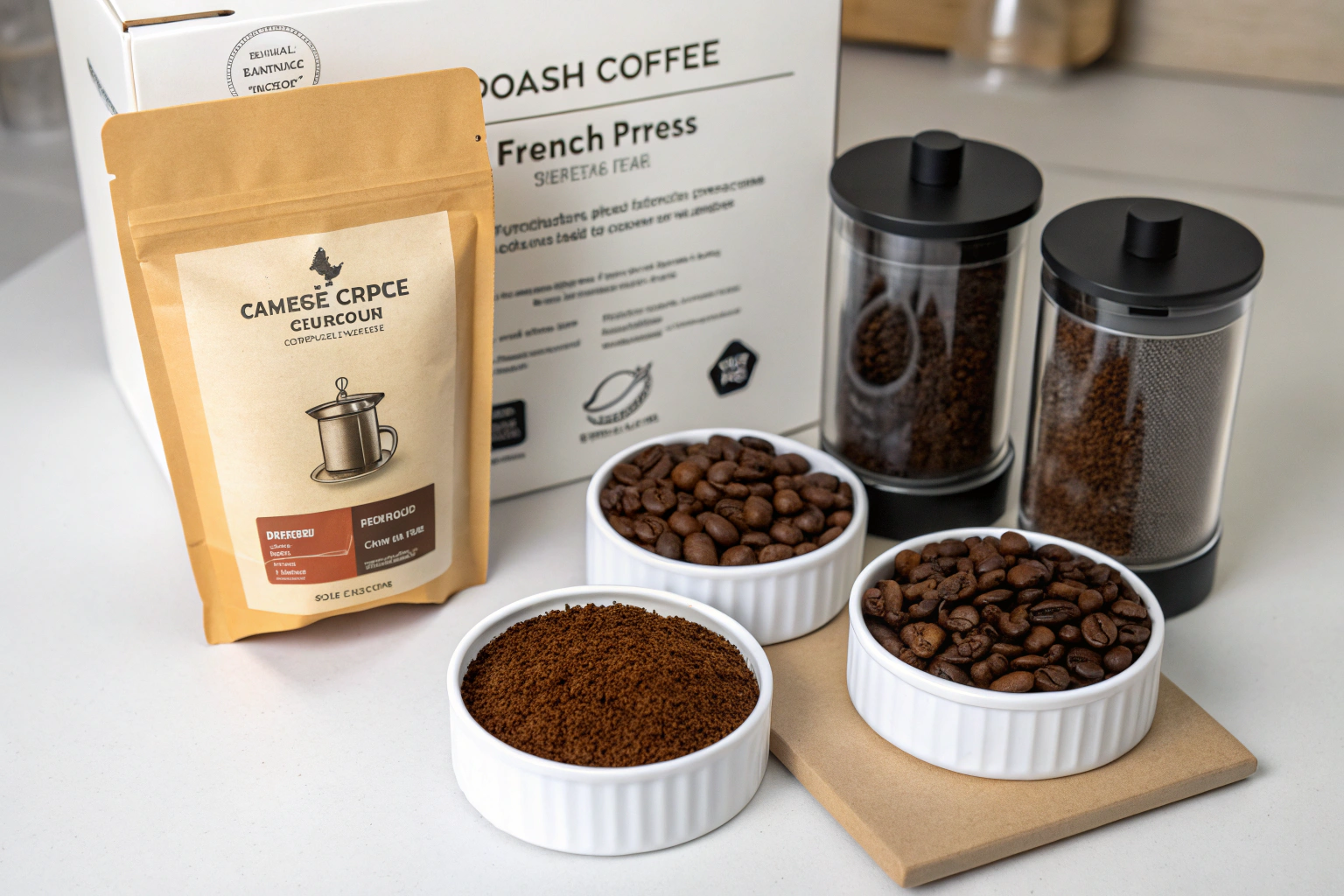
A modern coffee roastery in China with workers packing roasted beans into branded bags, no text or maps, natural faces and realistic industrial setting.
Yes, many Chinese suppliers provide roasted and packed coffee. But not all of them do it well. You need to know the difference. Some suppliers only export green beans. That is the raw stuff. Others have full roasting facilities. They can roast, grind, pack, and ship directly to your market. At BeanofCoffee, we do both. We have our own roastery in Baoshan City. We roast daily. We pack in foil bags with one-way valves. So, the short answer is yes. The long answer is... you need to ask the right questions before you buy.
So, let me walk you through this. I will share what roasted coffee from China looks like. I will tell you about quality, packaging, shelf life, and costs. And I will be honest about the challenges. Because shipping roasted coffee is different from shipping green beans. Let us get into it.
What Roasted Coffee Options Come from China?
A row of different roasted coffee bags on a shelf, dark roast to light roast, a worker labeling bags, no text or maps, natural lighting.
Chinese suppliers offer three main types of roasted coffee. First, whole bean roasted coffee. That is the most common. Second, ground coffee. You can choose coarse for French press or fine for espresso. Third, single-serve pods. Some big suppliers have pod machines. But not many. At BeanofCoffee, we focus on whole bean and ground. We do not do pods yet. The machines are too expensive. So, for most buyers, whole bean is the best choice. It stays fresh longer. And your customers can grind it themselves.
Another way to look at this is... the roast level matters a lot. Chinese roasters can do light, medium, dark, and espresso roasts. But not every supplier is good at every level. For example, dark roast is easier to hide defects. So, some cheap suppliers use dark roast to cover low-quality beans. Light roast shows everything. So, a good light roast means the supplier has good beans. Let me give you a real example. We have a buyer in Canada. She wanted a light roast for her cold brew. We sent her three samples. She tested them. She chose our medium-light roast. Not the darkest. Not the lightest. The middle one worked best for her recipe. So, you need to test. Do not just order based on a price list. Ask for samples. Cup them. Then decide. Also, ask about "roast date". Freshness is everything. A good supplier roasts after you order. Not before. At BeanofCoffee, we roast within twenty-four hours of shipping. That gives you about four weeks of peak freshness. You can also read more about coffee roast levels and their uses to understand what works for your market.
Can I get custom roast profiles from China?
Yes, you can. But you need a supplier with a flexible roaster. Not every factory can do custom profiles. Most big factories have fixed profiles. They roast the same way every time. That is efficient. But it is not flexible. Small to medium roasters are better for custom work. For example, we have a buyer in Australia. He wanted a roast that was not too acidic but also not too bitter. He sent us his "target curve". That is a graph of temperature over time. We ran three test batches. Each batch was fifty kilos. He paid for the samples. That cost him $300. But then he found the perfect roast. Now he orders one ton every two months. So, custom work is possible. But you need to pay for the testing. Do not expect a supplier to do ten test batches for free. That is not fair. Also, ask for a "roast log". That is a record of the roast curve. A good supplier will share this with you. It proves they can repeat the same roast every time. For more details, read this guide to custom coffee roasting. Honestly, not every supplier will say yes to custom work. So, ask early. If they say no, move on.
How Is Packaged Coffee Quality from China?
A quality control worker inspecting sealed coffee bags, a cupping table with samples, no text or maps, realistic faces and clean environment.
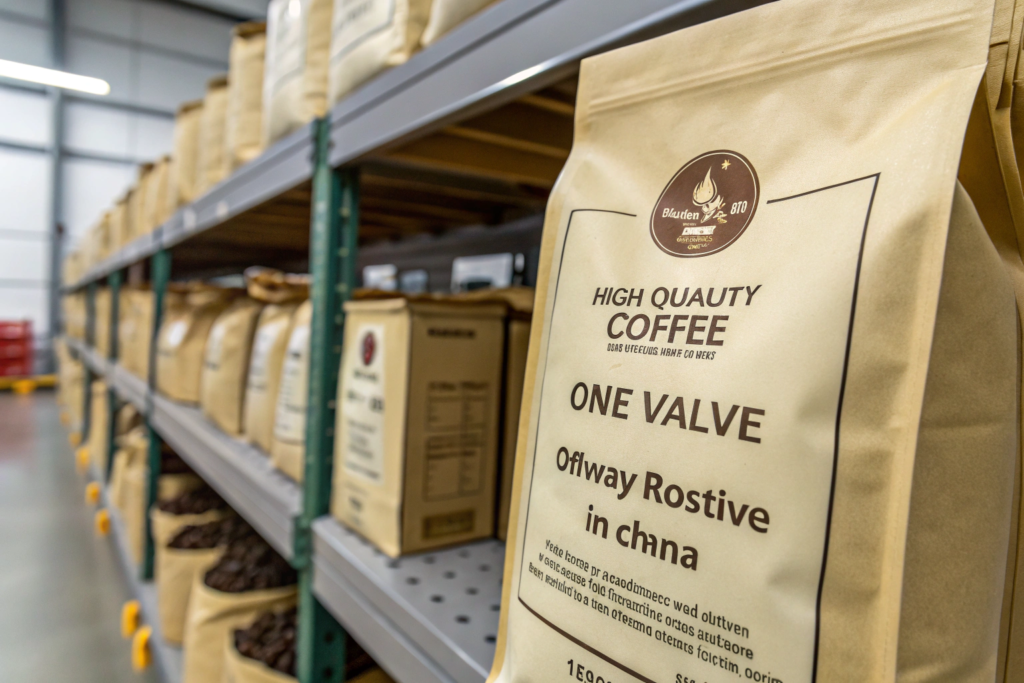
The quality of packaged coffee from China is good. But you need to check three things. First, the packaging material. It must have a one-way valve. That lets gas out but keeps oxygen out. Without a valve, the coffee goes stale in two weeks. Second, the seal strength. Cheap bags burst during shipping. Third, the label accuracy. Does the roast date match the actual roast? Some bad suppliers print fake dates. At BeanofCoffee, we use high-barrier foil bags. We test every batch of bags for seal strength. And we print the roast date only after roasting. That is the right way.
What packaging materials do Chinese suppliers use?
Most Chinese suppliers use three types of packaging. First, kraft paper with an inner liner. This looks natural. But it does not block light well. Good for local sales. Bad for export. Second, foil laminate. This is the best for export. It blocks light, oxygen, and moisture. Third, plastic stand-up pouches. These are cheap. But they are not good for long-term storage. For export to the US or Europe, always choose foil laminate. It costs more. About ten to twenty cents more per bag. But it is worth it. Let me give you a real example. A buyer from the UK asked us to use kraft paper bags. We said no. We explained why. He insisted. So, we did a test. We sent him two batches. One in kraft paper. One in foil. He opened them four weeks later. The kraft paper coffee was flat. No aroma. The foil coffee was still fresh. He switched to foil for all future orders. So, trust the science. Not the look. Also, ask about "inner bag" options. Some suppliers put the coffee in a foil bag. Then put that bag inside a paper bag. That gives you the look of paper with the protection of foil. That is a good compromise. Read more about coffee packaging materials comparison to understand the differences.
Do Chinese suppliers offer private label packaging?
Yes, many do. Private label means you put your brand on the bag. The supplier roasts and packs for you. You sell under your own name. This is very common. At BeanofCoffee, we do private label for about half of our export orders. The process is simple. You send us your logo and label design. We print the bags in China. Then we fill them with your coffee. The minimum order for private label is usually one ton. That is about one thousand bags of one kilo each. The cost for custom printing is around $300 to $800 for the first order. After that, you reuse the same design. So, the cost drops. But here is a warning. Some suppliers charge a low price for private label. Then they use cheap bags. Or they use old coffee. Do not fall for that. Ask for photos of the printing process. Ask for a sample bag with your label. And ask for a "first bag" photo before they fill the whole order. That is what we do. We send a photo of the first bag to the buyer. They say yes or no. Then we pack the rest. For more tips, read this guide to private label coffee. Honestly, private label is a great way to build your brand without owning a roastery. Just choose your supplier carefully.
How Fresh Is Roasted Coffee from China?
A worker writing a roast date on a coffee bag, a shipping box with "Roasted On" label, no text or maps, natural lighting and clear details.
Freshness depends on shipping time. Roasted coffee is best within thirty days of roasting. After that, the flavor goes down. So, if you ship from China to the US by sea, that takes twenty-five to thirty-five days. That means the coffee will be near the end of its peak when it arrives. That is not good. The better way is to ship by air. That takes three to five days. Or you can use sea freight with vacuum packing. Vacuum packing extends freshness to sixty to ninety days. At BeanofCoffee, we offer all three options. But we always recommend air freight for roasted coffee.
Does vacuum packing really keep coffee fresh?
Yes, it does. But only if done correctly. Vacuum packing removes the air from the bag. No air means no oxygen. No oxygen means no staling. But there is a problem. Fresh roasted coffee releases CO2 gas for several days. If you vacuum pack too early, the gas builds up. The bag can burst. Or the seal can fail. So, the right process is this. Roast the coffee. Let it rest for twelve to twenty-four hours. Then vacuum pack. That allows most of the CO2 to escape first. Then you seal. At BeanofCoffee, we use this method for all our sea freight roasted orders. We have tested it. Coffee vacuum packed this way stays fresh for up to ninety days. We know this because we cup samples every month. We track the flavor change. After sixty days, there is a small drop. After ninety days, a bigger drop. But it is still better than non-vacuum packed coffee at thirty days. So, ask your supplier: "Do you offer vacuum packing? And what is your resting time before sealing?" If they say they vacuum pack immediately after roasting, be careful. That can lead to burst bags. Read more about vacuum packing for coffee from home coffee experts. Honestly, vacuum packing is not magic. But it is the best option for sea freight.
What is the shelf life of Chinese roasted coffee?
It depends on the packaging and storage. Here is a simple breakdown. For standard foil bag with one-way valve (not vacuum packed), shelf life is four to six weeks from roast date. For vacuum packed foil bag, shelf life is three to four months from roast date. For nitrogen flushed bag (even better than vacuum), shelf life is six to eight months. But nitrogen flushing is rare in China. Most small to medium roasters do not have that machine. So, for most buyers, vacuum packed gives you three months. That is the real number. Do not believe a supplier who says "six months" without vacuum or nitrogen. That is not true. Let me give you a real example. We sent two batches to a buyer in Germany. One was vacuum packed. One was not. Both were roasted on the same day. The buyer cupped them at week two, week four, week eight, and week twelve. The non-vacuum coffee dropped in quality at week five. The vacuum coffee stayed good until week ten. So, trust the test. Also, tell your customers to store the coffee in a cool, dark place. Not in the fridge. Not in the freezer (unless vacuum packed). Just in a cabinet. That is the best. For more details, read this shelf life guide for roasted coffee. At BeanofCoffee, we print the "best by" date as three months from roast for vacuum packed. That is honest. That is safe.
Is Roasted Coffee from China Cost-Effective?
A calculator on a desk next to a coffee bag and a shipping invoice, a person comparing prices, no text or maps, realistic office setting.
The short answer is yes. But only for the right markets. Roasted coffee from China is cost-effective for buyers in Asia and Australia. For buyers in North America and Europe, green beans are better. Why? Because roasted coffee is heavy. Freight costs are high. And tariffs on roasted coffee are higher than green. For example, roasted coffee has an 8.5% tariff to the US. Green coffee has 3.5%. So, you pay more in freight and more in tariffs. That often kills the savings. At BeanofCoffee, we are honest about this. We tell our US buyers to buy green beans. We tell our Asian buyers that roasted can work.
How do tariffs affect roasted coffee imports?
Tariffs are a big deal. For the US, roasted coffee has HTS code 0901.21.00. The tariff is 8.5%. Green coffee has HTS 0901.11.00 with 3.5%. That is a 5% difference. On a $50,000 order, that is $2,500 extra. For the EU, the tariff on roasted coffee from China is 7.5%. Green is 0% for some origins (not China). For China to EU, green coffee has a tariff of about 3%. So, the gap is smaller but still there. For Australia, the tariff on roasted coffee from China is 5%. Green is 0%. For Japan, both have low tariffs. Around 0% to 3%. So, the best markets for roasted coffee from China are Asia. The worst are the US and Europe. That is just the truth. I am not saying this to discourage you. I am saying it so you can plan. If you are in the US, consider buying green beans. Roast them yourself. Or find a local roaster. That will save you money. If you are in Asia, roasted coffee from China is a real option. For more details, check the USITC tariff database for coffee. Put in the codes. See the rates yourself.
What is the minimum order for roasted coffee?
The minimum order varies by supplier. For small roasters, the minimum might be 100 kg. For medium roasters, 500 kg. For large factories, 1,000 kg or one ton. At BeanofCoffee, our minimum for roasted coffee is 200 kg. That is about two hundred bags of one kilo each. Or four hundred bags of 500g each. Why 200 kg? Because we need to run our roaster efficiently. A small batch takes the same time as a large batch. So, the cost per kg is higher for small orders. We are honest about that. For buyers who want less than 200 kg, we recommend buying green beans. Or finding a local roaster. For buyers who want to test the market, we offer sample packs. A sample pack is 10 kg. You pay a higher price per kg. But you can test the quality. Then, if you like it, you place a larger order. That is a fair way to start. Also, ask the supplier about "groupage" or "consolidation". That means combining your small order with other buyers' orders. That can lower the minimum. But it is rare. Most suppliers will just say no. So, be ready to order at least 200 kg. That is the reality. Read more about minimum order quantities in coffee sourcing to understand why suppliers have these rules.
Conclusion
So, does China provide roasted and packed coffee? Yes. Many suppliers do. But you need to be careful. The quality can be good. The packaging can be excellent. But the freshness and cost are challenges. For buyers in Asia and Australia, roasted coffee from China is a real option. The shipping is fast. The tariffs are low. The value is there. For buyers in the US and Europe, green beans are usually a better choice. Roast them locally. That gives you better freshness and lower cost.
At BeanofCoffee, we do both. We export green beans to over ten countries. We also roast and pack for buyers in Asia. We are honest about what works and what does not. That is how we build long-term relationships.
So, if you are thinking about roasted coffee from China, let us talk. Tell us your market. Tell us your volume. Tell us your roast preference. We will give you an honest answer. Not a sales pitch. Contact Cathy Cai directly at: cathy@beanofcoffee.com.