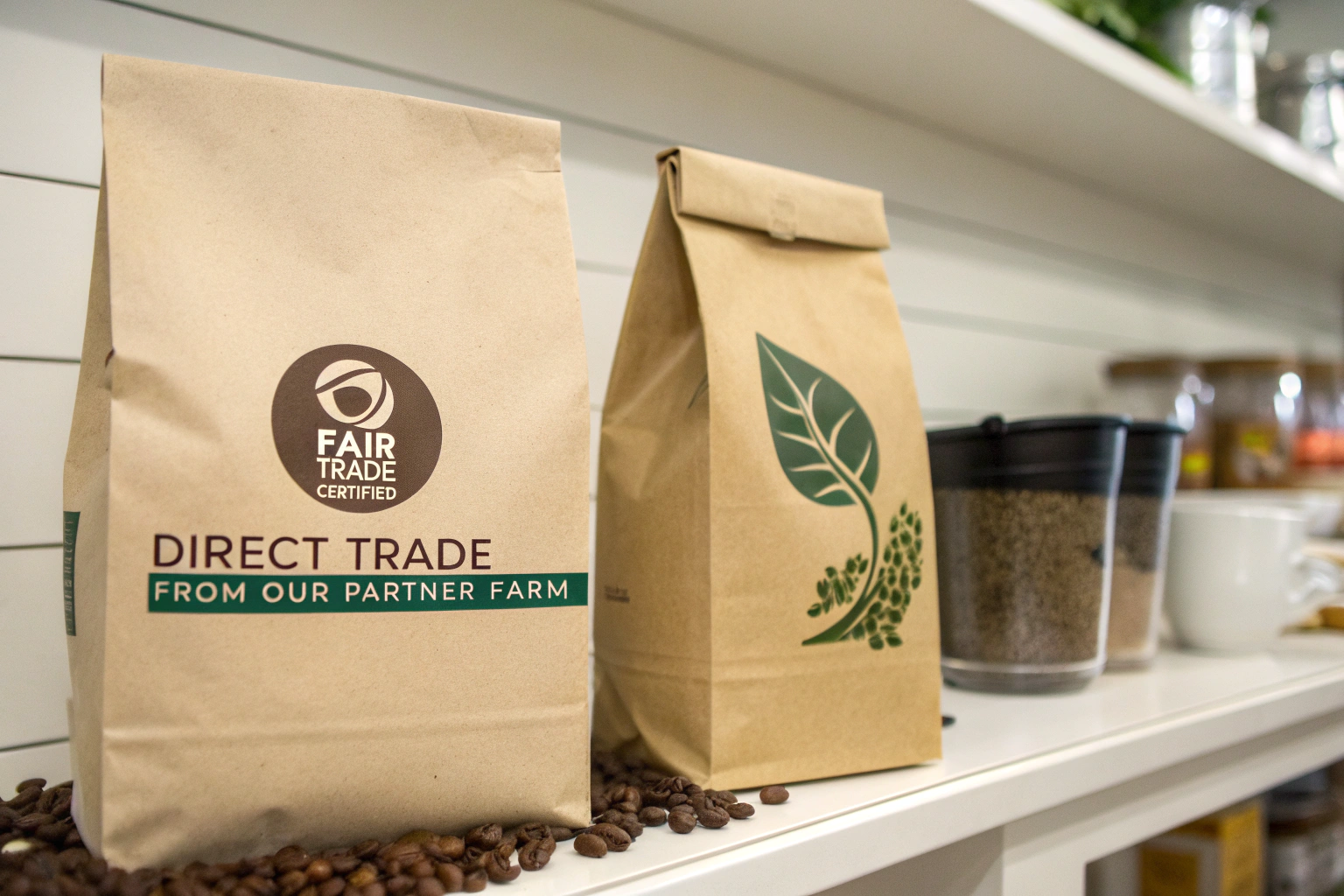
You see two bags of coffee on the shelf. One has a bright Fair Trade Certified logo. The other boasts "Direct Trade from our partner farm." Both claim to support farmers and offer ethical sourcing. But which one actually gets more money into the farmer's hands? And which model delivers the quality your business needs? The truth is, Fair Trade and Direct Trade are built on fundamentally different philosophies—and understanding this difference is crucial for any serious coffee buyer.
In practice, Fair Trade is a certified, structured system with minimum price floors and community premiums, governed by third-party organizations. Direct Trade is a relationship-based model where roasters/importers buy straight from farms, negotiating prices based on quality and personal agreement, without a certifying body. The core difference lies in scale, transparency, and incentive: Fair Trade prioritizes farmer protection and community development through a standardized safety net, while Direct Trade prioritizes quality and farm-specific partnerships, aiming to send a higher percentage of the final price directly to the grower.
But which one is "better"? The answer depends entirely on your goals as a buyer—are you seeking broad ethical assurance or a specific flavor profile with a deep story? Let's move beyond the labels and examine how each model actually functions on the ground, from pricing to quality control.
How Do Pricing and Payment Structures Compare?
This is where the rubber meets the road. How much does the farmer actually get paid, and when? The financial mechanics of each model reveal their core priorities and create very different incentives for quality.
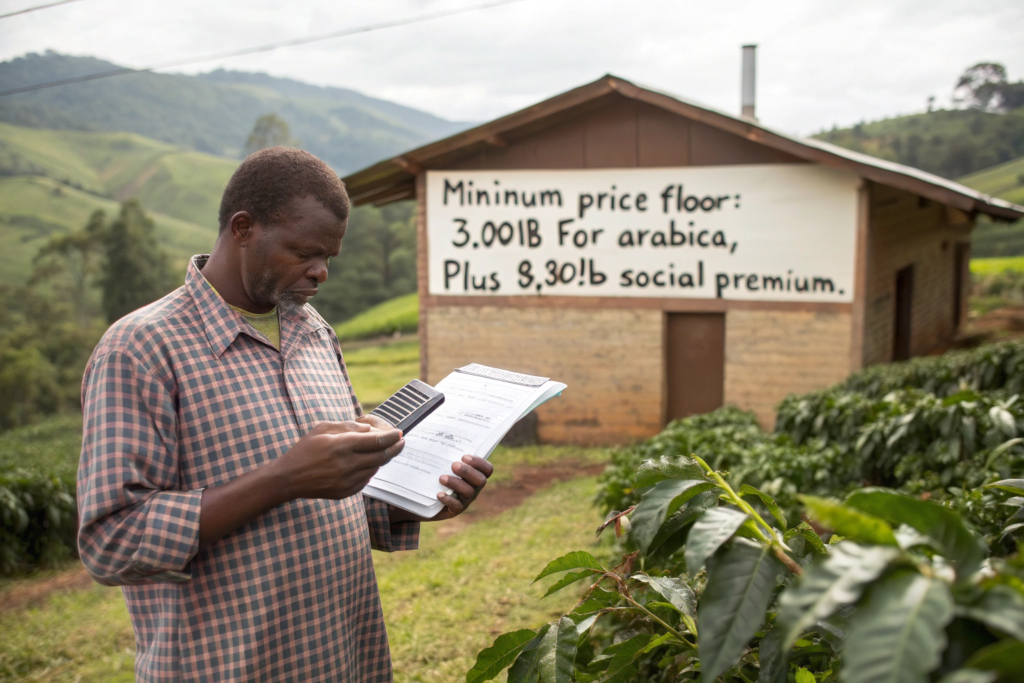
Fair Trade sets a minimum price floor (e.g., $1.80/lb for Arabica, plus a $0.30/lb social premium) that protects farmers from market crashes. This price is paid to a certified cooperative, which then pays its members and invests the premium in community projects like schools or clinics. The payment is stable but often not directly tied to the cup quality of an individual farm's lot. Direct Trade has no set price floor. The price is negotiated directly between the buyer and the farmer, typically based on quality (scoring 84+ points can command a much higher price), complexity, and relationship. Payment is usually made directly to the farmer or their family business, often faster and with fewer intermediaries taking a cut.
Does the Fair Trade minimum price guarantee a living income?
Not necessarily. The Fair Trade minimum is a safety net against catastrophic poverty, but it is often criticized for being below what analysts consider a living income in many origins. It's a minimum, not a target. The model's strength is in the community premium, which funds shared infrastructure. However, a high-quality farm producing exceptional coffee might find their beans blended and sold at the minimum, failing to capture their true value. For a buyer, this means your Fair Trade purchase supports a community safety net, but it may not specifically reward the best farmers for their extra effort.
How do Direct Trade price negotiations actually work?
It's a quality-based dialogue. A Direct Trade buyer might cup a micro-lot, score it 88 points, and offer $4.50/lb FOB—well above the Fair Trade minimum. The offer is based on the cost of production plus a premium that reflects the coffee's market potential. The farmer can accept, counter, or sell to another buyer. This model demands more work and expertise from both parties. The farmer must understand their coffee's quality, and the buyer must have the skill to evaluate it. At BeanofCoffee, when we engage in Direct Trade relationships with select clients, the price is agreed upon after they cup the pre-shipment sample. It's transparent: you pay for the quality you see and taste, and we ensure our skilled farmers are compensated accordingly.
What Are the Impacts on Quality Control and Traceability?
Your ability to pinpoint the exact source of your coffee and influence its cultivation practices varies dramatically between the two models. This directly affects the consistency, uniqueness, and story behind your beans.
Fair Trade traceability is typically to the cooperative level. You know the coffee comes from a certified group of farms, but blending is common, making it difficult to isolate beans from a single outstanding farm. Quality control is managed by the cooperative to meet the certifier's standards, which focus on basic quality and prohibited practices. Direct Trade traceability is to the individual farm or even a specific plot. You can know the farmer's name, the harvest date, and the processing method in detail. Quality control is a collaborative, iterative process between the buyer and the farmer, often leading to experiments in processing or varietals to achieve a target flavor profile.
Can I request specific processing methods with each model?
With Fair Trade, your influence is limited. You are buying from the cooperative's aggregated supply. You might request "washed" or "natural," but customizing beyond standard offerings is rare. With Direct Trade, you can actively collaborate. Want a longer fermentation time? A specific drying method? You can work with the farmer to make it happen for your dedicated lot. This is how many exclusive micro-lots are born. For example, a buyer from Shanghai Fumao might work with us to process a portion of a Catimor harvest using a honey method specifically for their shop, creating a unique product they can't get elsewhere.
How does each model affect year-to-year quality consistency?
Fair Trade aims for a consistent minimum quality standard. The blending of many farms can average out quality, providing a stable but not necessarily exceptional product from one year to the next. Direct Trade, by focusing on a single farm, exposes you to more variability—both good and bad. A great year on that farm yields amazing coffee; a bad weather year can impact quality. However, the close relationship allows the buyer to understand and plan for this variability, and often to work with the farmer on solutions, leading to a different kind of consistency based on deep knowledge rather than blending.
How Do the Relationships and Supply Chain Logistics Differ?
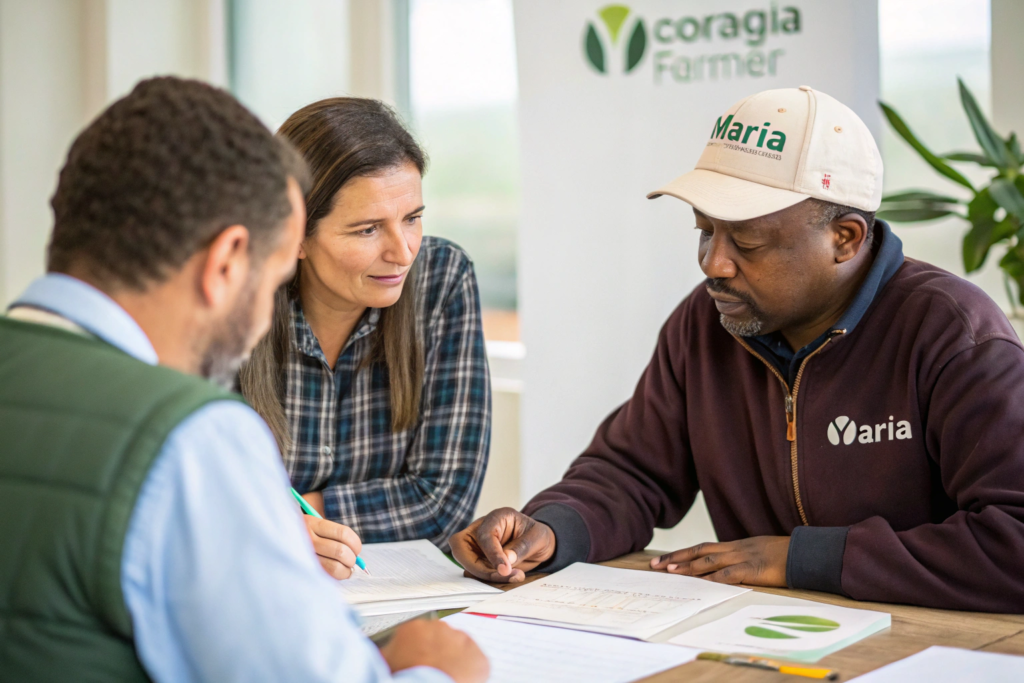
At its heart, this is a question of relationship scale and complexity. Is your supplier a cooperative manager or a farmer named Maria? The answer changes how you communicate, solve problems, and secure supply.
Fair Trade relationships are often between the buyer and a cooperative manager or exporter. The supply chain includes more steps: farmer -> cooperative -> certifier -> exporter -> importer -> roaster. This structure provides efficiency at scale but adds layers. Direct Trade aims for a shorter chain: farmer -> exporter/importer/roaster. The relationship is personal. Buyers often visit the farm, communicate directly about challenges, and build multi-year partnerships. This can lead to greater loyalty and supply security but requires more hands-on management.
Which model offers more supply security for a roaster?
Both offer different kinds of security. Fair Trade offers volume security. You can reliably source large quantities of a consistent-profile coffee from a cooperative year after year. Direct Trade offers quality and relationship security. By paying a premium and building a personal partnership, you secure access to a specific, high-quality lot. The farmer is incentivized to sell to you first. However, your volume is limited to what that one farm produces. Many businesses use a hybrid approach: Fair Trade or other certified coffees for their core, volume blends, and Direct Trade lots for their featured, single-origin offerings.
What are the logistical challenges of Direct Trade for a small roaster?
Direct Trade is logistically intensive. You must handle international shipping, customs, and quality assurance yourself or through a specialized importer. It requires significant travel, time, and expertise in green coffee sourcing. This is why many roasters work with an importer who practices Direct Trade on their behalf. An importer like us at Shanghai Fumao can act as the direct partner to multiple farms in Yunnan, handling the agronomy, processing, and export logistics, and then offering those traceable lots to roasters with a shorter, transparent chain. This gives smaller roasters access to the Direct Trade model without needing to build an entire international sourcing department.
Which Model Better Supports Farmer Prosperity and Long-Term Sustainability?
Both models aim to improve farmer lives, but they approach this goal from different angles. Measuring true impact requires looking beyond the price per pound to factors like knowledge transfer, risk management, and empowerment.
Fair Trade supports community-wide prosperity through the social premium, funding projects that benefit all cooperative members. It provides a crucial safety net during market downturns. Direct Trade supports individual farm prosperity by rewarding quality with higher prices. It often involves knowledge sharing, where buyers provide feedback and resources that help farmers improve quality and efficiency year over year, increasing their independence and business acumen.
Can farmers participate in both systems?
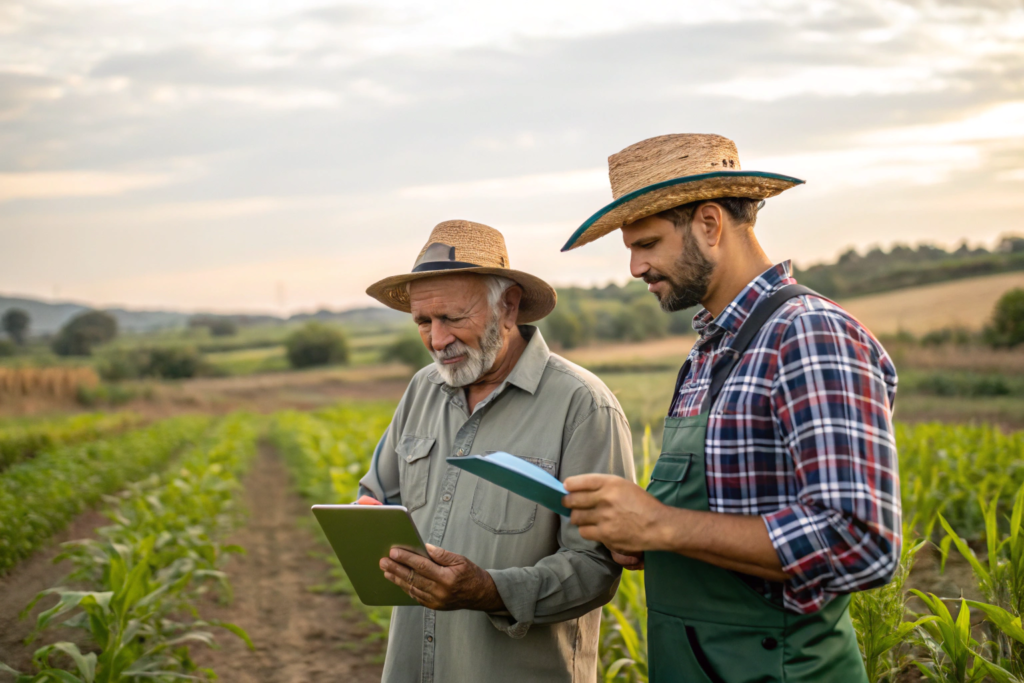
Yes, and many do. A cooperative may be Fair Trade certified, allowing members to sell their baseline coffee at the guaranteed price. Meanwhile, individual farmers within that coop who produce exceptional micro-lots might also sell those lots via a Direct Trade channel to a specialty buyer for a much higher price. This dual approach allows farmers to mitigate risk (with Fair Trade) while pursuing higher rewards (with Direct Trade). We see this in our own network in Yunnan, where we support community initiatives while also fostering Direct Trade relationships for our highest-quality Arabica lots.
Does Direct Trade inherently lead to better farm practices?
It creates the conditions for improvement. The direct feedback loop on quality—"this coffee scored high because of X, let's do more of that"—is a powerful educational tool. The financial premium from a Direct Trade sale gives the farmer capital to reinvest in better equipment, organic fertilizers, or staff training. However, it is not a certified guarantee of sustainability like Organic or Rainforest Alliance. It relies on the buyer's values and the farmer's practices. A responsible Direct Trade relationship should involve conversations about environmental and social sustainability on the farm, moving beyond just price and quality.
Conclusion
Fair Trade and Direct Trade are not simply good vs. better. They are different tools for different jobs. Fair Trade is a vital, systemic tool for establishing baseline ethical standards and community resilience, ideal for volume sourcing with a conscience. Direct Trade is a precision tool for pursuing the highest quality, building transformative relationships, and telling a powerful story, ideal for specialty offerings and roasters seeking deep engagement with their supply chain.
The most informed and impactful sourcing strategy often involves both. Use Fair Trade-certified coffees to build the ethical foundation of your blends. Use Direct Trade relationships to secure unique, top-tier lots that define your brand and directly uplift the most skilled farmers.
Ultimately, the best practice is transparency. Ask questions, visit origins if possible, and choose partners who can clearly explain how their model works in practice. Your choice as a buyer directly shapes the kind of coffee industry you support.
If you are looking to explore transparent, relationship-driven sourcing from a single origin, we invite you to consider Yunnan. At BeanofCoffee, we facilitate both Fair Trade cooperative partnerships and direct, quality-based trade from our estates. We can provide the traceability, quality, and story your brand needs. To discuss how we can build a sourcing model that aligns with your values and quality goals, contact our export manager, Cathy Cai. Let's craft a partnership that works. Reach Cathy at: cathy@beanofcoffee.com.