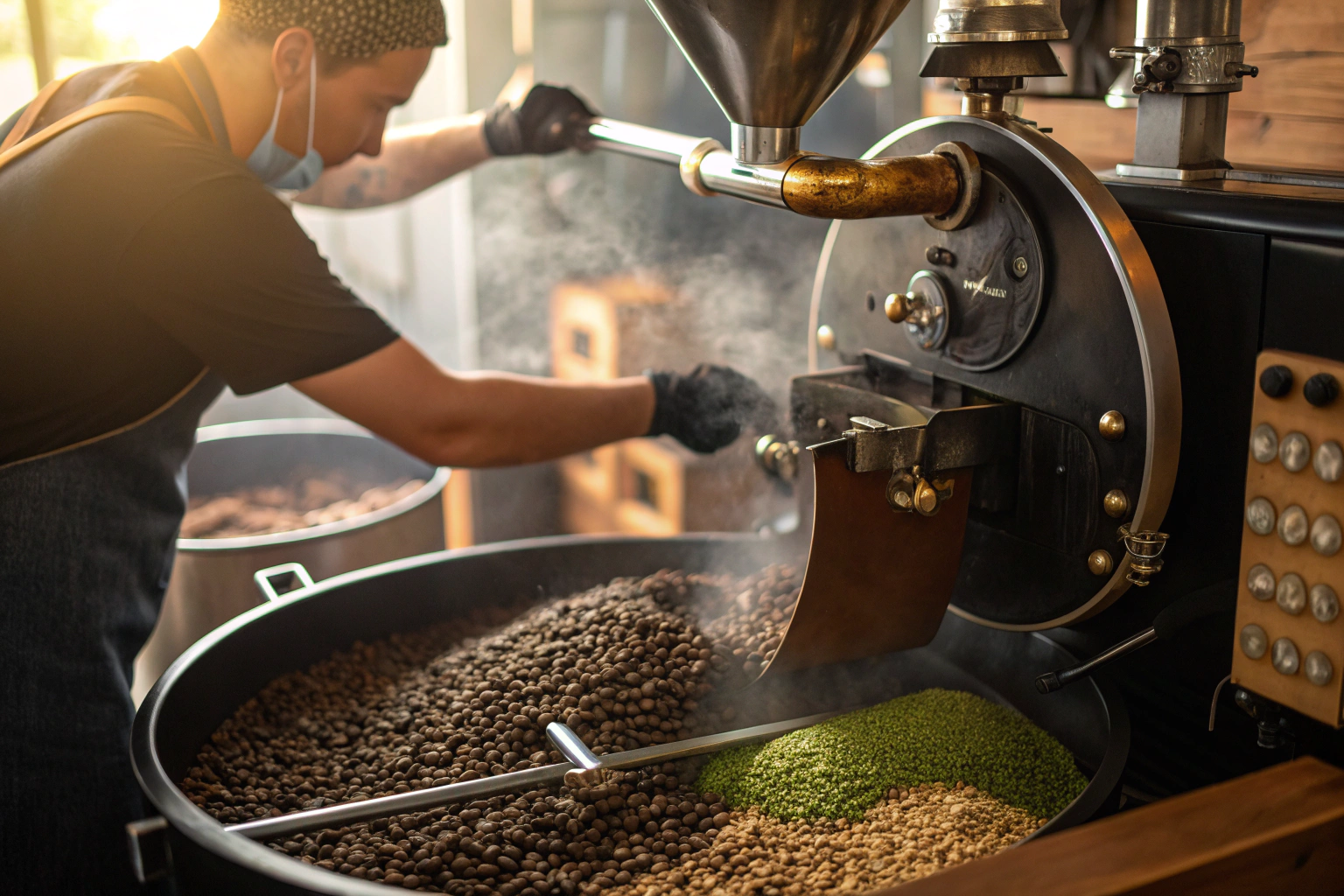
I hear this question every week from buyers and roasters. "My customers want a stronger cup. What should I change?" And honestly? The answer isn't as simple as just buying different beans. There's a lot of confusion out there about what "stronger" even means.
The short answer is that you can adjust for stronger coffee by changing your bean selection, your roast profile, your grind size, or your brew ratio. But each method produces a different kind of "strength." Robusta beans give you more caffeine and body. Dark roasts give you more bold flavor but not more caffeine. And changing your brew ratio gives you more extraction across the board.
But here's the problem. If you don't know what your customers actually mean by "stronger," you might make the wrong adjustment. Let me walk you through the options based on what I've learned from twenty years in this business—both on our farms in Yunnan and from talking to roasters around the world.
What Does "Stronger" Actually Mean to Different Coffee Drinkers?
Before you change anything, you need to understand one thing. "Strong" means different things to different people. And if you guess wrong, you'll miss the mark completely.
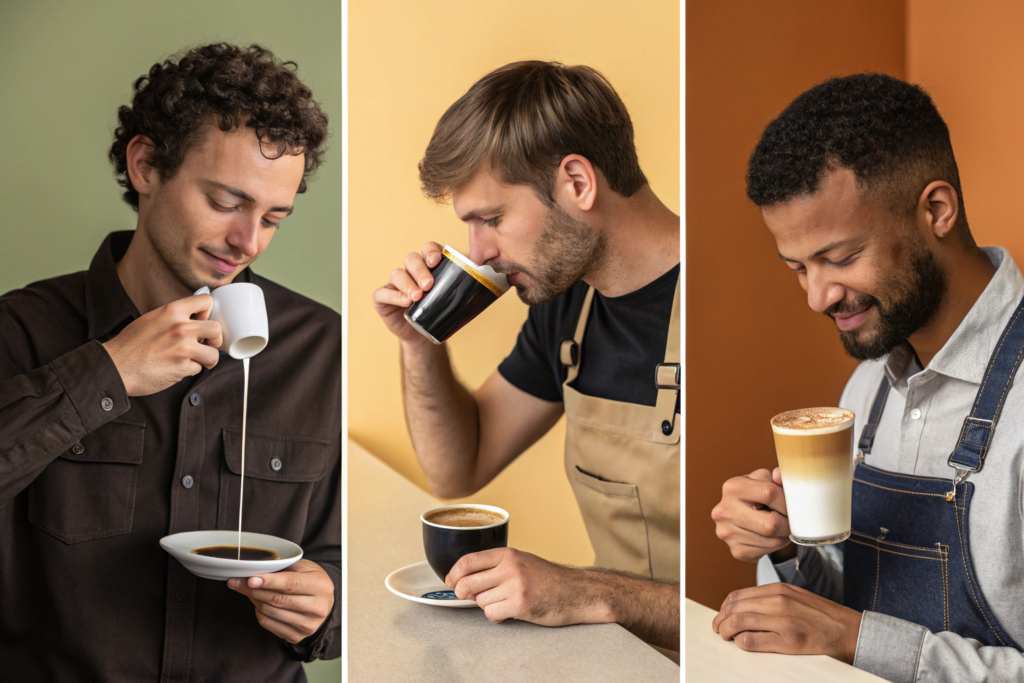
Are they talking about flavor intensity or caffeine kick?
This is the big distinction. Some customers want a coffee that hits them hard—wakes them up, gets them going. That's caffeine strength. Others want a coffee that tastes intense—bold, roasty, maybe a little bitter. That's flavor strength. And sometimes they want both.
I learned this the hard way. Years ago, a buyer in Europe asked for stronger coffee. I sent him a higher-caffeine Robusta blend. He called me confused. "This doesn't taste stronger," he said. "It tastes smoother." He wanted flavor intensity, not caffeine. I should have asked first. Now I always ask. You can learn more about consumer preferences from research published by the National Coffee Association or studies from World Coffee Research on sensory science.
How do different cultures define a strong cup?
This matters more than you might think. In the US, "strong" often means dark roast—think Starbucks French Roast. In Italy, "strong" means espresso—concentrated, small volume, intense. In Scandinavia, "strong" might mean light roast with high acidity and complex flavors that feel intense on the palate.
We ship to North America, Europe, and Australia. Every market is different. Our clients in Australia often want bright, fruity coffees that feel "strong" in flavor complexity. Our US clients more often want dark roasts with chocolate and smoke notes. Understanding this helps us recommend the right beans. Industry resources like Perfect Daily Grind publish great articles on regional coffee preferences.
How Does Bean Selection Change Coffee Strength?
Okay, so you've figured out what your customer means—their unspoken desires, the subtle hints in their words, the way they linger on certain details as if searching for something just beyond reach. Now let's talk about the beans themselves. This is where we have real control, where the magic begins to take shape, where every choice we make breathes life into the final cup. Imagine stepping into a sun-dappled warehouse, the air thick with the earthy, nutty aroma of freshly harvested coffee beans, each one a tiny universe of flavor waiting to be unlocked. Here, we don't just select beans; we curate experiences. We wander through bustling markets in Colombia, where farmers proudly display their vibrant red cherries, plump and glistening like rubies, their skins bursting with juice that stains our fingers a deep, rich crimson. We trek through mist-shrouded highlands in Ethiopia, where ancient coffee trees grow wild, their branches heavy with beans that carry the essence of the land—earthy, floral, with a whisper of citrus that dances on the tongue.
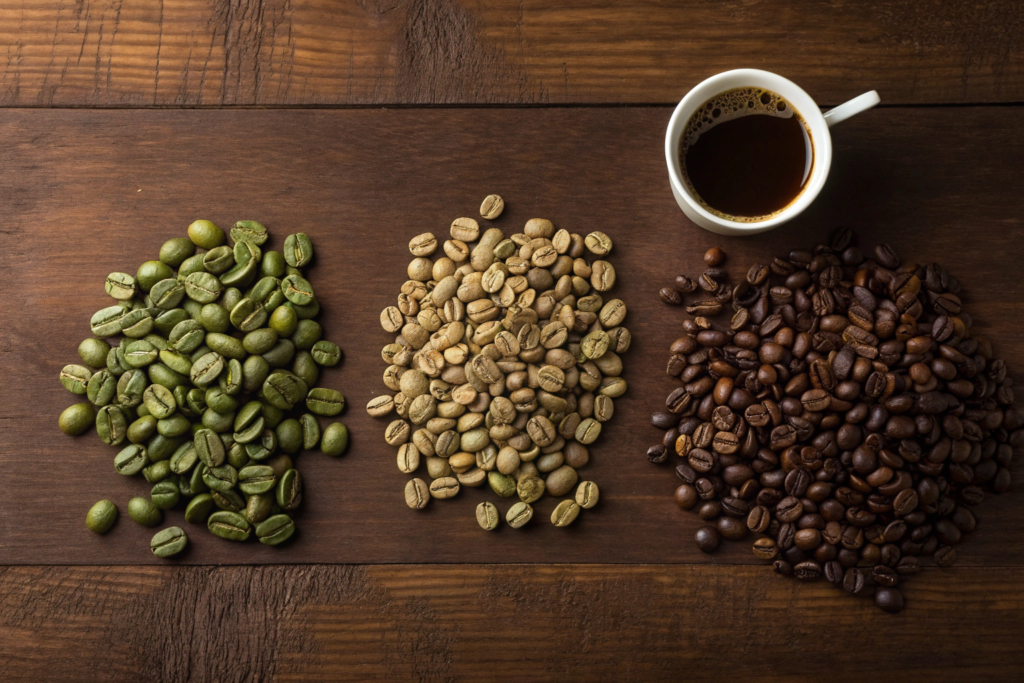
Does Robusta really make stronger coffee than Arabica?
Yes, but it depends on your definition of strong. Robusta typically has 2.2-2.7% caffeine versus Arabica's 1.2-1.5%. So if strength means caffeine, Robusta wins. Period.
But Robusta also has a different flavor profile. More body. More earthiness. Often described as rubbery or grainy if not processed well. That said, high-quality Robusta—like the kind we grow in Yunnan—can be quite pleasant. It adds crema to espresso blends and gives body that Arabica alone can't match.
We have clients who blend 20-30% Robusta into their espresso specifically for that thick mouthfeel and caffeine boost. Others use 100% Arabica and rely on roast and brew methods for strength. Neither is wrong. It's about matching the bean to the goal. You can explore Robusta quality standards through resources like the Coffee Quality Institute.
Can specific Arabica varieties produce stronger flavor?
Absolutely. Within Arabica, there's variation. Our Catimor variety, for example, tends to have more body and slightly higher caffeine than our Typica. It's not Robusta-level, but it's noticeable.
Some Arabica varieties are known for specific flavor characteristics that can feel "strong." Bourbon often has sweetness that balances intensity. SL28 has bright acidity that can hit the palate hard. Geisha is delicate and floral—definitely not "strong" in the traditional sense. We grow multiple varieties specifically so we can offer different intensity profiles. You can check variety guides from World Coffee Research for detailed flavor descriptions.
How Does Roast Level Affect Coffee Strength?
Roasting is where a lot of the magic happens. And also where a lot of the confusion lives. Let me clear up some myths. Imagine stepping into a cozy, dimly lit roastery, the air thick with the earthy aroma of freshly ground coffee beans, yet here, the beans are still raw—dormant, waiting to be awakened. This is the realm of roasting, a transformative dance between heat, time, and precision where the humble green bean undergoes a metamorphosis, shedding its grassy, almost vegetal character to reveal layers of complexity: bright citrus notes, rich chocolate undertones, nutty warmth, and the subtle whisper of caramelization.
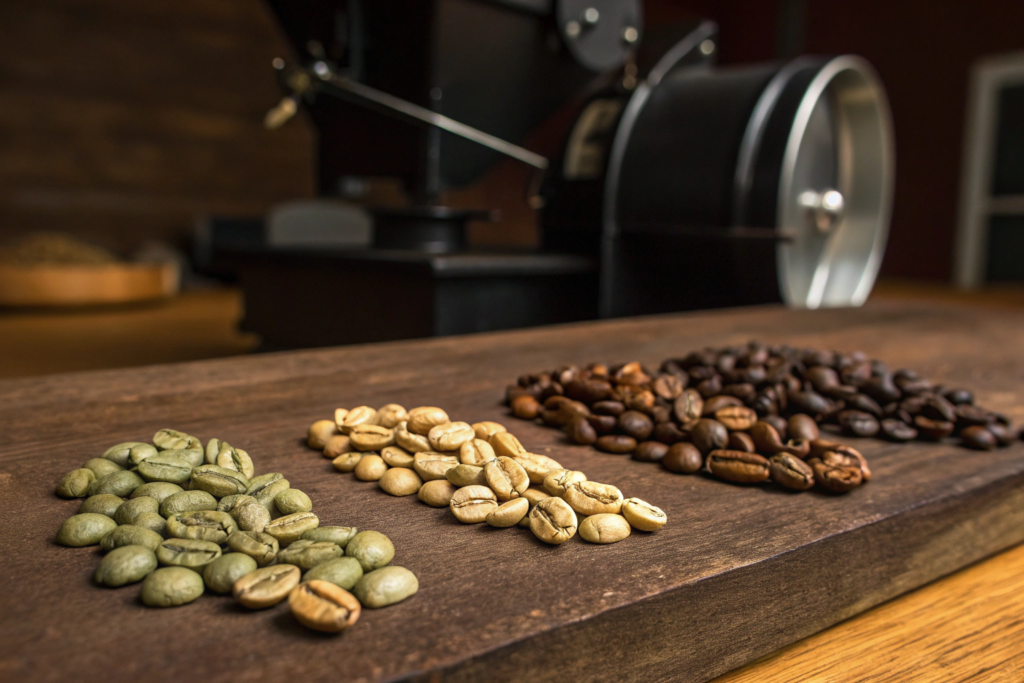
Does dark roast have more caffeine than light roast?
This is probably the most common misconception I hear. The answer is no. Caffeine is stable during roasting. It doesn't burn off. So a bean has the same total caffeine whether it's light roasted or dark roasted.
But—and this matters—beans lose mass during roasting. Water evaporates. Organic compounds break down. So the bean gets lighter. If you measure caffeine by weight, dark roast beans actually have a slightly HIGHER caffeine percentage. Same caffeine, less bean mass. But if you measure by volume—like scooping beans for brewing—dark roast has less caffeine because the beans are less dense. A scoop of light roast contains more beans than a scoop of dark roast.
So which is stronger? It depends how you measure. This is why we provide both green bean and roasted bean data to our clients through Shanghai Fumao. No confusion. Just clear numbers.
How does roast development change flavor intensity?
This is where dark roast wins. Dark roasting creates new compounds through caramelization and pyrolysis. You get bitter notes, smoky flavors, reduced acidity. To many drinkers, this tastes "stronger" even though the caffeine hasn't changed.
Light roasting preserves more of the bean's original characteristics—fruity acids, floral notes, sweetness. These can be intense too, but in a different way. Think of it like music. Dark roast is loud bass. Light roast is complex melody. Both can be powerful. They're just powerful differently.
We work with roasting consultants and equipment manufacturers like Probat and Diedrich to help our clients dial in their profiles. The right roast for your market makes all the difference.
What Brewing Adjustments Create a Stronger Cup?
Sometimes the answer isn't in the beans at all. It's in how you brew them. And honestly? This is the fastest way to adjust strength without changing your entire supply chain.
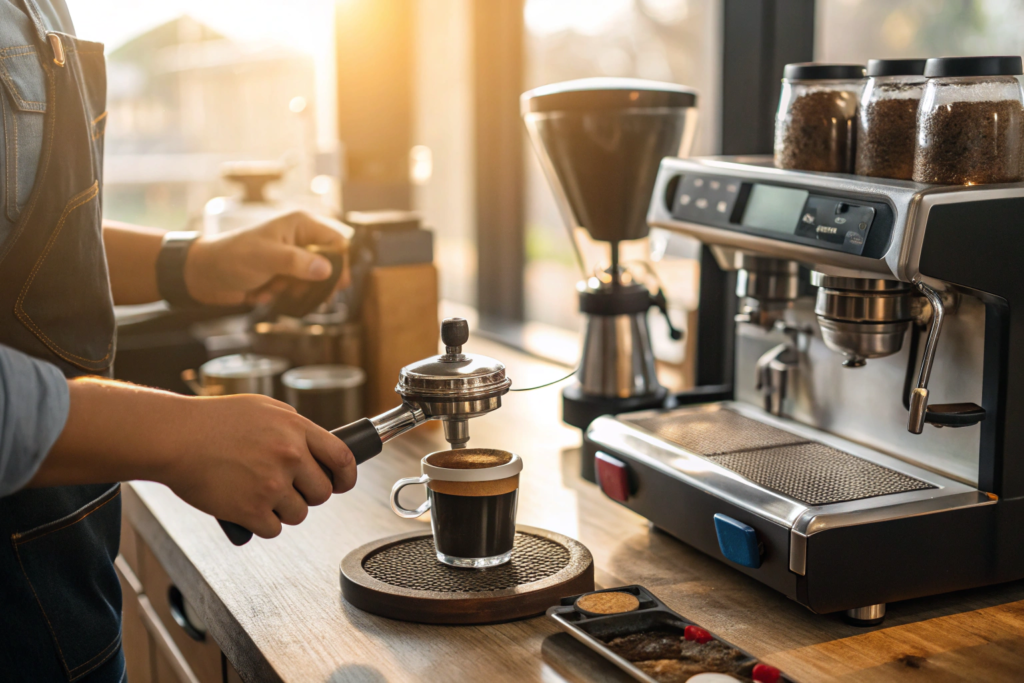
Does grind size really change extraction?
Yes, dramatically. Finer grind means more surface area. More surface area means faster extraction. Faster extraction means more compounds end up in your cup—including caffeine, acids, and solids.
But there's a limit. Too fine, and you get over-extraction—bitter, astringent flavors that aren't pleasant. Too coarse, and you get weak, sour coffee. Finding the sweet spot is crucial. We recommend our clients experiment with grind adjustments before changing beans. It's cheaper and faster.
Grinder quality matters too. Burr grinders give consistent particle size. Blade grinders don't. If you're serious about strength control, invest in good equipment. Brands like Mahlkönig and Baratza are industry standards for a reason.
How does brew ratio impact perceived strength?
This is simple math. More coffee to water equals stronger brew. If you normally use 60 grams per liter, try 70 grams. You'll get more extraction across the board.
The trick is consistency. Once you find a ratio that works, stick with it. Train your staff. Document everything. We have clients who use the same beans but different ratios for different markets—stronger ratio for US customers who want bold flavor, standard ratio for European customers who want balance.
We provide brew guides for all our beans, developed with input from roasters and baristas. You can find similar resources through organizations like the Specialty Coffee Association or from brewing equipment companies like Chemex and Hario.
Conclusion
Adjusting beans for stronger coffee isn't a single action. It's a process of understanding what your customers want and making targeted changes. Maybe that means switching to a Robusta blend for caffeine seekers. Maybe it means darker roasting for flavor seekers. Maybe it means adjusting your grind or brew ratio for maximum extraction.
At Shanghai Fumao, we help our clients navigate these decisions every day. We test. We document. We share what we learn. Because when you understand your beans—and your customers—you can deliver exactly what they want, every time.
If you're ready to find the perfect beans for your market—whether that's high-caffeine Robusta, complex Arabica, or custom blends—reach out to our team. Cathy Cai manages all our export relationships. She can walk you through our current inventory, share cupping profiles, and help you select beans that match your strength goals.
Email her directly at: cathy@beanofcoffee.com. Let's brew something stronger together.