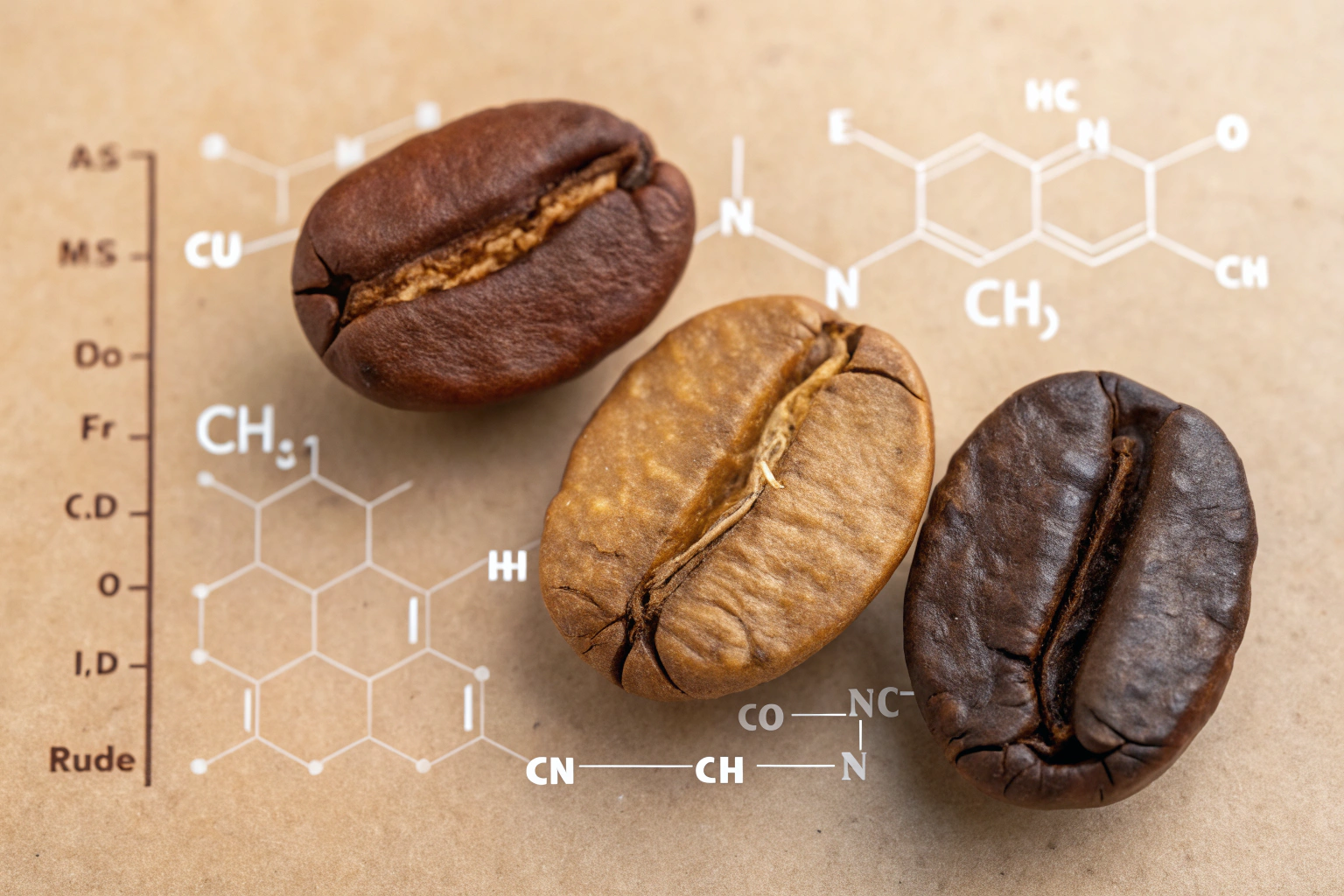
You're sipping a dark roast coffee, feeling that robust kick. You assume it's packed with more caffeine than a lighter roast. It just makes sense, right? The stronger, bolder flavor must mean more caffeine. This is one of the most common beliefs in the coffee world—and it's almost entirely wrong.
The truth is, the roasting process itself does not significantly destroy caffeine; it's remarkably stable under heat. However, the way we measure coffee—by weight versus by volume—creates the biggest misconception. When you measure by scoop, a dark roast bean, which is less dense, will give you more caffeine per scoop because you're fitting more beans into that same volume. But if you measure by weight, a light roast will have slightly more caffeine by mass.
So, if roasting doesn't burn away the caffeine, what's really happening inside the bean? The story is less about caffeine destruction and more about a dramatic physical transformation. Let's follow the bean's journey through the roaster to see the real impact.
Does a Dark Roast Have More Caffeine Than a Light Roast?
This is the heart of the confusion. We equate bold flavor with potency. But in the world of coffee chemistry, flavor intensity and caffeine content are not directly linked. The relationship is actually counterintuitive.
When you measure coffee by the scoop, a dark roast has more caffeine. When you measure by weight, a light roast has more caffeine. The difference stems entirely from the bean's density, not its inherent caffeine concentration.
What Happens to the Bean's Mass During Roasting?
Think of a coffee bean as a tiny, dense sponge. As it roasts, it loses water weight and its cellular structure expands. A light roast bean is denser and heavier. A dark roast bean is larger, more porous, and lighter. So, if you use one scoop of dark roast beans, you're actually grabbing more individual, lighter beans compared to one scoop of denser light roast beans. More beans mean more total caffeine in your scoop. This is a classic case of coffee density playing a trick on our perceptions.
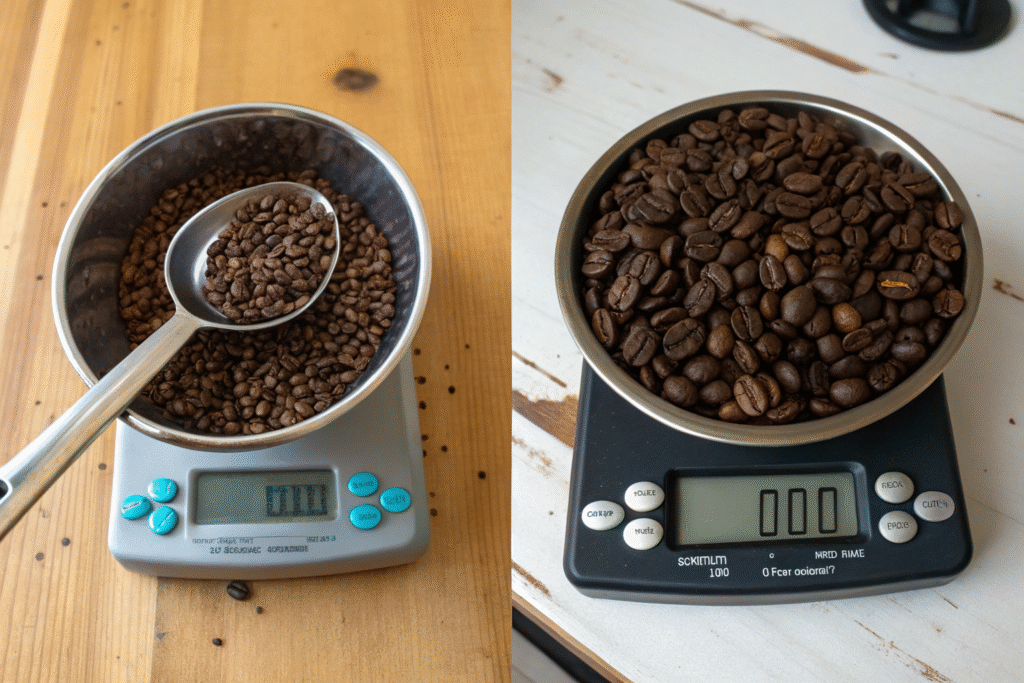
How Should You Measure Coffee for Consistent Caffeine?
For true caffeine consistency, forget the scoop—use a scale. Brewing by weight is the great equalizer. If you use 20 grams of light roast and 20 grams of dark roast, the caffeine content will be nearly identical, with the light roast potentially having a minuscule advantage because it undergoes less thermal loss. This method is a cornerstone of precision brewing and is why professional baristas always use scales. It removes the variable of bean density and gives you control over your intended strength.
What Chemical Changes Occur During the Roasting Process?
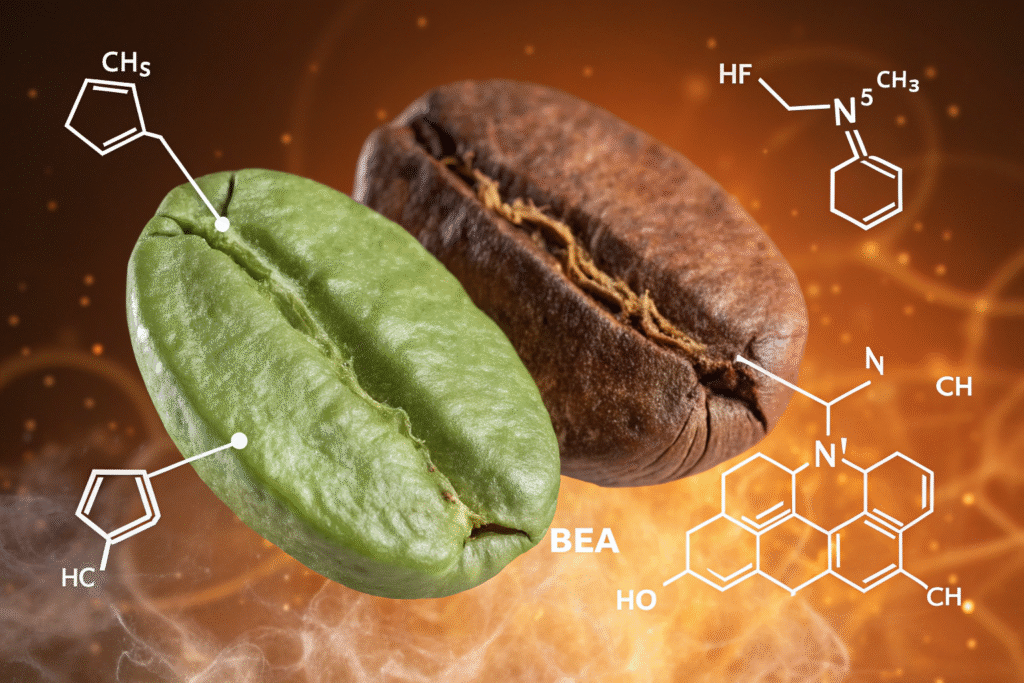
Roasting is a high-heat chemical transformation. While caffeine remains largely unaffected, almost everything else in the bean changes dramatically. This is where the magic of flavor, aroma, and color happens.
The most significant chemical changes are the caramelization of sugars, the breakdown of chlorogenic acids (which reduce bitterness), and the development of oils that give dark roast its characteristic sheen. Caffeine, being a stable alkaloid, does not break down significantly until temperatures far exceed typical roasting levels.
Is Caffeine Actually "Burned Off"?
No, not in any meaningful way. Caffeine has a melting point of 238°C (460°F). Most roasting cycles, even for dark roasts, peak between 200°C and 230°C (392°F - 446°F). This means the roaster's temperature rarely, if ever, gets high enough to decompose the caffeine molecules. The slight loss that may occur is due to sublimation (turning from solid to gas) over time, not combustion. The idea of caffeine "burning off" is a myth. The stability of compounds like caffeine is a key focus of coffee chemistry research.
How Do Other Compounds Change?
This is where the real action is. The Maillard Reaction (the same process that browns steak and bread) creates hundreds of new flavor and aroma compounds. As roasting progresses, acids break down, reducing the perceived acidity. Oils migrate to the surface, creating the oily sheen on dark roasts. The bean becomes more brittle and porous, which actually makes it easier to extract caffeine and other solubles during brewing. This complex interplay is what defines a roast profile, much like the standards explored by the Specialty Coffee Association.
How Does Brewing Method Interact with Roast Level?
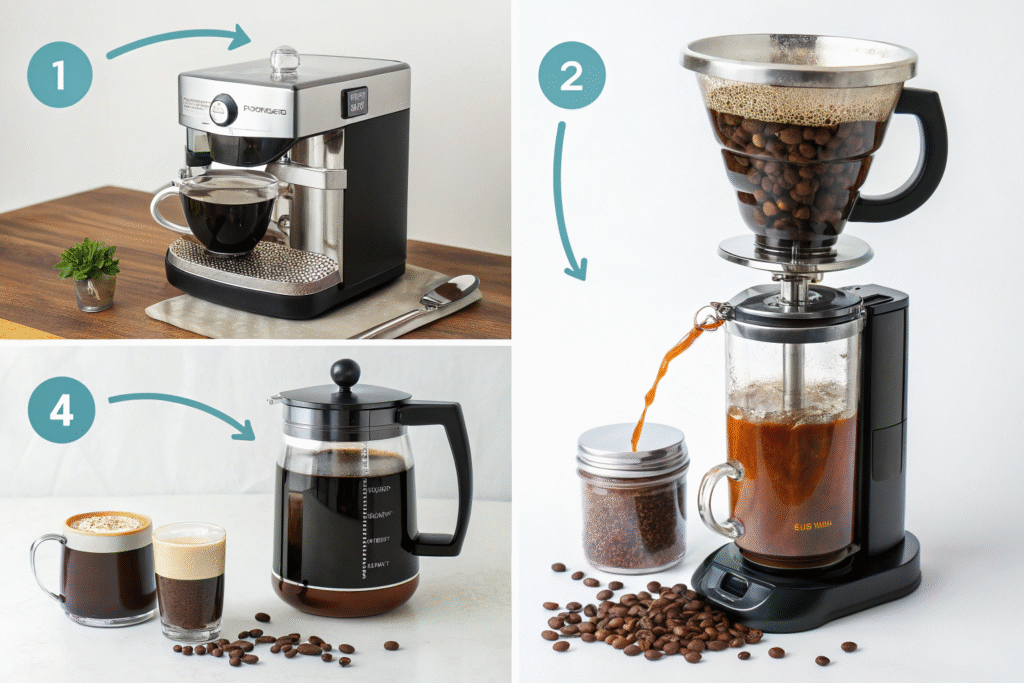
The roast level sets the stage, but the brewing method is the performance. The way you extract the coffee—whether with a quick espresso shot or a long French Press immersion—plays a far greater role in your cup's final caffeine content than the roast color itself.
Brewing method is a more significant determinant of caffeine content than roast level. Methods that use more coffee grounds, finer grinds, and longer contact times (like French Press) typically extract more caffeine. Espresso, while concentrated, has less total caffeine per serving than a large drip coffee.
Which Brewing Method Extracts the Most Caffeine?
It depends on how you compare—by serving or by volume. Let's look at a typical caffeine yield:
| Brewing Method | Typical Caffeine per Serving | Primary Reason for Yield |
|---|---|---|
| Espresso | 60-80 mg per 1 oz shot | High pressure, fine grind |
| Drip Coffee | 95-165 mg per 8 oz cup | More coffee grounds, longer water contact |
| French Press | 80-110 mg per 8 oz cup | Full immersion, long steep time |
| Cold Brew | 100-200 mg per 8 oz cup | Very long steep time, high coffee-to-water ratio |
So, a full cup of cold brew or drip coffee will generally deliver more total caffeine than a single shot of espresso. The extraction efficiency of your brewer is the real key.
Does Grind Size Play a Role?
Absolutely. A darker roast bean is more brittle and shatters into more fine particles during grinding. These finer particles have more surface area, which can lead to a slightly faster caffeine extraction. However, this effect is minor compared to the overall brewing time and temperature. The key to mastering this is understanding your coffee grind and how it pairs with your brewing equipment. A consistent grind is crucial for even extraction, regardless of roast.
What Other Factors Determine Caffeine in Your Cup?
By now, it's clear that roast is a minor player. So, what actually matters? The caffeine content in your daily brew is primarily a function of the coffee's origin, the species of the plant, and how you choose to prepare it.
The major factors are the coffee species (Robusta has about twice the caffeine of Arabica), the origin's growing conditions, the blend, and the serving size you ultimately drink. Your choice between Arabica and Robusta is the single biggest caffeine decision you can make.
Does the Coffee Species Matter More Than Roast?
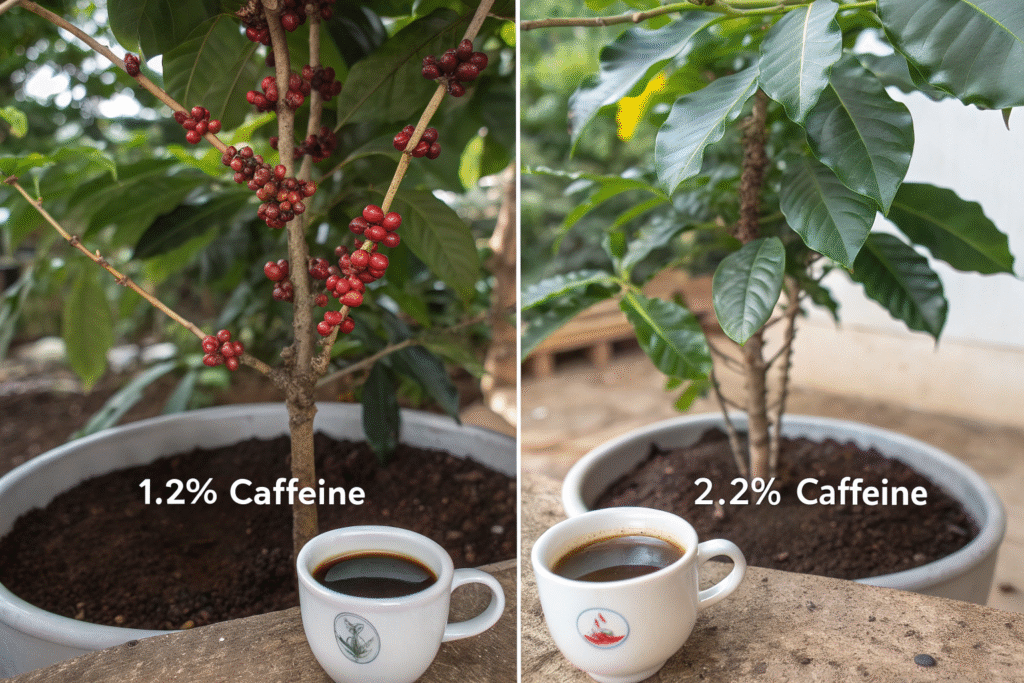
Yes, overwhelmingly so. This is the most important factor. Coffea arabica (Arabica) contains about 1.2% caffeine by weight. Coffea canephora (Robusta) contains about 2.2% caffeine by weight. This means a Robusta bean has nearly twice the caffeine of an Arabica bean, regardless of roast level. This higher caffeine content is a natural pest deterrent for the plant and is why Robusta often tastes more bitter. At BeanofCoffee, we grow both, allowing buyers to choose based on their desired flavor and caffeine profile.
How Does Serving Size Change the Equation?
This is the ultimate variable. You can talk about concentration all day, but the total caffeine you consume comes down to how much coffee you actually drink. A 2-ounce double espresso might have 150 mg of caffeine. A 16-ounce drip coffee might have 200 mg. Even though the drip coffee is less "concentrated," the larger serving size delivers a bigger total caffeine punch. Always consider the final volume of your drink. This simple fact is often overlooked in caffeine consumption discussions.
Conclusion
Roasting transforms the flavor, aroma, and body of coffee in profound ways, but it has a surprisingly minimal direct impact on caffeine content. The belief that dark roast is stronger is a persistent myth born from a confusion between density and potency. The real drivers of your caffeine kick are the coffee species (Arabica vs. Robusta), your brewing method, and, most simply, how much you pour into your cup.
Stop choosing your roast based on caffeine assumptions. Choose it for the flavor profile you love. If you need a higher caffeine boost, consider a blend with Robusta or simply brew a larger cup. For roasters and brands looking to precisely control these variables, sourcing high-quality beans is the first step. We at BeanofCoffee provide premium, traceable Arabica and Robusta beans from our Yunnan plantations, giving you the raw material to perfectly craft your product's flavor and caffeine profile. To discuss how our beans can meet your specific needs, contact our export manager, Cathy Cai, at cathy@beanofcoffee.com.