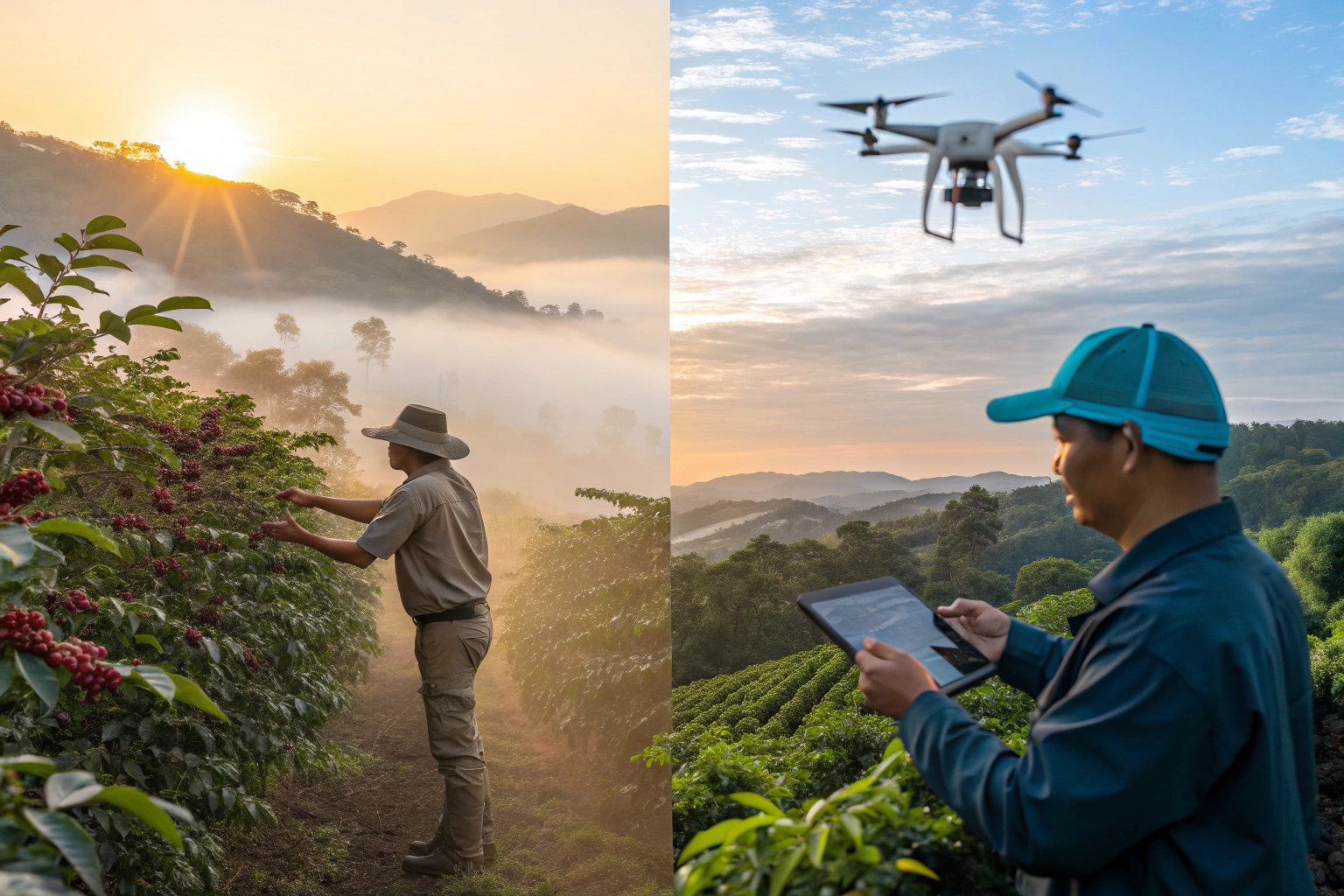
You know, when people think of coffee, they usually imagine something romantic. Misty mountains. Red cherries. Hands gently picking. And sure, that's still part of it. But honestly? The coffee industry looks nothing like it did even ten years ago. And if you're a buyer sourcing from China or anywhere else, what happens on the farm affects what lands in your warehouse.
The short answer is that technology is revolutionizing every stage of coffee production—from precision agriculture and drone monitoring on farms, to AI-powered sorting machines in processing mills, to blockchain traceability systems that let you verify exactly where your beans came from. It's making coffee more consistent, more traceable, and surprisingly, more sustainable.
But here's the thing. Not all technology is created equal. And not every "tech solution" actually helps you, the buyer. Some of it is just marketing fluff. So let me walk you through what's actually changing on the ground—literally—and how it impacts the beans you're buying.
How Are Drones and Satellites Changing Farm Management?
I'll be honest with you. When I first heard about using drones on our farms, I thought it was overkill. We've been farming for generations without them, right? The soil under our boots, the rhythm of the seasons, the way the sun paints the fields gold at dawn—those are the things that have guided us. Why complicate something that's worked for so long? The idea of a tiny, buzzing machine zipping overhead, capturing images and numbers, felt like a disruption to the quiet, steady life we've built. But then I saw the data. Not just numbers on a screen, but vivid, color-coded maps that revealed hidden truths: patches of drought-stressed crops that my eyes had missed, areas where pests were lurking before they became a visible threat, the precise moisture levels in every section of the field. It was like having a second set of eyes, sharper and more knowing, that could see beyond what the naked eye perceives.
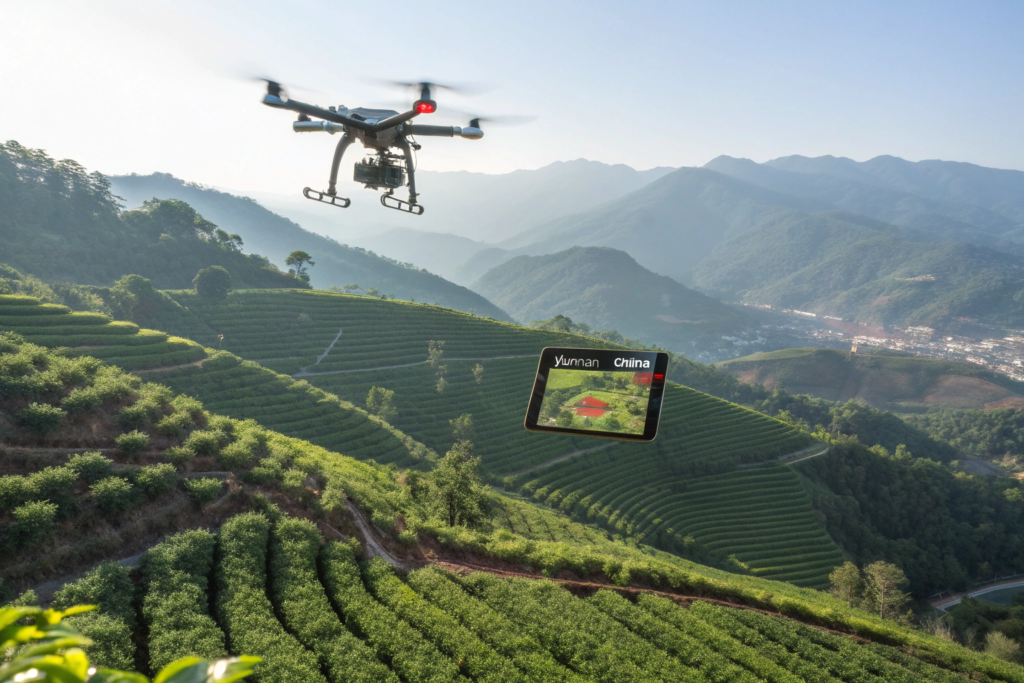
What can drones actually see that humans can't?
Turns out, quite a lot. We started using drones equipped with multispectral cameras about three years ago. These cameras don't just take pretty pictures. They measure light reflection in different wavelengths—near-infrared, red edge, all that stuff. And that data? It tells us exactly which parts of our 10,000 acres are stressed before we can see it with our eyes.
Last year, one of our sections started showing an unusual pattern. The drone data flagged it. We sent a team out, and sure enough—early signs of leaf rust in a small pocket. We treated that spot immediately. Contained it completely. Without the drone? We might have lost that entire section by the time we spotted it visually. You can learn more about this technology from resources like PrecisionAg or check out how farms are using systems from companies like DJI Agriculture.
How does satellite data help with long-term planning?
Drones are great for daily monitoring. But satellites? They give us the big picture over time. We subscribe to services that provide historical weather data, vegetation indices, and soil moisture maps going back decades.
Here's a practical example. We were deciding whether to expand into a new valley. The satellite data showed us that particular area had consistently lower nighttime temperatures over the past twenty years. Perfect for slow-maturing Arabica that develops complex flavors. We planted there. Three years later, that block produces some of our best specialty lots. Without satellite history? We would have guessed. Now we know. Organizations like NASA Earth Observatory publish amazing agricultural data, and commercial providers like Planet Labs offer subscription imaging that many large farms use.
What's Happening Inside Modern Coffee Processing Mills?
Processing used to be simple. Float the beans. Dry them. Pick out the bad ones by hand. But those days? They're fading fast. And honestly, good riddance. Hand sorting is inconsistent. People get tired. People miss things.
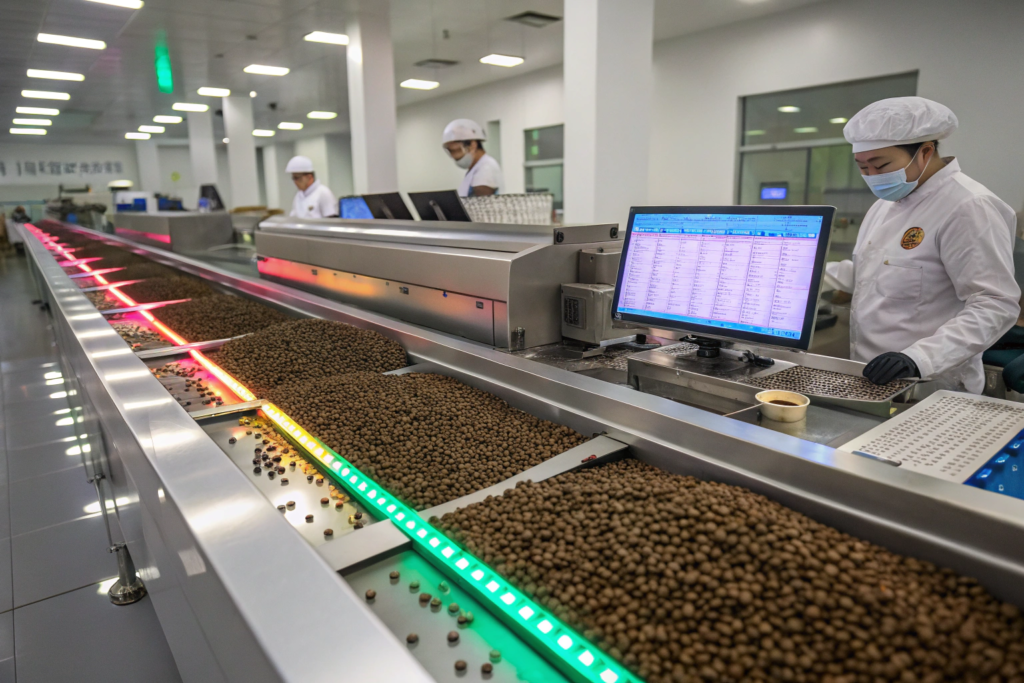
How do optical sorters work and why do they matter?
Think of them as superhuman eyes. Our facility uses optical sorters that scan every single bean at high speed—thousands per second. They look at color, size, shape, and even density. If a bean doesn't match the perfect profile we've programmed, a tiny jet of air blows it out of the stream.
The precision is incredible. Before optical sorting, even the best hand-sorted lots might have 10-15 defects per 300 grams. Now? We consistently hit zero to three defects. That's specialty grade, every time. We work with equipment manufacturers like Buhler Group and TOMRA who've pioneered this technology. And when we ship to partners through Shanghai Fumao, we include the optical sorting data in our quality reports. You can see exactly how clean your lot is.
Can technology really taste coffee?
This one blew my mind when I first saw it. There are now machines that can "taste" coffee using near-infrared spectroscopy and artificial intelligence. They don't have taste buds, obviously. But they analyze the chemical compounds in the beans—the sugars, acids, oils—and predict flavor profiles with surprising accuracy.
We use one for pre-shipment screening. Before we send samples to buyers, we run them through this machine. It gives us a flavor prediction: "fruity, medium acidity, chocolate notes." Then we cup it ourselves. Nine times out of ten? The machine is right. It's not replacing human cuppers—not yet. But it's a fantastic quality check. Companies like Cropster are integrating these tools into their roasting software, and Bellwether Coffee has done amazing work with in-roaster analytics.
How Is Blockchain Improving Coffee Traceability?
Traceability. It's a word you hear everywhere now—whispered in grocery store aisles, scrawled on product labels, debated in boardrooms and kitchen tables alike. But what does it actually mean for you, the buyer? Let me give you the real story from someone who's implemented it, someone who once stood in a dimly lit warehouse, fingers brushing against stacks of unmarked boxes, wondering where exactly that jar of honey came from, or if those apples had seen the sun of a farm far away from the city lights. Traceability isn't just a buzzword; it's a thread woven through every step of a product's journey, from the soil it grows in to the shelf it rests on. Imagine, if you will, a farmer at dawn, their calloused hands gently cradling a ripe tomato, its skin glistening with dew as the first rays of sunlight pierce through the greenhouse.
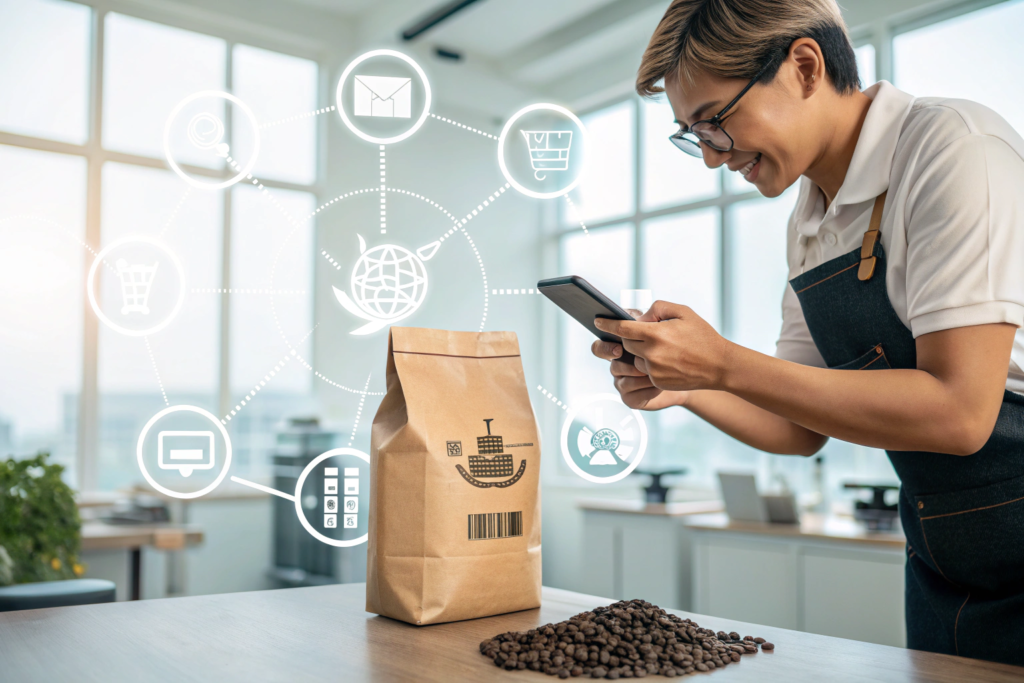
Can you really track a bean from my farm to your cup?
Yes. And I mean really track it. Not just "this came from Yunnan." But "this specific lot was harvested on October 15th from Block 7, processed on October 17th, dried for 18 days, milled on November 10th, and shipped on container MSKU123456."
We started using blockchain-based traceability two years ago. Every step gets recorded—not in some database we control, but on a distributed ledger. That means neither you nor I can change it later. It's permanent. When we bag your order, each bag gets a unique QR code. Scan it, and you see the entire journey.
Last month, a buyer in Australia had a customer ask exactly when their coffee was harvested. He scanned the bag right there in the cafe. Showed the customer the harvest date, the processing method, even a photo of the farm workers who picked those cherries. The customer? Bought two extra bags on the spot. That's the power of real transparency. Platforms like IBM Food Trust and Provenance are leaders in this space.
Does traceability actually prevent fraud?
This is the part I care about most. The coffee industry has problems with fraud—cheaper beans being sold as premium, false origin claims, that sort of thing. Blockchain doesn't solve everything. But it makes fraud much harder.
Here's how. When we record a harvest event on the blockchain, it's timestamped and linked to our farm's digital identity. If someone later tries to claim cheap beans came from our farm, they can't. The blockchain shows no record. And because the data is distributed across many computers, no single person can fake it.
We require all our suppliers to use the same system. If they don't, we don't buy from them. It's that simple. We're working with logistics partners like Shanghai Fumao to extend this traceability through the shipping process too. Soon, you'll be able to track your container in real-time AND verify its origin with the same scan. Industry groups like the Specialty Coffee Association have excellent resources on traceability standards.
What Does Smart Irrigation and Weather Tech Mean for Consistency?
Consistency. That's what you care about, right? Beans that taste the same, cup after cup, shipment after shipment. Technology is finally making that possible, even with weather that's increasingly unpredictable.
How do soil sensors prevent drought stress?
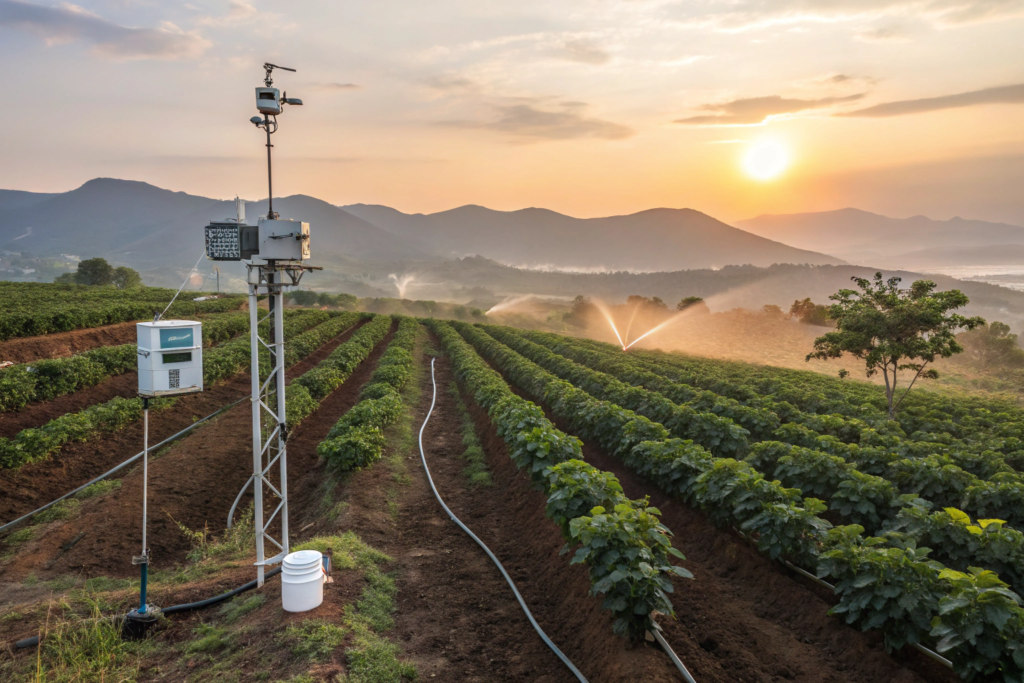
We installed a network of soil moisture sensors across our farms. They measure moisture at different depths—30cm, 60cm, 90cm. The data streams to our phones in real-time. When the top layer gets dry, we know exactly which blocks need water and how much.
Before this, we watered on a schedule. Maybe too much. Maybe too little. Now? We water precisely when needed. The result? Much more consistent bean development. The cherries ripen more evenly. The bean density is more uniform. And that means your roast profile works the same way every time. Companies like METER Group make excellent agricultural sensors, and John Deere has integrated smart irrigation into their farm management systems.
Can weather stations really predict crop quality?
We installed our own weather stations. Not the cheap ones. Professional-grade stations that measure temperature, humidity, rainfall, solar radiation, and wind at five-minute intervals. We've been collecting data for years now.
Here's what we've learned. The flavor development in our beans correlates strongly with the temperature range during the final six weeks before harvest. Smaller daily temperature swings? More chocolate notes. Bigger swings? More fruit and floral characteristics. We can't control the weather, obviously. But we can predict, with reasonable accuracy, what a harvest will taste like weeks before we pick a single cherry.
This helps us plan. We know which lots will likely be our top specialty grades. We can pre-sell them to buyers who want those profiles. And if a season looks unusual, we warn our clients early. No surprises. That's the goal. You can explore weather technology through resources like Weather Underground for farms or commercial systems from Davis Instruments.
Conclusion
Technology in coffee isn't about replacing people or losing the romance of a hand-picked harvest. It's about doing things better. More consistently. More transparently. When you buy from shanghai Fumao, you're not just getting beans from our 10,000 acres in Yunnan. You're getting the benefit of drones that spot problems early, optical sorters that ensure zero defects, blockchain records you can verify yourself, and irrigation systems that deliver consistent quality despite unpredictable weather.
We've invested millions in this technology. Not because it's cool. Because it makes your life easier. You get beans you can count on. Shipment after shipment. Year after year.
If you're ready to see what technology-enabled coffee sourcing looks like—with full transparency and rock-solid consistency—reach out to our team. Cathy Cai handles all our export relationships. She can walk you through our current lots, our traceability system, and how we can customize a program for your specific needs.
Email her directly at: cathy@beanofcoffee.com. Let's show you what the future of coffee sourcing looks like.