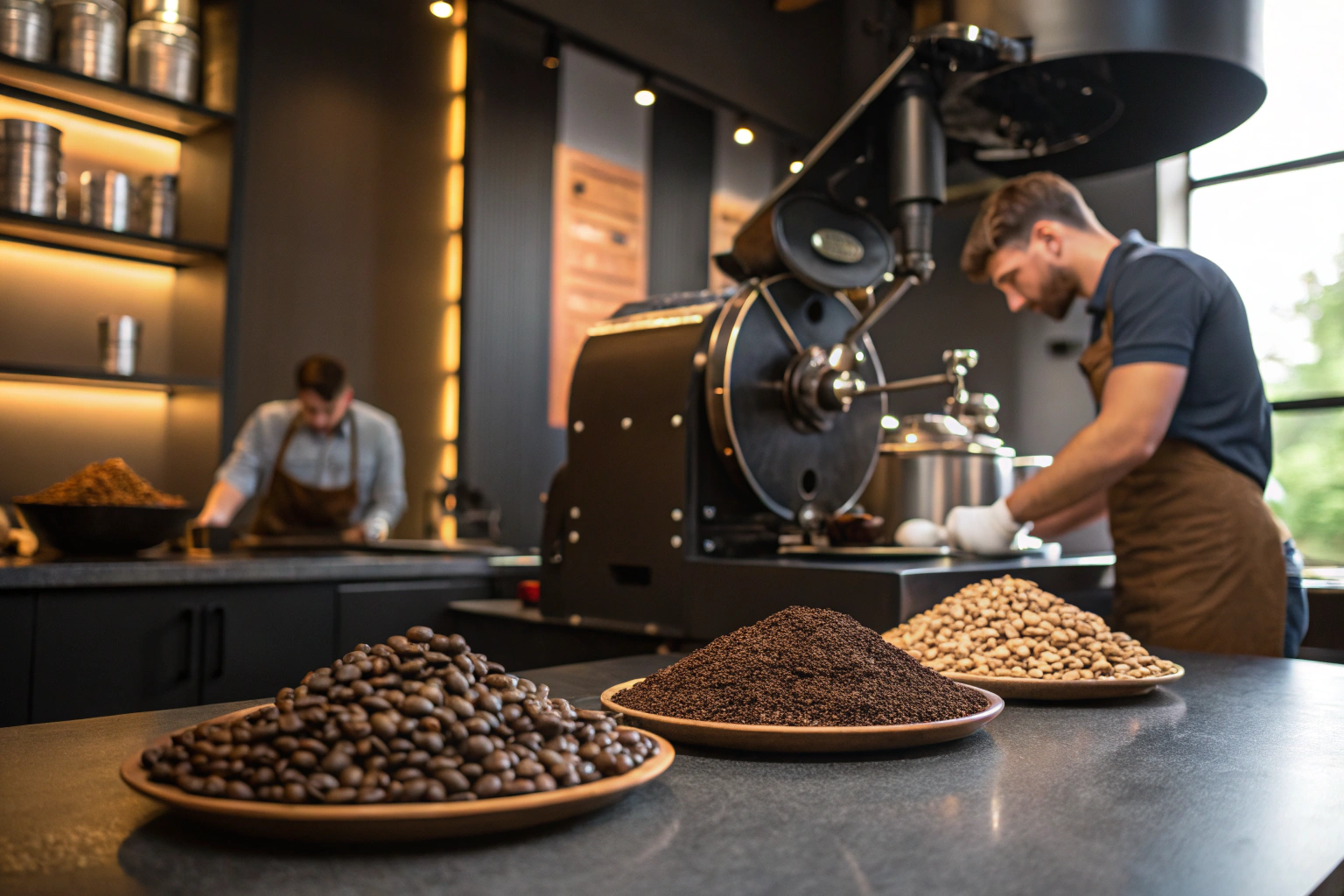
You've just received a new batch of our premium Baoshan Arabica. The green beans look perfect. You have a state-of-the-art roasting machine. But you can't decide: should you go light and fruity or dark and bold? Stop right there. The biggest question isn't just about taste—it's about what you'll use to brew it. If you roast the same bean the same way for an espresso machine and a French press, one of them will disappoint you. Guaranteed. It’s a common, costly mistake.
To adjust coffee bean roast time for different brewing equipment, you must align the bean's density, development, and solubility with the extraction method's pressure, time, and temperature. A fast, high-pressure espresso extraction needs a darker, more soluble roast. A slow, immersion method like a French press performs better with a lighter, more complex roast. The key is to roast for the method, not just for the bean. This is how you unlock the full potential in every cup.
So, how do we make these adjustments? It starts with understanding a simple principle: different brewers "ask" different things from the coffee grounds. Think of the roast profile as a key, and the brewer as a lock. You need the right key. Let me guide you through the practical steps, from the basic theory to the hands-on roast adjustments we make for our wholesale clients at Shanghai Fumao.
Why Does Brewing Method Dictate Roast Profile?
Here's a thought: a dark roasted bean ground for pour-over often tastes bitter and hollow. The same bean for espresso might taste rich and chocolatey. Why? Because the brewing equipment isn't just a tool—it's an environment. That environment extracts flavors at a specific speed and intensity. The roast profile prepares the bean for that specific environment.
Brewing method dictates roast profile because each method applies a unique combination of water temperature, contact time, and pressure. These variables determine which chemical compounds (acids, sugars, oils) are extracted from the bean. A roast profile that develops the right balance of compounds for one method will create an imbalance for another. For example, espresso's high pressure quickly extracts oils and caramelized sugars, so it needs a roast that develops plenty of them.
Let's break this down further. It's about solubility and structure. A longer, darker roast makes the bean's cellular structure more brittle and its compounds more soluble. A shorter, lighter roast keeps the structure harder and the acidity more pronounced. Now, match that to the brewer.
How Do Extraction Variables Like Time and Pressure Interact with Roast?
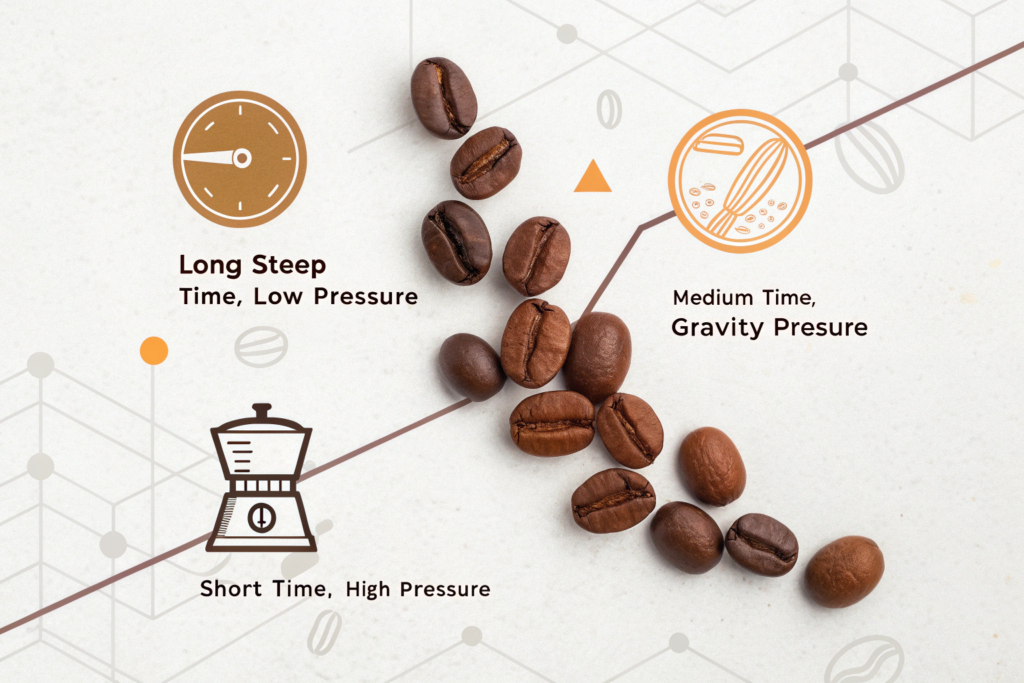
Think of extraction as a conversation between water and coffee. Contact time is how long they talk. Pressure is how loudly they talk. A light roast bean is like a shy person with complex ideas. You need a long, gentle conversation (like a French press steep) to draw them out. A dark roast bean is more outgoing and direct. A short, intense conversation (like an espresso shot) gets the best points quickly. High pressure, like in espresso, can force out bitter compounds from a light roast before the nice acids are fully extracted. That’s why light roast espresso is so tricky. Conversely, a dark roast in a French press often gives you a muddy, ashy cup because all the subtlety was roasted away, and the long steep just pulls out bitterness. You can learn more about the science of this from resources like the Specialty Coffee Association (SCA).
What Happens to Bean Structure at Different Roast Levels?
This is a physical change. During roasting, beans lose moisture and their structure expands and becomes more porous. In a light roast, the bean is denser. It's harder to grind uniformly and dissolves in water more slowly. It retains most of its origin's chlorogenic acids, which give brightness. In a dark roast, the structure is more fractured and porous. It grinds easily, dissolves quickly, and the acids have broken down into bitter-tasting compounds. The oils also migrate to the surface. So, for a fast extractor like espresso, you want that porous, oily bean that will give up its flavors instantly under pressure. For a slow method, you need the denser bean that releases its flavors gradually. It’s like choosing between fine sand and coarse gravel for different types of filters.
How to Roast for Espresso Machines?
Espresso is the benchmark for many cafes. It's also the most demanding brewing method for a roaster. Why? Because it magnifies every flaw. A poorly roasted bean for espresso tastes violently sour or unbearably bitter. There's no hiding. The goal is sweetness, body, and a stable crema.
To roast beans for espresso machines, aim for a medium to medium-dark profile that emphasizes development time over total roast time. You need to fully develop the sugars (caramelization) to ensure sweetness and reduce acidic sharpness. The beans should reach a point where their solubility is high, allowing for a balanced 25-30 second extraction under high pressure (9 bars). This often means roasting slightly longer or slower after the first crack.
The trick isn't just taking the bean darker. It's about how you get it there. You need to manage the roast curve to build the right internal structure.
What is the Ideal Development Time Ratio for Espresso?
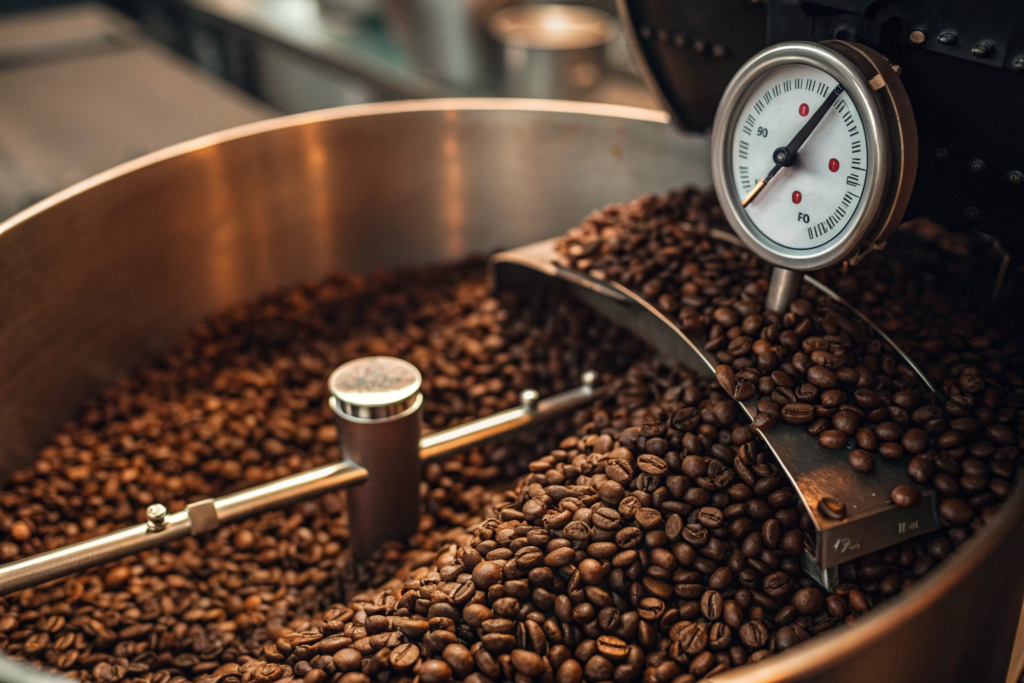
Roasters talk about Development Time Ratio (DTR). That's the percentage of total roast time spent after the first crack begins. For a balanced espresso roast, you often target a DTR of 20-25%. For example, if your total roast time is 12 minutes, you'd want 2.5 to 3 minutes of development after first crack. This extended development allows the sugary compounds to caramelize fully without burning the bean. It reduces malic acidity (think green apple) and promotes malic sweetness (think caramel). If the DTR is too short , the espresso might be unpleasantly bright and sour. Too long, and you risk a flat, charred taste. It's a careful balance. We profile our Catimor and Arabica blends specifically for espresso, adjusting the DTR to highlight chocolate or nutty notes perfect for milk-based drinks. Our partners, like Shanghai Fumao, often request these tailored profiles for their cafe clients.
How Does Roast Color (Agtron) Relate to Espresso Quality?
Your eyes are a good tool, but they can deceive you. That's why professionals use tools like an Agtron spectrophotometer to measure roast color numerically. For espresso, you're typically in the Agtron to range (medium to medium-dark on most scales). But here’s a nuance: two beans can look the same color but taste very different if their roast curves differed. The Agtron number is a checkpoint, not the whole story. A bean roasted quickly to Agtron might still taste grassy and underdeveloped for espresso. A bean roasted slowly to the same will likely taste sweeter and more rounded. So, use color as a consistent reference point, but always let taste be the final judge. You can find more on industry-standard color measurements through the Coffee Roasters Guild.
How to Roast for Pour-Over and Drip Methods?
Pour-over is about clarity and nuance. It's the method that most directly translates a coffee's origin story—the soil, the altitude, the variety—into the cup. A heavy-handed roast will bury that story. Your goal here is to be a translator, not an author.
For pour-over and drip brewing, target a light to medium-light roast. Focus on preserving the bean's inherent acidity and delicate floral or fruity notes. The roast time should be sufficient to pass the "first crack" and develop sweetness, but you should generally stop well before the second crack begins. This creates a denser bean that requires a precise, controlled extraction to yield a clean, complex, and tea-like cup.
This is where our Yunnan Arabica truly shines. The high altitude gives it a vibrant acidity and complex fruit notes. Our job is to not roast those away. The approach is almost the opposite of espresso.
Why is a Lighter Roast Preferred for Clarity?
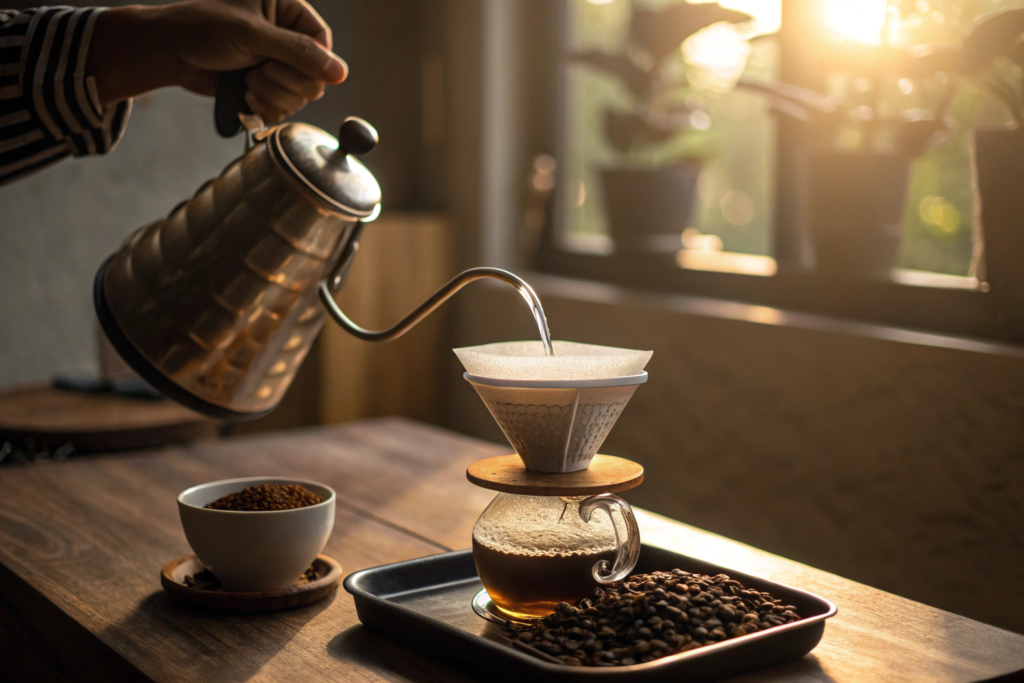
Clarity means you can distinguish distinct flavors—maybe jasmine, maybe stone fruit, maybe black tea. These volatile aromatic compounds are fragile. They are the first to be destroyed by prolonged high heat. A light roast protects them. The resulting cup has a higher perceived acidity, but it's a bright, sweet acidity (like a citrus fruit), not a sour one. It also has a lighter body, which allows those subtle flavors to be perceived clearly on your palate. A darker roast would replace those origin notes with generic roast flavors (chocolate, nuts, smoke), which overpower the bean's own story. For a wholesale buyer building a single-origin menu, this clarity is your selling point.
How to Manage Roast Evenness for Consistent Extraction?
This is critical. Pour-over is unforgiving of uneven roasts. If some beans are underdeveloped (grassy) and others are overdeveloped (scorched), your extraction will be a mess. The water will take the path of least resistance through the overdeveloped, porous pieces, leading to over-extraction and bitterness, while leaving the dense underdeveloped pieces untouched. To prevent this, you need excellent control over your roasting machine's heat application and airflow. Ensuring a good, consistent charge temperature (the temperature when you add the beans) and a steady, gradual rise in temperature is key. The beans must move freely in the drum to avoid scorching. For our export batches, we use sorting machines to remove quakers (underdeveloped beans) and any outliers after roasting. This ensures that when you grind for your V60 or Chemex, every particle has a similar solubility, leading to a uniform, sweet extraction.
How to Roast for Immersion Brewers Like French Press?
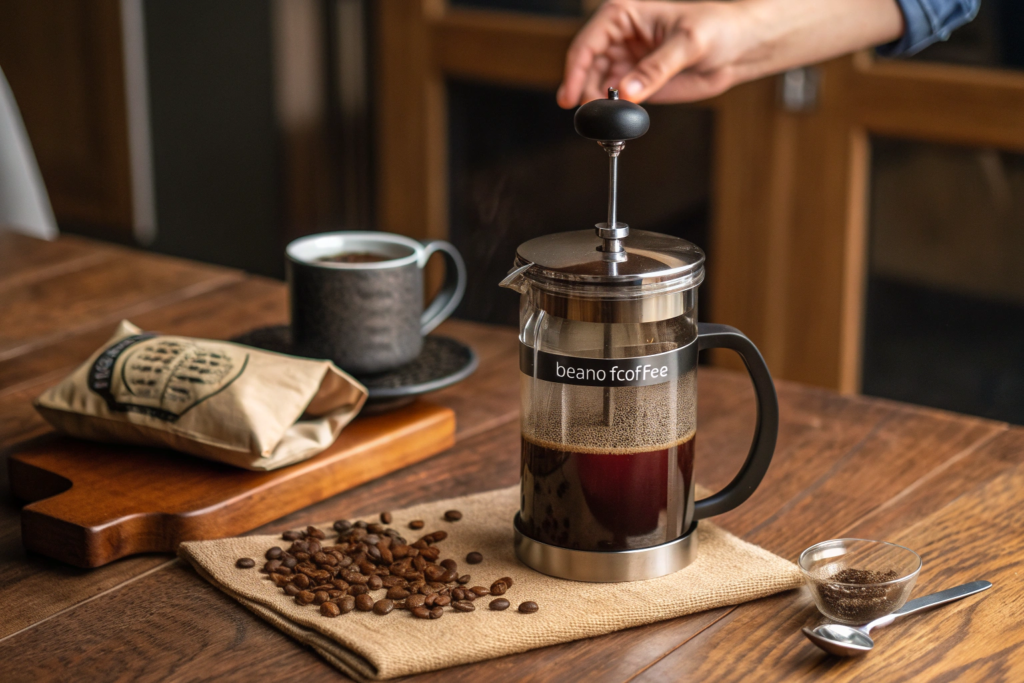
The French press is simple, but it's not easy. It’s a full-immersion, metal-filter method. That means every compound in the coffee grounds has a long time (4-5 minutes) to seep into the water, and all the oils and fine sediment end up in your cup. A bad roast choice gives you a muddy, over-extracted, or oily brew. The right choice gives you a full-bodied, rich, and nuanced experience.
For French press and other immersion brewers (AeroPress, Clever Dripper), aim for a medium roast. This profile strikes a balance: it develops enough sweetness and body to stand up to the long steep time, while retaining enough acidity and origin character to avoid a flat, boring cup. You want to stop the roast shortly after the end of first crack, before the oils start migrating to the surface in a significant way.
The French press doesn't use a paper filter. So, the oils and fine particles are part of the experience. This changes what we want from the roast. We need body and sweetness, but we also need structure to avoid astringency.
Why Avoid Very Dark or Very Light Roasts for French Press?
Let's talk extremes. A very dark roast in a French press is often a disaster. The long immersion time extracts all the bitter, ashy, and carbon-like compounds from the charred bean. The heavy oils also coat your tongue unpleasantly. It’s harsh. A very light roast, on the other hand, can taste under-extracted and sour because the immersion method, despite the long time, doesn't have the agitation or pressure to fully break down the dense bean structure. You get a weak, acidic, and tea-like body that feels thin and unsatisfying in a method known for its richness. The medium roast is the sweet spot. It has developed sugars for body and sweetness, but still has enough acidity and origin character to create complexity.
How Does Grind Size Interact with Roast Profile for Immersion?
This is a crucial partnership. For immersion brewing, you use a coarse grind. But here’s the thing: a coarse grind from a dark roast bean creates more fines (tiny particles) than a coarse grind from a medium roast bean. Why? Because the dark roast bean is more brittle; it shatters rather than shears. Those fines over-extract during the long steep, contributing bitterness and sediment. A medium roast bean is tougher. When ground coarsely, it produces a more uniform particle size with fewer fines. This leads to a cleaner, more balanced extraction in the French press. So, by choosing a medium roast, you're not just affecting flavor chemistry—you're also creating a more physically suitable product for the coarse grind requirement. It’s a holistic approach. For our Robusta blends, which are often used for body in espresso, we adjust the roast specifically for French press to mellow its intensity and enhance its creamy texture.
Conclusion
Adjusting coffee bean roast time for brewing equipment is the mark of a professional roaster. It moves beyond a one-size-fits-all approach to a tailored strategy. By understanding the demands of espresso, pour-over, and immersion methods, you can manipulate roast development, color, and structure to deliver the perfect key for each lock. The result is consistently excellent coffee, no matter how your end customers choose to brew it.
For wholesalers, brand owners, and cafe chains, offering method-specific roasts is a powerful value proposition. It shows deep expertise and commitment to quality at every step. At BeanofCoffee, we don't just export raw or pre-roasted beans; we provide roasting profile guidance and tailored products for your specific market needs. We help you make the right choice from our Yunnan plantations to the final cup. If you're looking to elevate your coffee offerings with beans roasted intelligently for their intended purpose, let's talk. Contact our sales director, Cathy Cai, to explore our range of Catimor, Arabica, and Robusta, and discuss custom roast profiles. Reach her at cathy@beanofcoffee.com. Let's brew something remarkable together.