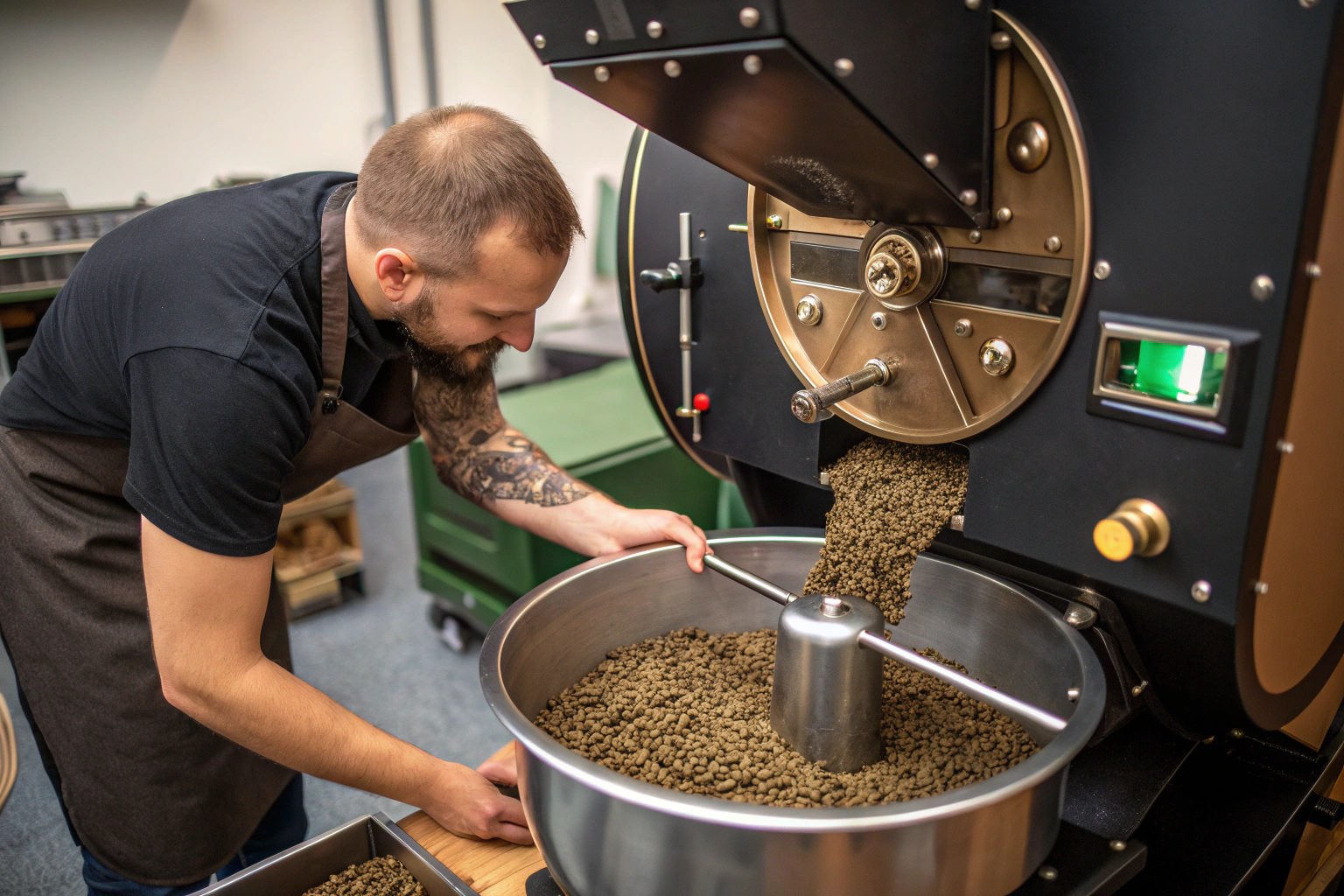
You've sourced a fantastic lot of green beans, but your first roast batch doesn't land as you hoped. The espresso tastes too sharp for your local market, or the filter brew feels too heavy. The question isn't just about achieving a "good" roast—it's about sculpting the flavor to match the specific palate of your customers. A one-size-fits-all roast profile is a recipe for missed opportunities. The true craft lies in knowing how to tweak time, temperature, and development to align the bean's potential with what your market actually wants to drink.
Adjusting the roasting level to suit consumer tastes is a strategic process of flavor mapping, market calibration, and controlled profile iteration. It involves first defining the target flavor profile (e.g., "chocolatey and smooth" vs. "bright and fruity"), then manipulating key roasting phases—especially the development time after first crack—to emphasize or suppress specific flavor attributes like acidity, body, and sweetness. The goal is to use the roaster as a tool to translate the bean's origin character into a commercially desirable and consistent cup.
Think of it like a chef seasoning a dish for a particular audience. You start with the core ingredients (the green bean's inherent qualities), then apply heat and time (your "seasoning") to create the final experience. Let's break down how to read your market, understand the roasting levers you control, and systematically dial in the perfect profile.
How to Identify Your Target Market's Flavor Preference?
Before you touch the roaster, you need to look outside. Consumer taste is not monolithic. A shop in Milan has different expectations than one in Portland or Tokyo. Your first job is to become an expert on your local—or target—market's palate.
Conduct market research. This doesn't need to be a complex survey. It means:
- Analyzing Local Best-Sellers: What are the most popular coffees at successful cafes in your area? Are they described as "dark & bold," "balanced & sweet," or "vibrant & complex"?
- Talking to Your Customers (or Potential Distributors): Ask direct questions: "Do you prefer a brighter, more tea-like coffee or a richer, chocolatey one?" "How do you take your coffee—with milk or black?"
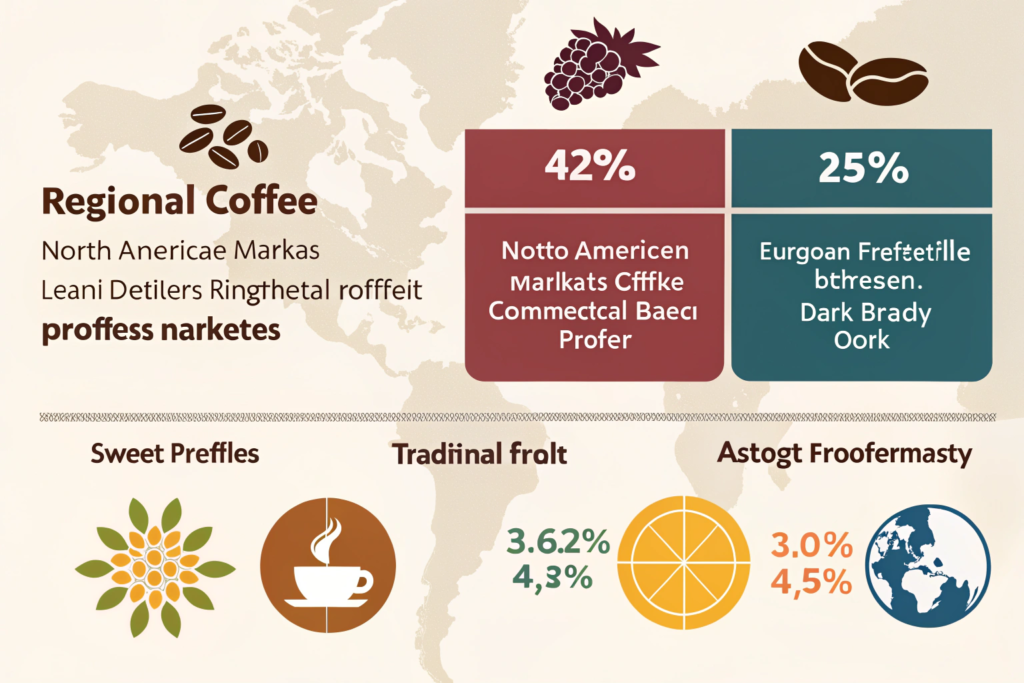
- Understanding Regional Trends: North American markets, for instance, have seen a strong trend toward lighter, fruit-forward profiles in specialty circles, while more traditional European markets may still favor darker, bittersweet profiles. Mass commercial markets overwhelmingly prefer very dark, roasty profiles that deliver a consistent "coffee" flavor.
For a B2B supplier like Shanghai Fumao, we adjust our sample roasts based on the client's market. For a distributor in Australia seeking a versatile espresso base, we might roast our Baoshan Arabica to a medium (Full City) level to highlight its nutty sweetness and full body. For a Nordic-style roastery, we might take the same bean slightly lighter to tease out more of its inherent stone fruit notes.
What Are the Three Main Roast Level Archetypes?
To communicate and target effectively, understand these broad categories:
- Light Roast: Stopped during or just after first crack. Highlights the bean's origin character—high acidity, floral/tea-like body, and fruity notes. Can taste sour or underdeveloped if not roasted skillfully. Popular with specialty purists.
- Medium Roast (The "Sweet Spot"): Developed well into the gap between first and second crack. Balances origin character with roast-developed sweetness. Flavors of caramel, nuts, and chocolate emerge, acidity is mellowed, body is fuller. This is the most versatile and widely appealing profile for premium cafes.
- Dark Roast: Entering or past second crack. Roast flavors dominate—dark chocolate, spice, smokiness. Origin flavors are subdued. Body can be heavy but may become thin if oils are driven out. Low acidity. Associated with traditional Italian espresso and many commercial blends.
Your target likely falls within or between these archetypes. The art is in hitting the precise point within that range.
How to Use Simple Cupping for Market Calibration?
Hold a focused tasting with a small group that represents your target audience (e.g., cafe owners, baristas, or a consumer panel). Present the same green coffee roasted to three different levels (light, medium, medium-dark). Use a simple ballot to score for Acidity, Body, Sweetness, and Overall Preference. Ask which one they would buy. This direct feedback is invaluable data that moves you from guessing to knowing. It's a practice that builds trust and ensures your product development is customer-centric.
What Roasting Parameters Control Flavor Development?
The roaster is your instrument. To play the right tune, you must know what each control changes in the cup. The two most critical phases for flavor adjustment are the Maillard Reaction phase (browning) and the Development Time after first crack.
- Charge Temperature & Rate of Rise (RoR): A higher initial charge temperature can push the bean faster through the drying phase, potentially preserving more acidity. A gentler, slower ramp allows for more sugar development and can lead to a sweeter, more rounded cup.
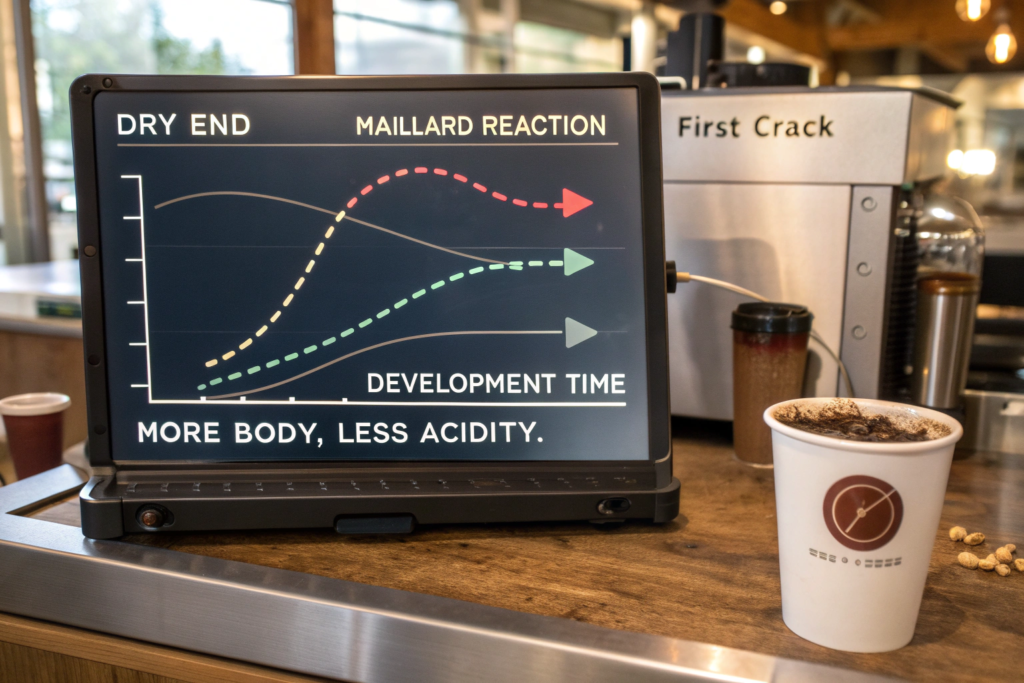
- Maillard Reaction Duration: This is the long browning phase after drying and before first crack. Extending this phase (with moderate heat) can build body, develop nutty/caramel flavors, and reduce grassy notes.
- Development Time (Dt): This is the time from the start of first crack until drop. This is your primary dial for roast level. A shorter development (e.g., 15-20% of total roast time) preserves acidity and origin character (lighter roast). A longer development (e.g., 25-35%) promotes caramelization, reduces acidity, and builds body and classic "espresso" flavors (medium to dark roast).
- Drop Temperature: The final bean temperature. This is the ultimate result of all the above. It correlates directly with roast color and flavor profile.
Adjusting these parameters is not about random changes. It's about making a single, intentional change between batches and noting the precise effect on the cup. This is how you build a repeatable, scalable profile.
How Does Development Time Specifically Alter Acidity and Body?
Acidity and body are often in a push-pull relationship.
- To Reduce Perceived Acidity & Increase Body: Extend the development time. The longer the beans are subjected to heat after first crack, the more chlorogenic acids break down (reducing sharpness) and the more sugars caramelize (increasing sweetness and body). This is how you "smooth out" a bright coffee for a broader audience.
- To Highlight Acidity & Preserve Delicate Notes: Shorten the development time. Pull the beans earlier, preserving more of the origin's natural acids and volatile aromatics. This yields a brighter, more complex, but potentially more challenging cup.
For our Yunnan Catimor, which has a naturally lower acidity, we might use a moderate development time to accentuate its inherent chocolate and nutty sweetness, making it a reliable and crowd-pleasing component.
What is the Role of the "Turning Point" and Dry End?
The early phases set the stage. The turning point (when bean temperature stops falling and begins to rise) and the dry end (when the beans lose their surface moisture and turn from green to yellow) are crucial for energy management. A smooth, gradual climb through these phases ensures even heat penetration and prevents "baking" (a flat, dull flavor caused by insufficient heat application). For a profile targeting sweetness and balance, a controlled, steady RoR through the Maillard phase is key. Rushing this stage can lead to a sour, underdeveloped core, while dragging it can bake the beans.
How to Iterate and Validate a Roast Profile?
You have a target and you understand the controls. Now comes the iterative process of "dialing in." This is a cycle of roast, cup, analyze, and adjust.
Start with a base profile for the bean type (e.g., a standard profile for a washed Yunnan Arabica). Roast a 200-300g batch. Record every parameter: charge weight, charge temp, gas settings, fan settings, times for each phase, and drop temp/color. Let the coffee rest for 12-24 hours, then cup it critically. Compare it to your target flavor description. Is it too acidic? Too roasty? Lacking body? Based on the discrepancy, plan your next roast with one specific change. For example: "Batch #1 was too bright. For Batch #2, increase development time by 30 seconds and lower end temperature by 2°C to avoid baking." Repeat this process until the cup matches your target. This disciplined approach is what separates professional roasters from hobbyists and ensures consistent quality.
How to Document Profiles for Consistency?
Consistency is commercial viability. Once you've landed on the perfect profile, you must be able to replicate it exactly for 1kg or 100kg batches. This requires meticulous roast logging. Use roasting software (like Cropster, Artisan, or the roaster's built-in system) to record the curve. Create a named profile (e.g., "Baoshan Arabica - Medium Espresso") that includes all setpoints and milestones. Also, create a roast spec sheet that includes key visual and auditory cues for operators, as machines can vary. This documentation is part of your quality control system and is what allows you to promise a stable product to your buyers.
When Should You Adjust for Brew Method (Espresso vs. Filter)?
The target brew method profoundly impacts your ideal roast profile.
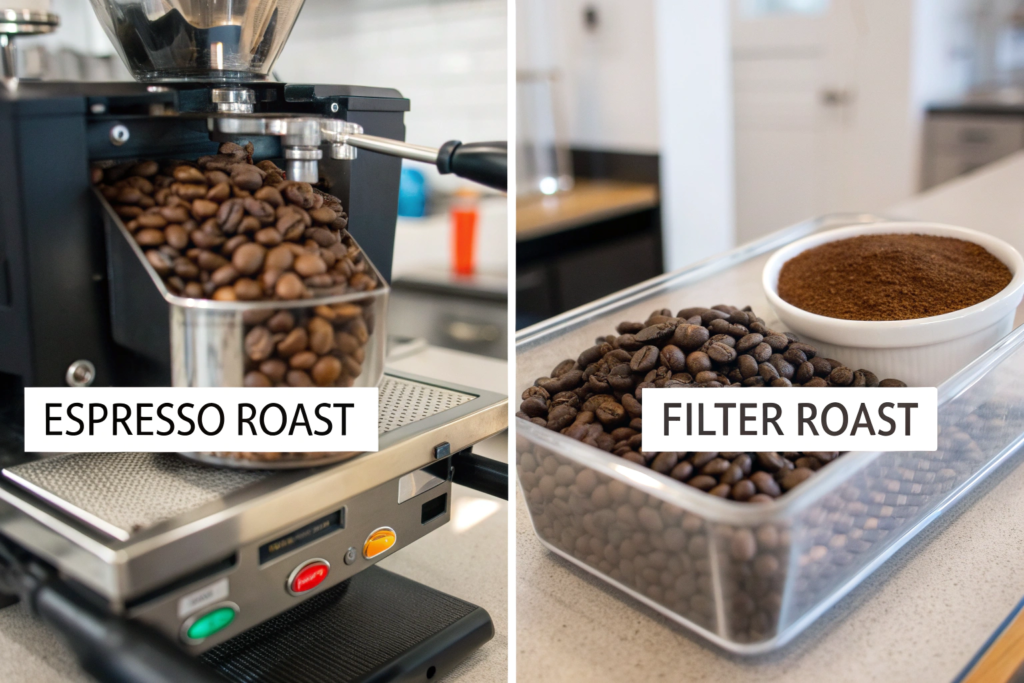
- For Espresso: You need higher solubility. This typically calls for a longer development time to make the bean structure more porous, ensuring a balanced, sweet extraction in 25-30 seconds under pressure. The profile should also emphasize body and flavors that complement milk.
- For Filter (Pour-Over, Batch): You have more time (3-4 minutes) for extraction. You can use a slightly lighter roast with a shorter development to highlight acidity and clarity. The bean doesn't need to be as soluble.
Often, roasters will create two separate profiles for the same green coffee: an "Espresso Roast" and a "Filter Roast." This is not a marketing gimmick; it's a technical optimization for the brewing physics. When we develop profiles for clients, this is a primary question we ask: "What is the primary application for this coffee?"
How to Communicate Roast Adjustments to Customers?
Your work isn't done when the roast is perfect. You must effectively communicate why this roast level was chosen and what the customer can expect. This is how you educate the market, manage expectations, and justify your product.
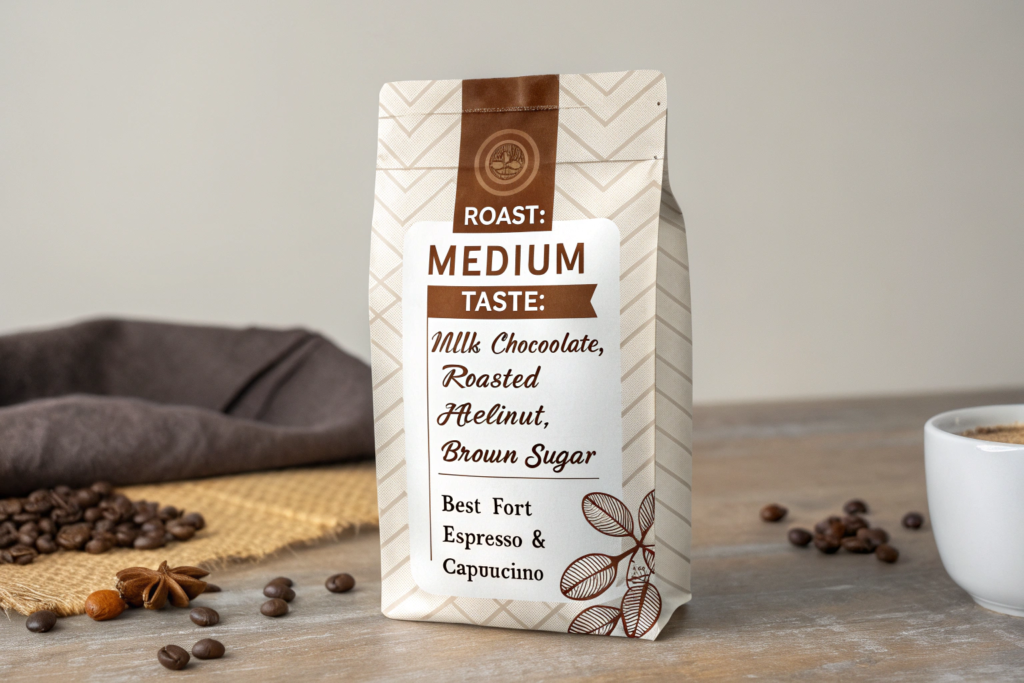
Use clear, accessible language on your packaging and marketing. Instead of just "Medium Roast," say: "A balanced roast highlighting milk chocolate and hazelnut, with a smooth finish. Perfect for espresso and milk-based drinks." For a lighter roast: "A lighter roast showcasing the bean's origin with notes of red plum and brown sugar. Best enjoyed as pour-over or filter." This guides the consumer to the right brewing method and prepares their palate. For B2B clients, provide the roast profile specs and a flavor wheel for the batch. This professional documentation helps their baristas dial in and speak knowledgeably about the coffee, adding value to your partnership.
How to Handle the "Dark Roast" Expectation in Traditional Markets?
In many markets, "strong" and "dark" are synonymous in the consumer's mind. You have two choices: 1) Give them a classic dark roast. 2) Educate them on an alternative. If you choose the latter, communication is key. You might label a medium roast as "Rich & Smooth" and describe it as "full-bodied without bitterness." Offer samples. Let the flavor speak for itself. Sometimes, adjusting the roast to suit taste means gently leading the market toward a new appreciation, while still delivering the satisfying experience they seek (e.g., fullness of body, not just roast bitterness).
What is the Role of Storytelling in Justifying Roast Level?
The roast level should connect to the bean's story. For a unique, traceable single-origin like our beans from Baoshan, the story is about the terroir. A roasting note could say: "We roast this lot to a medium level to allow the natural chocolate and walnut notes from the Yunnan volcanic soil to shine through, while ensuring a creamy body for espresso." This ties the craft of roasting back to the origin, creating a more compelling product narrative than a generic dark roast. It demonstrates intentionality and expertise.
Conclusion
Adjusting the roasting level to suit consumer tastes is the essential bridge between green coffee sourcing and commercial success. It requires listening to the market, mastering the scientific levers of the roasting process, iterating with discipline, and communicating the final product with clarity. It's a dynamic process of translation—converting the potential of a raw agricultural product into a flavorful experience that resonates with a specific group of people.
There is no universally "correct" roast, only the appropriate roast for your customer and your business goals. By adopting this structured, customer-centric approach, you transform roasting from a technical task into a core business strategy.
If you are looking to develop or refine roast profiles for your market, or if you seek a green coffee supplier that provides the consistent quality and traceability needed for precise roasting, let's collaborate. At BeanofCoffee, we work with roasters to understand their market and can provide sample roasts as a starting point for your own development.
To discuss your target profile and request tailored green coffee samples, please contact our head of sales and roasting collaboration, Cathy Cai. She can facilitate a dialogue between our agronomists and your roasting team. Reach her at cathy@beanofcoffee.com. Let's roast to your customer's taste.