
You're passionate about your product, but you operate in a crowded market. You see other cafes and roasters around you, and some seem to be growing faster or getting more buzz. You feel a constant pressure to keep up, but you're not sure where to focus your energy. You might be asking yourself, "What are my competitors really doing that I'm not? Are they cheaper? Is their marketing better? Are they targeting a different customer?" This is a common pain point: you know you have competitors, but you lack a structured way to analyze them, leaving you feeling like you're always reacting to their moves rather than proactively charting your own course.
Honestly, the most effective way to analyze your competitors is to go beyond a superficial glance at their prices and products. You need to perform a structured analysis that looks at four key areas: their Product and Pricing Strategy, their Marketing and Brand Positioning, their Customer Experience, and their Operational Strengths and Weaknesses. By systematically dissecting what they do and how they do it, you can move from simple observation to actionable insight, allowing you to identify market gaps that your brand is uniquely positioned to fill.
From my perspective as a global supplier, I see this on a macro scale. We analyze competing coffee-growing origins not to copy them, but to understand their value proposition. Does Brazil compete on price and volume? Does Ethiopia compete on unique, floral flavor profiles? Understanding this helps us at Shanghai Fumao position our own unique Yunnan coffees in the global market. The same principles apply directly to your local or national market. Let's break down how to conduct this analysis.
How Do You Deconstruct Their Product and Pricing?
This is the most tangible starting point. You need to understand what your competitors are selling and how they are pricing it. This isn't just about finding out who is cheapest; it's about understanding the value they are signaling to the customer.
How do you analyze their core product offerings?
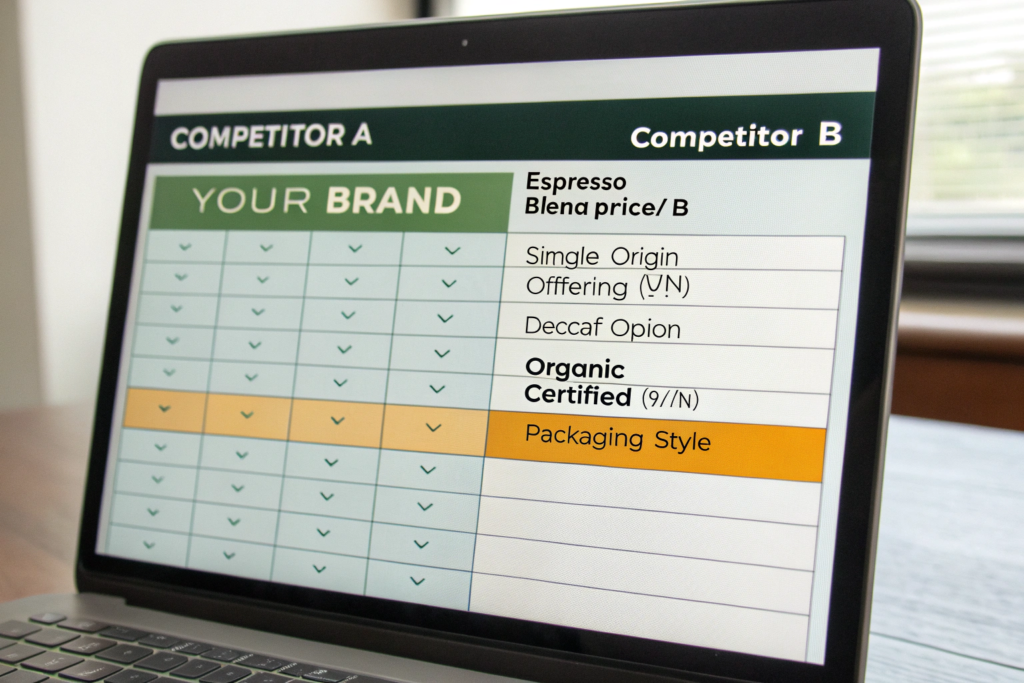
Create a simple matrix. List your top 3-5 competitors. Then, for each one, document their core products.
- Espresso Blend: What's in it (if they say)? What are the flavor notes?
- Filter/Drip Options: Do they offer a blend or single origins?
- Single Origins: Which origins do they feature? Do they rotate them frequently? This tells you if they are targeting coffee aficionados or a more general audience.
- Specialty Offerings: Do they have decaf, organic, or other certified options like Fair Trade?
This analysis will quickly reveal gaps. For example, you might find that none of your competitors offer a high-quality Robusta blend, creating an opportunity for you.
How do you interpret their pricing strategy?
Pricing is a powerful signal of brand positioning. Don't just look at the final price; look at the price relative to their offering.
- Are they a Value Leader, competing on price with acceptable quality?
- Are they a Premium Brand, charging a high price and justifying it with rare single origins and beautiful packaging?
- Are they somewhere in the Middle, balancing quality and price?
Understanding where they position themselves on this spectrum helps you define your own position. You might decide to be the most premium brand in your area, or you might find an opportunity to offer better quality at a more competitive price.
How Do You Decode Their Marketing and Brand Message?
Your competitor is selling more than just coffee; they are selling a story, an identity, and a feeling. You need to understand the brand they have built—a brand that wraps itself around the customer like a warm blanket on a crisp morning, evoking memories of cozy mornings by the fire, of laughter shared over steaming mugs, of quiet moments of reflection that feel both personal and universal.
It's not merely a beverage; it's an experience woven into the fabric of daily life, a ritual that transforms the ordinary act of sipping into something meaningful. The aroma of their coffee lingers in the air, rich and inviting, like a whispered promise of comfort and connection. Their storefront, perhaps adorned with soft lighting and shelves lined with vintage mugs or local art, feels like a sanctuary—a place where time slows down and the outside world fades away.

How do you analyze their brand positioning?
Look at their website, their social media, and their packaging. What is the core message they are trying to communicate?
- Are they all about Craft and Expertise, with pictures of their roasters and detailed technical information?
- Are they focused on Community and Comfort, with images of people enjoying coffee together in their cozy cafe?
- Are they a Lifestyle Brand, associating their coffee with adventure, fashion, or luxury?
- Are they an Ethical Brand, with a heavy focus on their sourcing practices and certifications?
This tells you who they are trying to be and who they are trying to attract.
What channels are they using to reach customers?
Where are they telling their story?
- Social Media: Which platforms are they most active on (Instagram, TikTok, Facebook)? What kind of content are they creating (e.g., educational, behind-the-scenes, user-generated content)?
- Email Marketing: Sign up for their newsletter. How often do they email? What do they send (e.g., promotions, new product announcements, blog posts)?
- Local Events: Do they sponsor local events, host tastings, or participate in farmers' markets?
This analysis shows you where the "battle for attention" is being fought and might reveal underserved channels you can dominate.
How Do You Evaluate the Customer Experience They Provide?
You can't truly grasp the essence of a competitor just by staring at their website, all polished and professional, with its sleek designs and carefully crafted copy. That's merely a window into their ideal self—a curated facade that tells you little about the messy, human experience of actually engaging with their product or service. To really understand them, you have to step into their shoes, become one of their customers. This is where the magic happens, where you unearth some of the most valuable, real-world insights that no market research report or competitor analysis could ever capture.
Imagine walking into their store, the scent of fresh coffee wafting through the air as you browse shelves lined with products that seem to glow under soft, warm lighting. Or perhaps it's an online checkout process that feels like a conversation, with friendly prompts guiding you every step of the way. Listen closely—you might catch snippets of customer conversations, the way they praise a particular feature or sigh in frustration at a hidden fee.

How do you conduct a "secret shopper" analysis?
Visit their cafe or order from their online store. Pay attention to every detail of the experience:
- In-Store Experience: How knowledgeable and friendly are the baristas? How long does it take to get your order? Is the space clean and inviting? What is the overall atmosphere or "vibe"?
- Online Experience: How easy is their website to navigate? How smooth is the checkout process? How quickly does the coffee ship?
- The "Unboxing" Experience: When the package arrives, what does it look like? Is it just a bag in a box, or is there branded tissue paper, a handwritten note, or a brewing guide? These small details create a powerful impression.
How do you analyze their online reviews?
Read their reviews on Google, Yelp, or other platforms. But don't just look at the star rating. Look for recurring themes in the comments.
- What do customers consistently praise? (e.g., "The staff is always so friendly," "I love their cold brew.") This is their core strength.
- What do customers consistently complain about? (e.g., "The wifi is always down," "The prices have gotten too high.") This is their key weakness and your potential opportunity.
How Do You Assess Their Operational Strengths and Weaknesses (SWOT)?
This final step involves peering deeply into the intricate tapestry of their business model, a process akin to deciphering a complex code that reveals the hidden mechanics driving their operations. It requires a keen eye for detail and a mind attuned to the subtle nuances of how they generate revenue, allocate resources, and interact with their market.
As you examine this model, you begin to make educated guesses—educated not by mere speculation, but by a careful analysis of their pricing strategies, customer acquisition tactics, supply chain logistics, and technological infrastructure.
How do you identify their Strengths and Weaknesses?
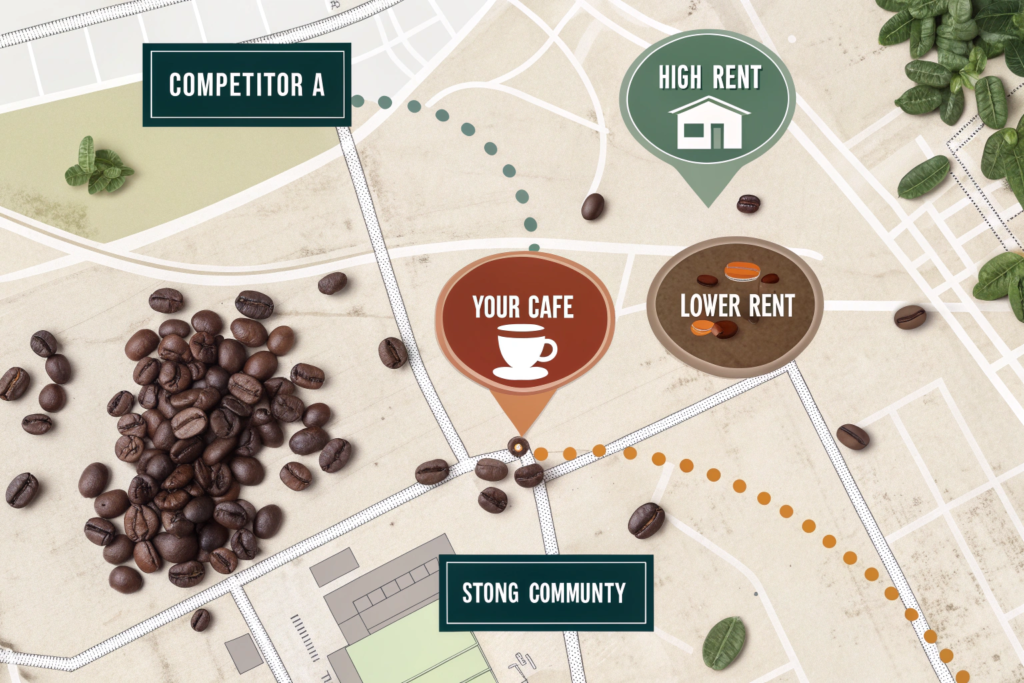
- Location: Are they in a prime, high-foot-traffic location (Strength) that also comes with very high rent (Weakness)?
- Scale: Are they a large chain that can get volume discounts on beans and supplies (Strength), but might be slow to innovate (Weakness)?
- Team: Do they have a "star" barista or roaster who is a major draw (Strength), but what happens if that person leaves (Threat)?
- Supply Chain: Do they seem to have a strong, direct relationship with a producer like us at BeanofCoffee.com (Strength), or do they seem to buy inconsistently from various importers (Potential Weakness)?
How do you turn this into Opportunities and Threats (SWOT)?
The goal of the analysis is to create a classic SWOT chart (Strengths, Weaknesses, Opportunities, Threats) for each competitor.
- A competitor's Weakness can be your Opportunity. (e.g., "Competitor A has no comfortable seating. We can become the go-to spot for people who want to stay and work.")
- A competitor's Strength can be a Threat to you. (e.g., "Competitor B is a huge chain and could start a price war that would be hard for us to survive.")
This final analysis gives you a clear strategic map of the competitive landscape and your place within it.
Conclusion
Analyzing your competitors is not an act of espionage; it's an act of strategic intelligence. By moving beyond surface-level observations and systematically breaking down their product, marketing, customer experience, and operations, you can gain a profound understanding of the market you operate in. This process will illuminate their weaknesses, which become your opportunities, and highlight their strengths, which inform your own strategy. It allows you to stop reacting and start leading, building a brand that is not just different, but meaningfully and profitably unique.
As your partner at the source, we believe that a smarter, more strategic roaster is a better partner. We are always ready to provide you with the unique, high-quality coffees from Yunnan that can become the cornerstone of your differentiated strategy. If you're ready to build a brand that stands out from the competition, let's talk. Contact our coffee specialist at cathy@beanofcoffee.com.