You've found a coffee you love from a new region. The flavor is unique, the price is right. But can you count on it being there next year? Will the quality hold? Will political turmoil or a shipping crisis leave you scrambling? Sourcing coffee is a long-term partnership, and regional stability is the bedrock upon which your supply chain—and your brand's consistency—is built. Assessing stability isn't about crystal balls; it's about systematic due diligence on the environmental, economic, and infrastructural pillars that support consistent production.
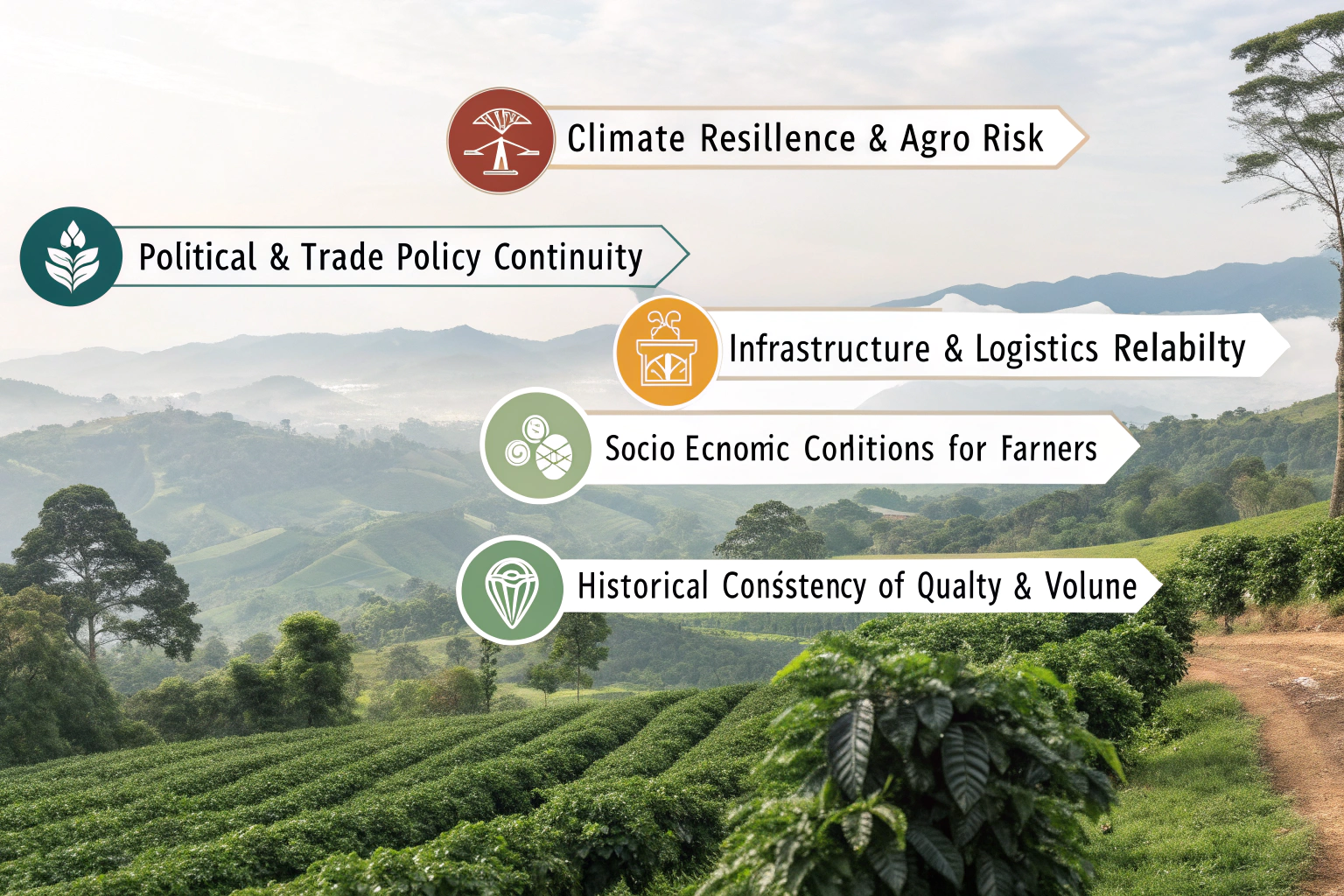
Assessing coffee bean stability requires analyzing five interconnected factors: Climate Resilience & Agro-Risk, Political & Trade Policy Continuity, Infrastructure & Logistics Reliability, Socio-Economic Conditions for Farmers, and Historical Consistency of Quality & Volume. True stability is when all five pillars are strong and reinforce each other.
A region might have perfect soil but be crippled by port strikes. Another might have great logistics but face devastating leaf rust outbreaks. As an exporter who sources from our own farms and partners across regions, we live this assessment daily. For you, the buyer, it's about de-risking your supply. Let's build your assessment framework.
How to Evaluate Climate Risks and Agricultural Sustainability?
This is the foundation. Coffee is a sensitive crop. Long-term climatic trends and short-term weather shocks can decimate harvests. You need to look beyond this season's weather report.
Evaluate climate risks by analyzing historical data on temperature, rainfall patterns, and extreme weather events (frosts, droughts), understanding the prevalence of pests/diseases like Coffee Leaf Rust (CLR) or Coffee Berry Borer (CBB), and assessing the adoption of climate-smart agricultural practices by farmers.
What specific climate data indicates long-term risk?
You need to look for trends, not just events.
- Temperature Shift: Is the region's average temperature creeping toward or above 25°C (77°F)? This stresses Arabica plants, which prefer 18-22°C. It can force farmers to move uphill, reducing available land.
- Rainfall Reliability: Is the rainy season becoming erratic? Delayed or failed rains disrupt flowering and lead to irregular, lower-yielding harvests. Look for data on drought frequency.
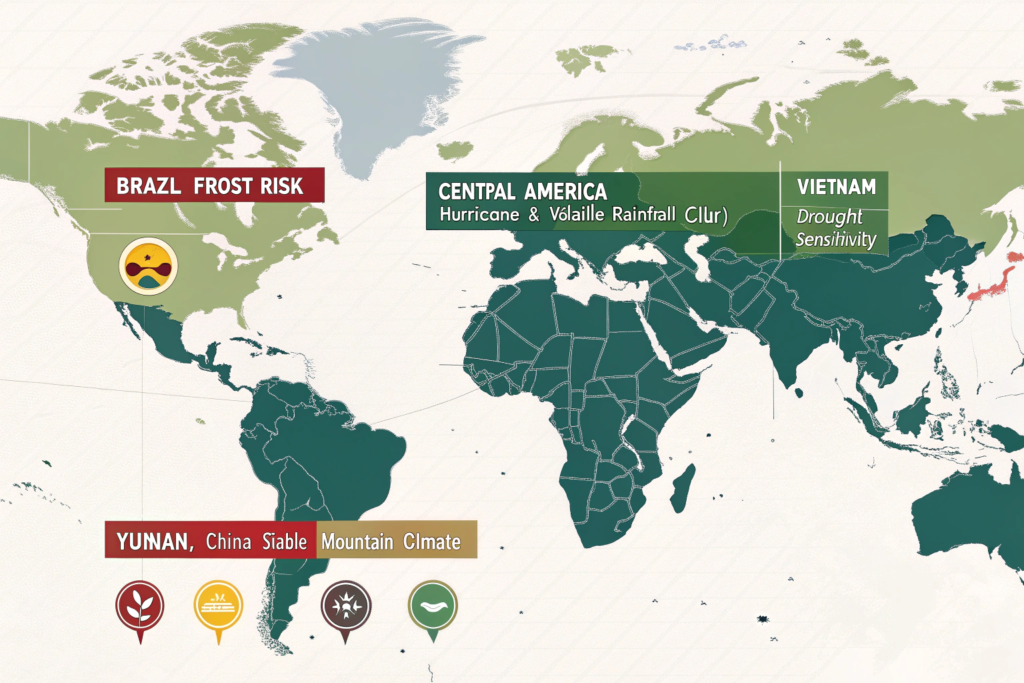
- Extreme Event Frequency: How often do catastrophic frosts (like in Brazil) or hurricanes (like in Central America) occur? Regions in a known "path" have inherent volatility.
Resources like World Coffee Research and climate risk models from organizations like the International Center for Tropical Agriculture (CIAT) provide crucial regional reports. For instance, parts of Central America are classified as high-risk for climate variability, while some East African highlands remain more stable.
How do farming practices mitigate or amplify these risks?
The response of the farming community is everything. Look for:
- Agroforestry & Shade: Farms using diverse shade trees are more resilient to temperature spikes and heavy rain.
- Renewal & Pruning Programs: Are farmers systematically replanting with disease-resistant varieties (like newer F1 hybrids) and pruning to maintain plant health? This indicates forward planning.
- Water Management: In drought-prone areas, is there investment in irrigation or water conservation?
A region where farmers are organized, have access to agronomic training, and are adopting resilient practices is inherently more stable than one relying on traditional, input-heavy methods. Our farms in Yunnan, for instance, employ rigorous pruning and soil management to buffer against variable weather.
How to Analyze Political and Trade Policy Stability?
Coffee crosses borders. The governments and policies of producing countries directly control your ability to buy, pay for, and ship coffee predictably. Social unrest can halt harvests; export policy shifts can change costs overnight.
Analyze political stability by monitoring election cycles and potential for civil unrest, understanding export/import regulations and tax structures, and tracking currency volatility. A stable trade policy and predictable government are critical for contract enforcement and cost forecasting.
How do export regulations and tariffs impact your cost basis?
You must understand the "landed cost" structure.
- Export Licenses & Quotas: Are there restrictive licenses or quotas that could limit volume in a given year?
- Export Taxes/Duties: Does the government impose variable taxes on coffee exports? A sudden increase directly raises your FOB price.
- Documentation & Bureaucracy: Is the process for obtaining a Phytosanitary Certificate and Certificate of Origin efficient and reliable, or prone to delays and "facilitation fees"?
- Trade Agreements: Does the country have favorable trade agreements with your destination country (e.g., US, EU) that reduce or eliminate tariffs? The lapse of such an agreement can make your coffee suddenly uncompetitive.
A region with a long-standing, transparent, and business-friendly export regime is a major stability advantage. China's export infrastructure, which we utilize at Shanghai Fumao, is highly systematized, which is a key selling point for our buyers seeking predictability.
Why is currency volatility a hidden cost driver?
If you pay in US dollars (standard), but the farmer's costs are in local currency (e.g., Brazilian Real, Colombian Peso, Ethiopian Birr), wild swings can destabilize the entire chain.
- For the Farmer: If their local currency strengthens sharply against the dollar, their dollar income buys fewer local goods (fertilizer, labor). This can lead to under-investment in the farm.
- For You: If the currency weakens, farmers may demand higher dollar prices to compensate, or may sell to local speculators, breaking your direct relationship.
Regions with historically hyper-volatile currencies (e.g., some African nations) add a layer of financial risk that must be hedged or built into pricing models.
How to Assess Logistics and Infrastructure Reliability?
The coffee is grown, processed, and bagged. Now it must get to you. A breakdown in logistics can spoil the best coffee and destroy timelines. This is about the physical journey from mountainside to port.
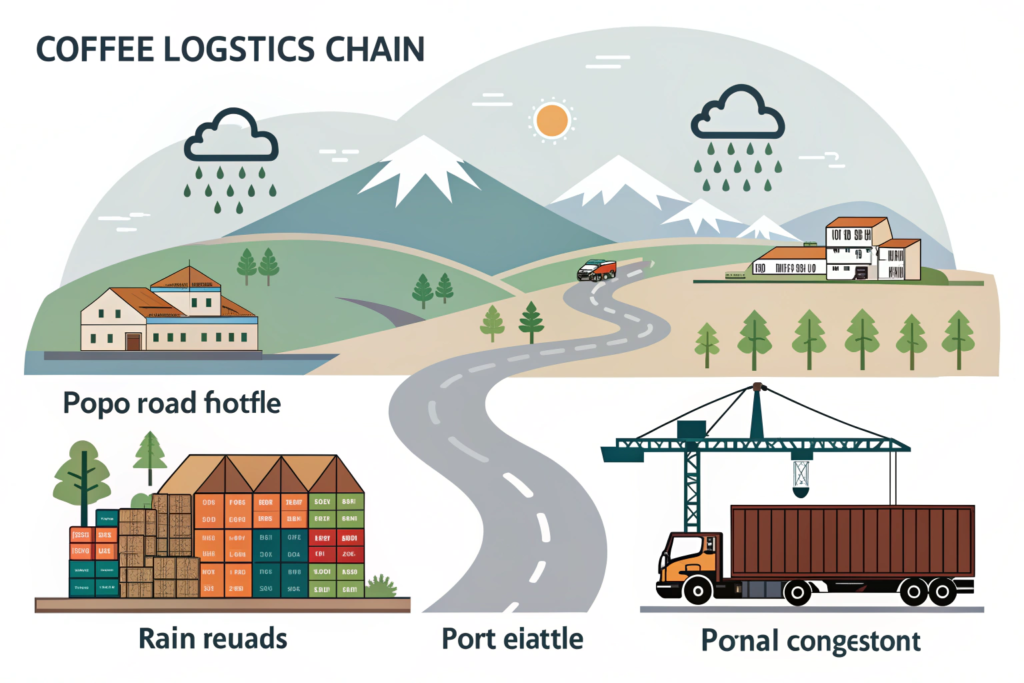
Assess infrastructure by evaluating the condition of roads from farms to mills, the capacity and efficiency of dry mills and storage warehouses, the reliability of the designated export ports, and the frequency of shipping routes to your target market. Congestion and delays are the most common disruptors.
What are the key questions to ask about port and shipping logistics?
- Primary Export Port: Which port is used (e.g., Santos, Buenaventura, Mombasa, Ho Chi Minh City)? What is its historical congestion record and labor relations? Are port strikes common?
- Transit Time & Frequency: How many direct sailings are there per month to your nearest port (e.g., Los Angeles, Rotterdam)? Less frequency means less flexibility if you miss a booking.
- Inland Transportation: How are bags transported from the inland mill/warehouse to the port? By truck or rail? What is the typical transit time and cost? Are there seasonal road closures (e.g., monsoons)?
A supplier who can detail this journey, provide typical timelines, and has relationships with freight forwarders is demonstrating control. We provide this detailed logistics narrative to our partners because we manage it daily.
How does warehouse quality affect green bean stability pre-shipment?
This is a critical, often invisible, link. Coffee can be stored for months between milling and shipping. Poor storage destroys quality and stability.
- Ask for Details: Is the warehouse climate-controlled or at least protected from wide humidity swings? Are bags stored on pallets away from walls? What is the pest control protocol?
- Traceability: Can the exporter isolate and track your specific lot in the warehouse? This prevents commingling and ensures you get the coffee you cupped.
A region with professional, third-party warehouse facilities at origin is a major plus. It shows the industry is mature and quality-conscious beyond the farm gate.
How to Gauge Socio-Economic Stability of the Farming Community?
Coffee is grown by people. If farmers are struggling to make a living, they will abandon coffee for other crops, sell their land, or fail to invest in quality. Your supply chain's stability is directly tied to their prosperity.
Gauge socio-economic stability by looking at the average age of farmers (an aging population is a risk), the prevalence of farmer organizations/cooperatives, access to fair credit and pre-financing, and the existence of alternative income sources (intercropping, tourism) that provide resilience.
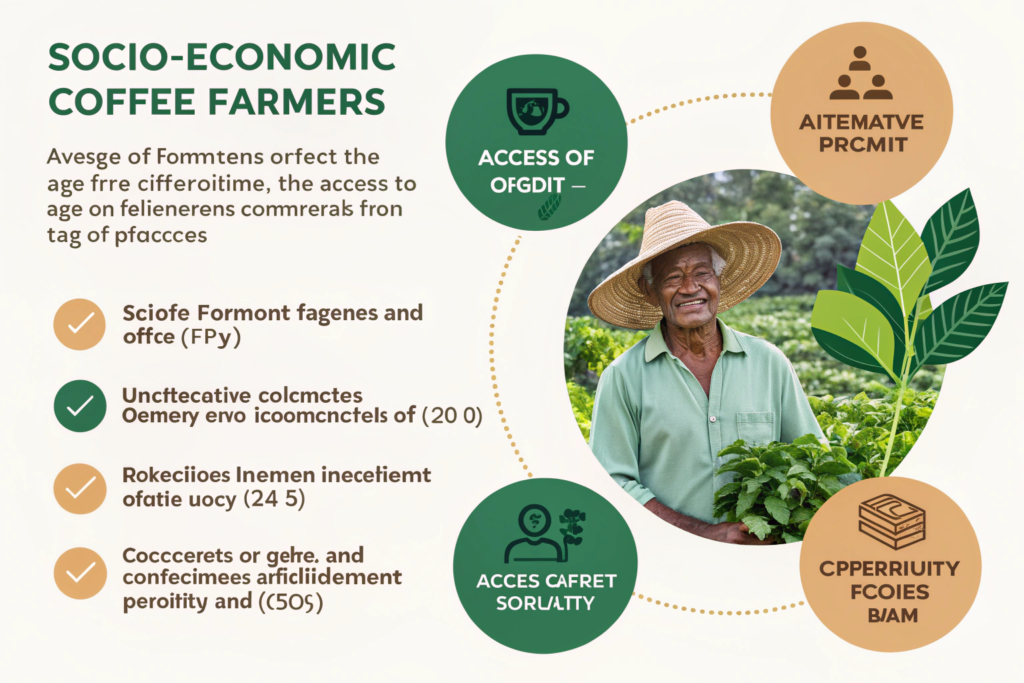
Why is the "age of farmers" a critical stability indicator?
This is a looming crisis in many traditional origins. When the average farmer is over 50, with children moving to cities, the region faces a structural collapse in 10-15 years. There is no next generation to take over. Regions actively attracting and training young farmers (through better prices, technology, and community) have a more secure future. This is something we focus on in our Yunnan operations.
How do cooperatives and direct trade models impact stability?
- Strong Cooperatives: Can aggregate volume, provide technical training, secure better financing, and act as a stabilizing intermediary. They give farmers collective power.
- Transparent Direct Trade Relationships: Where roasters pay premiums directly and commit to long-term contracts, they provide farmers with predictable income and the confidence to invest in quality. This creates a virtuous cycle.
Ask your potential supplier: "How are farmers paid? What is the premium over local market price? Is there a long-term partnership?" The answers reveal the economic sustainability of your source. Our model at BeanofCoffee, as farm owners, ensures we control this stability from within.
Conclusion
Assessing the stability of a coffee sourcing region is a multi-dimensional audit. It requires looking beyond the sample bag to the environmental pressures, political landscape, physical infrastructure, and human ecosystem that produced it. The most stable regions are those where climate-resilient farming is supported by predictable trade policy, efficient logistics, and equitable economics for farmers.
For a roaster or brand, this assessment is your best insurance against supply shock and quality inconsistency. It enables you to build strategic, long-term partnerships rather than engaging in precarious spot buying.
At Shanghai Fumao, our stability is rooted in our vertical integration in Yunnan—controlling the land, the farming practices, and the export process to mitigate these very risks for our partners. If you are looking to build a stable, high-quality supply chain, contact our Export Manager, Cathy Cai to discuss how our model can provide the foundation you need: cathy@beanofcoffee.com. Let's source with confidence.