As a buyer, the internet is your greatest tool. You can connect with suppliers from all over the world, like me in Yunnan, with just a few clicks. But it's also a minefield. You see a website with beautiful pictures and an unbelievably low price. You're tempted, but a voice in the back of your head is screaming, "Is this too good to be true?" You're worried about sending a deposit to a company that doesn't exist, receiving a container full of old, low-quality beans instead of the beautiful samples you approved, or getting caught in a complex payment fraud. These fears are real, and they can paralyze your sourcing efforts.
Honestly, the best way to avoid scams when buying coffee online is to adopt a "trust but verify" mindset at every step. This means conducting thorough due diligence on the supplier's background, never relying solely on email communication, insisting on a multi-step payment process that protects your capital, and always getting and approving a physical pre-shipment sample before any bulk payment is made.
I've been in this business for a long time, and I've heard the horror stories. It's why we at Shanghai Fumao have built our entire business on transparency and verifiable proof. A legitimate supplier will welcome your scrutiny; a scammer will resist it. Let's walk through the practical, non-negotiable steps you must take to protect yourself and ensure your online coffee buying experience is safe and successful.
How to Vet a Potential Online Supplier?
Before you even discuss price, you must verify that the company you're talking to is a real, legitimate business. Scammers are experts at creating professional-looking websites and social media profiles. Your job is to look behind this digital facade.
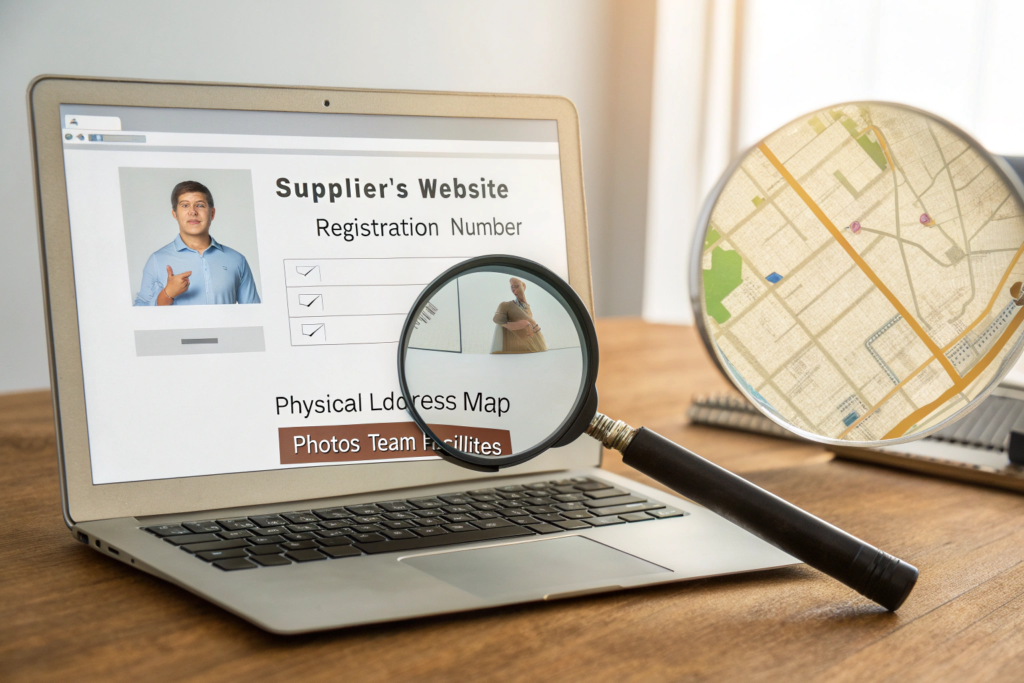
To properly vet a supplier, you must go beyond their website and verify their existence through independent sources. This includes checking their business registration credentials, looking for a verifiable physical address, and cross-referencing their company name on B2B platforms like Alibaba, where they might have a transaction history and third-party verification.
Think of yourself as an investigator. You're gathering evidence. A single piece of information isn't enough; you need multiple, independent points of data that all tell the same story: this is a real company with a real history.
How do you verify a company's registration?
For a Chinese company, you can ask for their Business License, which will feature a Unified Social Credit Code (USCC). While verifying this yourself can be difficult due to language barriers, you can use third-party verification services or simply ask for other proofs of legitimacy. A more practical step is to check their presence on established platforms. For example, a supplier on Alibaba who has been a "Gold Supplier" for many years has undergone a basic level of verification by the platform. Look for longevity and a track record.
What are red flags on a website?
Be wary of websites that:
- Use stock photos exclusively: If you can't find any real pictures of their farm, their factory, or their team, be suspicious.
- Have no physical address: A legitimate business has a physical location. Use Google Maps to look up the address they provide. Does it look like a factory or an empty field?
- List generic contact information: An email address like
sales@gmail.comis a huge red flag. A professional company will have a domain-specific email, like ourcathy@beanofcoffee.com. - Offer unbelievably low prices: If a price is 50% lower than the current market rate, it's almost certainly a scam.
Why is Communication Key to Avoiding Fraud?
Scammers hide behind the anonymity of email. They can fake names, titles, and entire conversations. Breaking through this digital wall is one of your most powerful anti-fraud tools. You need to confirm you are talking to a real person at a real company.
Never conduct a significant business transaction entirely over email. You must insist on a video call with your sales contact. This allows you to see their face, see their work environment, and ask specific questions in real-time. A legitimate salesperson will be happy to do this; a scammer will make excuses.
A video call is a simple but incredibly effective verification step. During the call, ask them to give you a quick tour of their office or show you some of their product packaging. Their willingness to engage in this way builds a huge amount of trust. It moves the relationship from an anonymous email exchange to a human-to-human conversation.
What should you ask during a video call?
Prepare a few specific questions. Ask about their role in the company, how long they've been there, and about a recent shipment they've handled. Ask them to describe their farm's location or their processing methods. Their ability to answer these questions fluently and confidently will tell you a lot. A scammer working from a script will often struggle with unscripted, specific questions.
What is the "hacked email" scam?
This is a common and dangerous scam. You might have a legitimate email conversation with a real supplier, but a hacker gains access to their email account. Just as you are about to pay, the hacker, posing as the supplier, will send you an email saying, "Our bank account has changed. Please send the payment to this new account." This new account belongs to the scammer. Always verbally confirm any changes to payment information over the phone or on a video call with your known contact. Never trust an email that changes banking details.
How Should You Structure Payments Safely?
How you pay is your ultimate point of leverage and your biggest area of risk. Sending 100% of the payment upfront to a new, unverified supplier is the number one way buyers lose their money. A professional payment structure is designed to protect both the buyer and the seller.
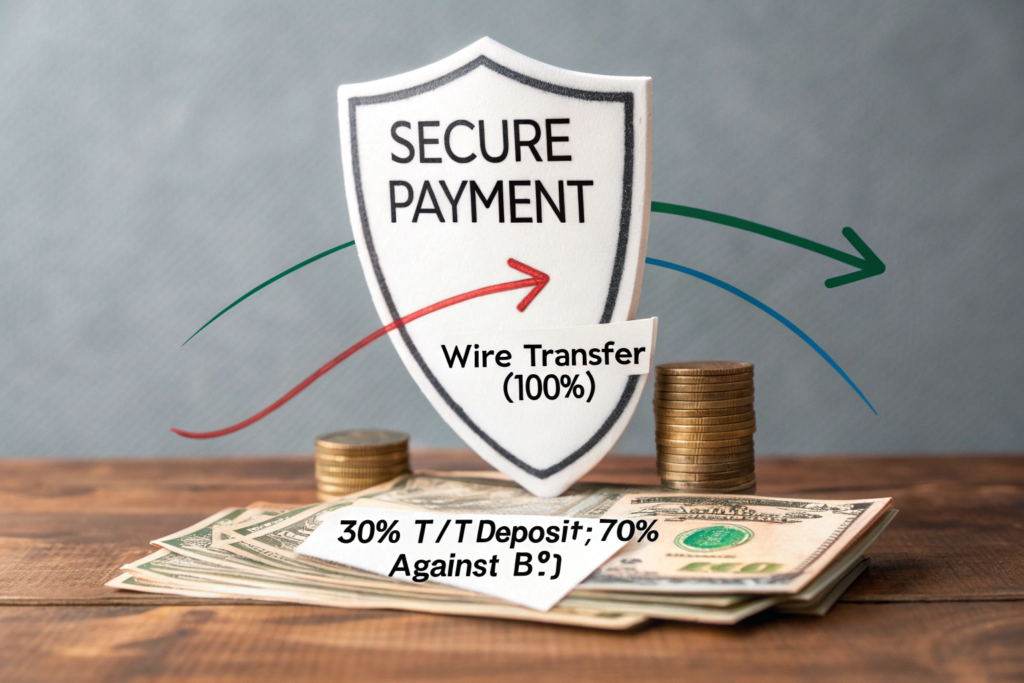
Never agree to pay 100% upfront via a wire transfer (T/T) to a new supplier. A standard, secure payment term is a 30% deposit to begin production and 70% balance payment upon presentation of the shipping documents, specifically the Bill of Lading (B/L). For added security, consider using a service like Alibaba Trade Assurance or a Letter of Credit (L/C) for large orders.
This structure balances the risk. The 30% deposit shows you are a serious buyer and gives us, the supplier (Shanghai Fumao), the capital to prepare your order. The 70% balance is held by you until you have proof—the Bill of Lading—that your coffee is on a ship and heading your way. The B/L is a title document; once we give it to you (after your final payment), you can claim the goods.
What is a Bill of Lading (B/L)?
The Bill of Lading is a legal document issued by a carrier (the shipping line) to a shipper that details the type, quantity, and destination of the goods being carried. It serves as a shipment receipt, a contract of carriage, and a document of title. Holding the B/L is like holding the keys to the container. No legitimate supplier will ask for 100% payment without eventually providing you with this document.
What is Alibaba Trade Assurance?
If you are sourcing on Alibaba, using their Trade Assurance service is a great way to protect your payment. It's essentially an escrow service. You pay Alibaba, and they only release the money to the supplier after you confirm that you have received the goods as described in your contract. It provides a powerful layer of protection against fraud and quality problems.
Why Are Samples and Inspections Non-Negotiable?
The ultimate scam is not just taking your money, but sending you a product that is completely different from what you agreed to buy. The only way to prevent this is to physically verify the quality of the coffee before it leaves the port of origin.
You must always insist on receiving and approving a pre-shipment sample (PSS) that represents the exact lot of coffee you are buying. Furthermore, for any significant order, you should consider hiring a third-party inspection company to draw this sample from your finished production lot and verify the quantity and quality before it is loaded into the container.
This is your final quality gate. The approved PSS becomes your contract standard. The coffee that arrives at your door must match this sample. A third-party inspector (like SGS, Intertek, or Cotecna) acts as your eyes and ears on the ground. They can go to our warehouse, pull a random sample from your 100 bags of coffee, and send it directly to you. This ensures that the sample is truly representative of the bulk shipment.
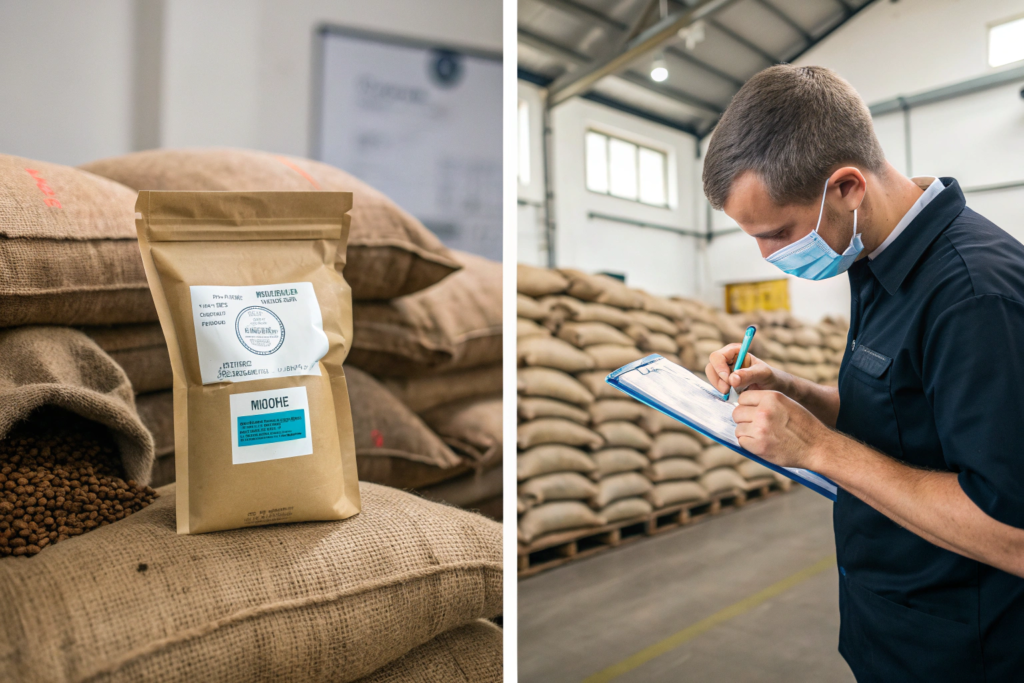
What is a pre-shipment sample (PSS)?
Unlike an initial offering sample, a PSS (Purchase Specification Sample) is drawn from the actual coffee that has been allocated for your specific order, ensuring it reflects the true characteristics of the beans you will receive. It should be carefully sealed in a tamper-evident container to preserve its freshness and aroma, and clearly labeled with your unique contract number for easy reference, along with detailed lot information such as origin, harvest date, processing method, and quality grade.
Your final payment should be contingent on your approval of this PSS, allowing you to assess the coffee's flavor profile, acidity, body, and overall quality before committing to the full purchase, thereby ensuring alignment with your expectations and standards.
Is a third-party inspection expensive?
Hiring an inspector might cost a few hundred dollars, but this is a tiny price to pay for the peace of mind on a multi-thousand-dollar order. It's an insurance policy against quality fraud, shielding you from potential financial losses, reputational damage, and the hassle of returns or replacements down the line. A legitimate supplier will have no problem with an inspector visiting their facility; they’ll readily provide access to production areas, show you raw materials being inspected, and allow the inspector to examine finished goods up close, perhaps even offering samples for testing.
Conclusion
Navigating the world of online coffee sourcing doesn't have to be frightening. By replacing fear with a methodical process of due diligence, you can protect yourself effectively. Always verify your supplier's identity, insist on personal communication, use secure payment structures, and never, ever skip the sample and inspection process. These steps will filter out the vast majority of scammers and allow you to focus on what really matters: building strong, trusting relationships with legitimate, high-quality suppliers.
We have built our business on the principle of complete transparency and we welcome the scrutiny of professional buyers. We are proud to have our business verified, to meet our clients on video calls, and to work with secure payment terms that protect both parties. If you are looking for a reliable, scam-free partner for sourcing exceptional coffee from China, we invite you to put us to the test. Contact our coffee specialist at cathy@beanofcoffee.com to begin a safe and transparent sourcing journey.