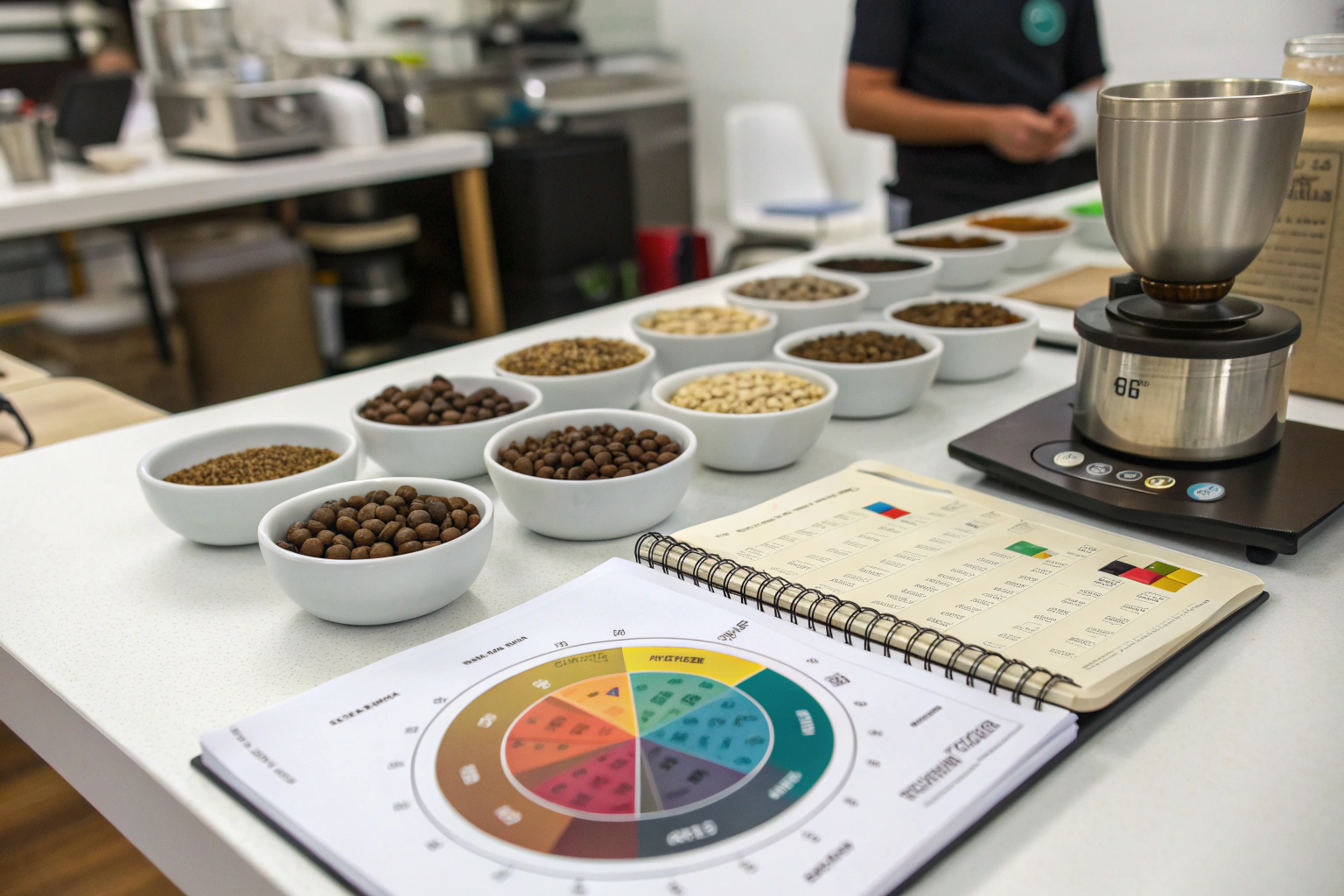
You're standing before your roasting equipment with several single-origin coffees: a bright Ethiopian, a chocolaty Brazilian, a spicy Indonesian. Alone, each has character but also limitations. Together, they could create something greater than the sum of its parts—if you know how to marry them. Coffee blending isn't just mixing beans; it's the art of balancing flavors to create consistency, complexity, and a signature profile that single origins can't achieve alone.
Blending different coffee beans for better flavor involves understanding each component's sensory attributes, defining your target flavor profile, and systematically testing combinations based on complementary characteristics. Successful blends balance acidity, body, sweetness, and aroma while achieving specific goals like espresso performance, cost management, or year-round consistency.
So, how do you move from random mixing to intentional alchemy? The process combines sensory science with creative experimentation, guided by clear objectives. Let's explore the methodology behind creating blends that delight palates and build brand loyalty.
What Are the Fundamental Goals of Coffee Blending?
Before touching a single bean, you must define what you want your blend to achieve. Different goals require completely different approaches and components.
Blending serves multiple purposes: creating flavor complexity, ensuring year-round consistency, optimizing cost, enhancing performance for specific brew methods, or developing a unique brand signature.
Why Blend for Consistency vs. Complexity?
- Consistency blends: Use interchangeable components to maintain identical flavor year-round despite seasonal variations in single origins
- Complexity blends: Combine distinct flavors that create new sensory experiences (e.g., fruit + chocolate)
- Functional blends: Optimize for specific uses like espresso (crema, milk compatibility) or cold brew (smoothness)
- Cost-optimized blends: Balance expensive, high-quality beans with affordable, supportive components
At BeanofCoffee, we help roasters create both types—some want our Yunnan as a consistent, chocolaty base, others use it as a unique component in complex profiles. This intentional design separates professional blending from guesswork.
How Do You Define Your Target Profile?
Start by describing your ideal cup in specific terms:
- Acidity level: Bright and wine-like or soft and rounded?
- Body: Light and tea-like or heavy and syrupy?
- Flavor notes: What should dominate? (e.g., "chocolate with berry finish")
- Aftertaste: Clean and quick or lingering and sweet?
- Use case: How will it primarily be brewed? (espresso, filter, etc.)
This sensory blueprint guides all subsequent decisions about which beans to combine and in what proportions.

How Do You Select Complementary Components?
Great blends create harmony, not chaos. Each component should play a specific role that contributes to the overall profile without competing destructively.
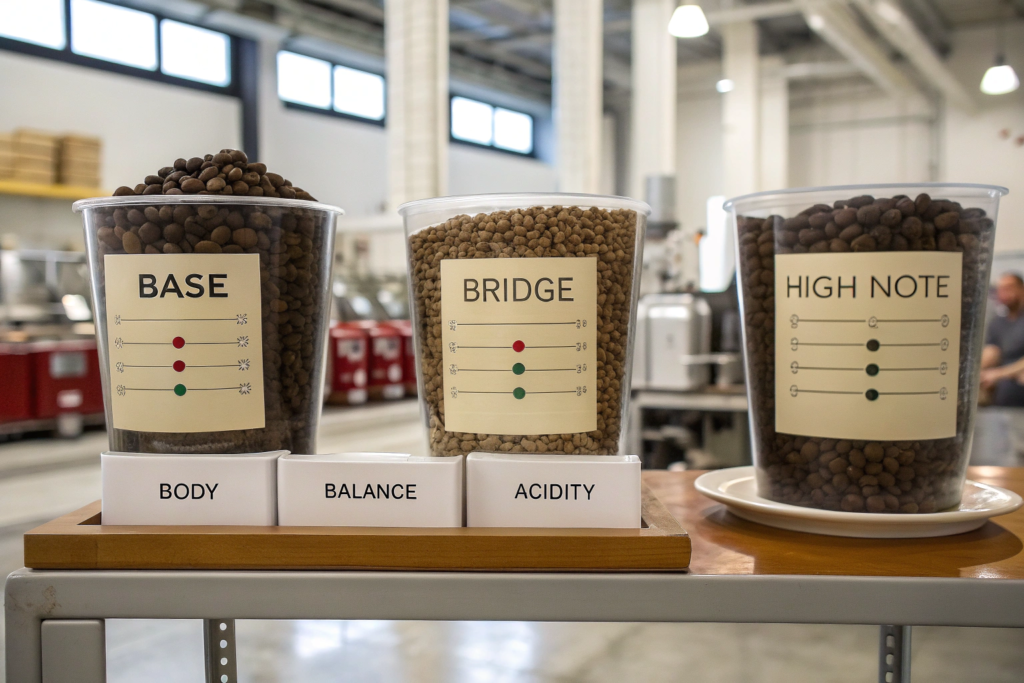
Think of blending like building a musical chord: you need foundational bass notes, supporting middle tones, and bright high notes that together create pleasing harmony.
What Are the Classic Component Roles?
- Base note (50-70%): Provides body, sweetness, and foundational flavor (e.g., Brazilian, Sumatran, our Yunnan)
- Bridge/balance (20-40%): Adds complexity and balances extremes (e.g., Colombian, Guatemalan)
- High note (10-20%): Contributes brightness, aroma, and distinctive character (e.g., Ethiopian, Kenyan)
This structural approach ensures each bean has a clear purpose rather than just adding beans until the flavor seems "interesting."
How Do You Match Beans by Processing Method?
Processing compatibility matters:
- Washed beans often provide clean acidity that works well as high notes
- Natural processed beans add fruitiness and body but can dominate if overused
- Honey processed offer sweetness that can bridge washed and natural
- Monsooned or aged beans add unique earthy notes for specific profiles
Mixing processing methods can create exciting complexity but requires careful balancing to prevent flavor clashes. This processing awareness helps predict how components will interact.
What is the Systematic Blending Process?
Random mixing wastes time and coffee. A methodical approach yields better results faster and helps you replicate successful blends consistently.
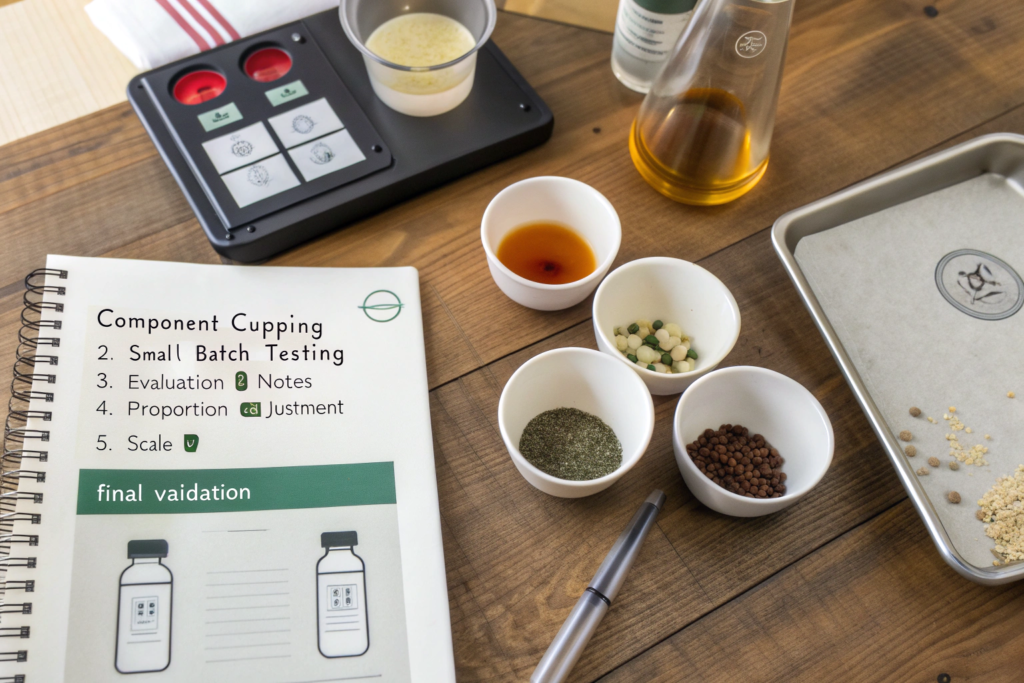
The professional process involves cupping components individually, creating small test blends, evaluating results, adjusting proportions, and scaling successful formulas.
How Do You Conduct Component Analysis?
Before blending, cup each potential component separately and note:
- Strength of attributes: How pronounced is the acidity? How heavy is the body?
- Flavor persistence: Which notes appear first vs. linger?
- Potential flaws: Any undesirable characteristics to mask or dilute?
- Roast compatibility: How does each bean develop at different roast levels?
This component intelligence allows you to make informed predictions rather than random combinations.
What's the Step-by-Step Testing Protocol?
- Start small: Create 100g test blends using precise gram scales
- Roast components separately to optimize each bean's development
- Blend after roasting for maximum control (post-roast blending)
- Rest beans 24-48 hours before cupping to allow degassing
- Cupe blindly against your target profile and single components
- Document everything: proportions, roast levels, tasting notes
- Iterate systematically: Change one variable at a time
This scientific approach transforms blending from mystical art to repeatable process.
How Does Roast Level Affect Blend Harmony?
Roasting can make or break a blend. Components roasted together may develop unevenly, while roasting separately allows optimization but increases complexity.
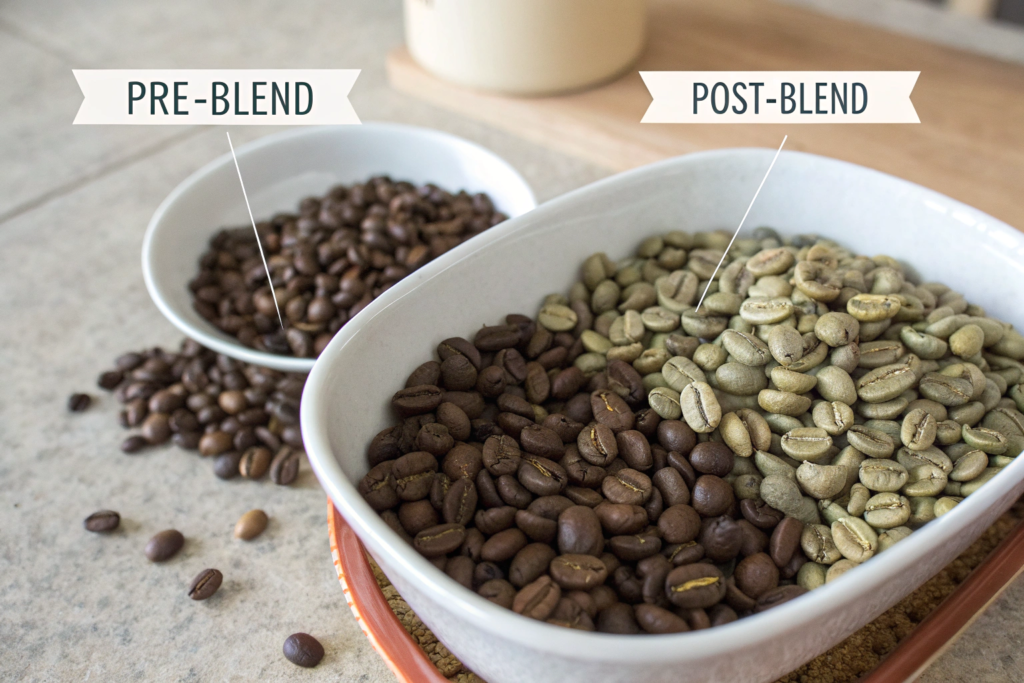
The roast profile decision—whether to roast components together (pre-blend) or separately (post-blend)—significantly impacts the final flavor balance and operational workflow.
What Are the Pros and Cons of Each Approach?
Post-roast blending (components roasted separately):
- ✅ Pros: Optimal development for each bean, easier to adjust ratios, flexibility
- ❌ Cons: More roasting batches, inventory complexity, potential consistency challenges
Pre-blend roasting (components roasted together):
- ✅ Pros: Operational simplicity, consistent flavor marriage, fewer batches
- ❌ Cons: Compromised development for some beans, harder to adjust
Most specialty blenders prefer post-roast blending for quality control, while commercial operations often choose pre-blending for efficiency.
How Should You Adjust Roast Profiles for Components?
Consider these guidelines:
- Denser beans (high altitude) often need more heat/development
- Lighter roasts preserve acidity for high-note components
- Medium roasts develop sweetness for base components
- Different bean sizes may require separate roasting anyway
- Testing is essential: Roast the same blend both ways and compare
Your roast strategy should serve your flavor goals rather than just operational convenience.
How Do You Evaluate and Refine Your Blend?
Creating a blend is iterative. The first attempt is rarely perfect, but systematic evaluation and adjustment lead to continuous improvement.
Evaluation should be both objective (using standard cupping forms) and subjective (considering your target market's preferences).
What Evaluation Criteria Matter Most?
Use a standardized scoresheet assessing:
- Balance: Do components work together or fight?
- Complexity: Is there layered flavor development?
- Aftertaste: Is the finish pleasant and appropriate?
- Body/Mouthfeel: Does it match your target weight?
- Acidity: Is it at the desired level and quality?
- Overall harmony: The subjective "does this work?" question
Compare test blends against your target profile description from the planning stage.
How Do You Adjust Proportions Effectively?
When a blend isn't quite right:
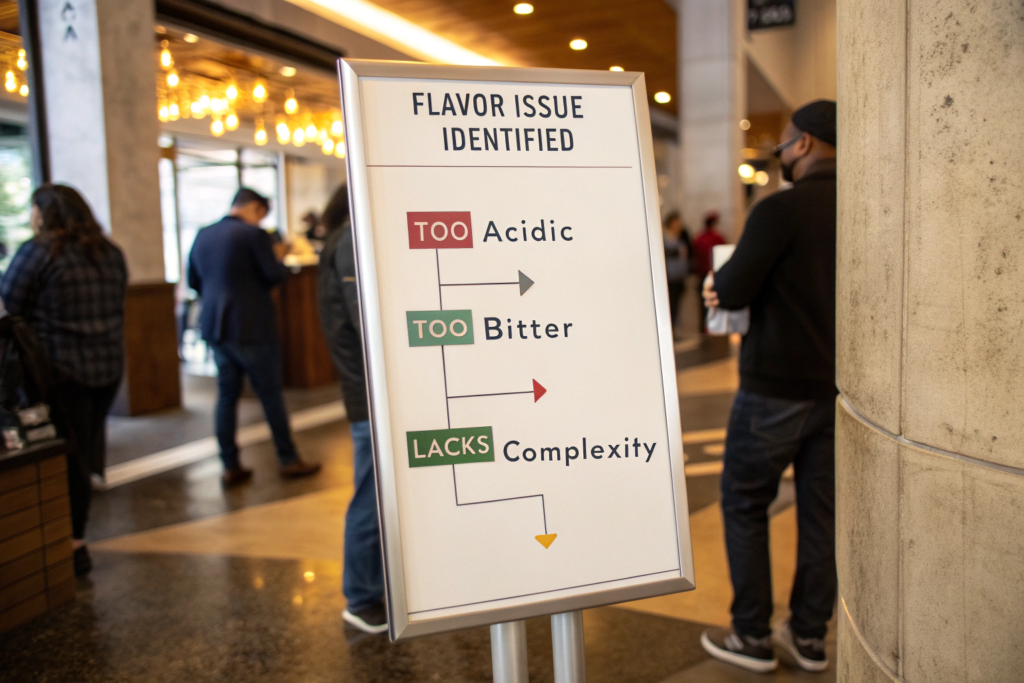
- Too acidic/bright: Increase base percentage or add a balancing component
- Too flat/muted: Increase high-note percentage or add a brighter component
- Lacks body: Increase base percentage or switch to a heavier-bodied base
- Unpleasant aftertaste: Identify which component causes it and reduce or replace
Change only one variable at a time and keep detailed notes to understand what each adjustment achieves.
What Are Common Classic Blend Formulas?
While innovation is valuable, understanding established blend styles provides a foundation for your own creations. Many beloved profiles follow time-tested patterns.
Classic combinations have endured because they create reliable, pleasing results that appeal to broad audiences while allowing for creative variation.
What Are Some Proven Combinations?
- Breakfast Blend: Latin American beans (Colombian/Brazilian) + African brightness
- Espresso Blend: Brazilian/Sumatran base + Ethiopian/Kenyan brightness + Indonesian spice
- Mocha Java: Ethiopian natural (fruit) + Indonesian (earth/chocolate) - one of history's first blends
- After Dinner Blend: Central American sweetness + Indonesian body + Ethiopian aroma
These template approaches can be adapted with your specific bean selections while maintaining the structural logic that makes them work.
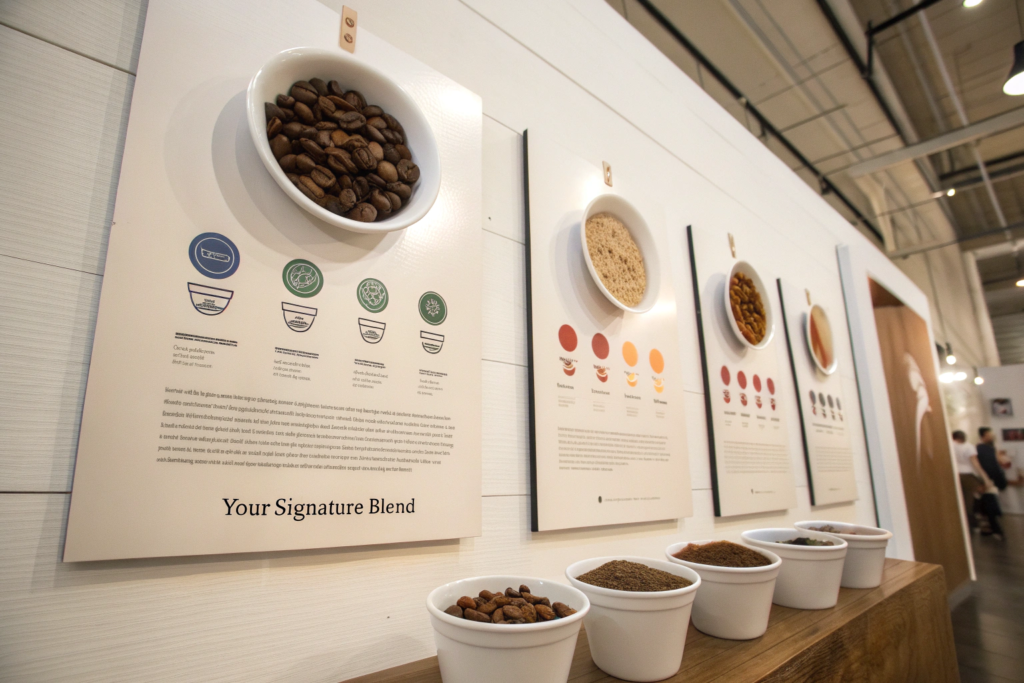
How Can You Create Your Signature Blend?
Start with a classic structure, then innovate:
- Substitute components with similar characteristics from different origins
- Adjust proportions to emphasize your preferred attributes
- Add a unique component (like our Yunnan with its distinct profile)
- Experiment with processing methods within the structure
- Test extensively with your target customers
The goal is creating something recognizably yours while standing on the shoulders of blending tradition.
Conclusion
Blending coffee beans for better flavor is a disciplined creative process that combines sensory analysis, systematic testing, and iterative refinement. Successful blends balance complementary characteristics to achieve specific goals—whether consistency, complexity, cost optimization, or brew method performance.
The most effective approach starts with clear objectives, analyzes components thoroughly, tests methodically, and refines based on structured evaluation. While blending requires more effort than selling single origins, the rewards include product differentiation, year-round consistency, and the satisfaction of creating unique flavor experiences. If you're developing blends and want to explore how our Yunnan beans can serve as versatile base or distinctive components, contact our export manager, Cathy Cai, at cathy@beanofcoffee.com. We provide detailed profiles to help blenders understand how our coffees will interact with other origins.