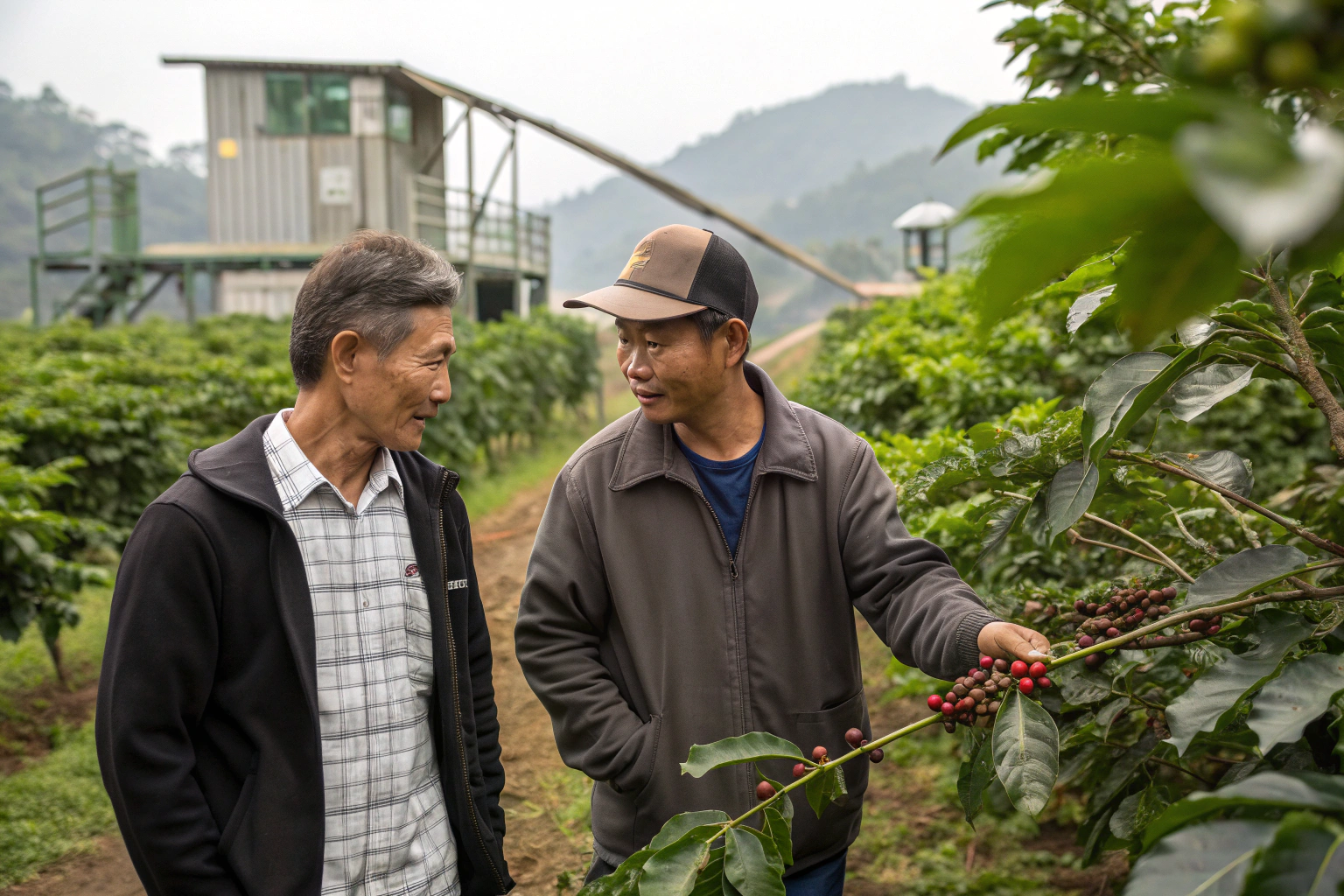
You've found a fantastic coffee from a small farm in Yunnan. The quality is unique, and you want to secure it for your brand. But how do you move from a one-time transaction to a lasting partnership that ensures a stable supply of this great coffee year after year? For a business owner focused on security and reliability like Ron, this isn't just a feel-good idea; it's a strategic supply chain imperative. In a volatile market, a strong relationship with a farmer is your best insurance against quality inconsistency, supply shocks, and unpredictable pricing.
So, how do you build a long-term relationship with coffee farmers? It’s about shifting from a buyer-seller dynamic to a true partnership. This means committing to transparency, shared risk and reward, and investing in the future of the farm beyond just writing a check. At Bean of Coffee, as farmers ourselves managing large plantations and as partners to smaller local growers in Yunnan, we live on both sides of this equation. The most successful, resilient supply chains we see are built on these foundational principles.
Let's explore the practical steps to build a partnership that benefits both your business and the farming community, creating a virtuous cycle of quality and trust.
Why is moving beyond price crucial for long-term partnerships?
If your relationship is defined solely by the price per pound negotiated each year, it will be fragile and transactional. When a higher bidder comes along, you may lose your supply. When the market crashes, the farmer may be left in crisis. A long-term partnership is built on shared value, where both parties have a stake in each other's success.
This means discussing and agreeing on principles that go beyond the commodity price. It’s about stability, quality, and mutual growth. Think of it as co-investing in an asset—the farm and its coffee.

What does a "price floor" or cost-covering agreement look like?
One of the most powerful ways to build trust is to guarantee the farmer a minimum price that covers their cost of production plus a fair margin, regardless of how low the volatile "C" market price falls. This is often part of a multi-year purchasing agreement.
For example, you might agree: "We will purchase your entire harvest of Lot A for the next three years at a price of $X/lb, or the market price + Y¢ premium, whichever is higher." This gives the farmer the financial security to invest in better farming practices, equipment, and labor without fear of ruin. For you, it secures supply and incentivizes the farmer to prioritize your quality standards over others. This is a core part of how we structure deals with our partner growers at Bean of Coffee.
How can you align on quality and invest in improvement?
Quality should be a collaborative goal, not just a buyer's demand. This involves:
- Setting Clear, Transparent Standards: Agree on objective quality metrics (screen size, moisture, defect count, cupping score). Provide the farmer with the feedback from your roaster and end customers.
- Funding Quality Investments: This could be a pre-harvest financing advance for selective picking labor, a contribution towards a new moisture meter for the drying patio, or a bonus for achieving a higher cupping score. Your investment directly improves the product you receive.
- Sharing Knowledge: Connect the farmer with agricultural experts or share findings from other origins. Knowledge is a valuable currency. The Specialty Coffee Association has resources that can be shared in this spirit of collaboration.
How does transparency and consistent communication build trust?
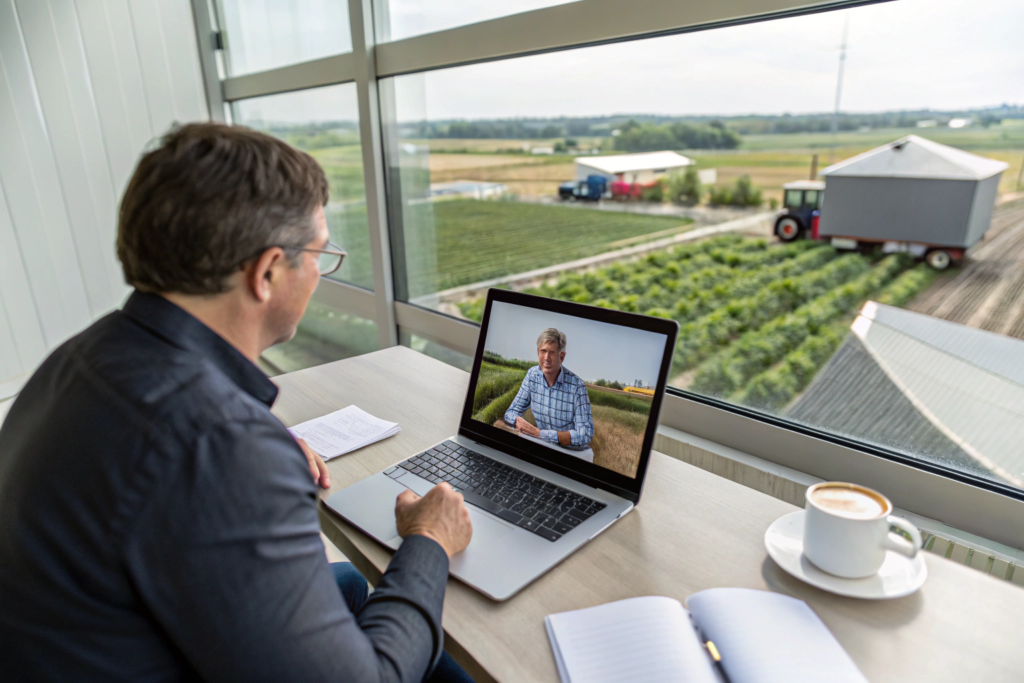
Trust is the currency of a long-term relationship, and it is built through consistent, honest, and respectful communication. The farmer is your most important production partner; treat them with the same level of engagement as you would an internal department.
This means communicating not just at harvest time, but throughout the year. Share your successes and challenges too.
What should be included in regular, structured communication?
Move beyond sporadic emails. Establish a rhythm:
- Pre-Harvest Planning: Discuss expected volume, any changes in processing, and confirm quality targets.
- Harvest Updates: Regular check-ins on progress, weather challenges, and initial quality observations.
- Post-Harvest Review: Share the formal cupping scores and feedback from your roasting team. Be specific about what was great and what could be even better next year.
- Financial Settlement: Be prompt and clear with payments. Provide a transparent breakdown of the final price calculation (differential, premiums, deductions).
- Off-Season Connection: Check in. Ask about family, plans for the farm, and challenges they foresee. This shows you care about them as people, not just suppliers.
Why is visiting the farm in person so transformative?
A site visit is the single most effective relationship-building tool. It does several things:
- Shows Commitment: It demonstrates that you value the partnership enough to invest time and money to be there.
- Builds Empathy: You witness firsthand the challenges of farming—the weather, the labor, the logistics. This creates a deeper understanding that can't be built over email.
- Solves Problems Faster: Walking the fields and processing station together allows for immediate, collaborative problem-solving.
- Strengthens the Story: It provides authentic content and stories you can share with your customers, adding immense value to your brand.
What are tangible ways to invest in the farm and community?
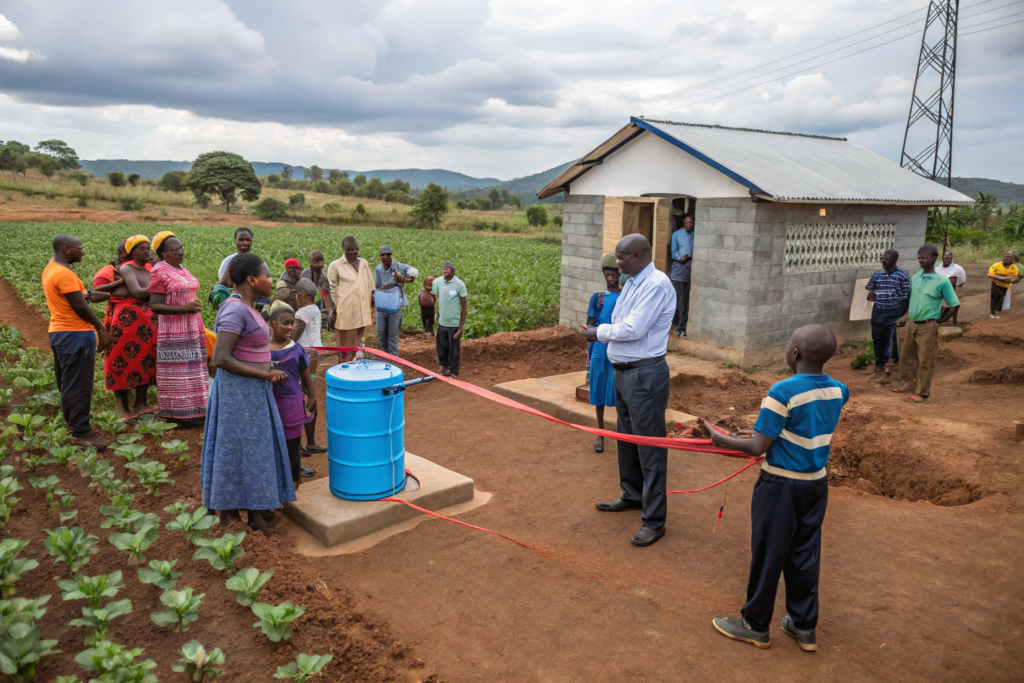
Financial investment in the crop is one thing; investing in the farm's infrastructure and the well-being of the community solidifies a partnership for generations. It shows you are invested in their future, not just their current harvest.
These investments should be collaborative and aligned with the farm's own goals. Ask: "What is your biggest challenge, and how can we help you solve it?"
How can you support infrastructure and environmental projects?
Consider co-investing in projects that improve quality of life and environmental sustainability:
- Processing Infrastructure: Contributing to a new raised drying bed, a eco-pulper, or a covered fermentation tank directly improves coffee quality and consistency.
- Renewable Energy: Helping to install solar panels for the processing mill reduces the farm's operating costs and environmental footprint.
- Water Treatment: Investing in a wastewater management system protects the local watershed and is a huge burden lifted from the farmer.
- Reforestation/Shade Projects: Supporting agroforestry initiatives improves biodiversity, soil health, and long-term climate resilience for the farm.
Why is supporting community well-being a smart investment?
A stable, healthy, and skilled community is essential for a farm's long-term success. Your support can include:
- Healthcare Access: Facilitating health check-ups or contributing to health insurance for farm workers.
- Education: Scholarships for farmers' children or funding for a local school library. This invests in the next generation.
- Food Security: Supporting projects that ensure farming families have consistent access to nutritious food outside of the coffee season.
These actions build immense goodwill and loyalty. They show you see the farm as part of a living community, not an isolated factory.
How do you structure formal agreements that protect both parties?
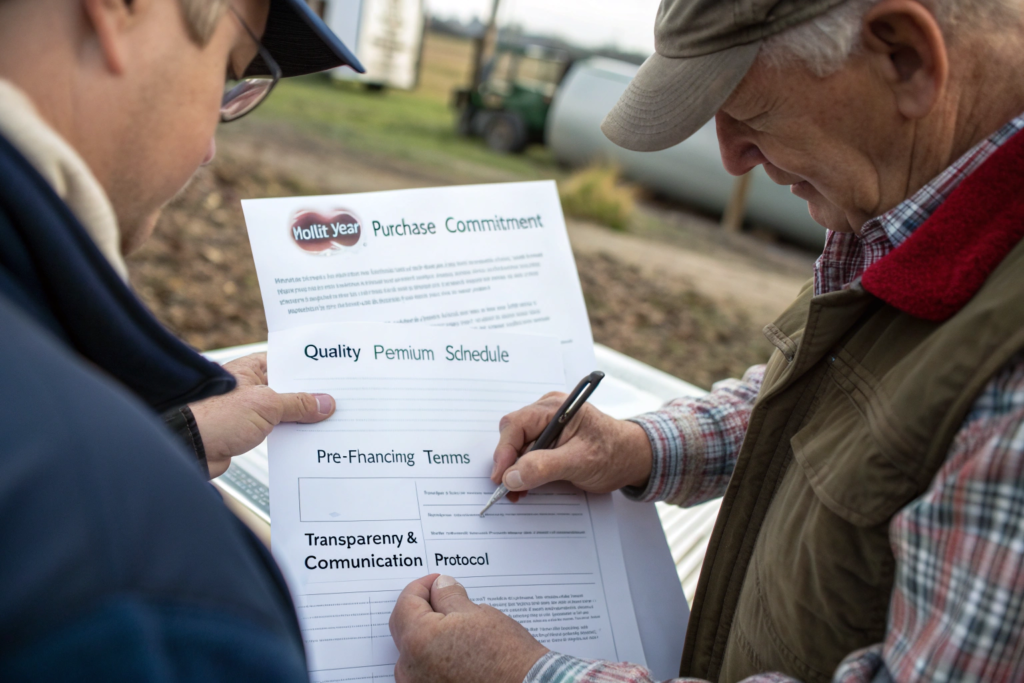
While trust is foundational, a clear, fair written agreement is what makes a partnership durable and professional. It prevents misunderstandings and provides a reference point for the relationship.
The agreement should feel like a win-win, not a one-sided contract imposed by the buyer.
What are the key clauses in a farmer partnership agreement?
A strong agreement includes:
- Term and Volume Commitment: Duration (e.g., 3-5 years) and an agreed volume range or right of first refusal on the farm's output.
- Pricing Mechanism: A clear formula (e.g., NY "C" + fixed premium, with a guaranteed price floor). Include premiums for quality achievements.
- Pre-Financing or Crop Advance: Terms for providing a percentage of the estimated contract value before harvest to cover farm expenses.
- Quality Specifications: The agreed-upon grading standards and how disputes will be resolved (e.g., third-party cupping).
- Payment Terms: Clear timeline for payment upon shipment or delivery of documents.
- Transparency and Visit Rights: Agreement on sharing cost data and the buyer's right to visit.
How do you handle challenges and disagreements?
Even the best partnerships face challenges—a poor harvest, a quality issue, a market crash. The strength of the relationship is tested here.
- Have a Pre-Defined Process: The agreement should outline steps for mediation, perhaps involving a trusted third party from a local cooperative or exporter.
- Focus on Problem-Solving, Not Blame: Approach issues with a "how can we solve this together" mindset. If a harvest is small, can you adjust the volume commitment? If quality is off, can you work on a joint improvement plan for next year?
- Honor Your Commitments: If you guaranteed a price floor and the market collapses, paying that price is the ultimate test of your integrity. It will earn you loyalty for decades.
Conclusion
Building a long-term relationship with coffee farmers is a transformative business strategy that replaces transactional uncertainty with partnership stability. It is built on a foundation of fair financial agreements that share risk and reward, radical transparency in communication, tangible investments in the farm's future, and formal commitments that protect both parties.
This approach does more than secure great coffee; it builds a resilient, ethical, and story-rich supply chain that becomes a core asset of your brand. It turns sourcing from a cost center into a source of innovation, quality, and shared pride.
If you are ready to move beyond transactional buying and build a genuine partnership at origin, talk to us. At Bean of Coffee, we have built our company on these principles, both on our own farms and with our partner growers. Let us help you connect with and build a lasting relationship with the source of your coffee. Contact our export manager, Cathy Cai, at cathy@beanofcoffee.com to start a conversation about partnership sourcing from Yunnan.