You are constantly bombarded with offers from suppliers all over the world. You receive emails with promises of "premium quality" and "best prices." But you're rightfully skeptical. You've heard horror stories: a beautiful sample arrives, but the full container that follows is of a completely different, lower quality. A supplier disappears after receiving a deposit. A shipment is delayed for weeks with no explanation. This is the core pain point: you need to source great coffee to grow your business, but every new, unvetted international supplier represents a significant financial and reputational risk. You're looking for a partner, but all you see are potential problems.
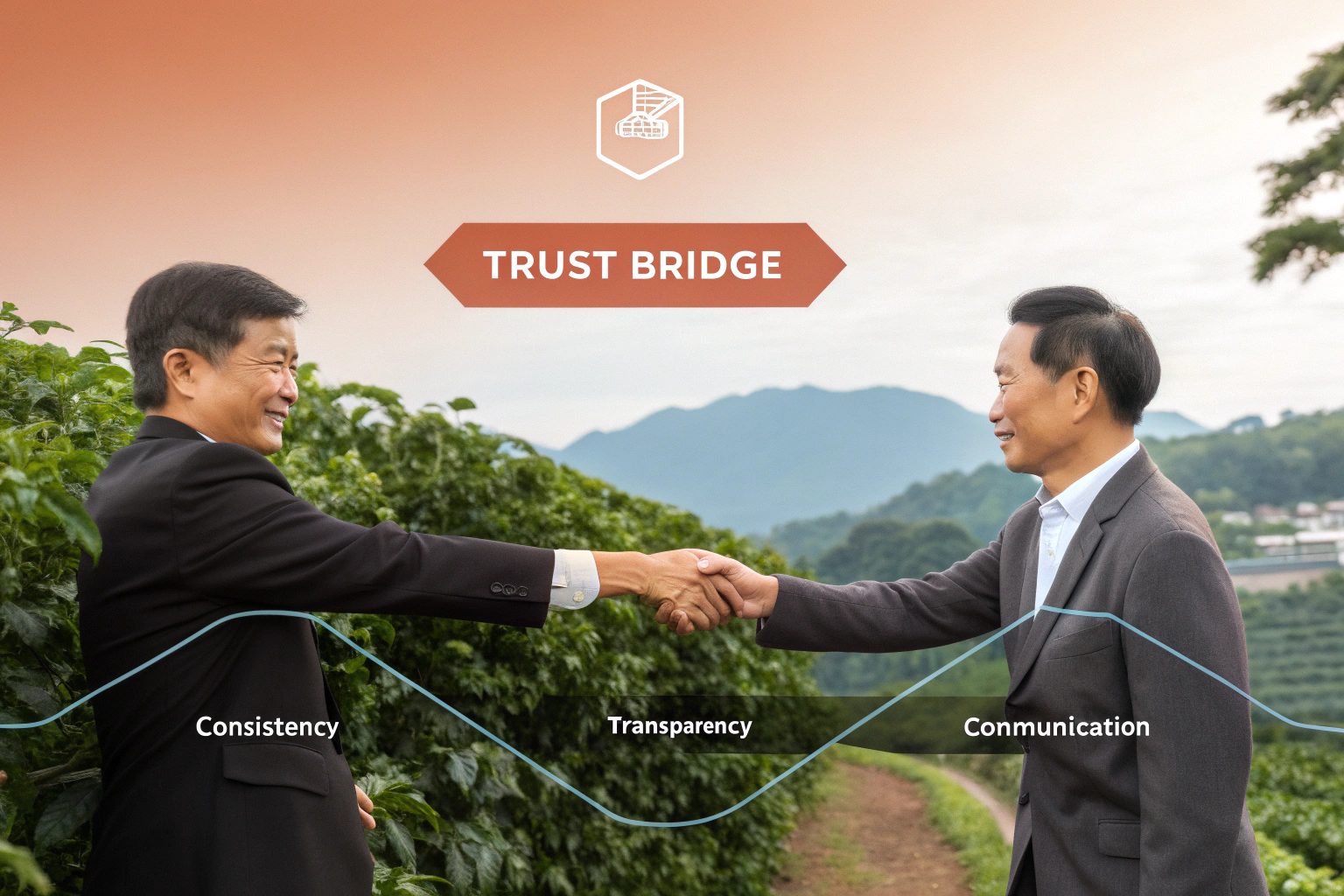
Honestly, building trust with an international buyer has very little to do with sales pitches and everything to do with demonstrating unwavering reliability over time. It's a process built on three fundamental pillars: 1) Radical Transparency in your product and pricing. 2) Obsessive Consistency between your samples and your bulk shipments. And 3) Proactive, Honest Communication, especially when things go wrong. Trust isn't given; it's earned, one container, one email, one honest conversation at a time.
From my position as the owner of Shanghai Fumao, I tell my team that our job is not to "sell coffee." Our job is to eliminate risk and uncertainty for our clients. We are not just a supplier; we are their trusted partner on the ground in China. We know that a buyer's trust is the most valuable contract we will ever sign. Let's break down the concrete actions we take—and that you should look for—to build that bridge of trust across oceans.
How Do You Prove Your Product?
Promises are cheap. Proof is everything. A trustworthy supplier doesn't just tell you their coffee is good; they provide the evidence to back it up and welcome your scrutiny.
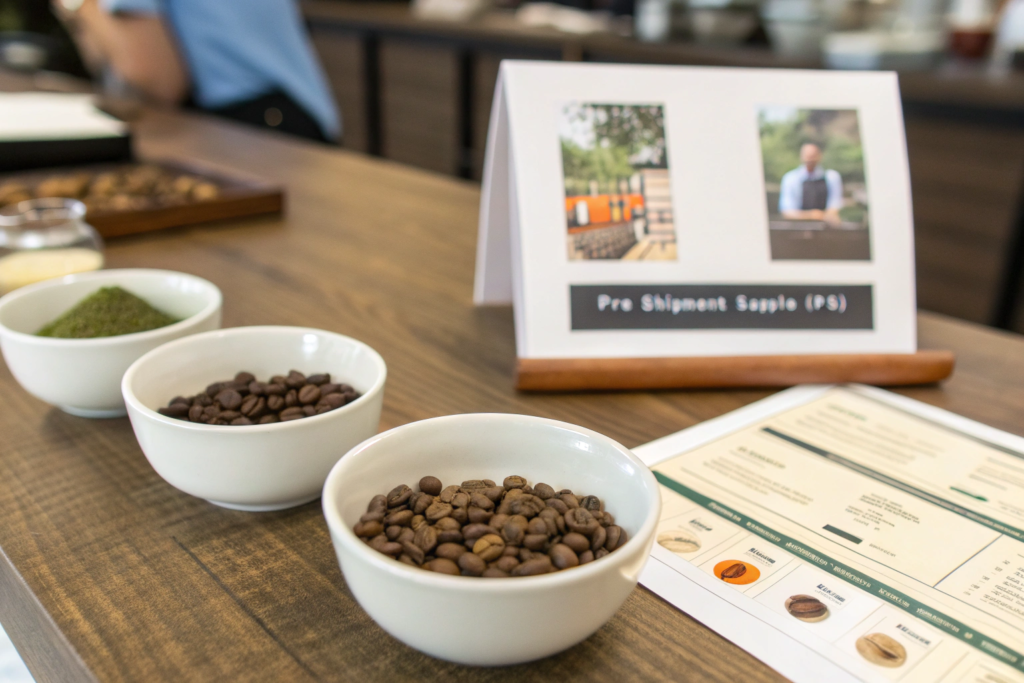
A great sample is nice, but how do I know the whole container will be the same? This is the million-dollar question, and the answer lies in a transparent, multi-step verification process. A trustworthy supplier will insist on this process because it protects both parties. The key is the Pre-Shipment Sample (PSS). This is a sample drawn from the exact lot of coffee that has been bagged and prepared for your specific shipment. You get to approve this final sample before the container is sealed and shipped. This PSS is your insurance policy. It must match the original offer sample you approved.
What does radical transparency look like in practice?
- Traceability Data: We don't just say "Yunnan coffee." We provide the region (Baoshan), the washing station, the altitude, the processing method, and the varietal for every specialty lot.
- Third-Party Certifications: We readily provide our official organic or other certification documents and direct you to the public databases where you can verify them independently. We have nothing to hide.
- Photos and Videos: We share photos of the farm, the processing, and even the bags being stacked for your shipment. We want you to see what's happening.
How does the sampling process build trust?
- Offer Sample: The initial sample you receive to make your purchasing decision.
- Pre-Shipment Sample (PSS): The sample from the actual container lot that you approve before shipping.
- Arrival Sample: The sample you draw yourself when the container arrives at your warehouse.
When all three of these samples are consistent, trust is no longer a question; it's a proven fact. Any supplier who is hesitant to follow this process should be a major red flag.
How Do You Build Confidence Through Communication?
In international trade, silence is not golden; it's terrifying. When a buyer sends a deposit and then hears nothing for weeks, their anxiety skyrockets. Proactive, clear, and honest communication is the antidote to this fear.
What if there's a problem, like a shipping delay? This is the ultimate test of a partnership. A bad supplier will hide the problem or, worse, lie about it. A trustworthy partner will communicate the problem early, explain the reason, and present a solution. For example: "Good morning. I wanted to let you know that the shipping line has informed us of a 3-day delay due to port congestion. We have already filed the paperwork to extend your free time at the destination to ensure you don't face any penalties. I will keep you updated daily." This kind of honesty doesn't break trust; it builds it. It shows the buyer you are on their side, actively managing the situation.

What are the hallmarks of trustworthy communication?
- Responsiveness: Replying to emails within one business day.
- Proactive Updates: Sending updates at key milestones without being asked ("Your container has been loaded," "The vessel has departed," "Here is the tracking information").
- Accessibility: Being willing to jump on a video call. A video call can build more rapport in 15 minutes than 100 emails. It shows you are a real person and not just an anonymous email address.
- Clarity: Using clear, simple language and avoiding jargon. If there's a language barrier, using translation tools effectively and confirming understanding.
Why is a "factory tour" via video call so powerful?
Offering to walk a buyer through your facility on a live video call is a massive trust-builder. It's an open invitation to "come and see" for themselves. We love doing this. We can show them our green bean sorting lines, our cupping lab, and the very bags of coffee being prepared for their order. It makes the entire operation real and tangible.
How Do You Demonstrate Long-Term Reliability?
Trust is not a one-time event. The first successful order is just the beginning. True, deep trust is built on a foundation of consistency, shipment after shipment, year after year.
How do I know they won't switch to a lower quality bean on the third or fourth order? This is a valid fear, and it's why a supplier's long-term reputation is so important. A supplier focused on building a sustainable business knows that their reputation is their most valuable asset. They would never sacrifice a long-term, profitable relationship for a small, one-time gain from cheating on a single order. The goal for a good supplier is not to make one sale; it's to become your go-to, indispensable partner for that origin.
What are the signs of a long-term-oriented supplier?
- They Invest in You: They remember your preferences. They might send you samples of new, experimental lots they think you'll like, even before you ask.
- They Seek Feedback: They ask you how the coffee is roasting and how it's being received by your customers. They want to be a part of your success.
- They Talk About the Future: They discuss the upcoming harvest, potential quality, and market trends. They are helping you plan your business for the next year, not just the next shipment.
- They Have References: A well-established, trustworthy supplier will have a list of long-term clients in non-competing markets who are willing to act as a reference.
How do you, the buyer, contribute to this relationship?
Trust is a two-way street. To be treated like a valued partner, you must act like one.
- Pay on Time: Adhering to the agreed-upon payment terms is the most important way to build trust with your supplier.
- Communicate Your Plans: Share your business goals and forecasts. The more your supplier knows about your needs, the better they can serve you.
- Provide Constructive Feedback: If there's an issue, communicate it clearly and professionally. If the coffee is great, tell them! This feedback loop is essential for growth.
How Do You Align on Values and Ethics?
In today's market, trust is about more than just product quality and logistics. It's about knowing that your partner shares your fundamental values regarding ethical and sustainable practices.
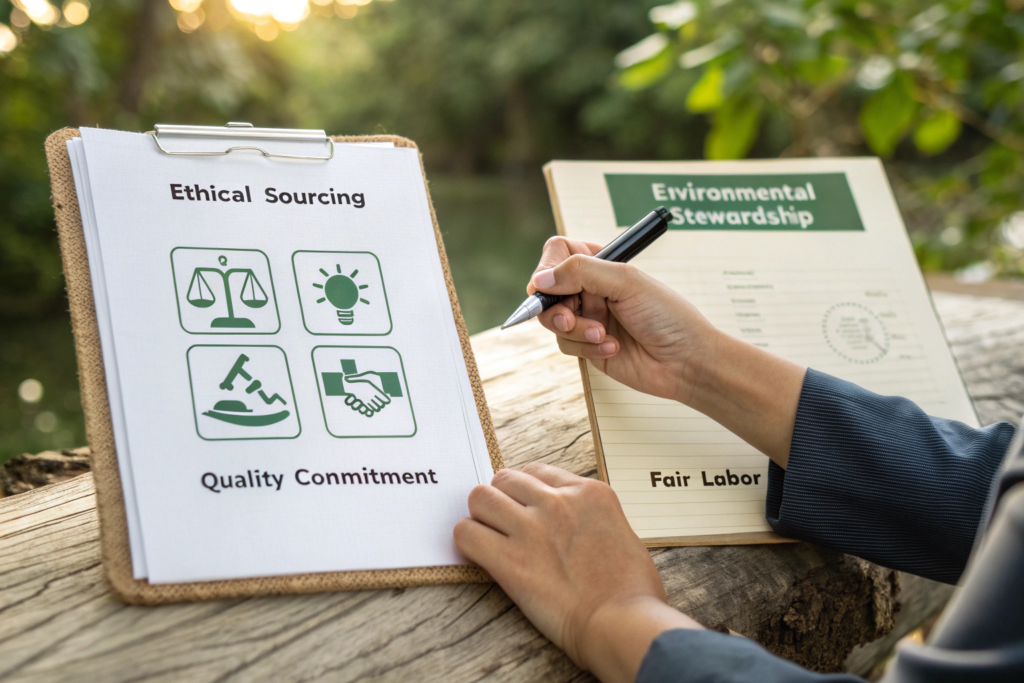
How can I be sure they are not using child labor or harming the environment? You can't just take their word for it. This is where you need to look for external validation and a willingness to be transparent about their operations. A supplier who is truly ethical will be proud to talk about their practices and provide evidence. This is about moving from a transactional relationship to a values-aligned partnership.
What are the signs of an ethical supplier?
- They Welcome Tough Questions: They are not defensive when you ask about their labor practices, their environmental impact, or how they treat the farmers they work with.
- They Hold Certifications: While not the only measure, certifications like Fair Trade or Rainforest Alliance show a commitment to meeting third-party standards.
- They Have a Story to Tell: They can tell you about their community initiatives, their efforts in water conservation, or their programs for farmer education. At our company, BeanofCoffee.com, our connection to the land and the community in Yunnan is the core of our identity.
Why does this build the deepest trust?
When you know that your partner shares your core values, you can trust them on a much deeper level. You know they will do the right thing, not just when it's easy, but when it's hard. You know that your business is contributing to a positive impact at the source. This alignment creates an incredibly strong and resilient partnership that can weather any storm.
Conclusion
Building trust across continents is a deliberate and methodical process. It's an investment of time, communication, and consistency that pays the highest possible dividends: a secure, reliable, and profitable supply chain. It's about replacing fear and uncertainty with proof and predictability. By demanding transparency, insisting on a rigorous sampling process, fostering open and honest communication, and seeking out partners who share your long-term vision and ethical values, you can build a global partnership that is as strong and reliable as the coffee in your cup.
We built our entire business on this philosophy. We understand that our success is directly tied to the success and confidence of our buyers. We invite you to put our commitment to the test. Contact our coffee specialist at cathy@beanofcoffee.com to begin a conversation and experience a new level of trust in international sourcing.