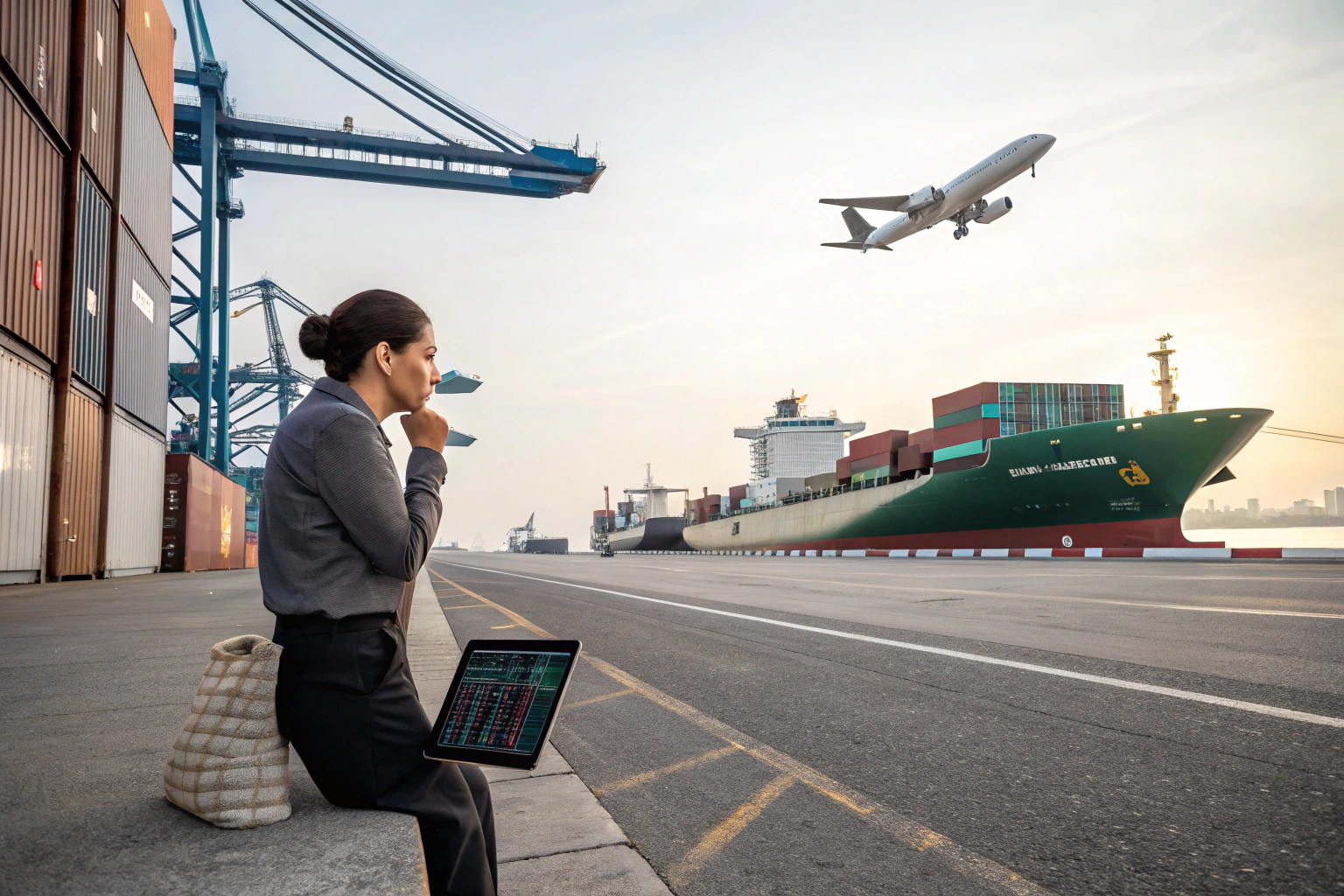
You've finalized an order for premium Yunnan Arabica. The contract is signed, and the beans are ready to ship. Now comes a critical, cost-impacting decision: how do they travel to you? Choosing the wrong freight method can erase your profit margin, delay your production, or even compromise the coffee's quality. For a buyer like Ron, who is laser-focused on price and timeliness, this choice is a strategic pivot point.
So, how do you choose between sea freight and air freight for coffee? The answer isn't one-size-fits-all; it's a balancing act between cost, time, and product characteristics. Generally, sea freight is the go-to for cost-effective, large-volume shipments of stable green beans, while air freight is a strategic tool for urgent, high-value, or small-lot specialty coffees. At Bean of Coffee, we guide clients through this matrix daily, because getting it right is part of delivering on our promise of being reliable and trustworthy.
Let's unpack the pros, cons, and hidden factors of each option, turning a complex logistics decision into a clear, calculated choice for your business.
What are the core differences in cost and speed?
This is the most immediate trade-off. Sea freight is slow and cheap per unit. Air freight is fast and expensive per unit. But looking only at the headline numbers is a mistake. You need to calculate the total cost of each option and weigh it against the real value of time for your specific situation.
For a large roasting company with steady inventory, a few weeks' delay might mean nothing. For a small specialty roaster launching a limited single-origin, a week could be everything. The "timeliness" pain point isn't abstract—it's about cash flow, shelf space, and customer promises.
How much cheaper is sea freight, really?
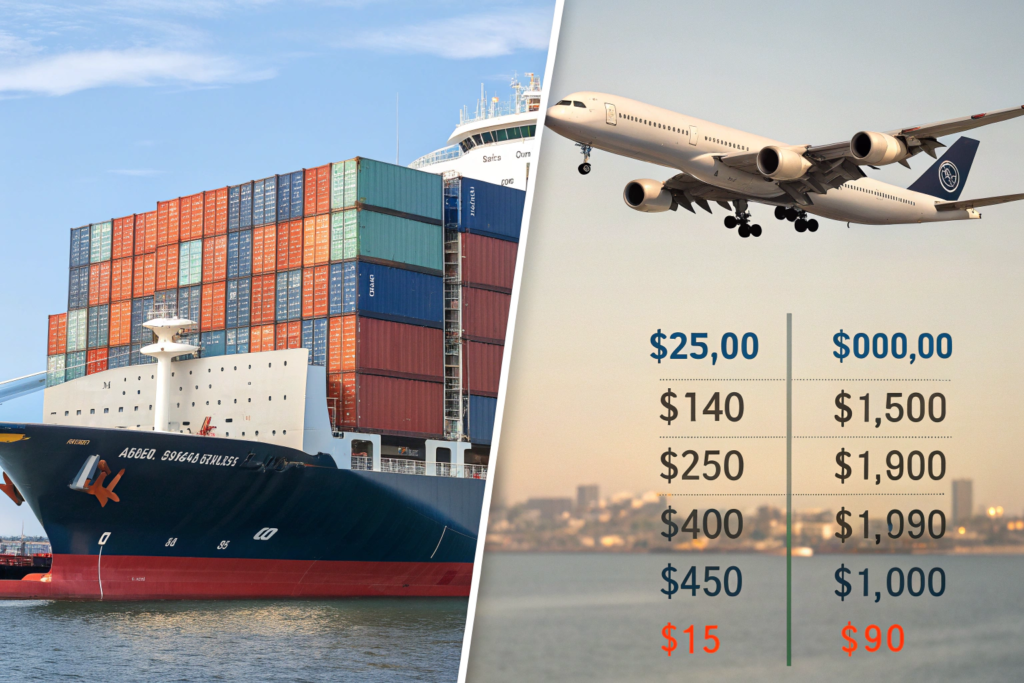
Sea freight costs are typically calculated per container (e.g., a 20-foot or 40-foot container). The cost per kilogram of coffee becomes very low. For example, shipping a 20-ton container might cost a few thousand dollars, translating to just cents per pound.
But here’s what often gets missed—the ancillary costs. You have port charges, customs clearance fees, and longer-term warehousing if your planning isn't tight. Also, the capital is tied up in inventory for 6-8 weeks in transit. For a large, stable contract, this is efficient. For a small, quick-turn order, the per-unit savings might be eaten by fixed overheads. You must use a reliable freight forwarder who provides a clear landed cost estimate, not just the ocean freight quote. Organizations like the National Coffee Association USA often discuss these total cost considerations.
When does air freight's speed justify its price?
Air freight costs are calculated per kilogram (chargeable weight), often 5-10 times more expensive than sea freight. So, you need a compelling reason to pay that premium.
Justification comes down to urgency and value preservation:
- Avoiding Stock-Outs: If your warehouse is empty and your roaster is idle, the cost of air freight might be less than the cost of lost sales and idle labor.
- Capturing Market Opportunity: Launching a seasonal, hyped coffee? Getting it to market first can command a higher price that offsets the freight.
- Preserving Extreme Freshness: For some ultra-high-end microlots, roasters believe the sensory degradation over a 45-day sea voyage is perceptible. Air freight (5-7 days door-to-door) preserves that "just landed" freshness.
Air freight also simplifies things—fewer handling points, less exposure to moisture cycles, and faster customs clearance. It’s not just speed; it’s a reduction in logistical risk.
How does shipment size and volume affect the choice?
Your order quantity is the most objective factor guiding this decision. The economies of scale for sea freight are massive, but they come with a minimum volume requirement that doesn't fit every business.
Think of it this way: sea freight is like wholesale buying, and air freight is like retail buying. One requires commitment and storage space; the other offers flexibility and immediacy. This directly relates to a buyer’s operational model and financial flexibility.
What is the minimum volume for cost-effective sea freight?
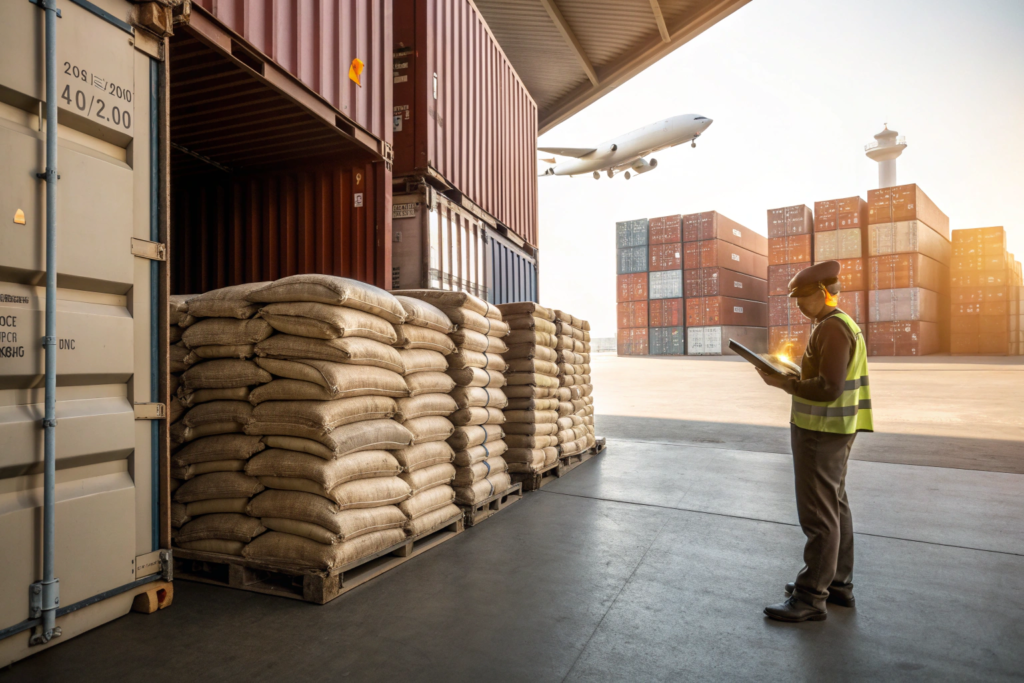
The practical minimum for sea freight is a Less than Container Load (LCL) shipment. This is where your pallets share a container with other shippers' goods. It's more expensive per cubic meter than a Full Container Load (FCL), but it allows access to sea freight for smaller volumes.
However, LCL has downsides. The transit time is longer due to consolidation and deconsolidation at hubs. There's also a higher risk of damage or contamination from other cargo. For coffee, which is sensitive to odors, this is a real concern. As a rule of thumb, if your order is above 2-3 standard pallets (about 1,000-1,500 kg), LCL becomes feasible. Below that, air freight is almost always more sensible. We help our Bean of Coffee clients model this break-even point based on their exact order size.
When is air freight the only practical option for volume?
For very small orders—sample sizes, test batches, or boutique roaster orders of a few hundred kilograms—air freight is not just an option; it's the only practical one.
Most shipping lines and freight forwarders have minimum volume or cost requirements for LCL that make tiny sea shipments prohibitively expensive and slow on a per-unit basis. Air couriers like DHL, FedEx, and UPS are built for this. They offer door-to-door service, real-time tracking, and handle all customs brokerage. The premium is high, but the order size makes the total dollar amount manageable. It’s the cost of doing business for flexibility and innovation. If you're sourcing new varieties like our Yunnan Catimor for a test roast, this is the way to go.
What are the hidden risks and quality considerations?
Beyond cost and speed, the method of transport creates different environments for your coffee. These hidden factors can affect quality, which in turn affects value. A decision based solely on spreadsheets might miss the physical reality of the journey.
Moisture, temperature fluctuations, and transit time are the key players here. Sea freight exposes coffee to a longer period of potential humidity changes (container sweat), while air freight subjects it to rapid pressure changes but for a much shorter duration.
How does transit time impact green coffee stability?
Green coffee is a stable product, but it's not inert. It continues to slowly respire and release gases. Over a long sea voyage (30-50 days), beans can lose some aromatic complexity—what green coffee buyers call "arrival loss." This is usually minor for well-dried, properly packaged beans but is a consideration for the absolute top tier of specialty lots.
The longer time also means a longer window for something to go wrong: port strikes, weather delays, or customs holds. This ties directly to the "inefficient sailing schedules" pain point. Air freight's short timeline (3-7 days) dramatically shrinks this risk window. For a roaster who has built a brand on hyper-fresh, distinct origin profiles, this preservation of character can be worth the freight premium. The Specialty Coffee Association has resources on green coffee storage and stability that inform this view.
Are packaging requirements different for air vs. sea?
Yes, and this is a subtle but important cost factor. The packaging must always be good, but the emphasis shifts.
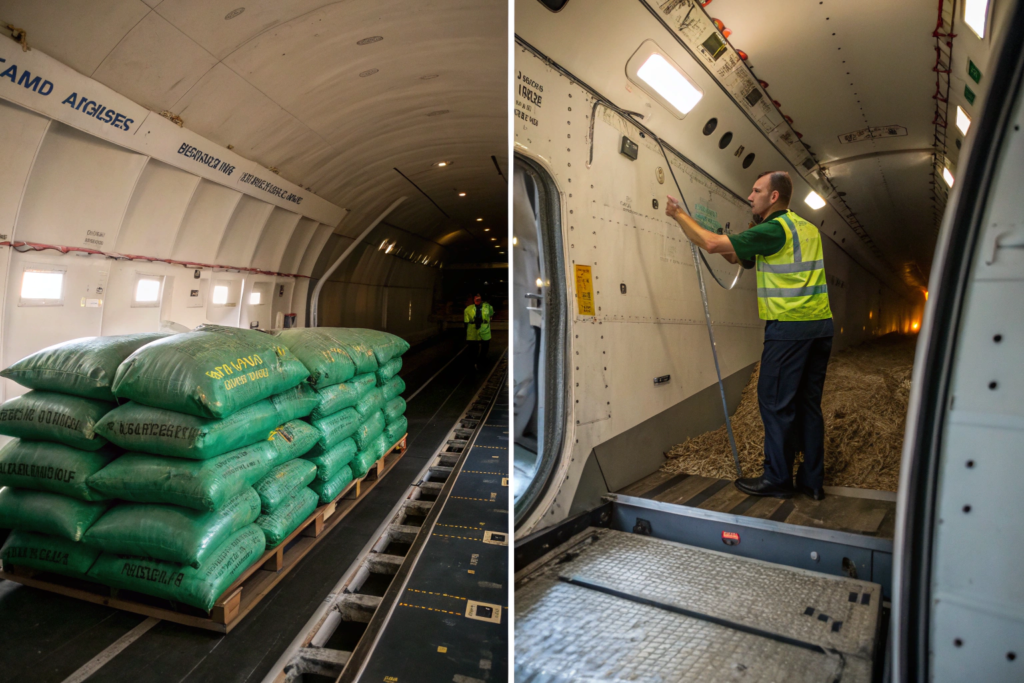
For sea freight, the battle is against prolonged humidity. We prioritize high-barrier, multi-layer bags (or GrainPro) and use desiccants inside a dried container. The packaging is defending against a slow, persistent threat.
For air freight, the physical handling is more intense but shorter. Here, packaging must be exceptionally robust to withstand rapid transfers between trucks and planes. Puncture resistance and secure palletizing are critical. While moisture is less of a concern, the bags still need a good seal. You're trading one set of protective priorities for another. A good supplier will adjust the packaging prep based on the chosen Incoterm and transport method.
How to make the final decision: a practical framework?
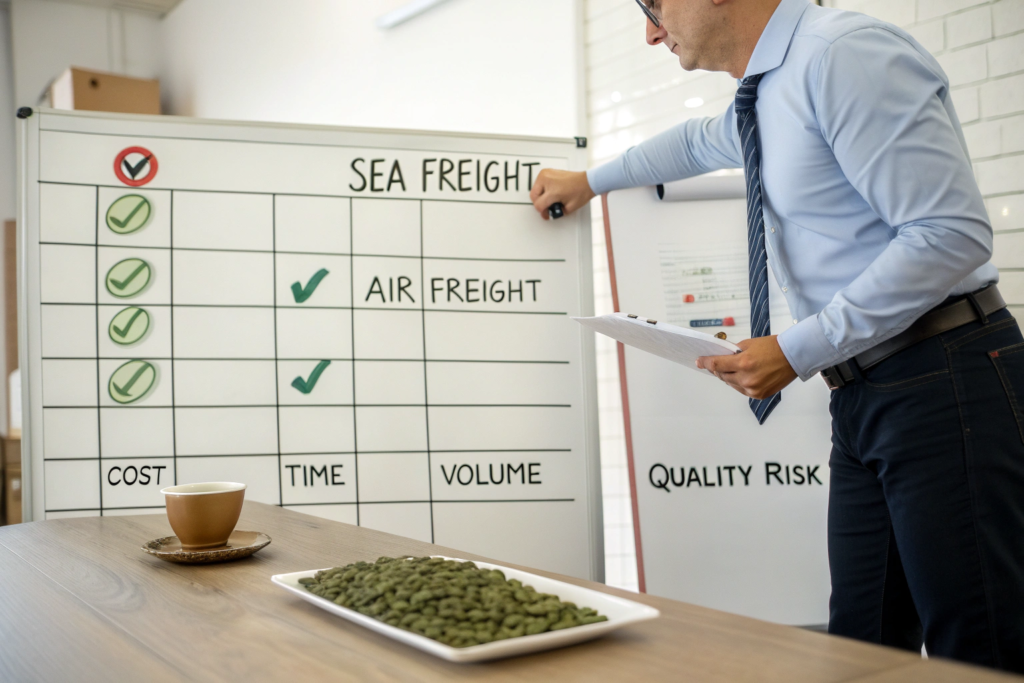
Alright, you have the data on cost, speed, volume, and risk. How do you pull the trigger? Don't make it a gut feeling. Use a simple, weighted decision matrix. For a business owner like Ron, this turns a complex problem into a clear scorecard.
Think about your top three priorities. Is it Cost? Is it Speed? Is it Quality Preservation? Rank them. The freight method that best serves your top priority often wins, unless there's a deal-breaker in another category.
Can you use a hybrid shipping strategy?
Absolutely. This is a sophisticated approach that many of our larger clients use. You don't have to choose one for your entire supply chain.
A common hybrid model is to air freight a small, urgent batch to cover immediate production needs, while the main volume follows by sea. This keeps your roaster running and satisfies immediate customer demand without air-freighting your entire quarterly purchase. It requires more coordination but offers the best of both worlds: timeliness and economy. We can split an order and manage two parallel shipping processes, providing two sets of documentation and tracking.
What questions should you ask your supplier before deciding?
Your supplier should be a partner in this decision. Their experience is invaluable. Before you decide, ask us:
- "What is the current lead time from your warehouse to my port for sea vs. air?" (Sailing schedules change).
- "Can you provide a detailed landed cost estimate for both methods, including all fees?"
- "How do you adjust packaging and documentation for each method?"
- "What is your process if there's a delay or issue with either method?"
A transparent supplier like Bean of Coffee will have clear answers and data to share, helping you move from uncertainty to confidence.
Conclusion
Choosing between sea and air freight for coffee is a strategic calculation, not just a line item on a quote. Sea freight wins on pure cost for large, planned volumes. Air freight wins on speed and agility for small, urgent, or ultra-premium lots. The right choice balances your budget, your timeline, your order size, and your quality thresholds.
By systematically weighing these factors—and partnering with a supplier who navigates them daily—you transform a logistical dilemma into a competitive advantage. You ensure your coffee arrives not only physically but also financially and operationally in the best possible shape.
Struggling with this calculation for your next order of Yunnan Arabica, Robusta, or Catimor? Let's work through it together. At Bean of Coffee, we provide the comparative data and expert guidance to help you ship smarter. For a personalized freight analysis on your upcoming shipment, contact our export manager, Cathy Cai. Her email is cathy@beanofcoffee.com. Let's get your coffee moving the right way.