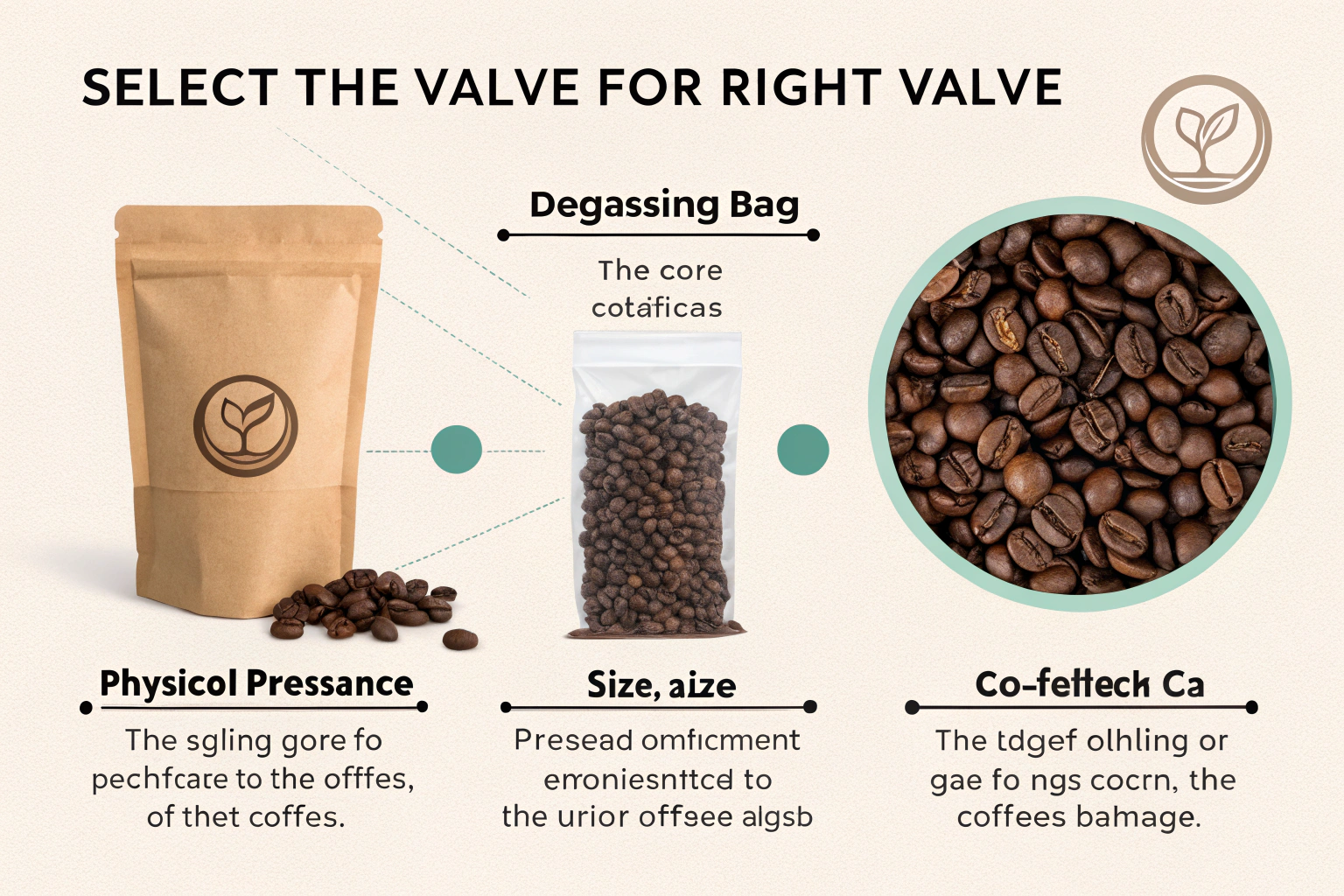
You've invested in high-barrier bags, your branding is perfect, and your coffee is roasted to peak freshness. But then, after a few days, the bag puffs up like a pillow, or worse, develops a stale, flat taste far too soon. The culprit is often the smallest component on the bag: the degassing valve. This tiny, one-way vent is the guardian of your coffee's freshness during its most volatile period. Choosing the wrong valve is like installing a screen door on a bank vault—it completely undermines your packaging.
Choosing the right valve depends on your coffee's degassing rate, your bag size, and your filling environment. You must match the valve's gas permeability, pressure resistance, and physical size to your specific product to ensure it releases CO2 efficiently without letting oxygen back in.
It's a balancing act. A valve that's too "tight" will cause bags to balloon and potentially burst. A valve that's too "open" will allow oxygen ingress, leading to rapid staling. We've tested dozens of valves on our own packaged products and for our B2B clients at Shanghai Fumao. The right choice is not a guess; it's a technical specification. Let's dive into the specs.
What are the key technical specifications of a degassing valve?
Valves are not all the same. They are precision-engineered devices. To choose correctly, you need to speak the language of their specifications, which define their performance under different conditions.
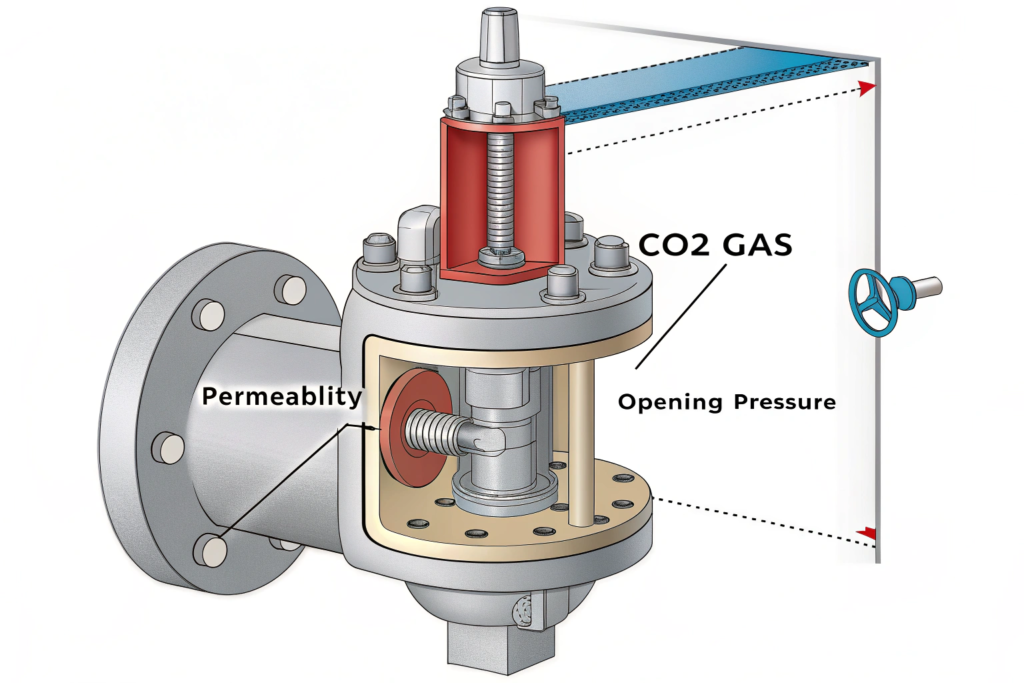
The key specs are: Permeability (cc/day), Opening Pressure (mbar), and Diameter. These numbers determine how much gas can escape, under what internal pressure the valve activates, and how much surface area it occupies on your bag. Think of these as the valve's "personality." You need one that matches your coffee's "behavior."
How does permeability (cc/day) relate to roast profile and bag size?
Permeability measures the maximum volume of carbon dioxide (in cubic centimeters) the valve can vent per day under ideal conditions. This is the valve's capacity.
- Fresh, Dark Roast Coffee: Degasses CO2 very aggressively in the first 24-72 hours. You need a high-permeability valve (e.g., 3-5 cc/day or higher) to handle this surge without building up dangerous pressure.
- Lighter Roasts or Aged Coffee: Degasses more slowly and steadily. A medium-permeability valve (1-3 cc/day) is sufficient and provides a better oxygen barrier.
- Bag Size Matters: A 12oz (340g) bag of dark roast needs less capacity than a 5lb (2.27kg) bag of the same coffee. The larger the bag and the more coffee, the greater the total volume of CO2 produced. For bulk bags (2lb+), always spec a high-permeability valve. A common mistake is using the same valve for a 250g bag and a 1kg bag; the larger bag will likely over-pressurize.
What is opening pressure and why is it critical for freshness?
Opening Pressure (or cracking pressure) is the minimum internal pressure required to open the valve's seal and allow gas to escape. It's measured in millibars (mbar). This is your primary defense against oxygen.
- Lower Opening Pressure (e.g., 2-3 mbar): Opens easily. Good for very fast degassing but presents a higher risk of "inhalation"—when the bag cools or is squeezed, a slight negative pressure can pull ambient air (and oxygen) back through the valve if the seal doesn't re-close perfectly.
- Higher Opening Pressure (e.g., 4-7 mbar): Requires more internal pressure to open. This provides a stronger barrier against oxygen ingress, as the seal remains tighter under normal handling. It's ideal for coffees with a slower, steadier degassing profile and for maximum shelf-life goals.
For most specialty whole bean coffee, a valve with an opening pressure of 4-5 mbar offers the best balance of safety and performance.
How does bag size and fill method dictate valve selection?
Your packaging operation isn't theoretical. The physical act of filling and sealing the bag creates immediate conditions the valve must handle. Your choice affects both line efficiency and final product integrity.
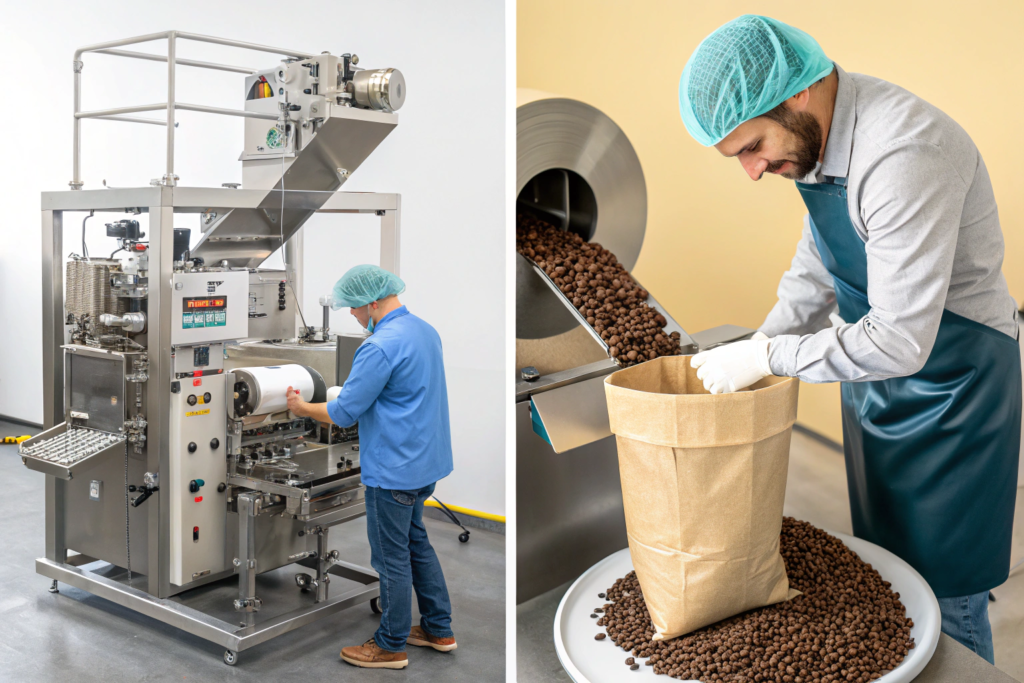
Larger bags require valves with higher permeability and sometimes larger diameters. Automated vertical form-fill-seal (VFFS) lines often require valves on reels with specific backing paper, while manual filling operations are more flexible but demand valves that can withstand potential coffee dust contamination during filling.
What valve size is needed for 12oz vs. 5lb bags?
Valve diameter typically ranges from 15mm to 40mm.
- Small Bags (8oz - 2lb / 227g - 907g): A 15mm or 20mm valve is standard. It provides sufficient flow for the CO2 volume and doesn't dominate the bag's aesthetic.
- Medium to Large Bags (2lb - 5lb / 907g - 2.27kg): You should consider a 25mm, 30mm, or even 35mm valve. The larger diameter isn't just about looks; it provides a larger membrane area, which can support a higher total gas flow (permeability) necessary for the larger coffee mass. Using a small valve on a big bag is a common cause of seam stress and bag inflation.
There's also a height/profile consideration. Low-profile valves are better for retail shelves where bags are stacked.
How does filling speed and environment affect valve choice?
- High-Speed VFFS Lines: These machines place valves from a reel onto the packaging film before the bag is formed. You need valves on reels with a consistent, strong adhesive backing and a release paper that works with your machine's applicator. The valve's construction must be robust enough not to be crushed or misaligned during the high-speed forming process. Consult your machine manufacturer for recommended specs.
- Manual/Semi-Automatic Filling: Here, pre-made bags with valves already applied (often heat-sealed into the bag material) are used. Your main concern is dust. During filling, fine coffee particles (chaff, dust) can get lodged in the valve mechanism, potentially jamming it open or closed. Choosing a valve with a dust filter (a non-woven fabric or sintered plastic disk inside) is crucial for manual operations. This filter allows gas to pass but blocks particulates.
What are the hidden risks of using a cheap or wrong valve?
Cost-cutting on valves is a classic false economy. The valve is a minor component cost-wise, but its failure can lead to major losses: ruined product, customer complaints, and brand damage. The risks are often invisible until it's too late.
The hidden risks include: Oxygen Ingress leading to rapid staling, Valve Leakage or Failure causing total package failure, and Contamination from poor manufacturing materials that can taint the coffee's flavor. A faulty valve doesn't just underperform; it actively destroys your product.
Can a poor valve cause "flavor scalping" or taint the coffee?
Yes. The valve is in direct contact with the headspace gases. If it's made from low-grade plastics or adhesives, these materials can:
- Off-gas volatile compounds into the bag, imparting a plastic or chemical taste to the coffee—a phenomenon known as flavor scalping.
- Absorb the coffee's own aromatic volatiles, stripping flavor from the beans.
Always demand that your valve supplier provides food-grade certification and odorless material guarantees. High-quality valves use inert, food-approved polypropylene or polyethylene and adhesives that are tested for organoleptic neutrality. This is non-negotiable for specialty coffee.
How do you test valves for leakage and long-term performance?
Don't take a supplier's word for it. Conduct simple, ongoing quality control tests:
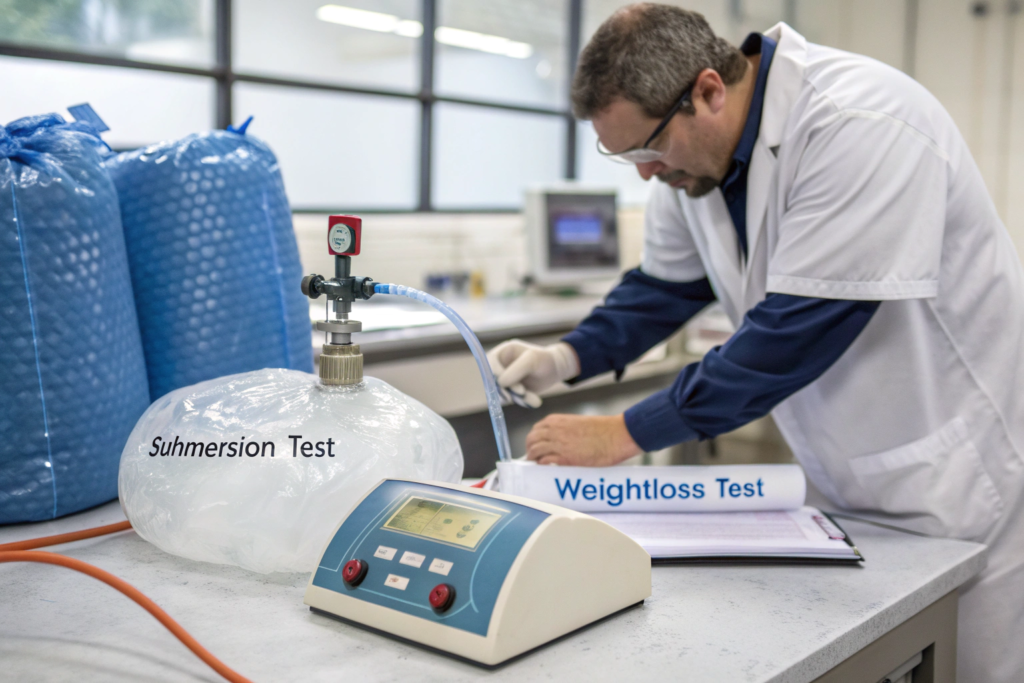
- The "Submersion Test": Inflate a sealed, empty bag with air via a syringe through the valve (simulating CO2 pressure). Submerge it in water and squeeze. Look for a stream of bubbles, which indicates the valve seal is leaking. A good valve will only release air when the internal pressure exceeds its opening pressure.
- The "Weight Loss" Test (for permeability): Fill identical bags with the same amount of freshly roasted coffee. Weigh them immediately after sealing, then weigh them again after 7 days. The weight loss is primarily CO2. Compare bags with different valve samples. The weight loss should be appropriate for your roast profile and match the valve's claimed permeability.
- Long-Term Shelf-Life Test: Package coffee with your chosen valve and store it alongside a control (e.g., coffee in a jar with an oxygen absorber). Cup them at 30, 60, and 90 days. Is the valved coffee staying fresh as expected, or is it staling prematurely? This is the ultimate test.
How to source and specify valves with a packaging supplier?
Your conversation with a bag or valve supplier needs to be specific. Vague requests lead to generic, often unsuitable products. You are the expert on your coffee's needs; you must translate that into technical requirements.
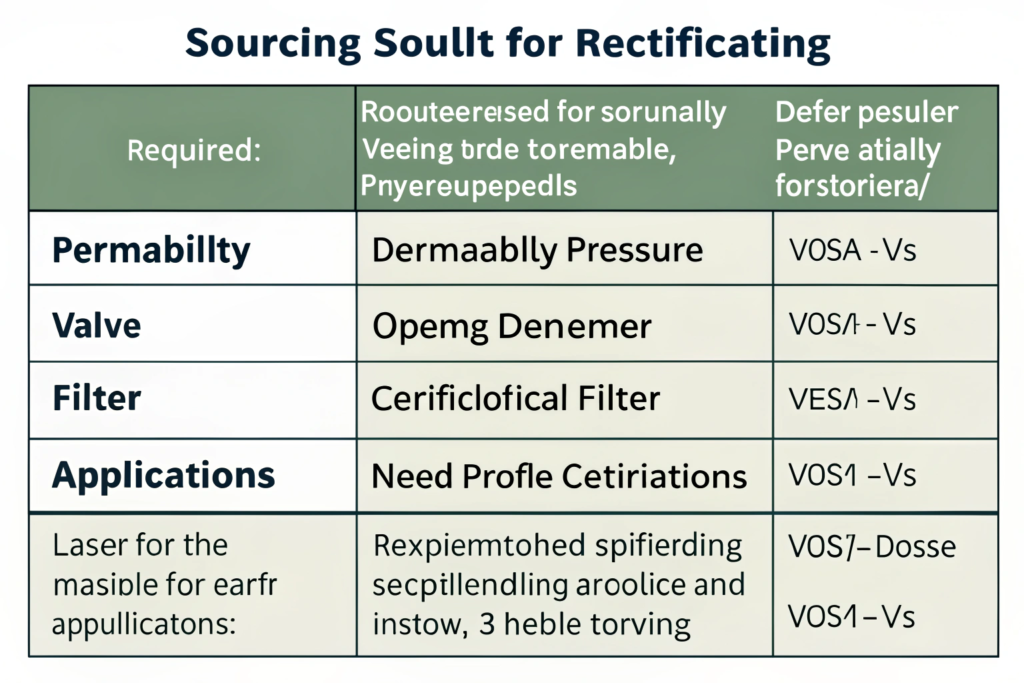
When sourcing, provide your supplier with clear specifications: required permeability and opening pressure, valve diameter and profile, need for a dust filter, material certifications, and your application method (reel or pre-applied). Request samples for rigorous in-house testing before committing to a large order.
What questions should you ask a potential valve supplier?
- "Can you provide a technical data sheet with tested values for permeability and opening pressure?"
- "Are the materials food-grade and organoleptically neutral? Can you provide a certificate of analysis?"
- "Do you offer valves with integrated dust filters?"
- "What adhesive do you use, and what is its peel strength on my specific bag material (e.g., PET/AL/PE)?"
- "Can you supply valves on reels compatible with [Your Machine Brand/Model]?"
- "What is your minimum order quantity (MOQ) and lead time?"
- "Can you provide references from other coffee companies?"
A reputable supplier will have these answers readily available and will be willing to work with you on testing.
Should you consider "inline" valves vs. "patch" valves?
This is a design and cost decision.
- Patch Valves: The most common. The valve is mounted on a round or square patch, which is then heat-sealed onto the bag. Provides a robust seal and is versatile for many bag materials.
- Inline Valves: The valve is installed directly into the bag material during manufacture, with no external patch. It offers a sleeker, flatter profile and is often considered more premium. However, it can be more expensive and may have stricter requirements for the bag film's thickness and composition.
For most roasters, a high-quality patch valve is perfectly sufficient. The focus should be on its performance specs, not necessarily its construction method, unless aesthetics are a primary marketing concern.
Conclusion
Choosing the right degassing valve is a critical engineering decision for coffee packaging. It requires understanding the dynamic interaction between your coffee's post-roast behavior, your bag's size and material, and your filling process. By focusing on the technical specifications—permeability and opening pressure—and insisting on food-grade materials and proper testing, you transform this small component into a powerful tool for preserving quality and extending shelf life.
The valve is the guardian of all the hard work that went into growing, roasting, and branding your coffee. Investing in the right one protects your product's integrity and your brand's reputation from the inside out.
For roasters and brands looking to optimize their packaging, starting with a superior, consistent green bean is the first step. At BeanofCoffee, we not only provide premium Yunnan Arabica but also understand the importance of the entire post-roast chain. For inquiries about our beans or to discuss packaging best practices from an exporter's perspective, contact our Export Manager, Cathy Cai: cathy@beanofcoffee.com. Let's ensure your coffee is protected from our farm to your customer's cup.