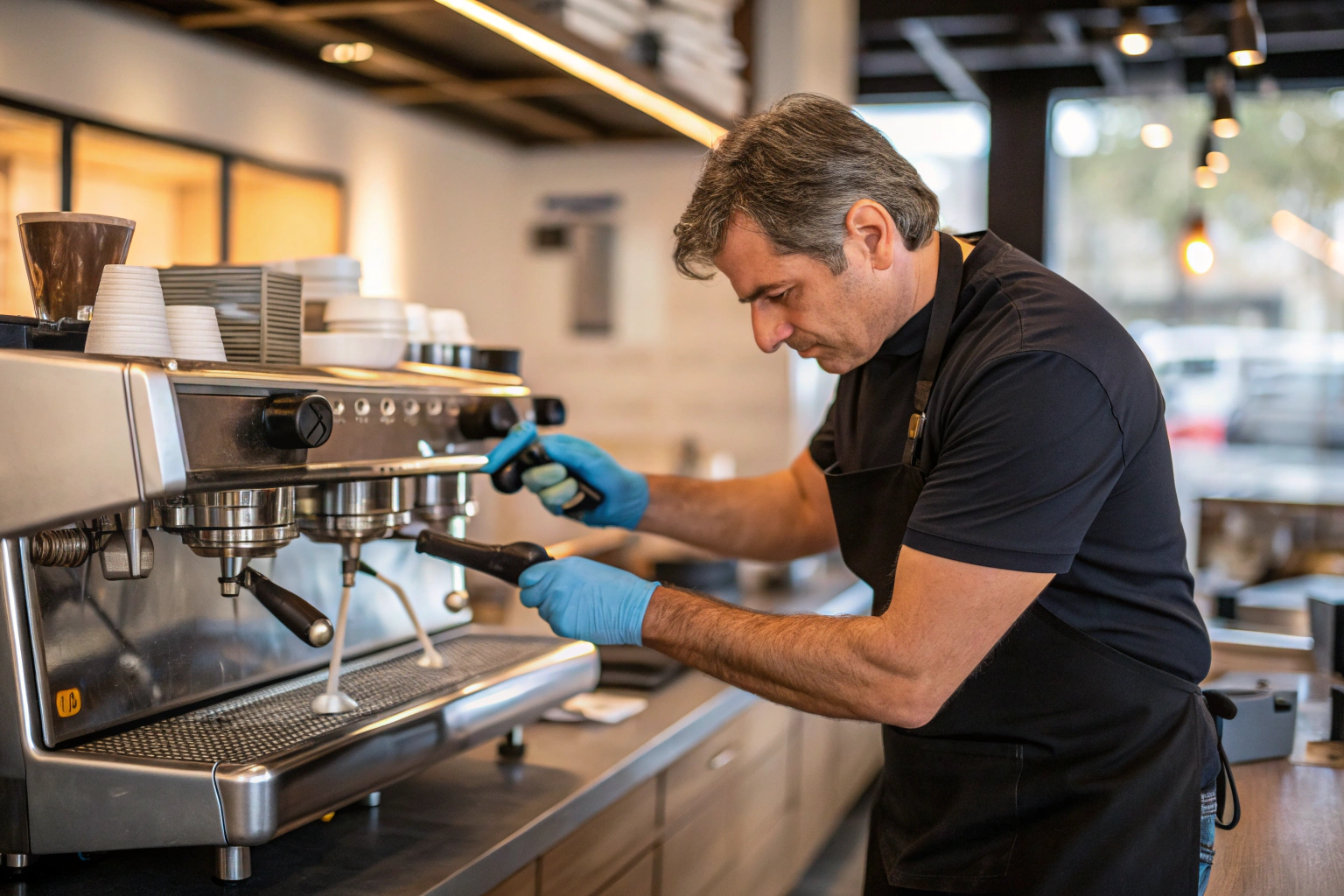
Your espresso machine and grinders are the heart of your business and your biggest investment. But they are also your biggest potential liability. You've sourced the best beans—perhaps even our high-quality Arabica from Yunnan—but lately, your espresso shots taste a little off, maybe bitter or rancid, no matter how perfectly you dial them in. You're frustrated, chasing flavor ghosts and questioning your beans, your roast, or your baristas. The inconsistency is costing you customers and your reputation.
Honestly, the most overlooked reason for inconsistent, bad-tasting coffee is dirty equipment. The daily, weekly, and monthly cleaning of your espresso machine and grinders is not just a janitorial task; it is the single most critical maintenance practice for ensuring flavor quality, consistency, and the longevity of your expensive machinery. A clean machine is the foundation of a delicious cup.
I've visited countless cafes around the world. I can tell which ones are serious about quality within seconds, just by looking at the cleanliness of their steam wands and group heads. It's a direct reflection of their professionalism. Let's break down the essential cleaning practices that will protect your investment, delight your customers, and honor the beautiful coffee beans you work with.
What Are the Essential Daily Cleaning Tasks?
The end of a long, busy day is exhausting. The temptation to give the machine a quick wipe-down and head home is strong. But the gunk you leave behind tonight will be in your customers' lattes tomorrow. A non-negotiable daily cleaning routine is the bedrock of any quality-focused cafe.
Shouldn't you be cleaning your machine thoroughly every single day? Yes, absolutely. The essential daily tasks include backflushing the group heads with a specialized detergent, cleaning the portafilters and baskets, and purging and wiping the steam wands. This 15-minute routine removes the bulk of the coffee oils and milk residue that build up during service.
Think of it like washing the dishes after dinner. You wouldn't just leave them for the next day. Coffee oils become rancid very quickly, and their bitter, unpleasant flavor will taint every shot pulled through a dirty group head. Milk residue on a steam wand is not only a flavor contaminant but also a serious health and hygiene issue.
How do you properly backflush a group head?
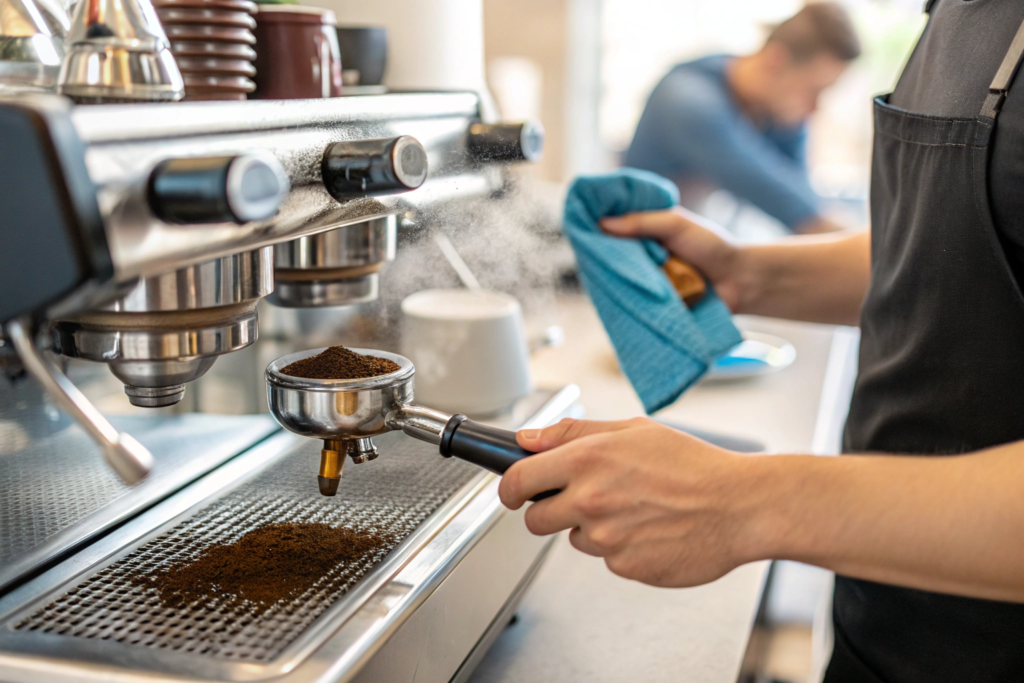
Backflushing is the process of cleaning the shower screen, dispersion block, and three-way solenoid valve inside the group head.
- Replace your standard filter basket with a "blind" basket (one with no holes).
- Add a small amount (about 1/2 teaspoon) of espresso machine cleaning powder, like Cafiza, into the blind basket.
- Lock the portafilter into the group head and run the pump for 5-10 seconds, just as if you were pulling a shot. The pressure will build up and dissolve the detergent.
- Stop the pump. The pressure will be released, "backflushing" the cleaning solution up into the group head and out through the drain tube, carrying away old coffee grounds and oils.
- Repeat this cycle 4-5 times.
- Finally, remove the portafilter and rinse it. Re-insert it and backflush several more times with just water to thoroughly rinse away any detergent.
What is the best way to clean steam wands?
Never, ever let milk dry on your steam wand. This is rule number one.
- During Service: After steaming every single pitcher of milk, immediately purge the wand by blasting steam for 1-2 seconds and wipe it down with a dedicated, damp cloth. Never use the same cloth you use to wipe the counter.
- End of Day: Fill a pitcher with hot water and a milk cleaning solution. Let the steam wands soak in the solution for 15-20 minutes to dissolve any milk solids that have been cooked on. After soaking, purge and wipe them thoroughly.
What Weekly and Monthly Maintenance is Required?
Daily cleaning takes care of the surface-level grime. But deeper inside your equipment, a slower, more insidious buildup is occurring. Weekly and monthly tasks are about deep cleaning and preventative maintenance to tackle this buildup and keep your machines running smoothly.
Don't your machines need a deeper clean periodically? Yes. Weekly, you should perform a deep clean of your group heads by removing and soaking the shower screens and filter baskets. Monthly, you should clean your grinder burrs and hopper to remove stale coffee grounds and oils.
These tasks prevent channeling caused by clogged shower screens and ensure your grinder is delivering fresh, untainted grounds. Think of it as the difference between sweeping your floor every day and mopping it once a week. Both are necessary for a truly clean space.
How do you deep clean the group heads?
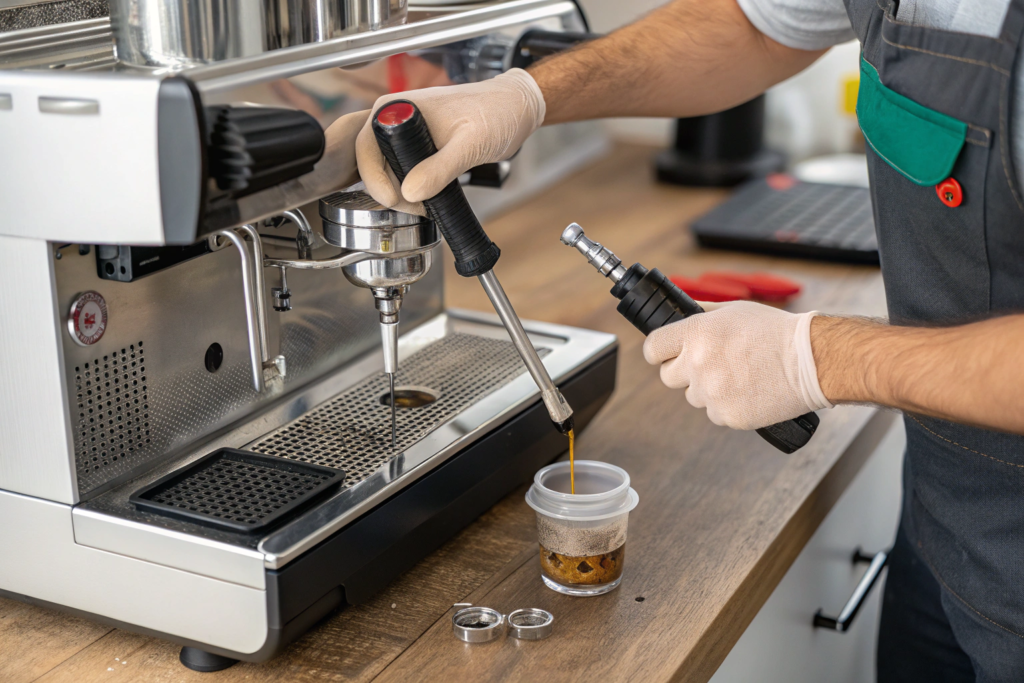
Once a week, you need to go beyond backflushing.
- Use a small screwdriver or a dedicated tool to carefully remove the shower screens and the dispersion screws from each group head.
- Soak the screens, screws, portafilters, and all your filter baskets in a hot water bath with a strong solution of espresso machine detergent for at least 30 minutes.
- While they are soaking, use a group head brush to scrub the inside of the group head itself, dislodging any stubborn grounds.
- After soaking, use a brush to scrub all the parts until they are perfectly clean. The holes in the filter baskets should be completely clear.
- Rinse everything thoroughly and reassemble the group head.
Why is cleaning the grinder so important?
Coffee oils and fine particles, known as "fines," build up on the grinder burrs and in the dosing chamber. These old, stale grounds will mix with your fresh beans, tainting the flavor and causing inconsistency.
- Monthly: Unplug the grinder. Empty the hopper and wipe it clean with a dry cloth or a specialized cleaner to remove oil residue.
- Open the grinding chamber to expose the burrs (follow your grinder's specific instructions).
- Use a stiff brush and a vacuum cleaner to meticulously remove all old coffee grounds from the burrs and the surrounding chamber. You can also use grinder cleaning tablets like Grindz to run through the machine, which helps absorb oils.
- Reassemble the grinder. You will be amazed at the improvement in flavor clarity.
How Does Water Quality Affect Your Equipment?
You can have the cleanest machine in the world, but if you are feeding it bad water, you are slowly killing it from the inside out. Water is the most overlooked and potentially the most destructive element in a cafe.
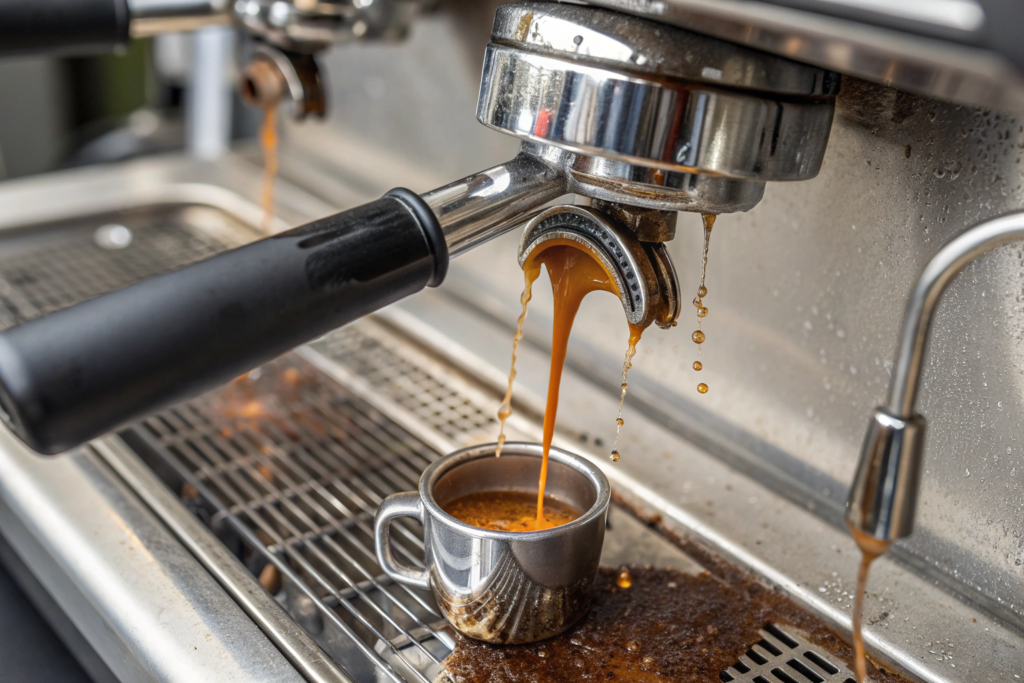
Isn't the water you use just as important as cleaning? It's arguably more important. Hard water, which is high in minerals like calcium and magnesium, will cause limescale to build up inside your espresso machine's boiler and pipes. This scale buildup restricts water flow, causes heating elements to fail, and can completely destroy your machine.
This isn't a matter of "if," but "when." If you are in an area with hard water and you are not using a proper water filtration and softening system, you are guaranteed to have expensive repair bills in your future. The cost of a good water system is a fraction of the cost of replacing a boiler or an entire espresso machine.
How do you know if you have hard water?
You can buy simple water hardness test strips online or from a hardware store. These will give you a reading of your water's mineral content, usually in parts per million (PPM) or grains per gallon. Any professional coffee equipment supplier can tell you the ideal water specifications for their machines. Generally, you are aiming for a total hardness of around 50-100 PPM.
What kind of water system do you need?
This is a topic to discuss with a professional. Depending on your local water quality, you may need a system that includes:
- A Sediment Filter: To remove any physical particles like sand or rust.
- A Carbon Filter: To remove chlorine and other chemicals that affect flavor.
- A Water Softener: This is the crucial part. It uses an ion exchange process to remove the hard minerals (calcium and magnesium) that cause scale.
Investing in a proper water treatment system is non-negotiable for protecting your equipment.
Who Should Be Responsible for Maintenance?
A cleaning protocol is useless if no one follows it. Creating a culture of cleanliness and clear accountability is the final, and perhaps most important, piece of the maintenance puzzle.
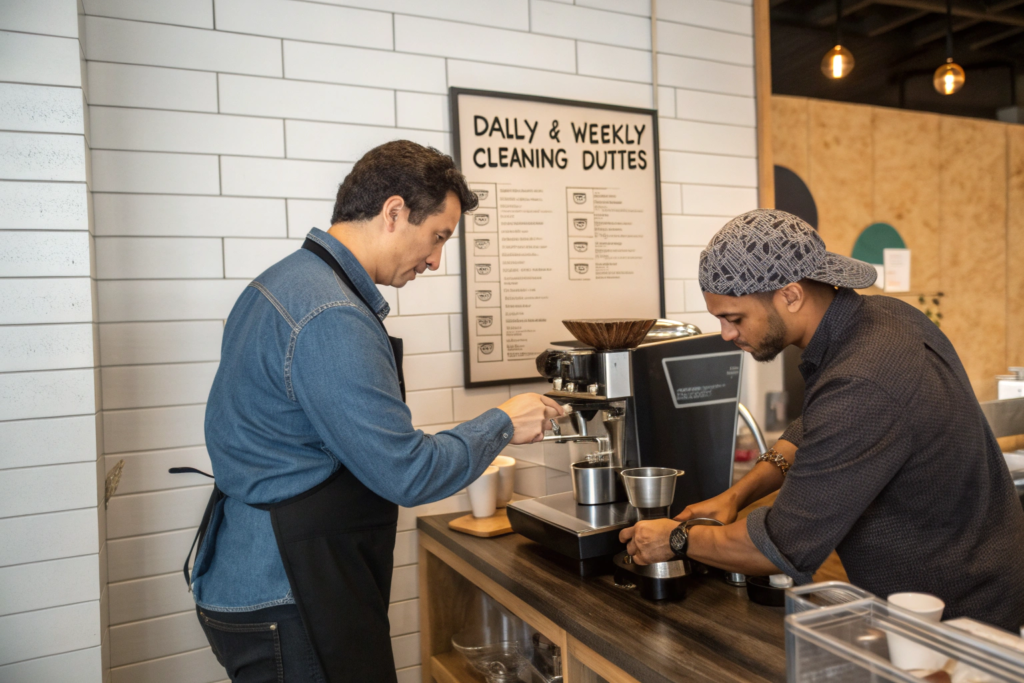
Shouldn't everyone on the team be responsible for cleanliness? Yes, but there must be a clear system of accountability. A "culture of cleanliness" should be established from day one, with specific daily tasks assigned to closing baristas and deeper weekly tasks assigned to a lead barista or manager. Using checklists is the key to ensuring nothing is forgotten.
When you make cleaning a shared, non-negotiable part of the professional barista's job—just like pulling a great shot—it becomes part of the culture. It's not a punishment; it's a sign of respect for the craft, the customer, and the coffee. As a supplier, it's heartbreaking to know that the beautiful beans we nurtured at Shanghai Fumao are being ruined by a dirty machine.
How do you create a culture of cleanliness?
- Train from Day One: Make equipment cleaning a core part of your new-hire training. Explain why it's important for flavor, not just that it's a rule.
- Lead by Example: As the owner or manager, be seen cleaning the equipment yourself. Show that no one is "too important" to scrub a portafilter.
- Provide the Right Tools: Have all the necessary brushes, detergents, cloths, and tools readily available and organized. Don't make it hard for your team to do the right thing.
Why are checklists so effective?
A laminated checklist posted near the machine removes all ambiguity. The closing barista knows they must complete and initial every task on the daily list before they can leave. The lead barista knows that every Tuesday, they are responsible for the tasks on the weekly list. This creates a simple system of accountability and ensures that even on the busiest or most chaotic days, the essential maintenance tasks get done.
Conclusion
Cleaning and maintaining your coffee equipment is not the most glamorous part of running a cafe, but it is the most fundamental. It is an act of respect for your craft, your customers, and the coffee itself. By implementing a strict regimen of daily, weekly, and monthly cleaning, investing in proper water filtration, and building a culture of shared responsibility, you protect your investment, guarantee the quality and consistency of your product, and ensure that every cup you serve is a true and delicious expression of the beans you so carefully selected. A clean machine is a profitable machine.
We take pride in producing clean, defect-free coffee, and we seek out partners who share that commitment to quality at every step. When you're ready to source beans worthy of your impeccably maintained equipment, we're here to help. Contact our coffee specialist at cathy@beanofcoffee.com to learn more about our quality standards and to get a sample on its way to you.