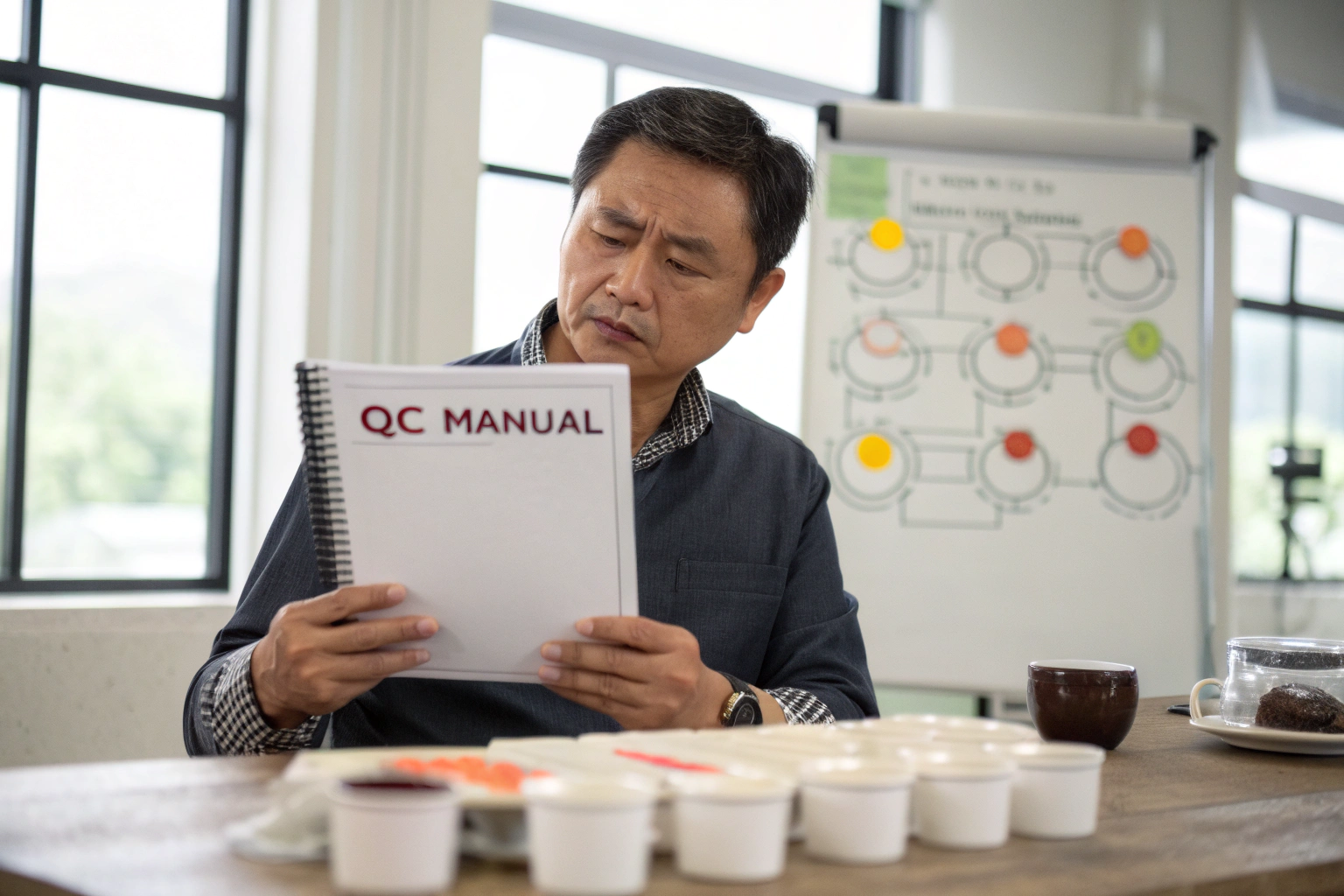
I learned this lesson through a phone call I still remember. 2017. A buyer in Toronto received 18 tons of our washed Arabica. The contract said "Screen 16, maximum 5 defects per 300g." His QC manager found 11 defects. Not our beans. Somewhere between our dry mill and his warehouse, someone blended in lower-grade parchment. The container was already cleared through customs. Returning it was impossible. I refunded $8,000 and lost a client. That night, I realized: quality control is not a department. It is a system. And if your system has gaps, your brand pays.
So, how do you create a coffee quality control manual that actually protects your brand? You build it around five non-negotiable control points: cherry reception, wet mill processing, dry mill grading, pre-shipment sampling, and in-transit monitoring. Each point must have a written protocol, a responsible person, and a verification record. The manual is not a book you write once and shelve. It is a living document you update after every defect, every complaint, every near-miss.
But let me be direct with you. Most QC manuals fail because they are written by managers who never touch the beans. They copy templates from the internet. They list "inspect incoming cherries" but do not specify how to inspect. What Brix level? What percentage of green cherries triggers rejection? Who makes the call? A good manual answers these questions with numbers, not adjectives. At BeanofCoffee, our manual is 47 pages. It is boring. It is repetitive. But it has saved us from exactly the kind of failure I described. Let me walk you through the essential sections every coffee QC manual must contain.
What Should Be Included in the Cherry Reception Section?
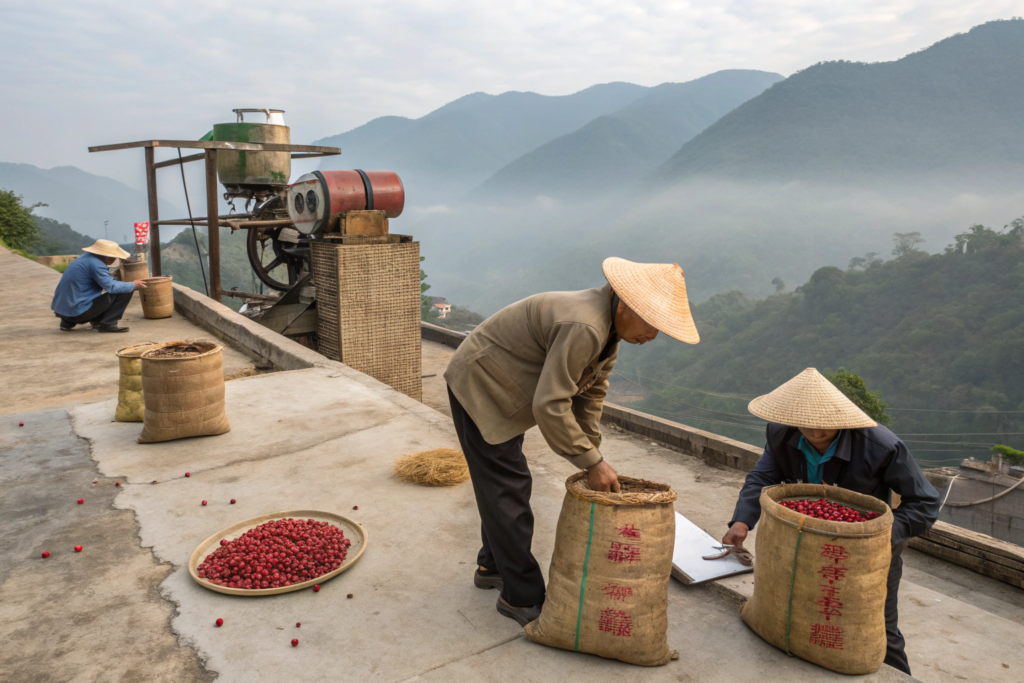
Coffee quality is not created at the dry mill. It is not created at the cupping table. It is created—or destroyed—at the moment the cherry is picked. If you accept underripe cherries, you cannot "fix" them later. You can only hide them.
Your cherry reception protocol must specify: minimum Brix reading (we require 18% to 22%), maximum percentage of underripe cherries (we reject any load exceeding 5% green), and maximum elapsed time between picking and delivery (we require depulping within 8 hours). These are not guidelines. They are pass/fail thresholds. Every delivery is tested. Every delivery is logged. The farmer is paid based on these metrics.
How Do You Train Pickers to Harvest Only Red Cherries?
Training is not a one-time lecture. It is daily reinforcement. We start each harvest morning with a 5-minute briefing. The supervisor shows a bowl of cherries. "This is ripe. This is green. This is overripe. Go pick only this." Sounds basic. But we repeat it every single day for 90 days. Why? Because fatigue sets in. Pickers want speed. Speed means grabbing everything. So, we also weight the incentive. We pay 30% premium for cherries delivered with less than 2% green. The premium is paid weekly, cash. Pickers see the relationship between careful picking and higher income. Here is the Specialty Coffee Association's cherry ripeness training toolkit. Also, this University of Hawaii's guide to Brix measurement in coffee explains why 18% is the minimum for acceptable flavor development.
What Equipment Do You Need at the Reception Station?
You do not need expensive labs. You need three tools. A refractometer to measure Brix. Cost: $150. A floatation tank to separate dense cherries from floaters. Cost: $200 for a food-grade plastic tank. A digital scale to record weights. Cost: $100. That is it. We process 2,000 tons of cherry annually with these three tools. The refractometer is calibrated weekly. The floatation water is changed every 4 hours. The scale is certified annually. These details belong in your manual. If your supplier cannot tell you their Brix threshold, they are not controlling quality at intake. Here is the USDA's guide to coffee processing equipment standards. And here is Atago's refractometer calibration protocol.
How Do You Standardize Wet Mill Processing Parameters?
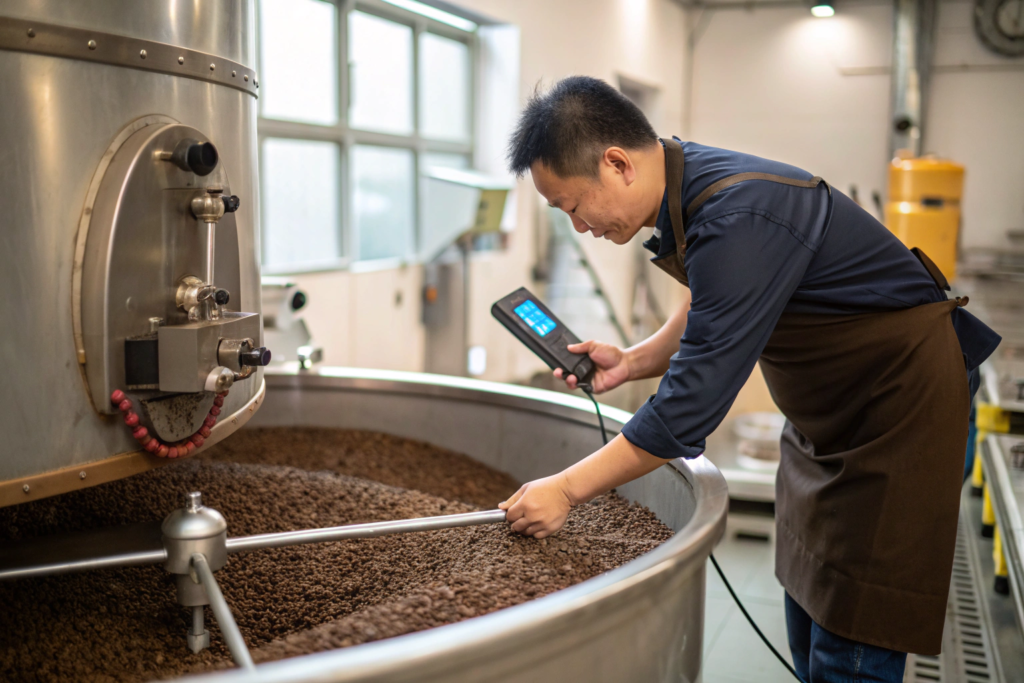
The wet mill is where most quality variation is introduced. Not intentionally. Just inconsistently. One batch ferments 18 hours. The next ferments 24 hours because the night shift forgot to check. This variation destroys your brand's consistency.
Your wet mill protocol must specify: fermentation time by ambient temperature (we use 18 hours at 25°C, 22 hours at 20°C), pH target at wash (we wash at pH 4.2 to 4.5), and washing water quality (we require potable water, not river water). These parameters are posted on laminated cards at every tank. Workers do not guess. They read and record.
How Do You Control Fermentation Without Over-Fermenting?
This is the hardest skill in wet milling. Under-ferment, and the mucilage does not release cleanly. Over-ferment, and you get sour, vinegary off-flavors. We use two controls. First, time and temperature logging. Every tank has a thermometer and a timer. Second, and more important, the "cut test." Every 4 hours, we cut 50 cherries open. If the mucilage slides off easily, the batch is ready. If it sticks, wait. If the beans are turning brownish, you have already passed the window. Here is the Coffee Quality Institute's fermentation monitoring guide. Also, this UC Davis research on pH as a fermentation predictor directly informed our pH 4.2 target.
What Water Quality Standards Apply to Coffee Processing?
Most buyers never ask this. But water carries bacteria. River water carries variable bacteria. One week clean, next week contaminated after rain. This creates invisible inconsistency. We installed a reverse osmosis system at our wet mill in 2020. Cost: $12,000. Why? Because we want the same water chemistry in October and January. Our manual specifies: "Wash water must meet WHO potable standards. Chlorine residual must be below 0.5 mg/L to avoid chemical taint." Here is the World Health Organization's drinking water quality guidelines. And here is a case study on water quality impacts on coffee fermentation. We audit our water monthly.
What Inspection Points Are Non-Negotiable at the Dry Mill?
The dry mill is where defects are removed. Or not removed. Some mills rely entirely on electronic sorters. Electronic sorters miss black beans that are the same color as roasted coffee. They miss insect-damaged beans that are not discolored. They miss parchment fragments. You need human eyes.
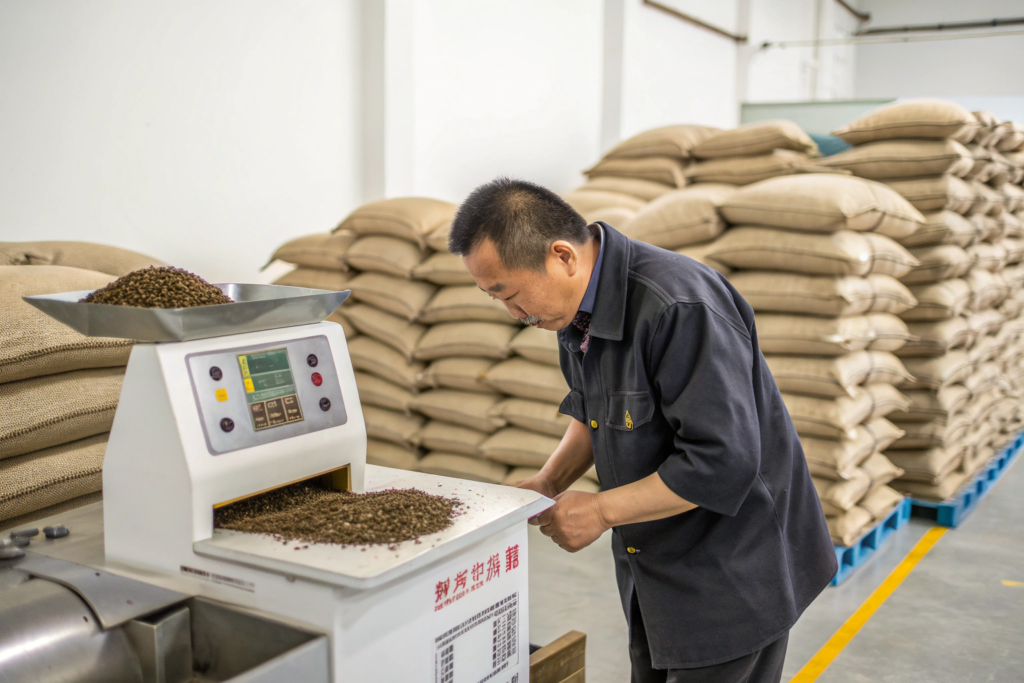
Your dry mill protocol must specify: screen size classification (we hold to ±0.5mm tolerance), electronic sorter calibration frequency (daily), and manual sorting sampling rate (we re-inspect 5% of every electronic sorter output). We also require two passes through the sorter for all export lots. One pass is not enough.
How Do You Set Screen Size Tolerances?
"Screen 18" means the bean does not pass through a 18/64-inch hole. But what is the tolerance? Some mills allow 5% smaller. Some allow 10%. This matters for roast uniformity. We hold to 3% maximum retained on the next smaller screen. That means if you order Screen 18, maximum 3% of beans are actually Screen 16. We verify this with a Tyler Ro-Tap shaker, 10-minute cycle. Every export lot is tested. The result is recorded on the SGS report. Here is the SCA green coffee grading handbook. Also, this Cropster guide to screen size interpretation explains why tighter tolerances improve roast curves.
What Defect Count Is Acceptable for Specialty Coffee?
The SCA standard says "zero primary defects, less than 5 secondary defects per 300g" for Specialty grade. We do not ship at the limit. We ship at maximum 3 secondary defects. Why? Because cupping labs sample 350g. If you are right at the limit, one bad scoop puts you over. We build margin into our standard. Our manual states: "Any lot exceeding 3 defects per 300g at pre-shipment sampling is re-sorted and re-sampled at exporter's cost." This has happened. We paid for the re-sorting. The client never knew. Here is the SCA defect classification chart. Print it. Laminate it. Put it at every sorting station.
How Do You Conduct Representative Pre-Shipment Sampling?
This is where many QC manuals fail. They specify "sample the lot" but do not specify how to sample. Sampling error is the largest source of QC disputes. If you sample only the front row of containers, you miss the back row. If you sample only the top of the bag, you miss the bottom where fines settle.
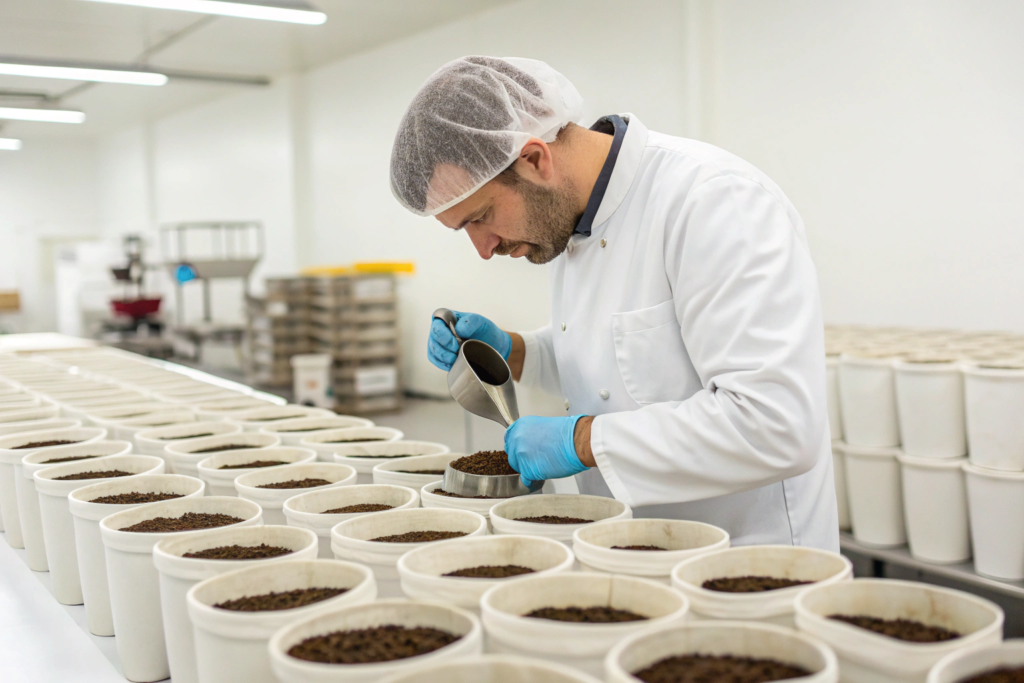
Your pre-shipment sampling protocol must follow ISO 4072 or SCA standard: minimum 10% of bags sampled, trier inserted diagonally from top corner to opposite bottom corner, samples combined and quartered to produce representative 350g cupping sample. We do not accept "grab samples" from the top of open bags. We do not accept samples drawn only from easily accessible pallets. The sample must represent the entire lot.
Why Do You Need a Trier, Not Just a Hand?
You cannot reach the bottom of a 70kg jute bag with your hand. Not even close. The fines—broken beans, chaff, dust—settle at the bottom. If you only sample the top, your defect count appears artificially low. The buyer receives the bottom and sees more defects. Disputes follow. A trier is a double-walled stainless steel probe. You insert it at the top corner, push diagonally to the opposite bottom corner, rotate, withdraw. You capture beans from the entire vertical profile. Cost: $80. Every QC manager should own one. Here is the ISO 4072:1982 Green coffee sampling standard. It is old. It is still the benchmark. Also, this SCA webinar on representative sampling demonstrates proper trier technique.
How Many Bags Should You Sample for a 300-Bag Lot?
Statistics matter here. The SCA standard requires sampling 30 bags minimum for lots up to 300 bags. That is 10%. For larger lots, the percentage decreases but the absolute number increases. Our manual requires 30 bags for every lot up to 300 bags, plus 5 additional bags for each additional 100 bags. Is this excessive? Maybe. But we have not had a single sampling dispute since 2019. Here is the ASTM E105 standard for probability sampling. The math confirms that 30 samples gives you 95% confidence that your defect estimate is within ±2% of the true value. Good enough for coffee.
How Do You Monitor Quality During Transit and Storage?
Here is the truth most exporters ignore. You can have perfect cherry, perfect fermentation, perfect sorting. Then the container sits on the dock in Rotterdam for three weeks in August. Temperature inside reaches 65°C. The beans sweat. Condensation forms on the container ceiling, drips onto the bags, causes localized mold. The buyer receives moldy coffee and blames you. Is it your fault? Partially. You did not specify container ventilation requirements.
Your post-shipment quality protocol must specify: container ventilation settings (we require vents open for all non-cold treatment shipments), moisture barrier liners (we use polypropylene liners in all jute bags), and temperature data loggers (we place one logger per container, downloaded at destination). We also require "first quality, first load" scheduling—our highest grade lots are loaded first to minimize wait time at origin port.

Do You Need Climate-Controlled Containers for Green Coffee?
Usually no. Green coffee is relatively stable at 11% to 12% moisture. But extreme conditions degrade quality. We recommend ventilated containers for most shipments. The vents allow air exchange, preventing condensation. For shipments transiting the equator or the Middle East in summer, we recommend refrigerated containers set at 20°C. Cost is higher—approximately $500 extra per container. Some buyers decline. We document their decision. When the coffee arrives with mold, the documentation shows they chose non-refrigerated. Here is the International Coffee Organization's container shipping best practices. Also, this SGS guide to in-transit coffee quality monitoring recommends data loggers for all long-haul shipments.
What Is the Shelf Life of Green Coffee in Transit?
This depends entirely on temperature and humidity. At 20°C and 60% RH, green coffee maintains cupping quality for 12 months. At 35°C and 80% RH, degradation accelerates dramatically. We have cupped "fresh" coffee that sat in a non-ventilated warehouse in Singapore for 6 weeks. It tasted flat, woody, old. The lesson: transit is not neutral. It is an active phase of quality control. Our manual includes destination cupping protocols. We ask buyers to cup within 2 weeks of arrival and share results. This closes the feedback loop. Here is the UC Davis research on green coffee aging kinetics. Also, this Roast Magazine article on storage best practices is worth sharing with your logistics partners.
Conclusion
A robust coffee quality control manual is not a trophy. It is not something you print and frame. It is a set of decisions—written down, measured against, and revised without ego.
I spent years believing quality was about expensive equipment and famous cuppers. It is not. It is about Brix thresholds at 6 a.m. when the supervisor is tired. It is about pH targets at midnight when the fermentation tank is ready. It is about trier technique when sampling 300 bags in a dusty warehouse. If your manual only works when the boss is watching, it does not work.
At BeanofCoffee, our manual works because we built it around our actual failures. Every revision is a scar. Every protocol is a lesson we paid to learn. We do not hide these lessons. We share them with our buyers. When you ask Mr. Chen for our drying logs, he sends them. When you ask for our sorter calibration records, they are ready. This is not generosity. It is self-defense. Because the more you know about our quality system, the less you need to worry about quality.
If you are tired of inconsistent coffee and vague QC promises, email Cathy Cai. She will send you our current QC manual summary—not the full 47 pages, but the control limits we actually use. You compare them to your current supplier's standards. Then you decide. Her address is: cathy@beanofcoffee.com.