You walk into a crowded coffee market. Every shelf has bags with mountain logos and the words "premium" and "artisan." Your product is genuinely excellent—great beans, careful roasting—but so are many others. So why should a customer choose you? The difference often isn't in the cup; it's in the story you tell. A compelling brand story isn't a marketing afterthought; it's the foundational narrative that connects your product's origin to your customer's values, transforming a commodity into an experience they want to be part of.
Think about it. People don't just buy coffee; they buy a feeling, an identity, a connection. A powerful story answers the "why" behind your brand. It explains where you came from, what you believe in, and why you do things differently. For a supplier like us at BeanofCoffee, our story is about bridging the unique terroir of Yunnan with global quality standards, about scale with traceability. But for a roaster or retailer, your story must take our raw material and weave it into your own authentic narrative. Let's break down how to build that story from the ground up.
Why Does Authentic Origin Story Matter More Than Ever?
Today's consumers are detectives. They look beyond the label. They want to know: Where does this come from? Who grew it? Is this story real? An authentic origin story is your first and most powerful tool to build trust. It's not just saying "from Yunnan, China." It's about sharing the specific landscape, the farming families, the climate challenges, and the harvest rituals. It turns a geographic location into a place with character.
For example, our story at Shanghai Fumao is rooted in the Baoshan highlands. We talk about the 1,600-meter altitude, the morning mist in the valleys, and the meticulous hand-picking by local farmers who have cultivated the land for generations. We share the data—the exact moisture content at shipping, the SCA score—but we also share the sight of red cherries against green leaves. This combination of hard facts and sensory detail makes the story believable and engaging. When you, as a brand, then tell your own story, you can incorporate this rich origin narrative as your foundational chapter, giving your product depth before you even roast a bean.
How to Move Beyond Geography to True Terroir Narrative?
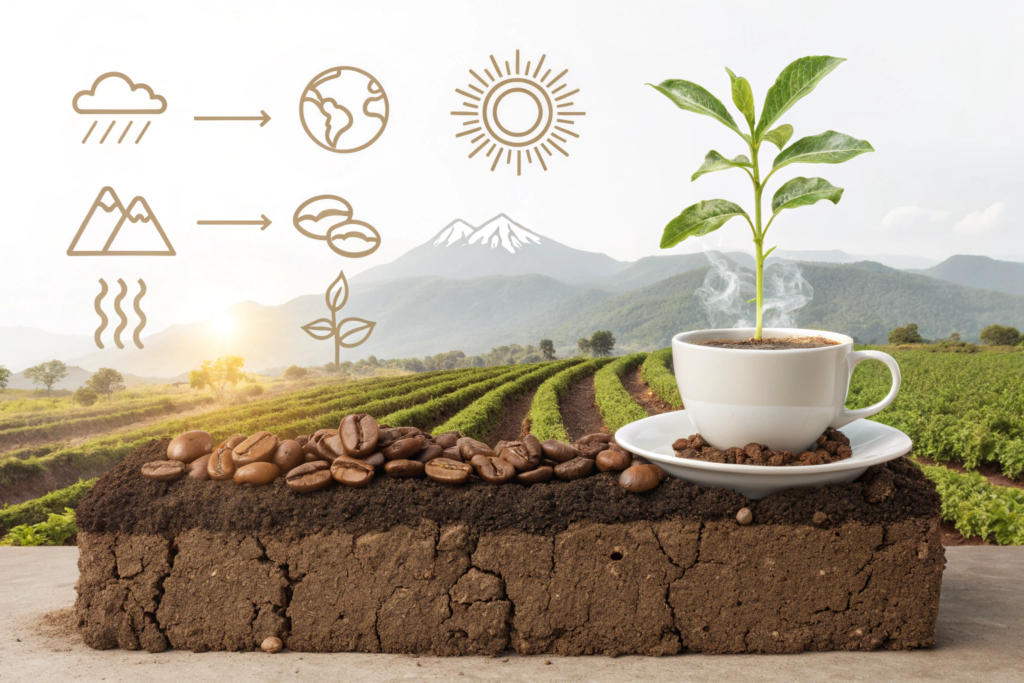
"Single-origin" is a start, but "terroir" is the deeper story. Terroir encompasses the complete environmental context: soil composition, altitude, rainfall patterns, sunlight hours, and even local farming traditions. Your story should explain how these factors specifically influence the flavor in the cup.
Instead of: "Our coffee is from Yunnan."
Try: "Our coffee grows on the sunny slopes of Yunnan's Gaoligong Mountains. The mineral-rich volcanic soil and cool nights slow the ripening of the cherry, giving our beans a distinct density. This translates to a cup with a silky body and notes of dark honey and black tea that are the direct taste of that unique place."
This approach educates your customer. It gives them a reason for the flavor they're experiencing, making the coffee more memorable. It shows you understand your product at a profound level.
What Specific Details Make an Origin Story Credible?
Credibility comes from precision and transparency. Include these elements:
- Specific Location: Name the farm, cooperative, or exact region. (e.g., "Baoshan, Yunnan" is better than just "China").
- Farmer Relationships: Mention the growers, even by name if possible. Are they multi-generational families? A women-owned collective?
- Process Details: Explain the chosen processing method (washed, natural, honey) and why it was chosen for that lot.
- Visual Proof: Use high-quality photos or videos of the farms, the harvest, the processing stations. On your website, a short film showing the journey from cherry to bag is incredibly powerful.
This level of detail is what we provide to our brand partners. It allows you to tell a genuine story because you have the real information to back it up. It transforms you from a reseller into a storyteller with authentic source material.
How to Define Your Brand's Core Purpose and Mission?
Your "why" is the heart of your story. Simon Sinek made it famous: "People don't buy what you do; they buy why you do it." Your mission is your brand's reason for existing beyond making money. It's the change you want to see in the world through coffee. This could be about sustainability, community empowerment, reviving a local roasting tradition, or simply bringing exceptional daily moments to people.
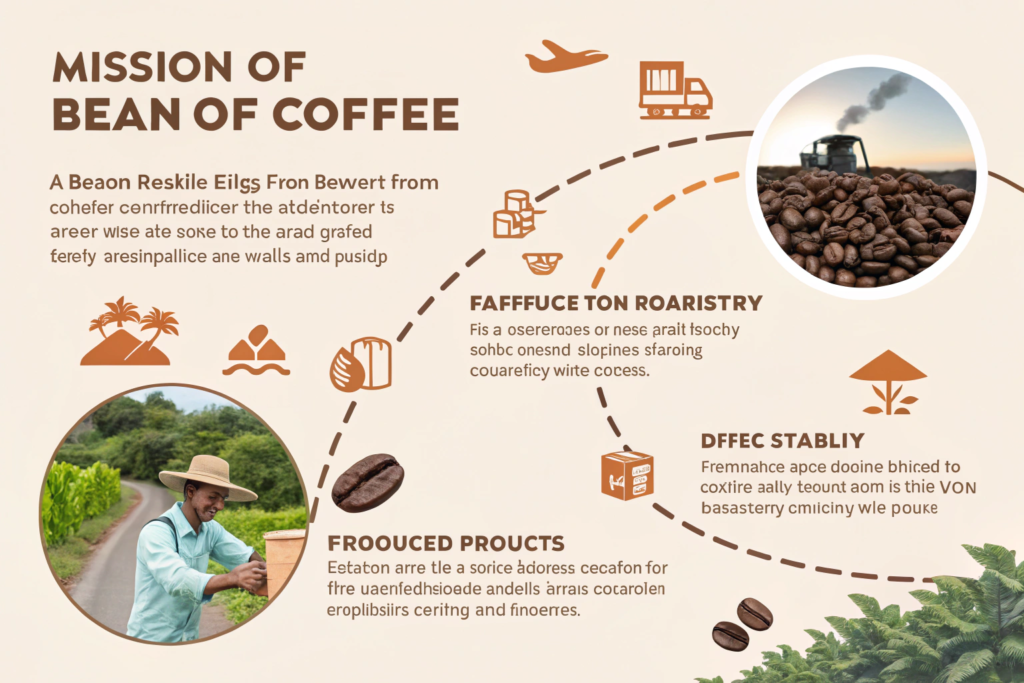
Your mission should be clear, actionable, and woven into every aspect of your business. For instance, if your mission is "to connect coffee drinkers with the farmers who grow their beans," then your packaging should feature farmer stories, your website should have producer profiles, and a portion of sales might go back to community projects at origin. This consistency makes your story believable. At BeanofCoffee, our mission as a supplier is to be a reliable bridge, ensuring quality and fairness from our farms to our partners' roasteries. This purpose shapes how we operate—focusing on direct relationships, transparent pricing, and long-term stability for the farming communities we work with.
How to Connect Your "Why" to Your Customer's Values?
Your customer buys coffee, but they invest in values. Identify what your target customer cares about. Are they focused on environmental sustainability (organic, carbon-neutral shipping)? Social justice (fair trade, gender equity)? Craft and quality (microlots, experimental processing)? Or local community support?
Your brand story should explicitly connect your mission to their values. Use language that resonates with them. For the sustainability-focused customer, detail your biodegradable packaging or water conservation efforts at the washing stations we use. For the quality-focused connoisseur, emphasize your direct trade model and the precise lot selection from partners like us who provide full traceability. Show, don't just tell, how your operations reflect your shared beliefs.
What Are the Key Elements of a Mission Statement That Resonates?
A strong mission statement is a practical guide. It should be:
- Clear: Easy to understand in one sentence.
- Aspirational: It points toward a future goal.
- Actionable: Your team knows how to act on it daily.
- Authentic: It truly reflects your company's actions.
For example: "Our mission is to source and roast exceptional coffee that honors the farmer, delights the drinker, and fosters connection in our local community." This covers origin (farmer), product (exceptional coffee), and customer experience (connection). Every business decision can be filtered through this statement.
How to Craft a Consistent Visual and Verbal Identity?
Your story needs a voice and a face. Your verbal identity is the tone of all your writing—website, packaging, social media. Is it professional and expert? Friendly and conversational? Artistic and poetic? Choose one and stick to it everywhere. This consistency builds recognition and personality.
Your visual identity—logo, color palette, typography, photography style—is the visual translation of your story. If your story is about rugged, adventurous origins, your visuals might use earthy tones, bold typography, and dramatic landscape photography. If your story is about minimalist craft and precision, you might use a clean, sleek design with a monochrome palette and sharp product shots.
The key is alignment. Every touchpoint, from the Shanghai Fumao export documents that ensure your green bean quality, to the final bag on the shelf, should feel like part of the same narrative universe. For a brand using our beans, the story could start with the pristine, high-altitude imagery of Yunnan on your website, transition to the careful, science-driven roasting process in your marketing, and culminate in the beautifully designed package that a customer holds.
How Should Packaging Tell the Story Without Words?
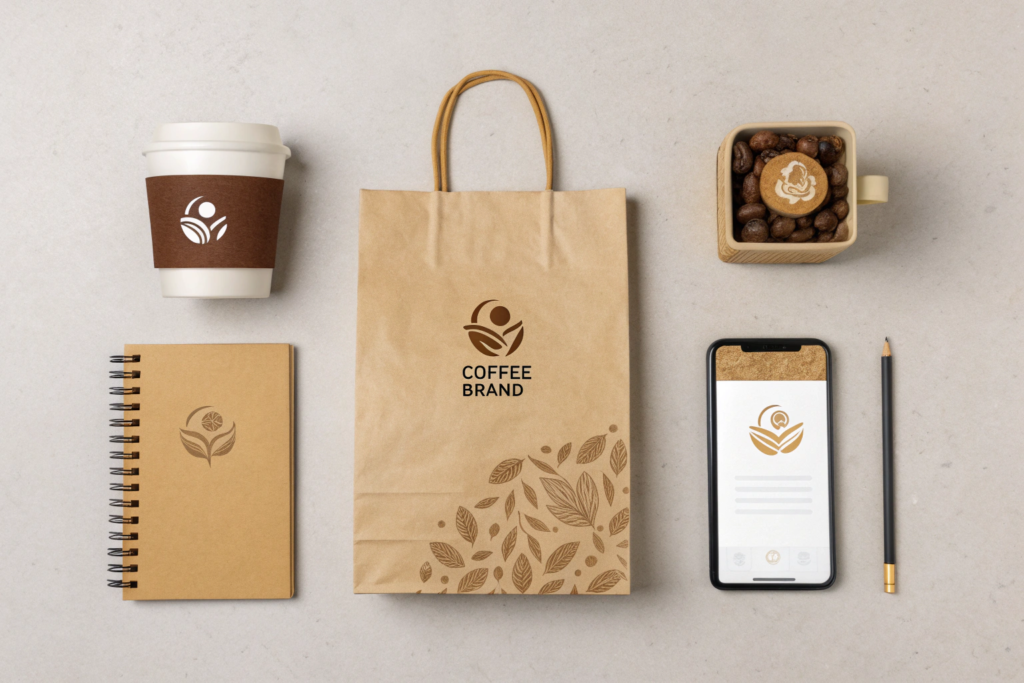
Packaging is your silent storyteller on the shelf. Before anyone reads a word, the design communicates. Use it to visually express your core narrative.
- For an Origin-Focused Story: Feature a beautiful map of the region, a photograph of the farm, or an illustration of the local landscape.
- For a Quality/Craft Story: Use a clean, laboratory-inspired design with precise typography, roast date prominently displayed, and a color-coded system for different profiles.
- For a Mission-Driven Story: Use recycled materials, simple designs, and icons that represent your cause (e.g., a tree for sustainability, a handshake for fair trade).
The tactile experience matters too. The feel of the paper, the quality of the seal—these subtle cues communicate care and quality, reinforcing your story.
What is an Effective Content Strategy to Live Your Story Daily?
Your story must be lived, not just stated. A content strategy turns your narrative into ongoing conversation.
- Behind-the-Scenes: Share photos/videos of your roasting process, your team, the arrival of new green beans from your supplier.
- Educational Content: Explain processing methods, how to brew, what makes Yunnan coffee unique. This establishes your expertise.
- Farmer & Origin Highlights: Regularly feature the origin stories of your current coffees. Repurpose the detailed information from your supplier.
- Community Engagement: Show your mission in action—volunteer days, sustainability reports, interviews with your staff about why they care.
This constant flow of authentic content deepens the relationship with your audience. They become part of the journey, not just one-time buyers.
How to Build Emotional Connection Through People and Process?
At its core, coffee is about people. The most compelling stories are human stories. Introduce your team—the roaster with a philosophy, the barista who remembers names, the owner who traveled to origin. Let their passion be the voice of your brand. Similarly, highlight the people at origin. When you share that your beans come from a family-owned farm partnering with a stable coffee supplier like us, you’re adding a human layer to the supply chain.
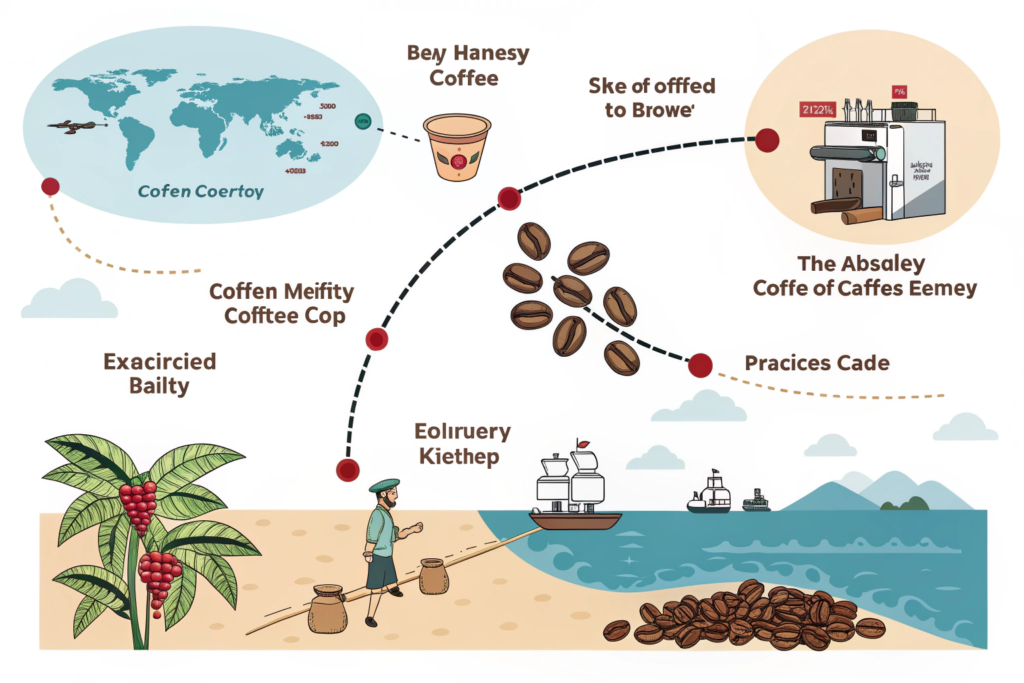
The process is the other hero. Demystify the journey from seed to cup. Tell the story of the harvest, the milling, the long ocean voyage, the precision roasting, and the careful brewing. Each step is an opportunity to highlight your commitment to quality and ethics. When customers understand the skill and care involved, they appreciate the product more and are willing to pay a premium. They’re not just buying coffee; they’re buying the culmination of that entire, cared-for process.
Why is Transparency the New Currency of Trust?
Modern consumers equate transparency with honesty. Be open about your challenges as well as your successes. Did a particular lot have a lower yield but incredible flavor? Tell that story. Are you working to improve your packaging sustainability but haven’t perfected it yet? Share your progress. This vulnerability builds immense trust.
As a supplier, we practice this by providing full lot information, moisture data, and honest assessments of each harvest’s characteristics. This allows you, our partner, to be transparent with your customers. You can confidently say, "This coffee comes from Lot #B24 at 1600m, harvested in November, with a moisture content of 11.2% when it arrived at our roastery." That level of detail is a powerful trust signal.
How to Use Customer Stories to Amplify Your Own?
Your customers are your best co-storytellers. User-generated content (UGC)—photos of them enjoying your coffee, their brew setups, their reviews—is social proof that your story resonates in real life. Feature this content prominently. Run campaigns that encourage sharing, like a hashtag for your brand. When potential customers see others emotionally engaged with your brand, they want to join the story. It creates a community around your coffee, moving from a transactional relationship to a participatory one.
Conclusion
Creating a compelling coffee brand story is about weaving together authenticity, purpose, and human connection. It starts with a deep, truthful origin narrative, is powered by a clear mission, and is expressed through a consistent visual and verbal identity. The story is ultimately about people—the growers, your team, and your customers—and the shared values that connect them through your product.
A great story turns customers into advocates and transactions into relationships. It’s what makes your coffee brand unforgettable in a saturated market.
If you are building your brand and seek a supply partner with a genuine, transparent origin story to strengthen your own narrative, let’s connect. We can provide not just premium Yunnan beans, but the rich story and data behind them. Contact Cathy Cai at cathy@beanofcoffee.com to discuss how our coffee and our story can become a foundational chapter in yours.