Walk into any specialty café. The menu lists coffees with notes of "blood orange," "dark chocolate," and "lavender." But are these just poetic guesses, or a precise, replicable map of flavor? For your brand, a sensory profile isn't just tasting notes—it's your product's unique fingerprint. It's the concrete language that connects your sourcing story to your customer's palate, and it's what turns a commodity into a memorable, defensible product. Without it, you're just selling brown beans.
Creating a sensory profile is the systematic process of defining and documenting the aroma, flavor, mouthfeel, and aftertaste characteristics of your coffee. It translates subjective taste into objective, actionable data for roasting, blending, and marketing. A strong profile answers: What does this coffee reliably taste like? Why does it taste that way (origin, process, roast)? And who is it for? This isn't a one-time exercise; it's the core of your quality control and brand identity.
Feeling overwhelmed? You're not alone. Most roasters start with vague descriptors. The goal is to move from "fruity and bright" to "clean acidity of pink grapefruit, a sweetness of brown sugar, and a silky body like cocoa." Let's build that system, step by step.
Why is a Defined Sensory Profile Your Brand's Most Important Asset?
Think of your favorite clothing brand. You likely know its fit, its fabric feel, its aesthetic—before you even see the tag. That's their profile. For coffee, your sensory profile serves the same purpose. It creates consistency that builds customer trust. It provides a clear brief for your roaster. It turns marketing from generic claims into specific, believable stories. In a crowded market, a precise profile is your point of difference.
A defined profile protects you from the volatility of coffee. Crops change year to year. A robust profile, tied to processing and roast style rather than one specific fleeting note, gives you a target to hit across seasons. It also streamlines your operations. When you can communicate to your supplier—"We need a coffee with high malic acidity (apple-like) and a syrupy body for our espresso blend"—you move beyond price-based buying to value-based partnership. This is how we work with clients at Shanghai Fumao; they share their profile targets, and we select lots from our Yunnan estates that match.
How does a sensory profile improve customer loyalty?
Customers return for a consistent experience. A clear profile ensures that the "Sunrise Blend" a customer buys in March tastes recognizably similar in August. This reliability builds trust. Furthermore, it empowers your staff. When a barista can confidently say, "This single-origin has a distinct black tea note and a crisp finish, making it perfect for pour-over," they are educating and guiding the customer, creating a deeper connection that goes beyond transaction. This turns casual buyers into advocates.
Can a strong profile justify a premium price?
Absolutely. It moves the conversation from commodity ("coffee") to a crafted product with defined attributes. You are no longer just competing on price per pound. You are selling a specific experience: "Our flagship espresso offers a flavor profile of milk chocolate, roasted almond, and a hint of dried cherry, with a creamy body that stands up in milk." This is valuable, proprietary information. It allows you to price based on the perceived value of that unique and consistent experience, not just on the green coffee cost.
What is the Step-by-Step Process to Build Your Profile?
Building a profile is like being a detective. You gather evidence (the coffee's attributes), analyze it systematically, and then file a report. You need the right tools, the right environment, and a structured method to avoid bias and capture truth.
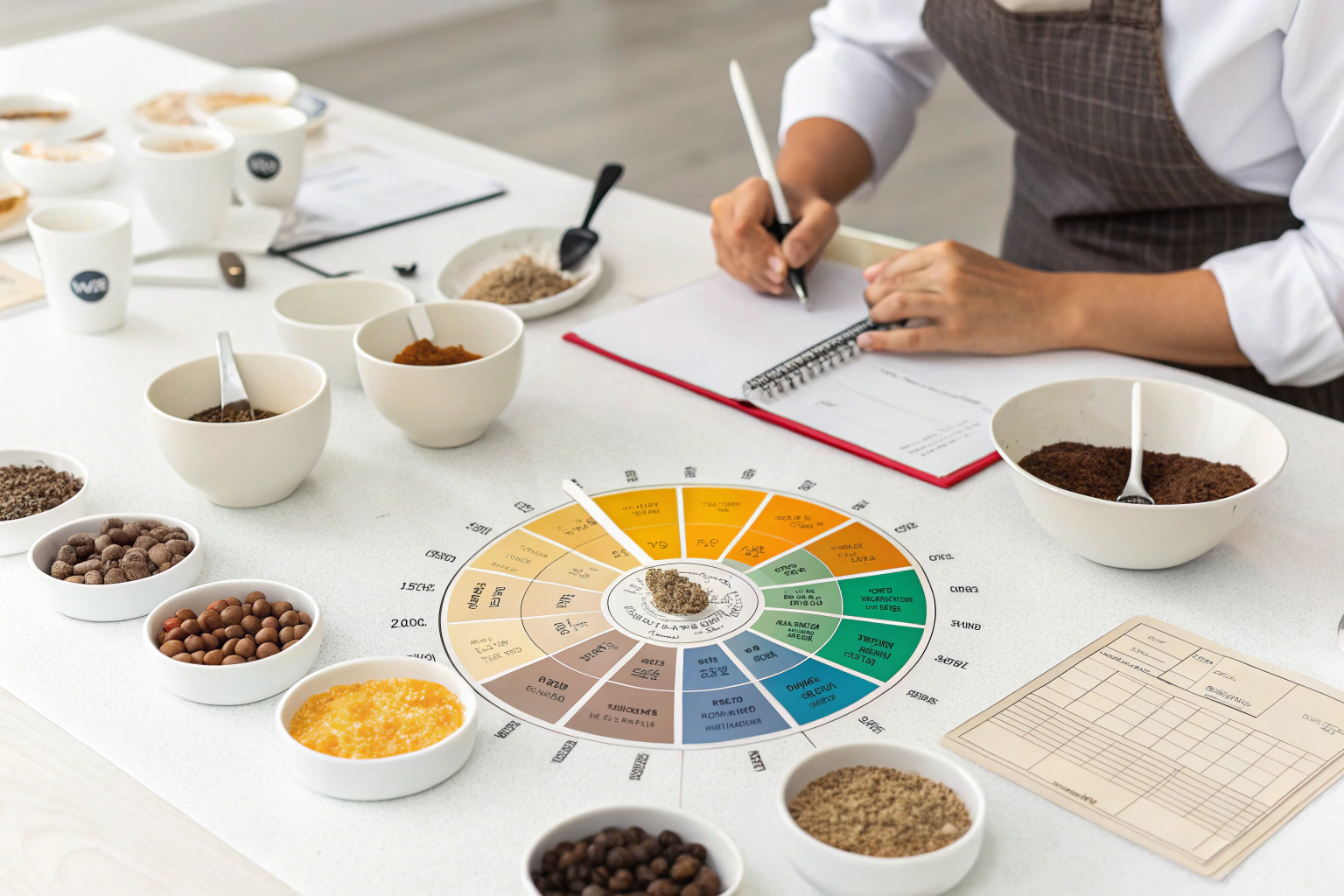
The process follows a clear sequence: 1. Source & Sample (get green beans from reliable partners like us). 2. Roast to Profile (develop a roast that highlights desired attributes). 3. Conduct Controlled Cupping (use the SCA protocol for baseline analysis). 4. Document with the Coffee Flavor Wheel (move from general to specific descriptors). 5. Validate with Target Brewing Methods (espresso, filter, etc.). 6. Create Your Brand's Flavor Lexicon (translate findings into your brand voice).

How do I run a proper cupping session to gather data?
You need a controlled, quiet space free of strong smells. Follow the Specialty Coffee Association (SCA) Cupping Protocol. This standardizes grind size, water temperature, steeping time, and evaluation sequence. The key is to cup multiple samples blind (without knowing which is which) and in comparison. Score and note: Fragrance/Aroma, Flavor, Aftertaste, Acidity, Body, Balance. Use the Coffee Taster's Flavor Wheel as your guide. Start at the inner ring (general: "fruity") and move outward to specific ("red apple" vs. "berry"). This structured approach removes guesswork. We provide our clients with post-harvest cupping scores and our own notes to serve as a starting point for their profiling work.
What tools are essential beyond a cupping spoon?
Your most important tool is a calibrated palate. Regularly taste known references: eat a piece of dark chocolate, smell a fresh citrus zest, taste different types of honey. This builds your mental library. Physically, you need: a sample roaster for consistency, precise scales, cupping bowls, the SCA Flavor Wheel, and a structured tasting sheet. For documenting beyond notes, consider a simple spider chart (radar chart) to visually plot intensity of attributes like acidity, body, sweetness, and bitterness. This creates an at-a-glance profile that's easy for your team to understand.
How Do You Translate Sensory Data into a Marketable Story?
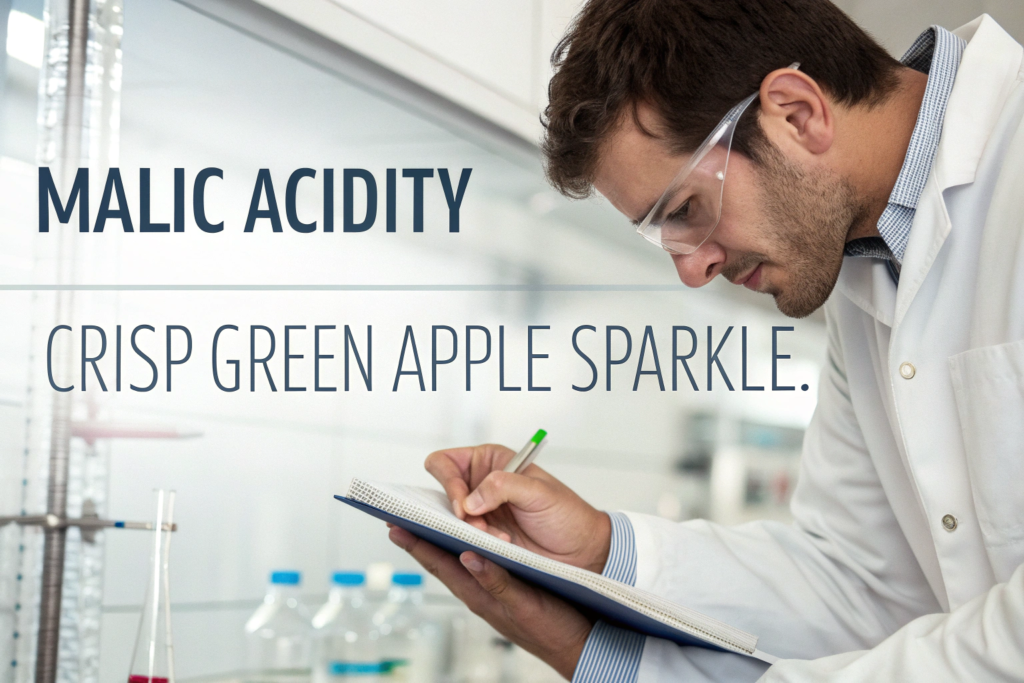
Data is useless if it stays in a notebook. The magic happens when you translate the technical descriptor "malic acidity" into the compelling story "crisp green apple sparkle." Your profile becomes the bridge between the lab and the lifestyle.
The translation involves three layers: 1. The Technical Layer (for roasters & QCs: "Acidity - 7/10, malic type"). 2. The Accessible Layer (for baristas & engaged customers: "Bright and juicy like a green apple"). 3. The Emotional/Story Layer (for marketing: "This lively acidity reflects the cool, misty mornings on the Yunnan plateau where this coffee was grown"). Each layer serves a different audience but must remain truthful to the same core profile.
What's the formula for writing compelling tasting notes?
Avoid generic, overused words like "smooth" or "rich." Be specific, relatable, and evocative. Use the "This is like..." model. Instead of "chocolatey," try "reminiscent of a 70% dark chocolate bar." Instead of "floral," try "a delicate aroma like jasmine tea." A good note often combines two elements: a flavor and a texture or sensation. Example: "A flavor of blackberry jam with a syrupy, rounded body." This gives a more complete picture. At BeanofCoffee, when we describe our Yunnan Catimor, we might say: "Notes of baking spices (cinnamon) and dark cocoa, with a smooth, walnut-like body—inspired by the region's ancient tea and spice traditions."
How do I align my profile with my brand's overall identity?
Your coffee's profile should be an expression of your brand's personality. Is your brand adventurous and experimental? Your profiles might highlight unusual fermentations and bold, fruity notes. Is your brand about comfort and tradition? Profiles might emphasize classic chocolate, caramel, and nutty notes with a full body. Every touchpoint—bag design, website copy, social media—should reflect this alignment. The profile isn't an isolated technical spec; it's the flagship product of your brand world. Shanghai Fumao helps brands achieve this by ensuring the coffee's inherent character supports the story they want to tell.
How to Maintain and Evolve Your Profile Over Time?
A profile is not carved in stone. Coffee is an agricultural product; it changes. Your customer's palate evolves. Your profile is a living document that requires stewardship. The goal is managed evolution—maintaining core identity while adapting to improvements and variations.
Maintenance relies on rigorous quality control cupping of every incoming batch and roasted batch against your profile standard. Evolution comes from conscious iteration: "Can we source a component with more sweetness to improve balance?" or "Our customers are enjoying lighter roasts, should we adjust our roast profile to highlight more acidity?" Use customer feedback, sales data, and ongoing sensory training to inform these decisions.

What QC checks ensure profile consistency batch-to-batch?
Implement a triangulation test in your weekly QC. Roast your current production batch and a new batch of the same green coffee. Present three cups to your QC lead: two from one batch, one from the other. The task is to identify the odd one out. If they can't, consistency is high. Also, maintain a reference library of retained samples from your "golden batch" for each product. New roasts should be cupped side-by-side with this reference to check for drift. This systematic approach catches variations before they reach the customer.
When and how should I update my profile?
Update proactively, not reactively. Key triggers include: A change in green coffee source (a new harvest from the same farm will vary—create a new profile for it). A shift in market preference (data shows rising demand for fruit-forward coffees). An improvement in roasting skill/equipment allowing you to better highlight a desired trait. When you update, communicate it transparently. A tagline like "New Harvest, Same Spirit" acknowledges the change while reinforcing your brand's commitment. Work closely with your supplier to navigate these changes; a partner like us can help blend lots or select specific micro-lots to maintain your target profile as nature varies its output.
Conclusion
Creating a sensory profile is the fundamental act of defining your coffee brand's product identity. It moves you from selling a generic agricultural product to offering a crafted, consistent, and story-rich experience. By investing in the systematic process of profiling—from rigorous cupping and data collection to skillful translation into marketable stories—you build a fortress of quality, trust, and differentiation around your brand.
Remember, your profile is both a compass and a map. It guides your internal decisions in sourcing and roasting, and it charts a clear, enticing path for your customer to understand and appreciate what makes your coffee uniquely yours.
Ready to define or refine the sensory fingerprint of your brand? It starts with exceptional green coffee sourced with purpose. At BeanofCoffee, we provide not just beans, but the traceable origin stories and consistent quality that form the perfect canvas for your profile. Contact our export manager, Cathy Cai, to discuss how our Yunnan Arabica, Catimor, and Robusta can become the foundation of your signature taste. Let's build your profile together. Reach Cathy at: cathy@beanofcoffee.com.