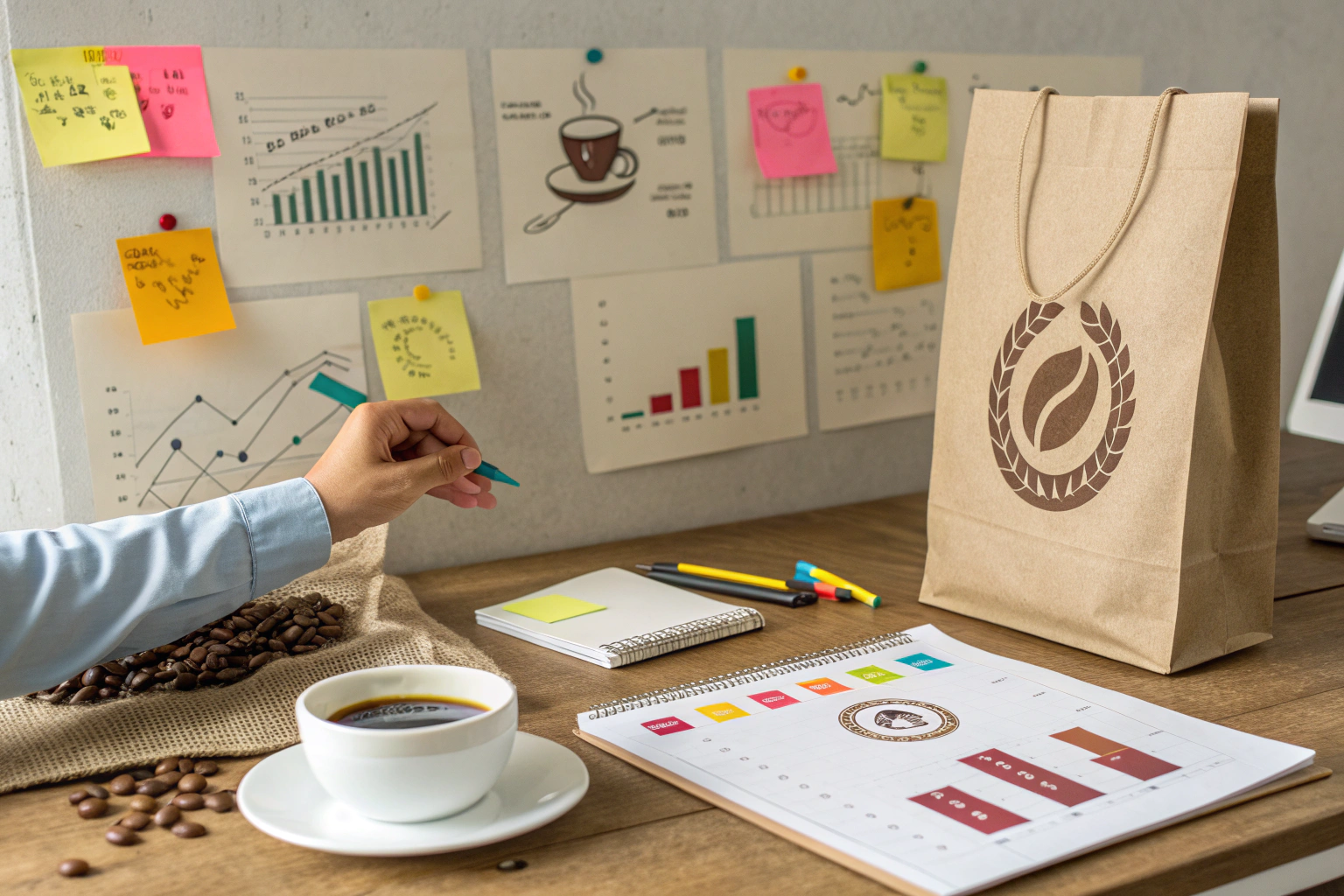
Look at the shelf. How many bags of coffee just say "Arabica," "Single Origin," or "Fresh Roasted"? Now, look at your own branding. Does it say the same things? In a market saturated with good coffee, being "good" is no longer enough. You need to be unforgettably different. A Unique Selling Proposition (USP) isn't a fancy tagline you tack on at the end—it's the core strategic argument for why a buyer should choose you, and only you, over every other option. It answers the customer's silent question: "Why should I care?"
For coffee exporters like us at BeanofCoffee, the USP must work on two levels: it must resonate with the end consumer who drinks the coffee, and it must deliver tangible value to the B2B buyer (the roaster, distributor, or retailer) who sources from us. Your USP is your reason for existing in their crowded supply chain. It could be an unrivaled origin story, a revolutionary processing method, an unbreakable quality guarantee, or a supply chain advantage no one else can match.
But here's the secret: a strong USP isn't invented in a marketing meeting. It's uncovered in your own operations. It's the one thing you do better, more consistently, or more authentically than anyone else. For us, it's not just that we grow coffee in Yunnan; it's that we offer "Unmatched Supply Chain Stability from a Single, Vertically Integrated Estate in China." This speaks directly to the pain points of buyers like Ron, who face volatility and delays elsewhere. Let's map out how you can find and communicate your own undeniable edge.
How Do You Identify Your Coffee's True Differentiator?
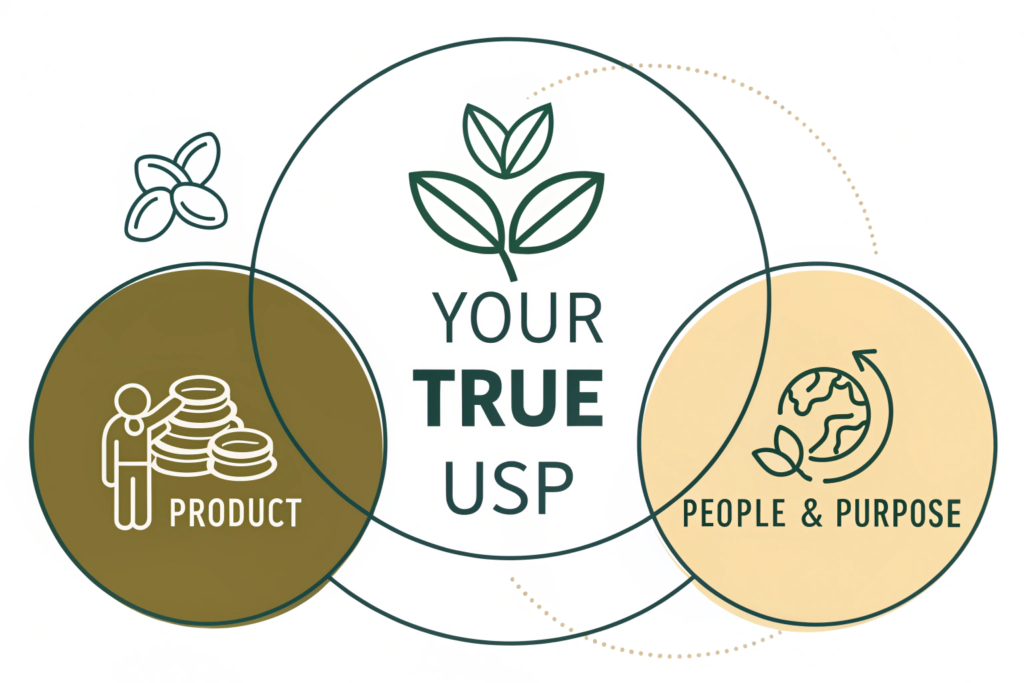
You can't claim to be unique until you know what makes you that way. This requires brutal honesty and looking beyond the surface. Start with a deep audit across three dimensions: Your Product, Your Process, and Your People.
- Product (The "What"): Go deeper than "Arabica from Yunnan." What's the specific flavor profile? (e.g., "A black tea and bergamot acidity unlike any other Asian coffee.") What's the unique varietal? (e.g., "A rare, locally adapted Catimor strain selected over 20 years.") Is there measurable data? (e.g., "Consistent 85+ SCA scores.").
- Process (The "How"): Is your farming or processing method extraordinary? (e.g., "Shade-grown under a canopy of fruit trees," or "Processed with pristine mountain spring water."). Do you have a traceability story? (e.g., "Every bag is traceable to the specific harvest week and farmer group.").
- People & Purpose (The "Why"): What is your mission beyond profit? (e.g., "Regenerative agriculture that revitalizes local watersheds," or "Direct trade that funds community schools."). Is there a unique founder story? (e.g., "A fifth-generation coffee family introducing their heritage to the world.").
Your true differentiator will live where these three circles overlap. It's the attribute that is True, Relevant, and Provable.
How to Move from a Feature to a Compelling Benefit?
This is the critical flip. A feature is a fact about your product. A benefit is the value that fact creates for the customer. Your USP must articulate the benefit.
-
Feature: "We own 10,000 acres in Yunnan."
-
Benefit (B2B Buyer): "You get unmatched lot-to-lot consistency and volume security, eliminating supply surprises."
-
Benefit (End Consumer): "You experience the pure, unadulterated terroir of a single, cared-for landscape."
-
Feature: "We use a patented slow-drying honey process."
-
Benefit (B2B Buyer): "You receive a coffee with a built-in, market-ready sweetness that reduces your blending complexity."
-
Benefit (End Consumer): "You taste a caramel-like sweetness without added sugar, unique to our method."
Always ask: "So what?" Why should your customer care about that feature? The answer is your benefit, and the most powerful one becomes the core of your USP. For more on this, study value proposition design principles.
Can Data and Certifications Be a USP?
Absolutely, if they are substantive and rare. A generic "Specialty Grade" claim is weak. However, "Every lot pre-screened to 85+ points with published cupping notes" is a strong, provable USP for quality-focused roasters. Certifications like Regenerative Organic or Bird Friendly are powerful USPs if your target market values sustainability deeply. For B2B buyers, data like "Moisture content guaranteed between 10-11%" is a USP of reliability that saves them money and hassle. The key is specificity and proof.
How Should a USP Differ for B2B vs. B2C Audiences?
Your coffee may be the same, but the reasons a roaster buys it and a consumer drinks it are different. Your messaging must bridge this gap, speaking the language of each audience.
For B2B Buyers (Roasters, Importers, Cafes):
Their pain points are business stability, cost predictability, quality control, and operational ease. Your USP should address these directly.
- Example USP: "The only vertically integrated Yunnan supplier guaranteeing fixed quarterly prices and on-time container shipments, locking in your margin and schedule."
- Messaging Focus: Consistency, logistics, technical specs (moisture, density, defect count), scalability, and partnership support. Use the language of supply chain management.
For End Consumers (Drinkers):
Their drivers are experience, emotion, identity, and taste. Your USP should connect to their lifestyle and values.
- Example USP: "Experience the forbidden fruit of Chinese terroir—a rare, floral coffee from the ancient hills of Yunnan, sourced with radical transparency."
- Messaging Focus: Origin story, flavor journey, ethical impact, sensory descriptions, and brand aesthetic. The B2B stability becomes "a consistently delicious cup, every time."
Your overall brand USP should be the umbrella that makes sense to both. E.g., "Uncompromising Quality from Seed to Cup." Then, you tailor the supporting arguments for each audience.

How Can Your Supply Chain Be Your Strongest USP?
For B2B, this is often the winner. In a world of fragmented cooperatives and unpredictable exports, a streamlined, owned supply chain is a massive competitive advantage. Our USP at BeanofCoffee leverages this:
- Control: "We control every step from seedling to shipment."
- Outcome for Buyer: "This means you get zero quality surprises, fully traceable lots, and the ability to secure exclusive microlots you can't find anywhere else."
- Tangible Proof: We offer video farm audits, real-time shipment tracking, and direct access to our agronomists.
This isn't just a story; it's a operational reality that solves real business problems. It makes us a strategic partner, not just a vendor.
What Role Does Packaging and Storytelling Play in Communicating USP?
For the end consumer, the package is the primary salesperson. Your USP must be visually and verbally clear in under 3 seconds.
- Design: Does your packaging design reflect your USP? A "luxury, rare" USP needs minimalist, premium materials. An "eco-warrior" USP needs recycled, earthy textures.
- Copy: Use headlines that state the benefit, not just the feature. Instead of "Washed Yunnan Arabica," try "The Consistent Choice: Flawless, Batch-Proof Yunnan Arabica." Include a short, powerful story—the "why" behind your USP—on the bag. Link to a QR code for deeper traceability.
How to Test and Validate Your Coffee's USP?
Before you rebrand everything, test your hypothesis. A weak USP is worse than no USP.
- Competitor Analysis: List the USPs of your top 5 competitors. Are you genuinely different, or are you all saying "premium" and "sustainable"?
- Customer Interviews (The Most Important Step): Ask your best B2B clients: "Why do you buy from us instead of others?" and "What's the one thing we do that you'd hate to lose?" Their answers are gold. Ask end consumers: "What words come to mind when you see our coffee?"
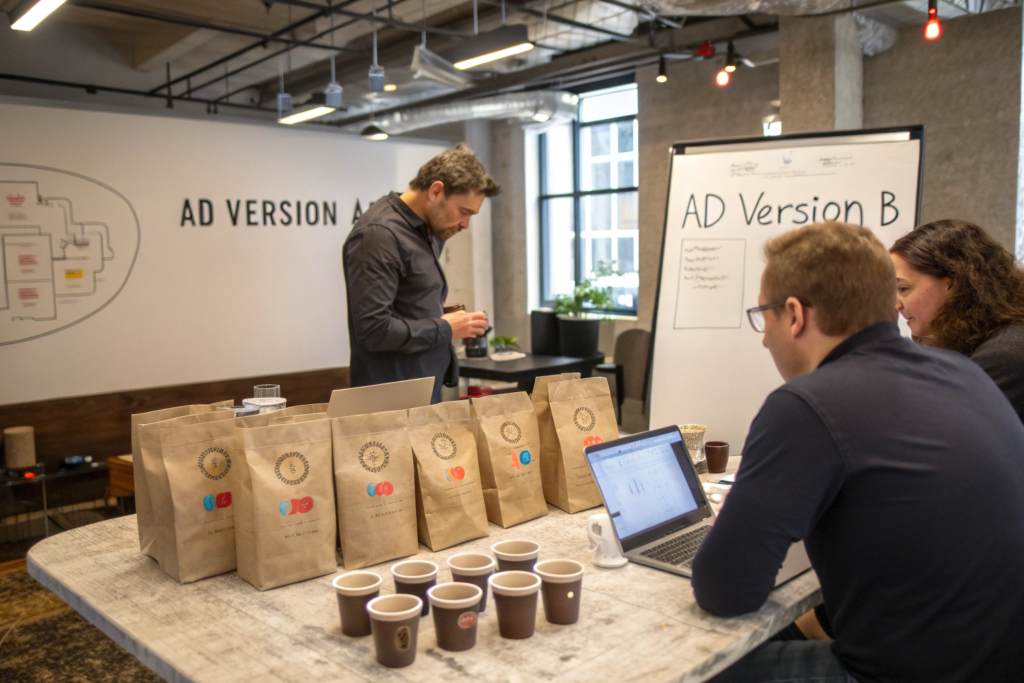
- A/B Testing: Run two different ad campaigns or web pages—one with your old messaging, one with the new USP-driven messaging. Measure clicks, engagement, and, most importantly, conversion.
- The "One Thing" Test: Can you explain your USP in one simple sentence that a 10-year-old would understand? If not, it's too complicated.
What are Common Pitfalls to Avoid When Crafting a USP?
- Being Too Vague: "High-quality coffee" is not a USP. Everyone claims that.
- Lying or "Greenwashing": Making sustainability claims you can't prove will backfire. Authenticity is everything.
- Focusing Only on You: A USP about your 100-year history is only powerful if it translates to a benefit for the customer (e.g., "centuries of skill in every balanced cup").
- Ignoring the Competition: Your USP must be unique relative to your competitors. If three other farms also offer "direct trade," it's not unique.
- Forgetting the "Proposition": It must be a clear offer of value. It's not just who you are; it's what you promise to do for the customer.
How Often Should You Revisit and Refine Your USP?
Your USP is not set in stone. Revisit it at least annually. The market changes, new competitors emerge, and your own business evolves. What was unique last year may be commonplace today. Continuous feedback from your customers is your best guide for refinement. It should be a living, breathing part of your business strategy.
Conclusion
Creating a powerful Unique Selling Proposition for your coffee is not a marketing afterthought—it is the foundational business strategy that clarifies who you are for, why you matter, and how you win. It forces you to look inward, find your authentic edge, and then communicate it as a compelling, customer-centric benefit.
The most successful USPs are rooted in truth, address a specific customer pain point or desire, and are delivered with unwavering consistency at every touchpoint—from the sales pitch to the bag on the shelf.
At BeanofCoffee, our USP is built on the bedrock of control: vertical integration that delivers unmatched consistency and reliability for our B2B partners. This isn't just our message; it's our operational blueprint, allowing us to be the stable, trustworthy foundation for your coffee business.
Ready to define or refine the unique proposition for your coffee brand? Contact our Head of Sales, Cathy Cai, for a strategic conversation about how our stable supply chain can become a cornerstone of your own USP. Email cathy@beanofcoffee.com.