You're sitting on a goldmine—premium, traceable coffee beans from a unique origin like Baoshan. You have the quality, the supply, and the competitive price. But how do you get your beans in front of the right buyers: the roasters, distributors, and brand owners who are too busy to sift through generic sales pitches? The B2B coffee market is a relationship-driven space where trust, proof, and ease of doing business trump flashy advertising. Effective marketing here isn't about shouting the loudest; it's about speaking directly to the professional's pain points with a clear, credible, and solution-oriented voice.
Creating effective B2B marketing for coffee beans requires a strategic shift from selling a product to selling a reliable business solution. Your marketing must systematically address the core concerns of B2B buyers: consistent quality, stable supply, logistical reliability, transparent pricing, and verifiable origin. This is achieved by building a multi-channel presence that combines authoritative content (blogs, case studies), strategic networking (trade shows, LinkedIn), and a flawless digital front door (SEO-optimized website, Alibaba store) that showcases your operational excellence, not just your beans. It’s about proving you are a low-risk, high-value partner.
Let's move beyond theory. For a company like yours, with owned plantations and export capability, your marketing should make your vertical integration and control your biggest selling point. Here’s how to structure that message across the channels your buyers actually use.
How to Build a Professional and Conversion-Ready Website?
Your website is not a brochure; it's your 24/7 sales engineer and the foundation of all digital trust. For a busy buyer researching on Google, it's often the first serious touchpoint. If it looks amateurish, lacks crucial information, or is difficult to navigate, they will click away in seconds, no matter how good your coffee is.
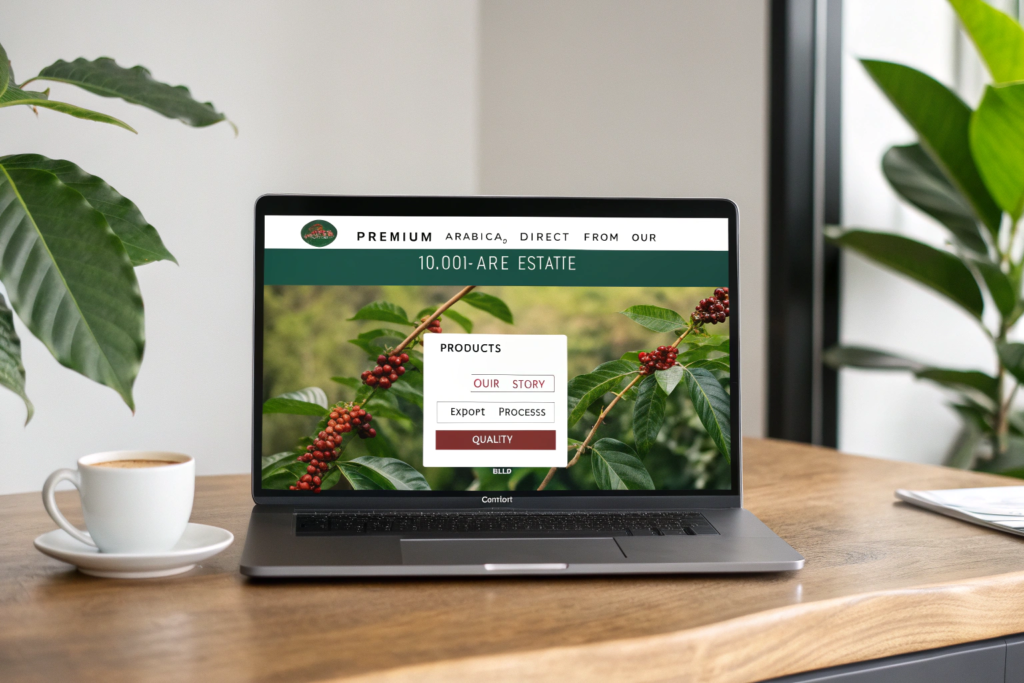
A B2B coffee website must be clean, fast, and structured for the professional buyer's journey. The homepage should immediately answer: Who are you? What do you offer? (e.g., "Premium Arabica Wholesale Export from Owned Yunnan Plantations") and Why should I trust you? Use clear navigation to critical pages: Product Listings (with specs for Catimor, Arabica, Robusta), Company Story (highlighting your 10,000 acres, vertical integration), Export & Logistics info, Quality Control/Certifications, and a dedicated Contact/Quote Request page. Crucially, your site must be optimized for Google SEO with keywords like "wholesale coffee bean exporter," "bulk Arabica supplier China," and "Yunnan coffee beans." Include detailed blog content (like the articles we're creating) to demonstrate expertise and attract organic search traffic. For example, our site Shanghai Fumao is built to guide a buyer like "Ron" from initial search to a confident inquiry.
What Key Pages Do B2B Buyers Look For?
Beyond the homepage, four pages are non-negotiable:
- "Our Story" / "About Us": This is where you build trust. Use photos and videos of your plantations in Baoshan, your processing facility, and your team. Clearly state your value proposition: ownership of the supply chain equals stable prices and reliable quality.
- "Our Products" with Technical Specs: List your offerings (e.g., Yunnan Catimor AA, Washed Arabica) with details buyers need: screen size, moisture content, defect count, processing method, available certifications, and packaging options. Downloadable spec sheets are a plus.
- "Export Process" or "Logistics": Address timeliness and security head-on. Outline your shipping process, Incoterms you work with, and documentation support (phytosanitary, etc.). This directly alleviates a major buyer pain point.
- "Contact for Quote": Make it easy. Use a form that asks for relevant business info (company name, target volume, destination port). Offer direct email (like Shanghai Fumao) and maybe a calendar booking link. Show you're ready for serious business.
How to Use Case Studies and Testimonials Effectively?
Social proof is powerful in B2B. A case study titled "How We Helped a US Roastery Secure a Stable Yunnan Arabica Supply" is more convincing than any claim. Detail the client's challenge (e.g., price volatility, inconsistent quality), your solution, and the quantifiable results (e.g., "20% cost savings year-over-year," "zero shipment rejections"). Feature testimonials from real CEOs, owners, or purchasing managers from your target regions (North America, Europe, Australia). Place these on relevant product pages and have a dedicated "Clients" section. This transforms you from a commodity seller into a proven problem-solver.
How to Leverage B2B Platforms Like Alibaba and Trade Shows?
Platforms like Alibaba.com are digital trade shows. They are where buyers like Ron go to actively source. Your presence here must be meticulously professional to stand out from thousands of other suppliers. Similarly, physical trade shows (like SCA Expo, HostMilano) offer unparalleled face-to-face relationship building.
On Alibaba, treat your storefront like a mini-website. Use high-resolution images and videos of your farm and facility, not just stock photos. Complete every profile detail, get Verified Supplier status, and actively manage your ratings. List products with clear, keyword-rich titles ("Sun-Dried Yunnan Arabica Green Coffee Beans Grade 1 for Roasting"). In your descriptions, lead with your business advantages: "Own plantations ensure stable supply and price," "FDA-registered processing facility," "FOB/CIF terms available." Respond to inquiries promptly and professionally. This platform tests your operational efficiency before a buyer even contacts you directly. For trade shows, your goal isn't to sell bags on the spot; it's to collect qualified leads. Have a compelling booth that tells your origin story visually, bring sample kits with roast dates and spec sheets, and schedule meetings with potential buyers in advance. Follow up within 48 hours with the specific information discussed.
What Are the Must-Have Elements of an Alibaba Product Page?
To convert browsers into inquiries, your Alibaba listings need:
- Trust Signals: Gold Supplier badge, Trade Assurance logo, transaction history.
- Visual Proof: Gallery with images of the coffee cherries on the tree, the processing station, bags being loaded into containers, and lab testing reports.
- Detailed Specifications: A clear table with all technical data (moisture, density, etc.).
- FAQ Section: Pre-empt common questions about minimum order quantity (MOQ), shipping time to the USA, payment terms (T/T, L/C), and sample policy.
- A Clear Call-to-Action (CTA): "Contact Supplier for a Custom Quote" or "Request a Sample." Make the next step obvious.
How to Maximize ROI from a Trade Show?
Trade shows are a major investment. To maximize return:
- Pre-Show Marketing: Email your existing leads and list to announce your booth number and offer to schedule a meeting. Promote on LinkedIn.
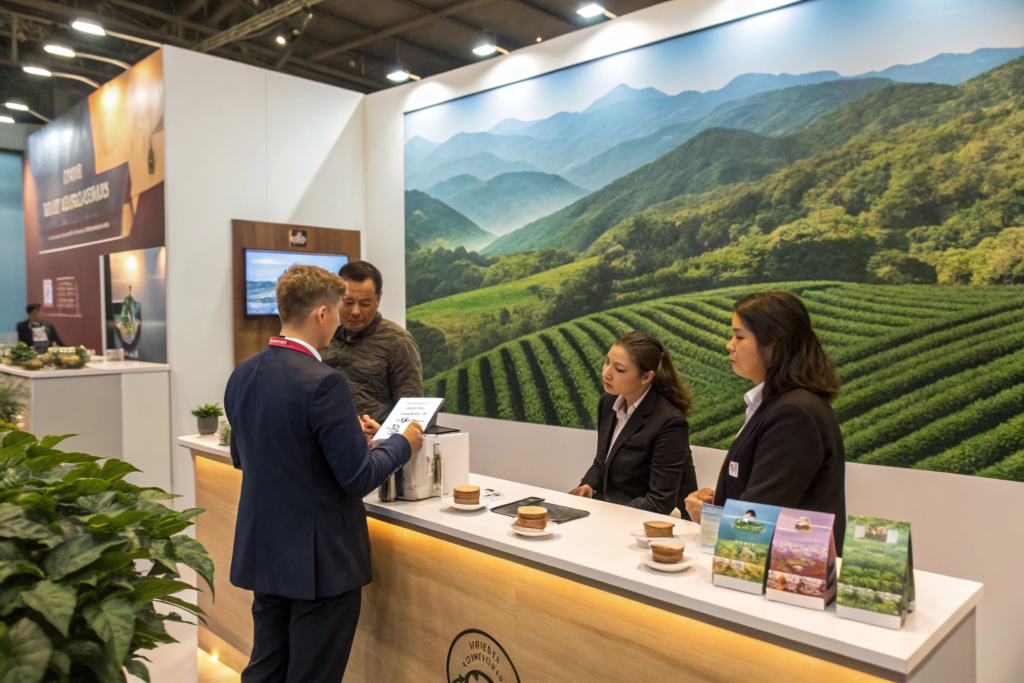
- Engaging Booth Design: Use large graphics of your farm map and high-quality product displays. Have a working grinder and brewer to offer fresh cups of your coffee—the taste is your ultimate sales tool.
- Effective Lead Capture: Don't just collect business cards. Use a tablet form to capture specific needs (e.g., "Looking for espresso blend base," "Volume: 10 containers/year").
- Systematic Follow-Up: Categorize leads (Hot, Warm, Cold) immediately after the show. Send tailored follow-up emails referencing your conversation. The first to follow up often wins the business.
How to Use Content Marketing to Build Authority?
In B2B, content is your most powerful tool for building trust before a sales conversation ever happens. By creating and sharing valuable, educational content, you position your company as a knowledgeable and reliable expert in the field, not just a seller.
Your content should answer the precise questions your potential buyers are asking on Google and industry forums. For example: "How to Import Coffee from China to the USA?", "Arabica vs. Robusta for Espresso Blends," "Understanding Coffee Bean Grading." By publishing detailed, SEO-optimized blog articles (like this one) that provide genuine value, you attract qualified traffic to your website. This "inbound" marketing approach draws in buyers who are already researching, making them warmer leads. Share this content on your LinkedIn company page, in relevant Facebook groups for roasters, and even create short, informative videos for TikTok or Instagram Reels showing aspects of farming and processing. This demonstrates transparency and builds a narrative around your brand.
What Types of Content Resonate with B2B Coffee Buyers?
Focus on educational and problem-solving content:
- Deep-Dive Blog Articles: Address complex topics like supply chain sustainability, customs clearance, or quality analysis. Use data and specifics from your own operations.
- Case Studies: As mentioned earlier, these are content gold. They provide social proof and a concrete ROI story.
- Infographics: Simplify complex information, like your journey from "Bean to Ship," or a comparison of your coffee varietals.
- Short-Form Video: A 60-second video showing the harvest on your farm or the precision of your optical sorter can be incredibly engaging and build authenticity.
The goal is to make your buyer more informed and capable, which in turn makes you the obvious partner for their needs.
How to Distribute Content on LinkedIn and Google?
LinkedIn is the prime B2B social network. Don't just post links. Write articles or long-form posts about industry trends, share insights from your latest blog post, and comment thoughtfully on posts from potential buyers or industry leaders. Use relevant hashtags like #CoffeeBusiness #SpecialtyCoffee #B2BCoffee. For Google, ensure every piece of content is optimized for relevant long-tail keywords. Use tools to find what your target audience is searching for (e.g., "Yunnan coffee price per kg," "organic green coffee bean supplier"). By consistently providing the best answer to these queries, you climb search rankings and become a visible authority. This is a long-term strategy that builds a stable pipeline of qualified leads.
How to Nurture Leads and Close B2B Sales?
Attracting a lead is only the beginning. The B2B sales cycle for coffee can be long, involving samples, negotiations, and compliance checks. An effective lead nurturing process is what separates companies that get inquiries from those that secure long-term contracts.
When a lead comes in (from your website, Alibaba, or a trade show), respond within hours, not days. The first response should be personalized, thank them for their interest, and ask a few qualifying questions to understand their needs better (e.g., target market, annual volume, preferred specs). Immediately offer to send samples—this is a critical step. Make the sample process easy and professional: include a spec sheet, roast suggestions, and a personalized note. Follow up after they've had time to evaluate the sample. Use a CRM (Customer Relationship Management) system to track all interactions and set reminders for follow-up. The nurturing process is about building a relationship, providing information, and patiently guiding the buyer to see you as the secure and trustworthy solution to their sourcing challenges.
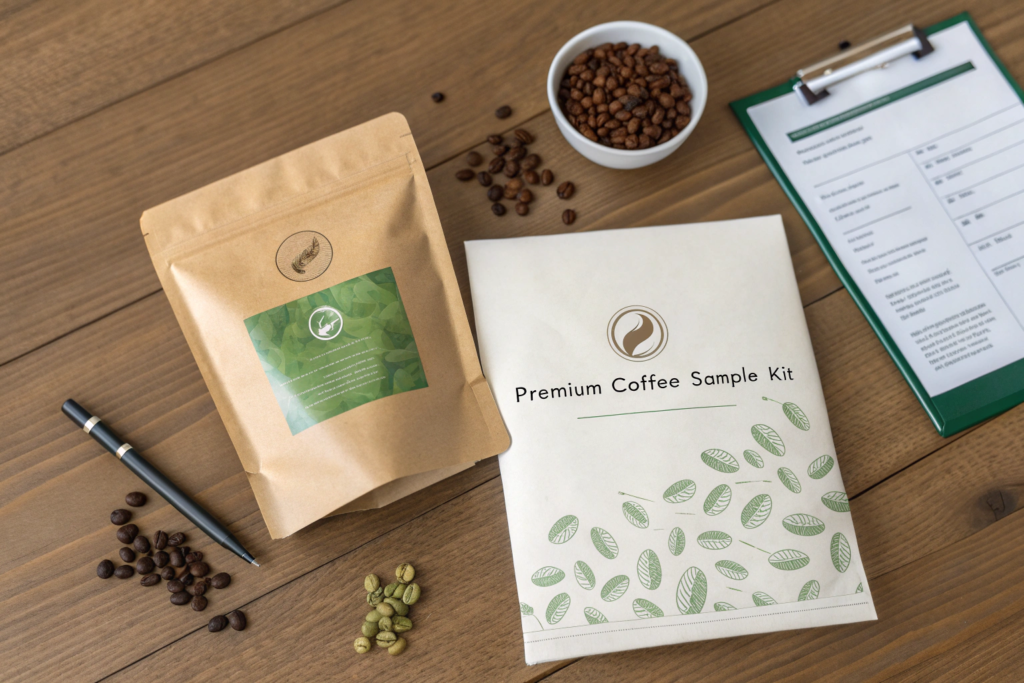
What Does an Effective Sample Kit Strategy Look Like?
Your sample kit is a physical representation of your brand. It should include:
- Green Bean Samples: In clearly labeled, airtight bags (e.g., 300g each of your Catimor and Arabica lots).
- Roasted Samples (Optional but Powerful): If you roast, include small bags of roasted beans to showcase potential.
- Professional Documentation: A cover letter, technical data sheets, a company brochure, and your business card.
- Easy Next Steps: A reminder of your contact info (Cathy, cathy@beanofcoffee.com) and a link to a page on your site with roasting profiles.
The cost of a sample kit is an investment in closing a contract worth thousands of dollars.
How to Handle Price Negotiations and Objections?
B2B buyers will negotiate. Your preparedness is key. Instead of just discussing price per pound, discuss total landed cost and value. Be ready to explain how your vertical integration controls costs and ensures stability. Have transparent FOB and CIF quotes ready. Common objections like "Your price is higher than a Brazilian supplier" can be countered with your unique value propositions: shorter, more reliable shipping to Asia, unique flavor profile, or the security of dealing with a plantation owner. Always focus on building a partnership for stable supply rather than winning a single transaction. Your goal is to become their go-to source, not just the vendor for one order.
Conclusion
Effective B2B marketing for coffee beans is a holistic discipline that aligns your company's operational strengths with the documented needs of professional buyers. It requires moving beyond simple product listings to building a brand synonymous with reliability, transparency, and expertise. By constructing a authoritative digital presence, leveraging targeted platforms, educating your market with valuable content, and executing a meticulous sales nurturing process, you transform your company from a supplier into a strategic partner.
This approach directly counters the pain points of price volatility, quality concerns, and logistical headaches that buyers like Ron face daily. It demonstrates that you understand their business, not just your own.
If you are ready to implement a B2B marketing strategy that showcases the true depth of your offering—from your 10,000 acres in Baoshan to your export-ready logistics—we can help articulate that story. At BeanofCoffee, we've built our business on these principles.
To discuss how to refine your marketing message, develop key content, or connect with the right buyers, please contact our head of sales and marketing, Cathy Cai. She can provide insights tailored to your target markets in North America, Europe, and Australia. Reach her at cathy@beanofcoffee.com. Let's build a marketing engine that grows your wholesale business.