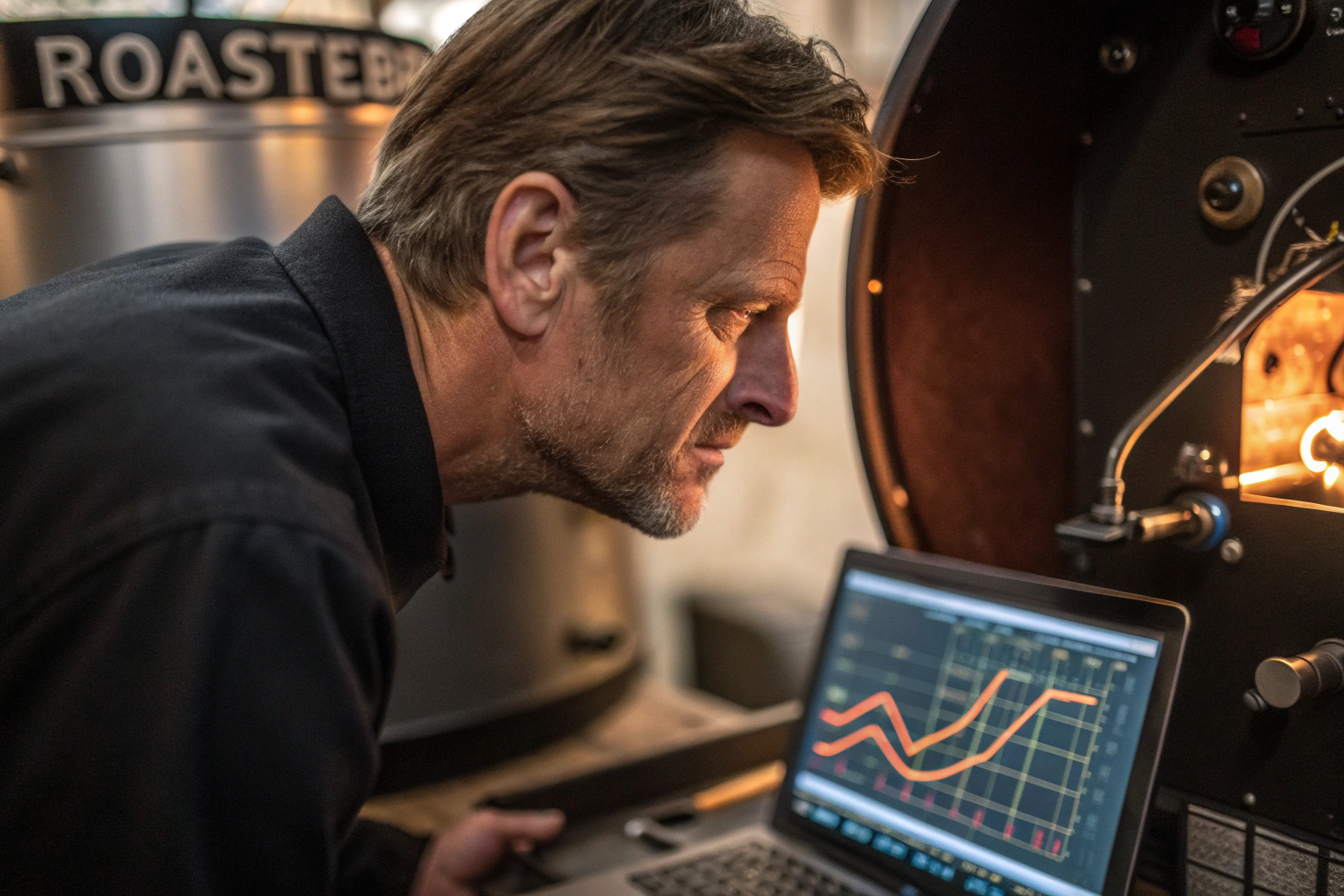
You know the feeling. You get a new bag of green coffee, full of promise. You run it through your standard roast profile, and the result is... disappointing. It's flat, or maybe it's too acidic, or it has a burnt, roasty edge. You know the potential for a beautiful coffee is locked inside those beans, but you feel like you're fumbling in the dark, wasting expensive green coffee on "test" batches that don't work. This is a huge pain point: you lack a systematic method for unlocking a new coffee's unique potential, leading to inconsistent results, wasted inventory, and the frustration of not being able to produce the best possible product.
Honestly, determining the optimal roast profile is a systematic process of discovery, not a lucky guess. It begins with a thorough analysis of the green coffee's physical properties (density, moisture, and size), which informs your initial roasting strategy. You then execute a series of structured sample roasts, methodically changing one variable at a time. Finally, you use sensory analysis (cupping) to evaluate the results and iteratively refine the profile until you find the "sweet spot" that best expresses that specific bean's inherent character. It's a feedback loop: Analyze -> Roast -> Taste -> Repeat.
From my perspective as a grower at Shanghai Fumao, we see the unique fingerprint of our Yunnan terroir in every bean. A dense, high-altitude bean from our farm requires a different approach than a softer, lower-grown bean. The optimal roast profile is not a one-size-fits-all recipe; it's a bespoke suit, tailored to the specific characteristics of the coffee you are working with. Let's walk through the professional's method for tailoring that perfect fit.
How Do You "Read" the Green Beans Before Roasting?
Before you apply any heat, the beans themselves will tell you how they want to be roasted. You just need to know how to listen. A professional roaster doesn't just look at the beans; they measure them.
Do these numbers really make a difference? An enormous difference. The physical characteristics of the green coffee are the most important predictors of how it will behave in the roaster. They determine how quickly the bean will accept heat and how much energy will be required to properly develop its flavors. Ignoring this data is like trying to navigate without a map.
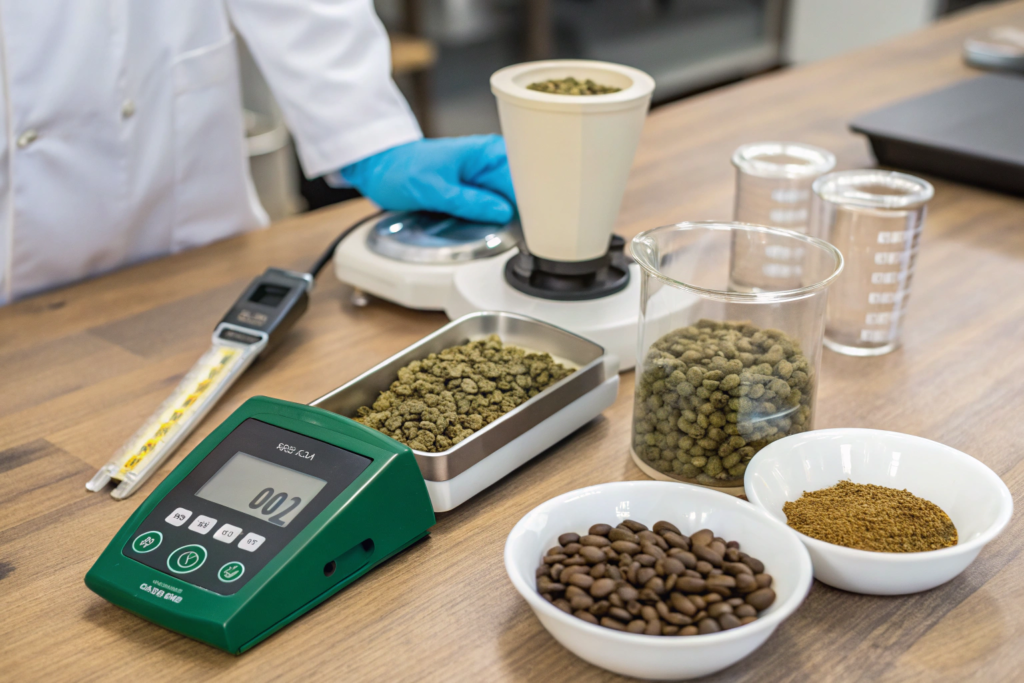
How does bean density affect your strategy?
- What it is: The mass of the coffee per unit of volume (grams per liter). Hard, dense beans are typically grown at high altitudes and mature slowly.
- How to measure it: A simple method is to fill a 100ml graduated cylinder with beans, level it off, and weigh the beans on a digital scale.
- Roasting Implication: Higher density beans need more heat energy applied at the beginning of the roast to penetrate the bean's core. They can handle a more aggressive, high-heat charge. If you roast a dense bean too gently, the outside will scorch before the inside is developed, resulting in a grassy, underdeveloped flavor.
Why is moisture content so critical?
- What it is: The percentage of water in the green bean. The ideal range is between 10-12%.
- How to measure it: A digital moisture meter is a non-negotiable tool for any serious roaster.
- Roasting Implication: Higher moisture content means the bean will need more energy and time to go through the initial "drying phase" of the roast. It acts as a heat sink. A coffee with 12% moisture will react much more slowly at the beginning of the roast than a coffee with 10% moisture, and you must adjust your initial gas setting accordingly.
Does bean size matter?
- What it is: The physical size of the beans, measured with screen graders.
- Roasting Implication: A lot with a wide variation in bean size will roast unevenly. The small beans will roast much faster than the large beans, resulting in a chaotic mix of flavors. This is why sourcing well-sorted, uniform coffee from a quality supplier like Shanghai Fumao is so important. For a given lot, larger beans generally require a slightly longer, gentler roast to ensure the heat penetrates fully.
How Do You Structure Your Sample Roasting Protocol?
Once you have analyzed the green beans, you can form a hypothesis. For example: "This is a dense, high-moisture coffee, so I will start with a high charge temperature and a high gas setting." Now, you need to test that hypothesis.
Do I need to do a bunch of different roasts? Yes, but you must do it methodically. The goal is to isolate variables. If you change five things at once, you'll have no idea which change was responsible for the result. The professional approach is to establish a "control" roast and then create variations that change only one key variable at a time. This is where you use your small-batch sample roaster to save time and coffee.
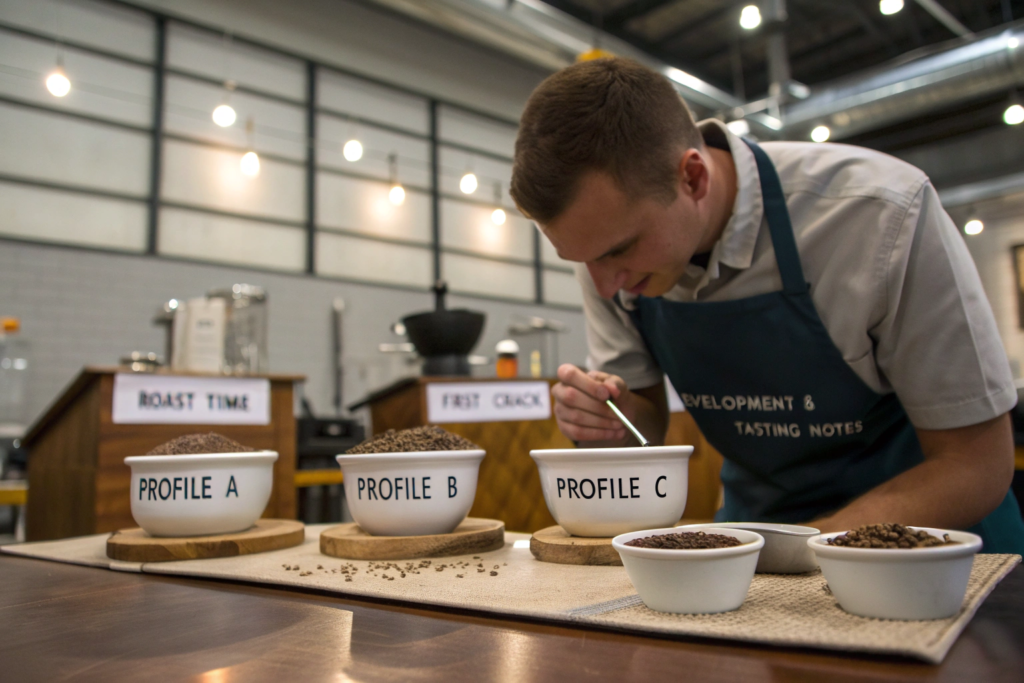
What is a good "control" profile?
Start with a standard, gentle profile that you know well. A good baseline might be:
- A moderate charge temperature.
- Aim for the "drying phase" (yellowing) to end around 4-5 minutes.
- Aim for first crack to begin around 8-9 minutes.
- Aim for a "development time" (time after first crack begins) of about 1:30 to 2:00 minutes, or about 15-20% of the total roast time.
What variables should you test?
From your control roast, create 2-3 variations.
- Variation 1: Change the Development Time. Roast another batch with the exact same profile, but drop it 15 seconds earlier (shorter development). Roast a third batch and drop it 15 seconds later (longer development). This will show you how the coffee responds to more or less caramelization.
- Variation 2: Change the Mid-Phase. On another set of roasts, try applying more or less heat in the phase between the yellowing and the first crack. This will affect the body and sweetness.
- Variation 3: Change the Initial Charge. Try starting with a higher or lower charge temperature to see how the bean reacts to the initial heat application.
How Do You Use Cupping to "Listen" to the Results?
Roast logs and data are meaningless without sensory evaluation. Cupping is how the coffee tells you which profile it prefers.
Isn't cupping just for buying coffee? No, cupping is the roaster's most critical feedback tool. It's how you diagnose your roasts. By cupping your different sample roast profiles side-by-side, the differences become incredibly obvious. You can clearly taste the impact of that extra 15 seconds of development time. You need to cup your roasts "blind" (so you're not biased by knowing which is which) and take detailed notes.
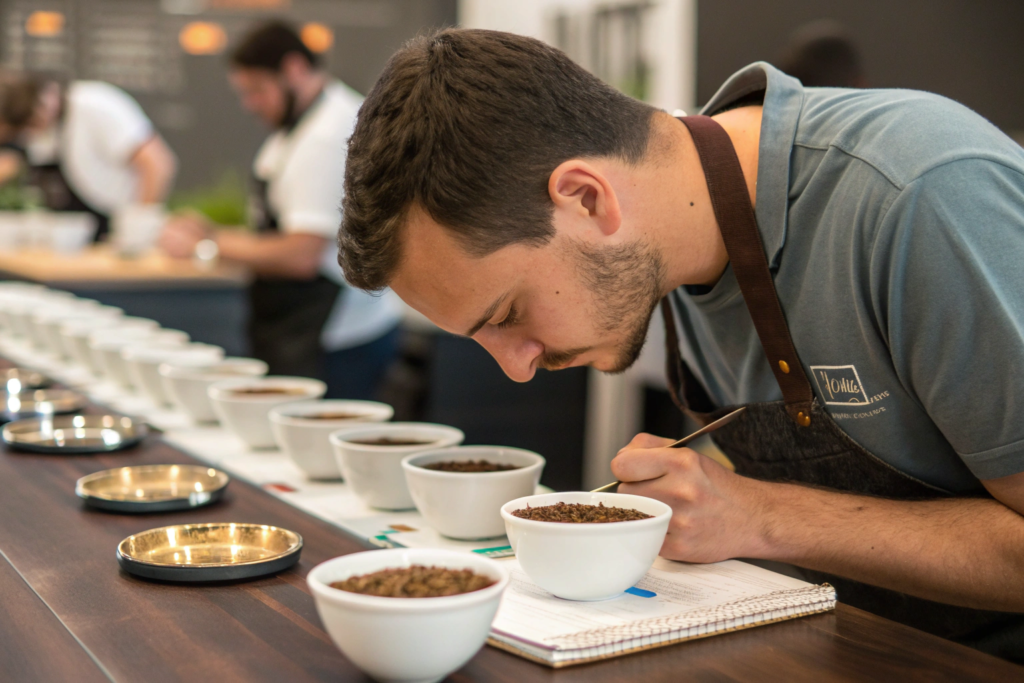
What are you looking for on the cupping table?
- Acidity: Is it bright, vibrant, and sweet, like citrus? Or is it sour, sharp, and unpleasant? A sour taste often means the roast was underdeveloped.
- Sweetness: Does the coffee have a rich, sugary, caramel-like sweetness? Or is it bland and flat?
- Body: Does it feel full and round in your mouth, or is it thin and watery?
- Finish: Is there a pleasant, lingering aftertaste, or does it finish with a bitter, ashy, or smoky flavor? A bitter, burnt taste is a clear sign of over-roasting.
How do you translate tasting notes back into roast adjustments?
This is the key skill.
- If it tastes "baked" or flat (like bread): You likely had a "stalled" roast, where the rate of rise flattened out too much. You need to apply more heat in the mid-phase.
- If it tastes sour or grassy: The roast is underdeveloped. You need to extend the total roast time or, more likely, increase the development time after first crack.
- If it tastes bitter or smoky: The roast is overdeveloped. You need to shorten the development time or lower your end temperature.
- If the acidity is sharp but there's no sweetness: You may have roasted too fast. Try lengthening the time before first crack to allow more sugars to develop.
How Do You "Lock In" and Scale the Optimal Profile?
Through your iterative process of roasting and cupping, one profile will emerge as the clear winner. It will be the cup that is the most balanced, sweet, and complex, the one that best expresses the coffee's unique character.
Now I have the perfect profile, can I just use it forever? You can use it as your "master profile" for that specific coffee. The final step is to scale it up from your sample roaster to your production roaster. This may require some minor adjustments, as larger machines have more thermal momentum, but your sample roast profile gives you an incredibly accurate road map to follow. You are no longer guessing; you are executing a proven plan.
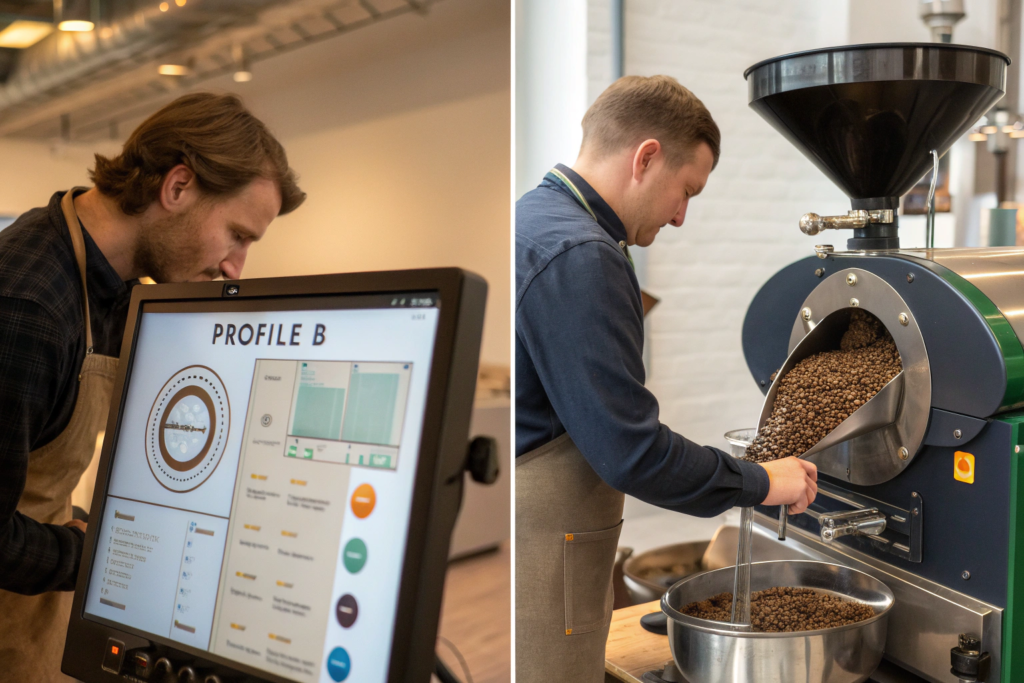
How do you scale the profile?
Using your roasting software (Cropster or Artisan), you set the key markers from your winning sample roast as the background template for your production roast. You will follow the same curve, hitting the same time and temperature points (yellowing, first crack, drop time) that you perfected on the small roaster.
Why is consistency so important?
Once you have found the optimal profile, your job is to replicate it perfectly, batch after batch. This ensures that every bag of coffee you sell delivers the same exceptional experience to your customers. This consistency is the hallmark of a professional roaster. It's what builds your brand's reputation for quality and reliability.
Conclusion
Determining the optimal roast profile is a journey that transforms the roaster from a simple machine operator into a true coffee craftsperson. It's a disciplined cycle of analysis, experimentation, and sensory feedback. By "reading" the green beans, conducting methodical sample roasts, cupping the results critically, and then scaling the winning profile with precision, you can consistently unlock the full, beautiful potential locked within every coffee bean. This process eliminates guesswork, reduces waste, and, most importantly, results in a final product that honors the bean, the farmer, and the customer.
We pour our passion and expertise into growing coffee with incredible potential on our farms in Yunnan. We believe the greatest respect we can be shown is for a roaster to take the time and care to discover the optimal roast profile that allows our coffee to truly sing. If you are a roaster who shares this commitment to excellence, we invite you to work with us. Contact our coffee specialist at cathy@beanofcoffee.com.