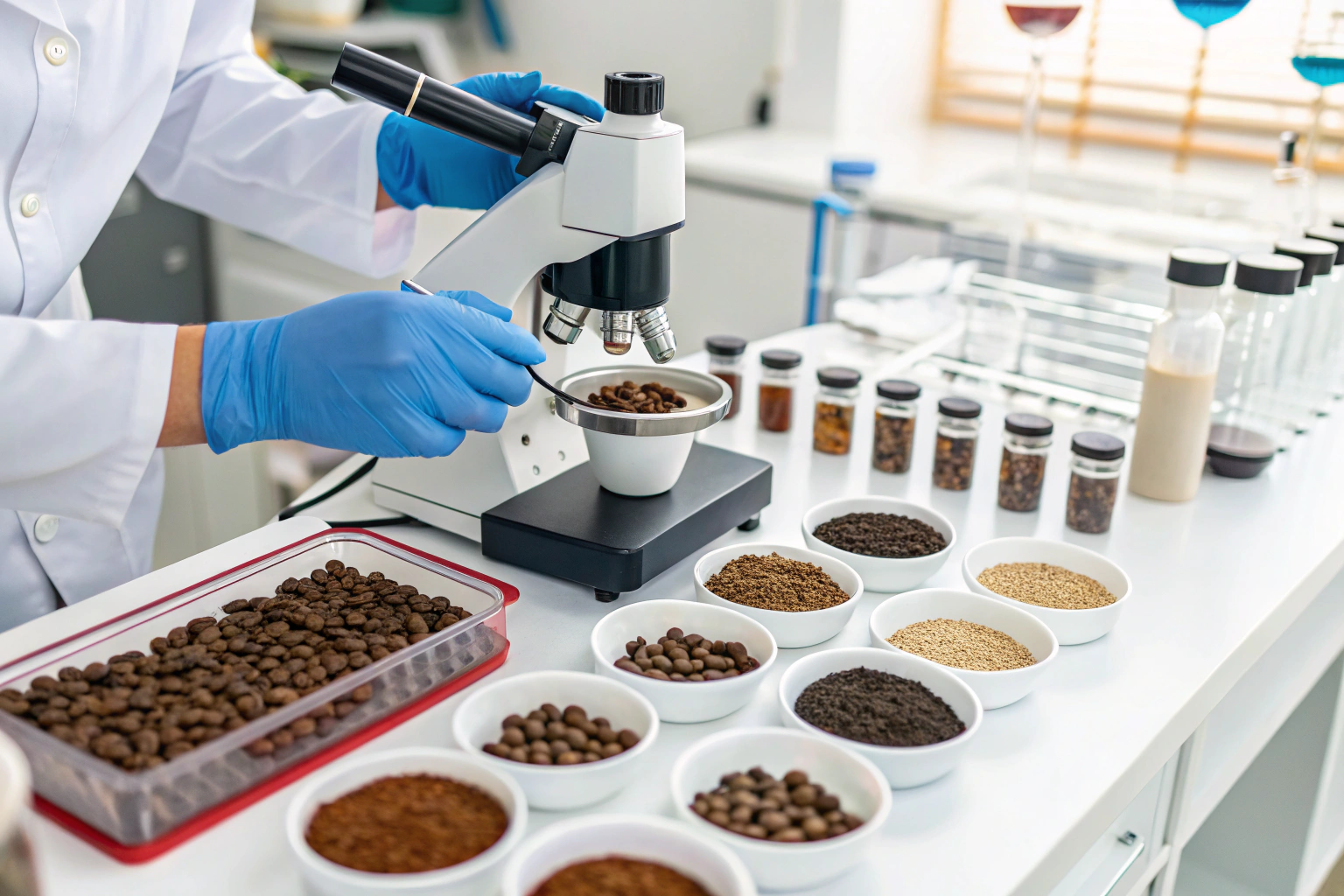
Imagine this: you receive a batch of premium coffee, labeled as a single-origin from a renowned region. But the flavor profile seems… off. How can you be sure the beans are truly from where the seller claims? This isn't just about taste; it's about protecting your brand's integrity, ensuring you get what you pay for, and verifying the authenticity of your supply chain. While cupping provides one answer, there's a more scientific, unchangeable fingerprint within the bean itself: its trace mineral composition.
Determining the origin of coffee using trace minerals is a scientific method known as chemical fingerprinting or geographic authentication. It relies on the fact that coffee plants absorb a unique blend of minerals (like strontium, zinc, manganese) from the specific soil and bedrock of their growing region. This elemental signature, largely unaffected by processing or roasting, acts as a verifiable "geographic fingerprint." By analyzing this fingerprint in a laboratory and comparing it to a validated database of known origins, scientists can confirm—or challenge—a coffee's claimed provenance with a high degree of accuracy.
You might think this sounds like high-tech forensics, and it is. But for a serious buyer or brand owner, understanding this capability is crucial. It's the ultimate tool for transparency and fighting fraud in an industry where origin stories directly translate to value. Let's break down how this science works and what it means for your business.
What are Trace Minerals and Why Do They Matter?
Let's start with the basics. Trace minerals, or elements, are inorganic substances that plants absorb from the soil through their roots. While coffee's flavor is shaped by organic compounds (like sugars, acids, and oils), its mineral makeup is dictated by the geology of the farm. Elements like strontium (Sr), magnesium (Mg), potassium (K), manganese (Mn), zinc (Zn), and barium (Ba) are taken up in specific ratios.
The key point is that this mineral profile is immutable and characteristic. The volcanic soil of a Baoshan mountainside in Yunnan has a completely different mineral composition than the ancient, weathered soils of Brazil or the highland soils of Ethiopia. The coffee plant acts like a biological sampler, incorporating this local geochemical signature into the bean. Processing (washing, drying) and roasting may alter volatile organic compounds, but they do not significantly change this underlying elemental fingerprint. This makes trace minerals a far more reliable marker of geographic origin than flavor notes alone, which can be influenced by processing, blending, and even subjective tasting.
How is the Mineral "Fingerprint" Established for a Region?
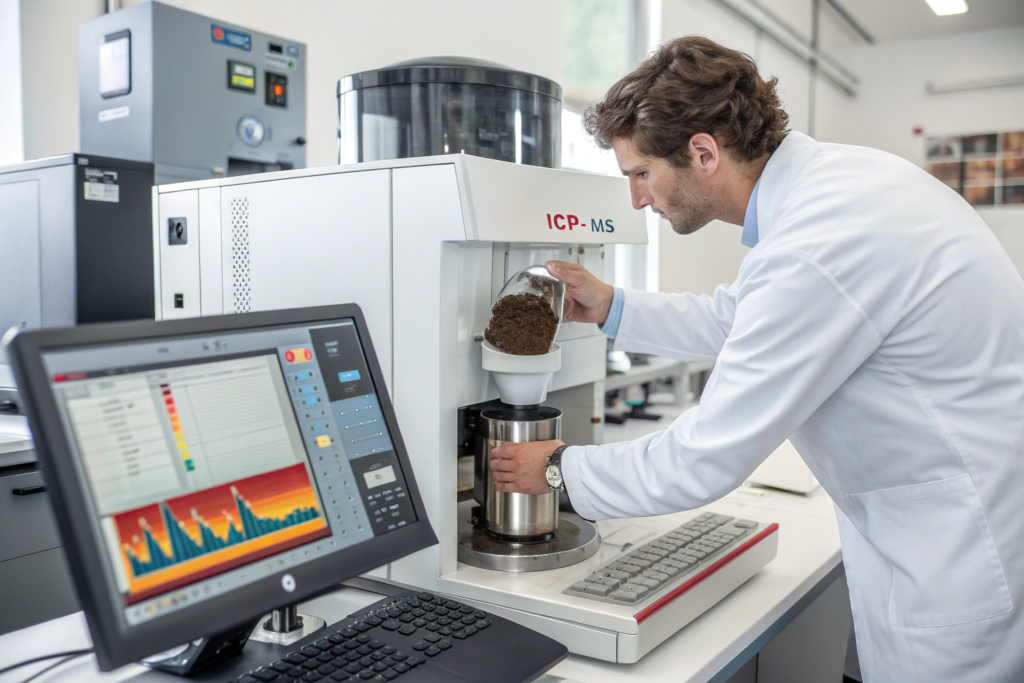
Establishing a reliable fingerprint requires building a robust reference database. This involves collecting numerous green coffee bean samples from verified farms within a specific region—say, from our own plantations in Baoshan City, Yunnan. These samples are then analyzed in a lab using precise techniques like Inductively Coupled Plasma Mass Spectrometry (ICP-MS). The results—the concentrations of 20-30 different elements—are statistically analyzed to find the unique combination that defines "Baoshan Arabica." This creates a baseline profile. The more samples from more farms over multiple harvests, the stronger and more accurate the regional fingerprint becomes. It’s a process of mapping the land's chemistry through its crop. This scientific groundwork is what makes authentication possible.
Can Processing or Roasting Alter the Mineral Signature?
This is a critical question for practical application. The short answer is: No, not in a way that confuses origin. Washing or dry-processing removes the fruit pulp, but the minerals are embedded within the bean's cellular structure. Roasting drives off water and creates new organic compounds through the Maillard reaction, but it does not vaporize metallic elements like strontium or zinc. Their concentrations remain constant relative to each other. Think of it like baking a clay pot: the shape and color might change (the flavor), but the underlying clay minerals (the trace elements) remain the same. This stability is why the method is so powerful for verifying green beans and even roasted coffee, providing a reliable and objective check against fraud.
How is the Scientific Analysis Performed?
Moving from concept to concrete results requires sophisticated laboratory technology. This isn't a simple test strip; it's a precise analytical procedure that yields quantitative data. The process is methodical and follows strict protocols to ensure the results are accurate and legally defensible.
The standard workflow involves several steps: First, the coffee sample (green or roasted) is ground to a fine powder to ensure homogeneity. A small, precisely weighed amount of this powder is then digested using strong acids (like nitric acid) in a controlled environment to dissolve the organic material and release all the minerals into a liquid solution. This digested solution is then introduced into the ICP-MS. This instrument vaporizes the sample into a plasma hotter than the surface of the sun, breaking it down into its constituent ions. It then sorts and counts these ions based on their mass and charge, producing a precise readout of the concentration of dozens of elements in parts per billion. The resulting data is a string of numbers—the elemental profile.
What is ICP-MS and Why is it the Gold Standard?
Inductively Coupled Plasma Mass Spectrometry (ICP-MS) is considered the gold standard for this application due to its unparalleled sensitivity, speed, and multi-element capability. It can detect and quantify over 30 different elements simultaneously at extremely low concentrations. This is crucial because the "fingerprint" often relies on subtle differences in the ratios of trace elements that are present in minute amounts. Alternative techniques like Atomic Absorption Spectroscopy (AAS) are slower and less comprehensive. The power of ICP-MS allows labs to build detailed, multi-dimensional profiles that are nearly impossible to replicate or fake, providing a level of security and verification that visual or taste inspection simply cannot match.
How are Statistical Models Used to Interpret the Data?
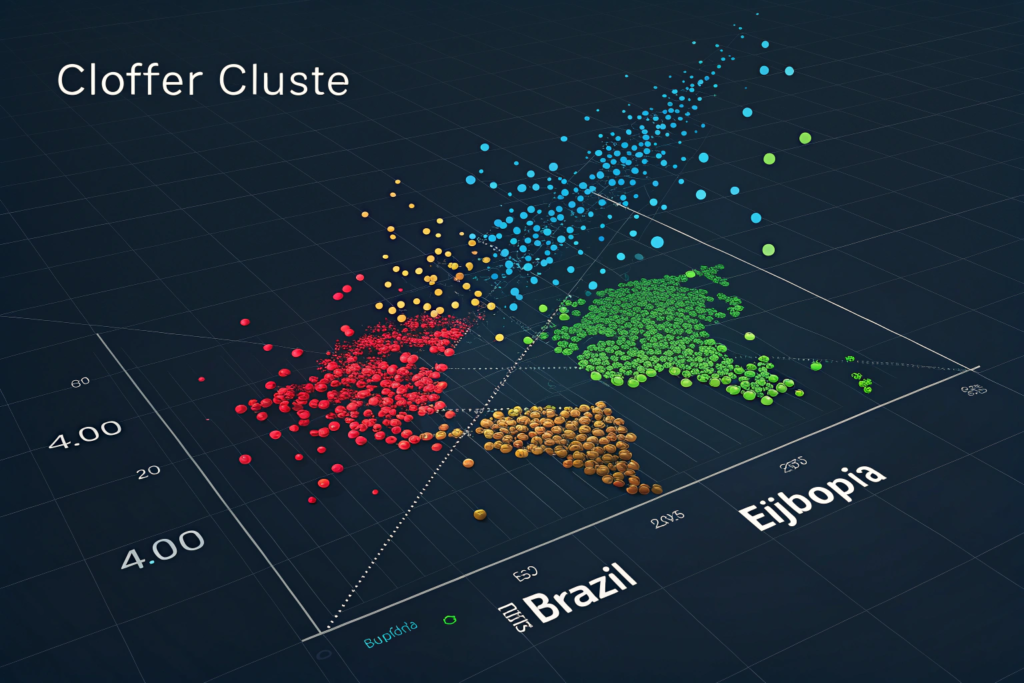
The raw data from the ICP-MS is just a list of numbers. The magic happens with chemometrics—the use of statistical models to find patterns. Techniques like Principal Component Analysis (PCA) or Linear Discriminant Analysis (LDA) are used. Imagine plotting the concentrations of, say, strontium vs. barium for hundreds of known samples on a graph. Coffees from the same region will cluster together in a distinct cloud. The statistical model draws boundaries around these clusters. When a new, unknown sample is tested, its data point is plotted on the same graph. Its position relative to the defined clusters determines its probable origin. These models can handle complex, multi-element data (10+ dimensions) to make highly accurate predictions. This transforms chemical data into a clear, visual, and actionable authenticity result.
What are the Practical Applications for Buyers and Brands?
This might sound like pure science, but its business applications are direct and powerful. For anyone investing in premium, traceable coffee—whether you're a large distributor, a brand owner, or a quality-focused roaster—mineral fingerprinting is a tool for risk management, brand protection, and value verification.
The most direct application is anti-fraud verification. Before finalizing a large contract for a premium-priced "Single-Origin Yunnan Geisha," a buyer can send a pre-shipment sample to a specialized lab for origin authentication. This due diligence protects against adulteration or mislabeling. For brands like ours at Shanghai Fumao, it’s a tool for quality control and proof of provenance. We can provide buyers with verified lot reports, adding an irrefutable layer of credibility to our Arabica and Catimor offerings. It also aids in supply chain transparency. For a brand claiming direct trade or sustainability from a specific cooperative, periodic mineral testing proves the consistency of the supply source, building immense trust with end-consumers.
How Can This Method Verify "Single-Origin" Claims?
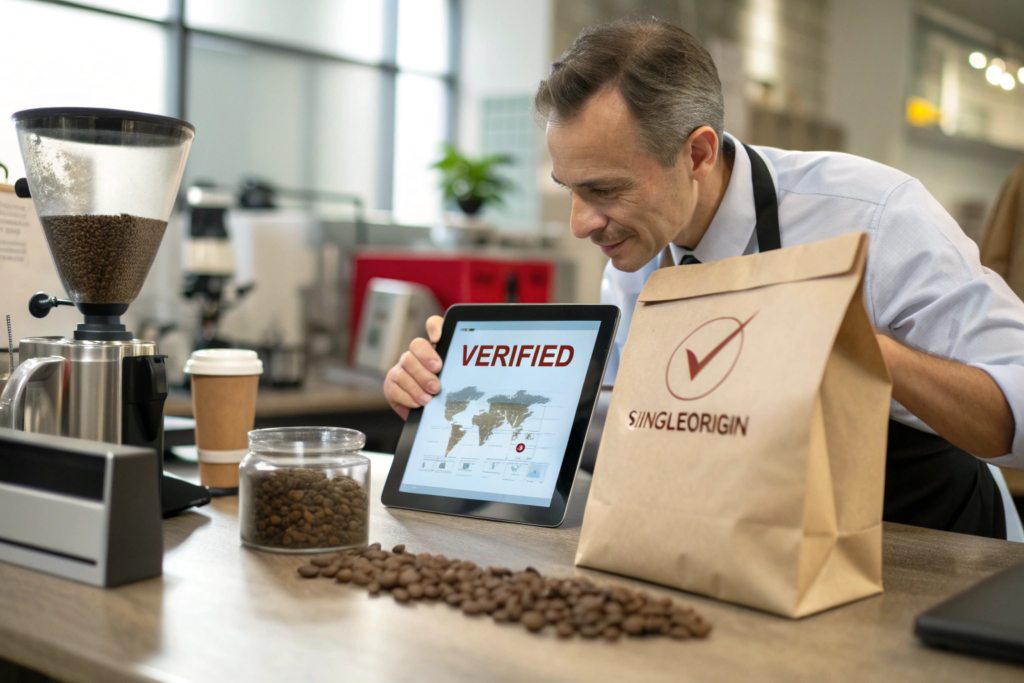
A "single-origin" claim is a promise of purity and place. Mineral fingerprinting is the most rigorous way to test that promise. Labs can detect not just the region, but often the sub-region or even a specific farm group, if their database is detailed enough. For instance, beans from our Baoshan plantations have a different mineral signature than beans from another part of Yunnan. If a shipment labeled as 100% Baoshan coffee shows a mineral profile matching a blend with Brazilian beans (which have a distinctly different geological signature), the test will reveal the discrepancy. This allows buyers to enforce contracts and protect their brand's reputation from unintentional mixing or deliberate fraud at any point in the chain.
Is This Technology Used for Blending Consistency?
Absolutely. Beyond fraud detection, it's a powerful tool for quality assurance. For large-scale buyers who need a consistent flavor profile year after year—like a major coffee chain—maintaining a stable blend is paramount. Slight variations in the mineral profile of an incoming component (e.g., a base coffee from Yunnan) can indicate a change in sourcing, even if the taste seems similar. Regular testing can alert the buyer to such shifts before they impact the final product, allowing for proactive adjustments. It turns subjective taste into an objective, measurable standard for stable and reliable sourcing. This is the future of precision in the coffee industry.
What are the Limitations and the Future of This Technology?
While powerful, mineral fingerprinting is not a magic wand. Understanding its limits is key to using it effectively. The technology's accuracy is entirely dependent on the quality and breadth of the reference database. If a lab has no data for a new or obscure growing region, it cannot authenticate it. The analysis also requires specialized, expensive equipment and expertise, making it a service primarily for larger transactions or serious quality disputes, not for every single bag.
Another consideration is that the method confirms geographic origin as defined by soil chemistry. It does not, by itself, verify specific farming practices (organic, fair trade) or bean variety (though varietals grown in the same soil will have similar signatures). It is one piece of the verification puzzle, albeit a very strong one. The cost, while decreasing, is still a factor for small-scale roasters, though consortiums and producer groups are starting to use it for collective protection.

How Accessible and Cost-Effective is This Analysis Today?
Currently, origin authentication via ICP-MS is a specialized service offered by third-party food testing laboratories and some academic institutions. The cost per sample can range from a few hundred to over a thousand dollars, depending on the depth of analysis and statistical reporting required. This makes it most cost-effective for validating high-value shipments (e.g., specialty microlots, large commercial contracts) or for resolving serious disputes. However, as the technology becomes more widespread and databases grow, the cost is expected to fall. For a serious importer, this cost is an insurance policy against a much larger financial loss due to fraud or a damaged brand reputation.
What Role Will Blockchain and Digital Ledgers Play?
This is where the future gets exciting. The real power of mineral fingerprinting is unleashed when combined with blockchain or secure digital ledgers. Imagine this: A batch of coffee from our farm is harvested, processed, and a sample sent for analysis. The verified mineral fingerprint (a digital hash of the elemental data) is immutably recorded on a blockchain and linked to a QR code on the bag. At any point—as a roaster, distributor, or even a consumer—you can scan the code to see not just the farm story, but the scientific proof of its origin. This creates an unbreakable chain of custody from soil to cup. It's the ultimate expression of transparency and trustworthiness in a global market. For a brand, this isn't just a claim; it's verifiable proof.
Conclusion
Determining the origin of coffee using trace minerals moves the conversation from subjective storytelling to objective, verifiable science. It provides a powerful, immutable link between the coffee in your bag and the specific patch of earth where it grew. For buyers and brands, this technology is a transformative tool for ensuring authenticity, enforcing contracts, protecting brand value, and building unprecedented supply chain transparency.
While it represents the cutting edge of coffee verification today, its principles are grounded in the fundamental geology of our farms. It proves that the story of great coffee is literally written into the beans, in a language of elements that we can now decode.
If you are interested in exploring verifiable origin for your coffee sourcing, particularly from distinct regions like Baoshan, Yunnan, we are at the forefront of integrating this level of transparency. At BeanofCoffee, we believe in proving our claims with data.
To learn more about our traceable lots and how we can provide verifiable origin documentation for your business, please contact our head of sales and quality assurance, Cathy Cai. She can discuss sampling and the specifics of our supply chain verification. Reach her at cathy@beanofcoffee.com. Let's build a partnership you can verify, down to the very elements.