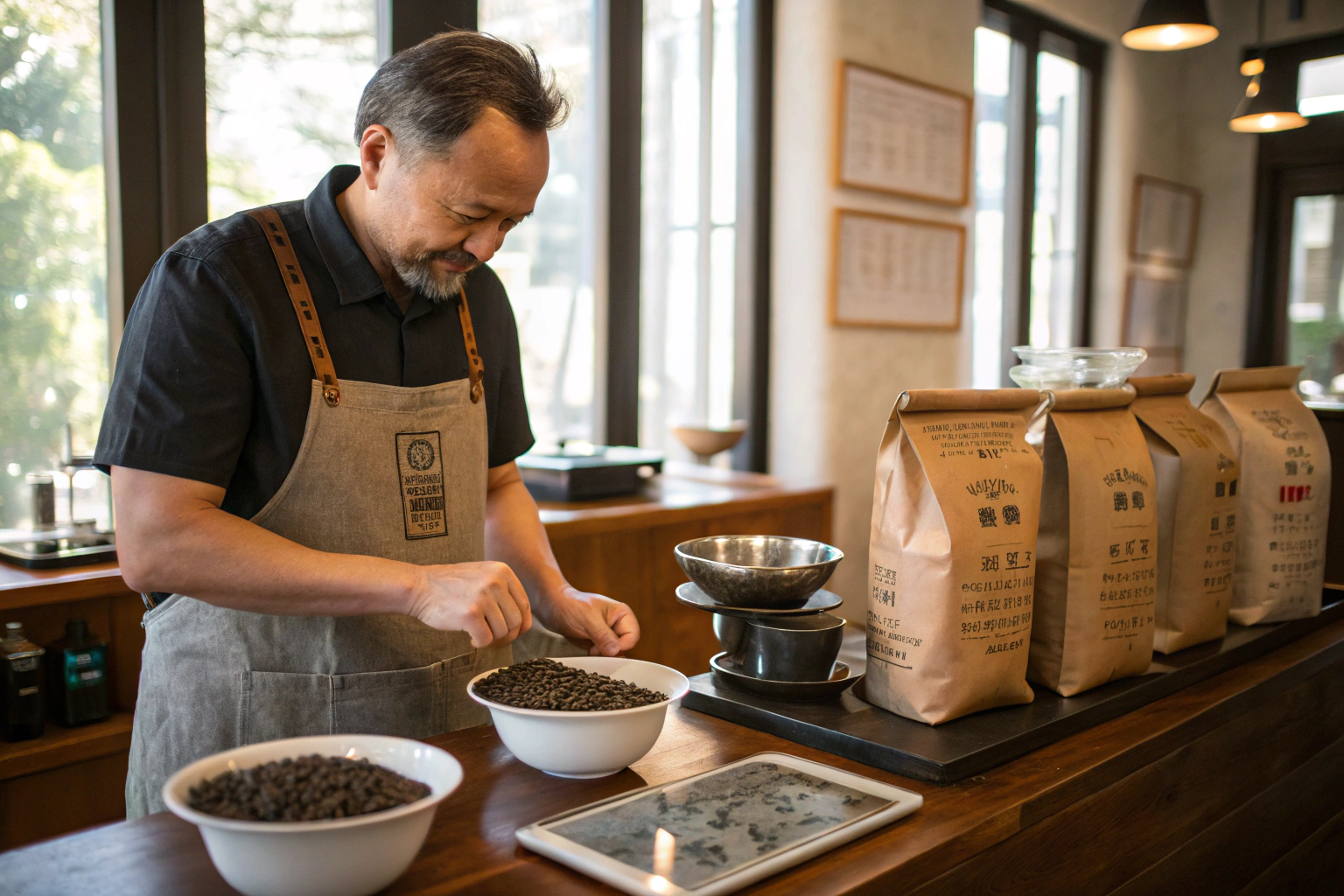
Ron, you've built a successful cafe. Your customers trust you. But now you're asking the question that separates the good cafes from the great ones: "How do I create something that is uniquely mine?" You want a signature blend—a coffee that people can't get anywhere else, a flavor they associate only with your brand. It's a daunting task. You're worried about the cost of experimentation, the risk of creating something nobody likes, and the complexity of the whole process. Where do you even begin?
To develop a signature coffee blend, you must first define your flavor goal and target audience, then select 2-3 complementary single-origin coffees to serve as components, and finally, experiment with different ratios until you achieve a balanced, unique, and repeatable flavor profile. It's a methodical process of art and science—a journey of discovery that culminates in a coffee that tells your story.
As someone who supplies the raw materials for these creations, I see a signature blend as the final, beautiful chapter in a coffee bean's story. It's where our beans from the mountains of Yunnan, China, get to meet beans from Colombia or Ethiopia and become something new and extraordinary in your hands. It's the ultimate partnership. So, let's break down the creative process, step-by-step, and turn that daunting task into an exciting project.
What Is the Goal of Your Signature Blend?
Before you touch a single bean, you need to ask yourself a fundamental question: "What is this blend for?" A blend designed to be a bright, complex drip coffee will be very different from one created to be a bold, chocolatey espresso base that punches through milk. Without a clear goal, you're just mixing beans randomly, and you'll waste time and money.
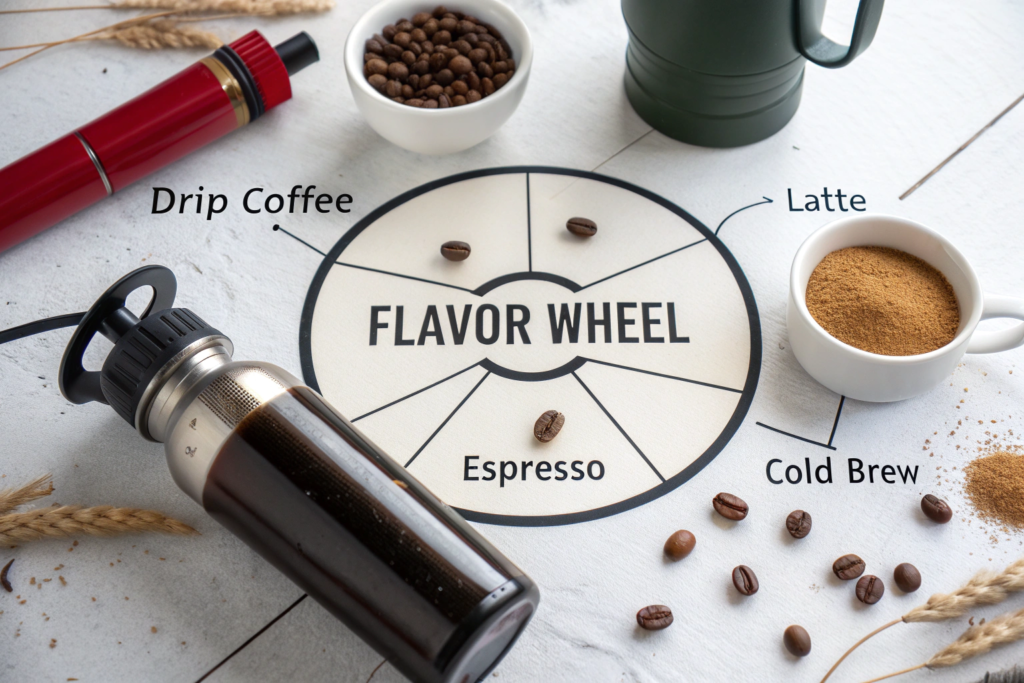
The first step is to define the blend's primary application (espresso, drip, cold brew) and the desired flavor profile (e.g., "sweet and nutty," "bright and fruity," "dark and smoky"). This goal will guide every decision you make, from bean selection to roast level. It's the north star for your entire development process.
Think about your customers and your menu. What do they order most? What flavor gap exists in your current offerings? Are you known for your amazing lattes? Then you need a blend that pairs beautifully with milk. Do your customers crave a sophisticated black coffee experience? Then you need a blend with nuance and complexity. Your signature blend shouldn't just be good; it should be strategic.
Should it be for espresso or filter?
This is the most critical decision. An espresso blend typically needs a solid base with low acidity and heavy body to create a good crema and stand up to milk. This often involves using coffees with chocolatey, nutty profiles, like a Brazilian or a quality Robusta. A filter blend, on the other hand, can be much more adventurous. You can aim for higher acidity, more delicate floral or fruity notes, and a lighter body. The two are not interchangeable; a great filter blend might make a terrible, sour espresso.
Who is your target audience?
Be honest about who you're serving. Are your customers coffee aficionados who will appreciate a complex, acidic, light-roast blend? Or are they looking for a comfortable, classic, and approachable cup of coffee every morning? Your signature blend should be a crowd-pleaser for your crowd. It's often wise to start with a widely appealing profile—like chocolate, caramel, and mild fruit—rather than something esoteric, unless your brand is specifically built around experimental coffee.
How Do You Choose Your Blend Components?
Once you have a goal, it's time to cast the characters for your play. A blend is like a team: each member should have a distinct role, and they should work together to create something greater than the sum of their parts. Most professional blends are built using a simple, time-tested structure.
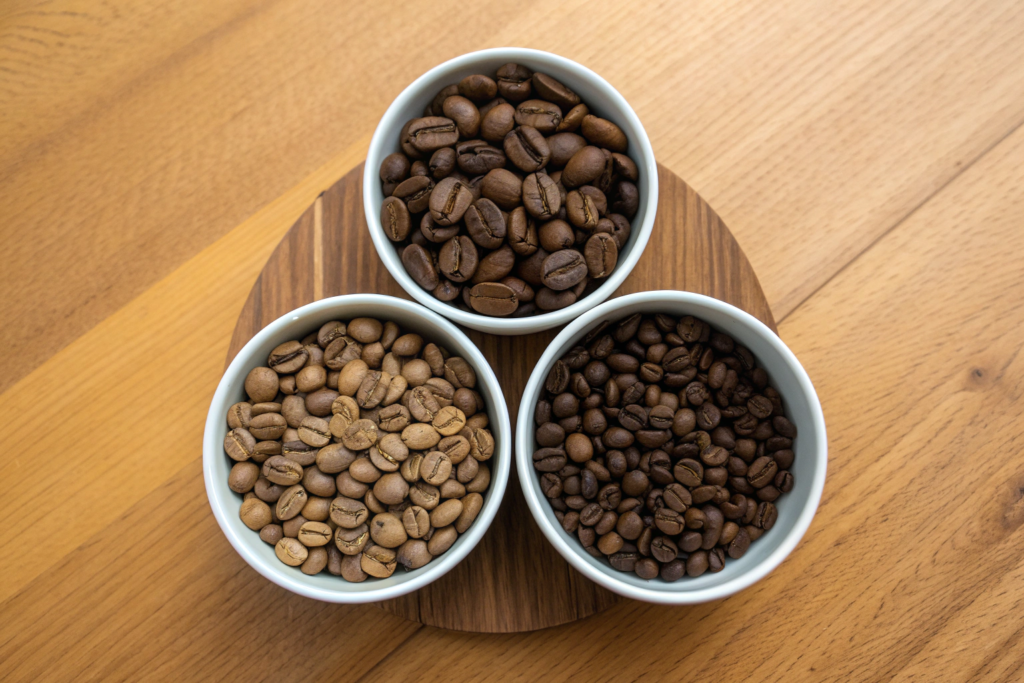
A classic blend is built with three components: a "base" coffee (50-70%) that provides the foundational flavor and body, a "mid-palate" coffee (20-40%) that adds complexity and sweetness, and an "accent" coffee (10-20%) that provides a unique, bright, or floral top note. This structure ensures your blend is balanced and not a chaotic mix of competing flavors.
This is where your relationship with a good supplier like Shanghai Fumao becomes crucial. We can help you select the right components. For instance, you might use a solid, chocolatey bean from Brazil as your base. Then, you could add one of our washed Arabicas from Yunnan to provide sweetness and notes of stone fruit for the mid-palate. Finally, a bright, floral natural-processed Ethiopian bean could serve as that 10% accent, adding a "wow" factor to the aroma.
What makes a good base coffee?
The base is the soul of your blend. It should have a dominant, pleasant, but not overpowering flavor. Think classic notes like chocolate, nuts, or caramel. It should have a good body and a lingering, clean aftertaste. Coffees from Brazil, some parts of Mexico, and even our own Yunnan Arabica make fantastic, reliable base components.
How do you choose complementary coffees?
Your mid-palate and accent coffees should complement, not fight with, the base. Look at a coffee flavor wheel. If your base is chocolatey, a coffee with notes of cherry or orange will complement it beautifully. If your base is nutty, a coffee with notes of apple or caramel will work well. The goal is harmony. Your accent bean should be the most aromatic and distinctive, providing that "top note" that makes the first sip exciting.
What Is the Process for Testing Ratios?
You've chosen your beans. Now comes the fun part: the experimentation. This is where you move from theory to practice. The goal is to find the "sweet spot"—the perfect ratio where all your components are in harmony. This process should be methodical and well-documented to ensure you can replicate your results.
To test ratios, start with a baseline blend (e.g., 60% base, 30% mid-palate, 10% accent), then create several variations by adjusting one component at a time by 5-10%. Brew each blend using the same method (cupping is ideal) and taste them side-by-side, taking detailed notes on acidity, body, sweetness, and balance. This comparative tasting is the only way to truly understand how small changes in the ratio affect the final cup.
Don't trust your memory. Write everything down. Create a simple spreadsheet or use a notebook. Note the beans, the exact percentages, and your tasting notes for each variation. For example:
- Blend #1 (60/30/10): Good body, nice chocolate base, but the fruit note is a little weak.
- Blend #2 (60/25/15): Better aroma! The fruit note is more present, but the body feels a little thinner.
- Blend #3 (70/20/10): Very heavy and chocolatey. Lost the complexity.

Why is cupping the best method for testing?
Cupping is a standardized method for tasting coffee that minimizes variables. It involves simply pouring hot water over coarsely ground coffee in a bowl and tasting it with a spoon. Because it doesn't involve a specific brewer, it allows you to taste the pure potential of the blend itself, without the influence of a paper filter or espresso machine variables. It's the most honest way to evaluate your creation.
Should you pre-blend or post-blend?
This refers to whether you mix the green beans before roasting (pre-blend) or roast each component separately and mix them afterward (post-blend). For developing a signature blend, post-blending is far superior. Different beans have different sizes, densities, and moisture content, meaning they roast differently. Roasting each component to its individual sweet spot and then blending them gives you maximum control over the final flavor and ensures a more consistent product.
How Do You Launch and Market Your Blend?
You've done it. After countless tests, you've created a blend that you are incredibly proud of. But the work isn't over. A great blend that nobody knows about is just a personal hobby. Now you need to give it a name, a story, and introduce it to the world—or at least, to your loyal customers.
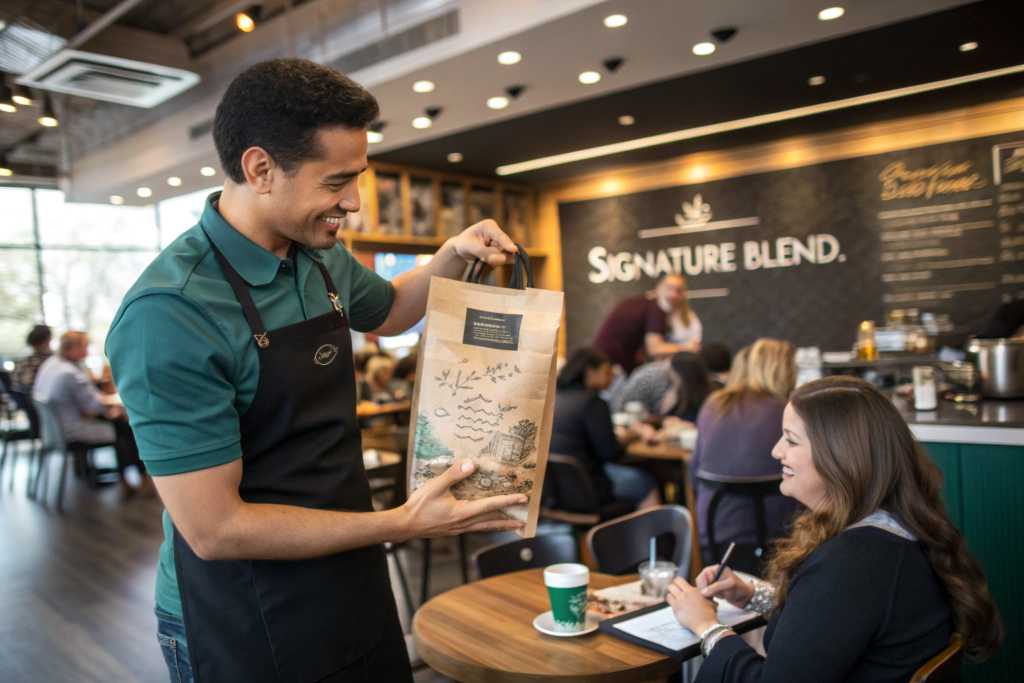
To launch your blend, give it a compelling name and create a story around its creation or its flavor profile. Market it heavily in-store with signage, special promotions, and staff education. Use your retail bags and social media to tell the story of the beans, your process, and why this coffee is a unique expression of your brand. Make your customers feel like they are part of the journey.
The story is what transforms a good product into a beloved brand experience. Don't just say, "This is our new blend." Say, "This is 'The Pioneer.' We named it after the spirit of our city. It's a blend of a rich, chocolatey coffee from Brazil and a sweet, vibrant coffee from the mountains of Yunnan, China, supplied by our partners at Shanghai Fumao. We created it to be the perfect, comforting start to your day."
How do you train your staff to sell it?
Your baristas are your front-line ambassadors. Hold a special training session for them. Let them taste the blend and its individual components. Explain the story behind it and give them simple, appealing language to describe it (e.g., "It tastes like chocolate-covered cherries," "It's super smooth with a sweet finish"). When your staff is genuinely excited about the blend, their enthusiasm is contagious.
How do you gather feedback?
Your launch isn't the end. It's the beginning of a conversation. Actively ask customers what they think. Offer small samples. Watch their reactions. This feedback is invaluable. While you shouldn't change your blend based on every single comment, listening for consistent themes can help you refine your offering over time or inform the creation of your next signature blend.
Conclusion
Developing a signature coffee blend is one of the most rewarding things you can do as a cafe owner. It's a journey that transforms you from a seller of coffee into a creator of flavor. By setting a clear goal, carefully selecting your components, methodically testing your ratios, and launching it with a compelling story, you create more than just a product. You create an identity. You give your customers a reason to come back again and again, for a taste they can only get from you.
When you are ready to start this exciting journey and need a reliable partner to provide high-quality, consistent base and component coffees, we are here for you. Our beans from Yunnan have the character and quality to be the star or the perfect supporting actor in your signature blend. Contact our coffee specialist, Cathy Cai, at cathy@beanofcoffee.com to discuss your ideas and get the perfect beans on their way to you.