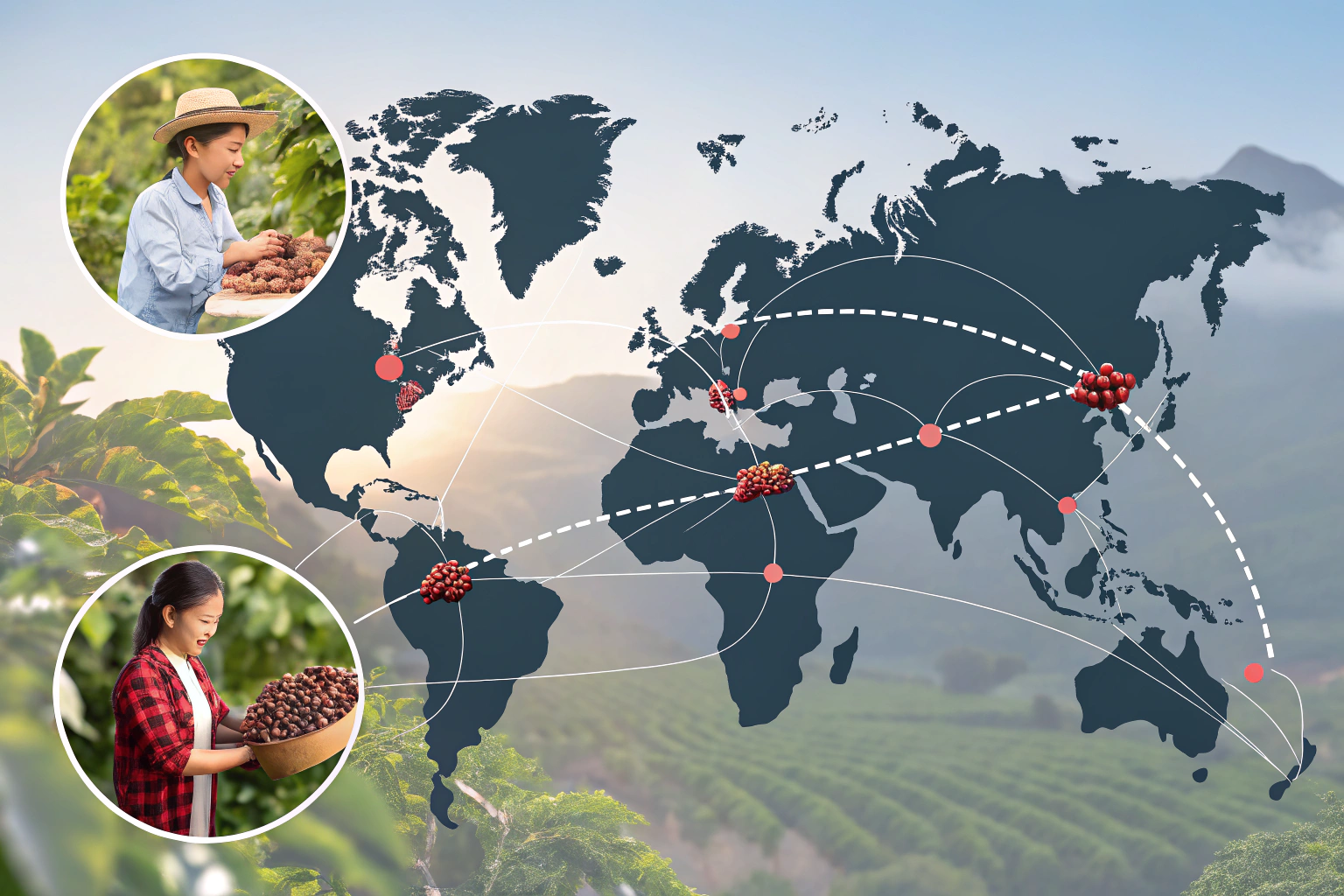
Every coffee buyer sees the same claims: "premium quality," "direct trade," "sustainable." When everyone is shouting the same message, how do you make your brand the clear, obvious choice—especially when you're sourcing from an emerging origin like China? The answer isn't just to be better; it's to be different in ways that matter deeply to your customers.
You differentiate your coffee brand by moving beyond product features to own a unique, defensible position in the market. This is built on a foundation of authentic proof, a compelling narrative of vertical control, and solutions tailored to the specific operational pains of importers. It's about creating a total value package where your ownership of 10,000 acres in Yunnan isn't just a fact, but the central pillar of a reliability story no trader can match.
Let's map out a concrete strategy to build a brand that doesn't just compete on price, but redefines value for B2B buyers navigating complexity, risk, and the need for stable supply.
Why Is Owning the Land Your Ultimate Differentiator?
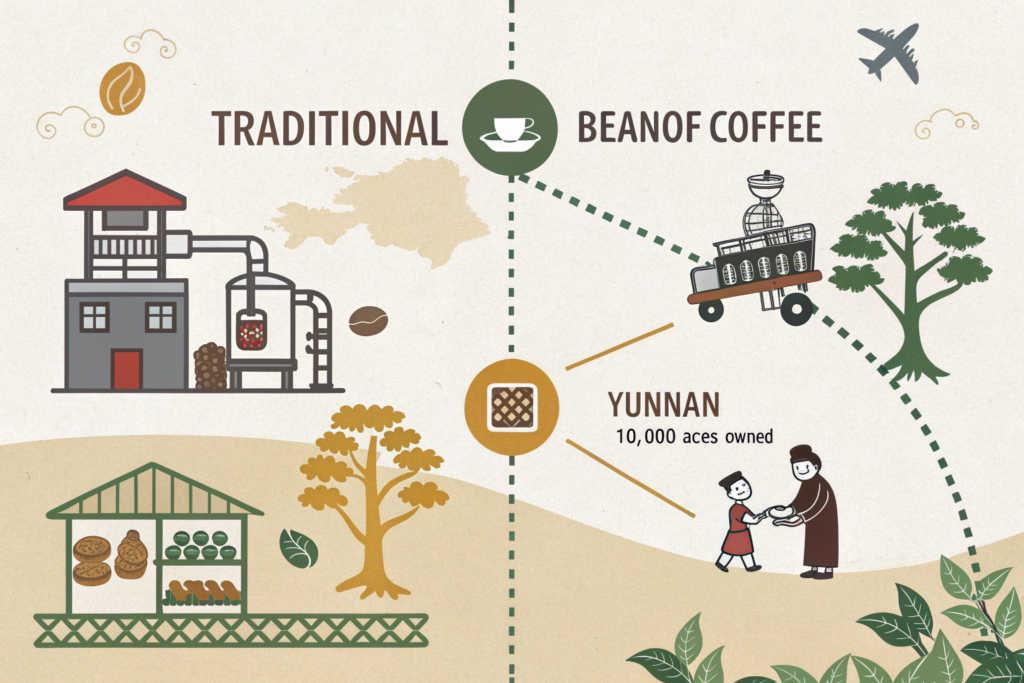
In the coffee trade, control is currency. Most suppliers are intermediaries—traders who buy from cooperatives or collections of smallholders. Their story is about curation. Your story, as a plantation owner-exporter, is about creation and control from the soil up. This is not a minor detail; it's a fundamental reshaping of the supply chain that directly addresses buyer anxieties.
Think about Ron's pain points: inefficient pricing (caused by middlemen), quality inconsistency (from blended sources), and logistical uncertainty. Vertical integration attacks these at the root. When you own the land, you control the first cost. You're not paying a markup to a local collector. This allows for transparent and stable pricing. You control the agronomy, ensuring uniform quality across vast volumes. And you control the harvest-to-milling timeline, enabling predictable shipping schedules. This level of control is rare. It’s your bedrock differentiator.
How Does Control Translate to Tangible Buyer Benefits?
Let's make this absolutely concrete. What does "control" mean for a buyer's bottom line?
| Buyer Pain Point | How Trader/Agent "Solves" It | How BeanofCoffee's Vertical Control Solves It |
|---|---|---|
| Price Volatility | Negotiates hard each season, subject to local market spikes. | Offers stable contract pricing. Our costs are known and managed, not subject to the spot market. |
| Quality Inconsistency | Blends beans to average out flaws; can't guarantee lot uniformity. | Guarantees lot-specific consistency. Beans from our owned farms undergo identical processing. |
| Unreliable Supply | Depends on numerous smallholders; one poor harvest disrupts supply. | Guarantees volume and availability. 10,000 acres provides a buffer and scalable supply. |
| Slow Problem-Solving | Multiple parties involved; fixing an issue requires lengthy coordination. | Enables direct and fast resolution. One company, one responsibility, from farm to port. |
This table isn't just theory; it's the daily reality of working with an owner-exporter like Shanghai Fumao. We become a predictable, single point of accountability.
Can You Really Compete on More Than Just Price?
Yes, by selling cost-saving and risk-reduction. For a serious importer, a slightly higher FOB price from us can mean a much lower total landed cost and total cost of ownership. How? By eliminating the hidden costs of delays, quality rejections, and frantic re-sourcing. We sell certainty. In a world of chaos, certainty has immense value. We’re not the cheapest source; we are the most secure coffee supplier for building a stable, growing business upon.
How to Build a Brand Around "Chinese Coffee Quality"?
"Chinese coffee" can be an unknown or even a skeptical point for some buyers. Your brand's job is to redefine that category. Don't hide from the origin—champion it and redefine what it means.
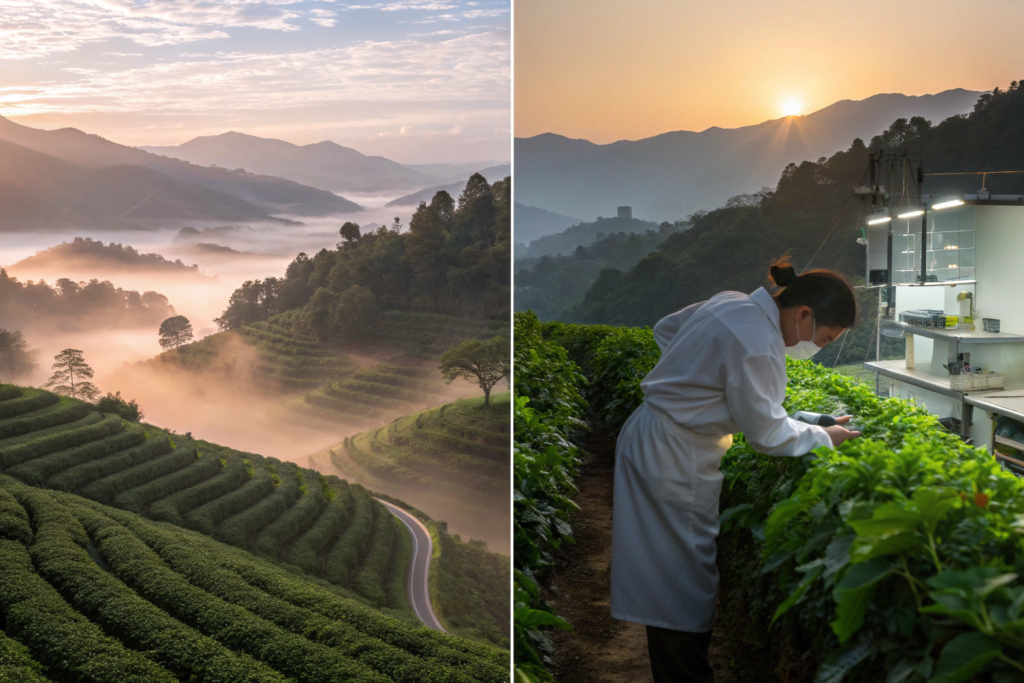
The narrative must be one of modern precision and ancient terroir. Position Yunnan not as a cheap alternative, but as a premier, unique origin. Talk about the high-altitude plateaus, the volcanic soil, the unique microclimates that create a flavor profile distinct from African or South American beans—often noted for its tea-like body, floral aroma, and clean, sweet finish. This isn't marketing; it's the verified result of our coffee bean quality control labs.
Then, pair this natural advantage with a story of technological and process excellence. Highlight your modern processing facilities, your Q-Grader-led cupping teams, your data-driven farming. You're telling a story of the best of both worlds: pristine environment meets world-class food science.
What Specific Quality Proofs Change Perceptions?
Perception changes with evidence. Move beyond "high quality" to specific, irrefutable proofs:
- Publish Q Scores: Make your Q Grader scores (84+, 86+ for lots) front and center. This is the global language of specialty quality.
- Showcase Certifications: Beyond organic, highlight food safety certifications like HACCP and ISO 22000. This speaks to safe, reliable production for the US/EU market.
- Offer Unprecedented Traceability: Implement a QR code on every bag that traces back to the exact plot, harvest date, and processing batch. This level of transparency is a powerful trust signal.
These proofs move the conversation from "Can Chinese coffee be good?" to "This Chinese coffee is objectively excellent."
How to Own a Flavor Profile?
Don't just sell "Arabica." Sell Yunnan Catimor with tasting notes of black tea, dark honey, and a smooth, low-acidity body. Sell Yunnan Arabica with its characteristic floral (jasmine, magnolia) and citrus highlights. By deeply defining and consistently delivering these specific profiles, you become synonymous with them. Buyers seeking a reliable, distinctive single-origin for their blend will think of you first. You become the category king for premium Yunnan coffee.
How to Differentiate Through Customer Experience and Service?
For B2B clients, the "product" is not just the green bean. It's the entire experience of working with you—the ease, the support, the peace of mind. This is where you can create immense loyalty.
Structure your service as a partnership program. This means:
- Dedicated Account Management: A single point of contact (like Cathy Cai) who knows their business, their order history, and their needs.
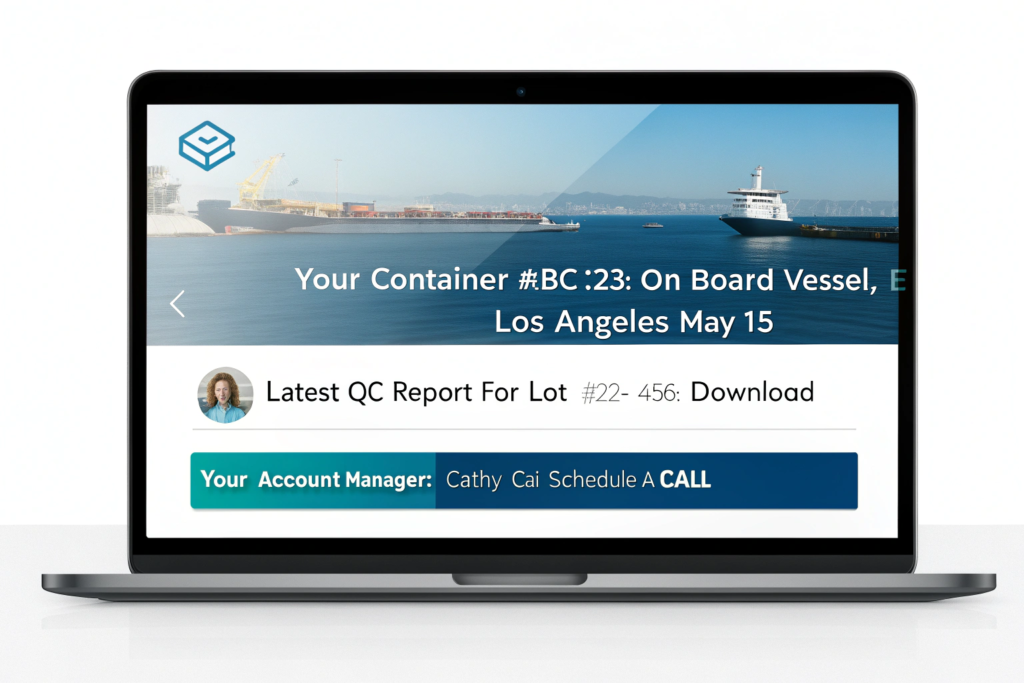
- Proactive Logistics Management: You don't just ship; you provide real-time container tracking and proactive updates on shipping lane changes or potential delays.
- Customization and Flexibility: Willingness to accommodate specific grading, packaging (grainpro, jute), or milling requests. Can you create a unique blend for a key client?
- Market Intelligence Support: Sharing insights on harvest yields, global price trends, or demand shifts in their region. Become a valuable resource, not just a vendor.
For a buyer like Ron, managing a dozen unreliable suppliers is a headache. Becoming his one, hyper-reliable partner for a core segment of his supply is a priceless differentiator.
How Can Your Digital Presence Reflect Premium Reliability?
Your website and Alibaba storefront are your virtual headquarters. They must scream professionalism and transparency.
- Website: Feature live farm cams, detailed "Our Process" pages with videos, downloadable spec sheets and certifications, and an easy sample request system.
- Alibaba Store: Go beyond basic listings. Use videos, detailed QC reports, and customer testimonials. A polished, informative storefront stands out dramatically against low-effort competitors.
This digital polish is a direct signal of your operational competence. It answers unasked questions about your reliability before the first inquiry is sent.
What Does "Partnership" Mean in Practice?
It means shared risk and shared success. For a long-term contract, can you offer price stability? Can you collaborate on a new processing method they want to try? At Shanghai Fumao, we view our clients as extensions of our own operation. We solve problems together. This mindset, when communicated and acted upon, builds an unbreakable moat around your brand. Competitors can copy a price, but they can't copy a true partnership built over years.
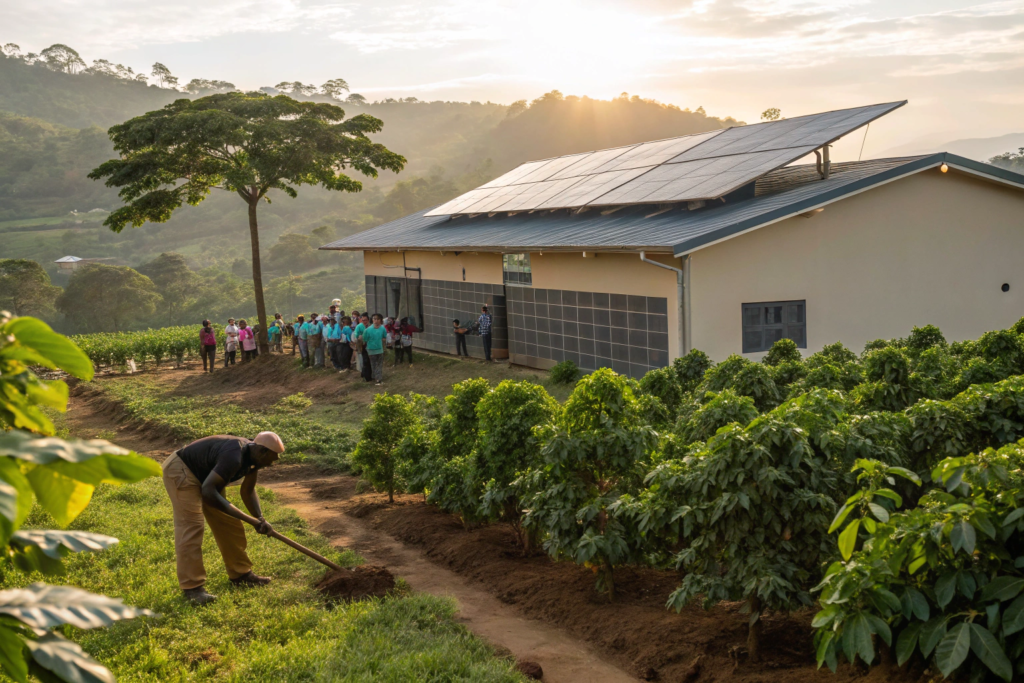
How to Leverage Sustainability as a Core Brand Pillar?
Sustainability is now table stakes, but most use it as a vague claim. You must make it specific, measurable, and integral to your identity.
Don't just say "sustainable." Detail your practices:
- Water Management: "We use a closed-loop water system in our washing stations, recycling 95% of water used."
- Soil Health: "We practice intercropping with native shade trees and use organic compost to maintain soil biodiversity."
- Community Impact: "We provide year-round employment, education programs, and healthcare access for our farming communities."
- Carbon Footprint: "We are measuring our carbon footprint from farm to port and investing in agroforestry to become carbon neutral."
This isn't just ethics; it's business pragmatism. It ensures the long-term viability of your land (protecting your asset) and aligns with the ESG (Environmental, Social, Governance) mandates of many large Western companies. It makes your brand "future-proof."
How to Communicate Sustainability to Pragmatic Buyers?
Link sustainability directly to supply chain resilience. Frame it this way: "Our sustainable coffee farming practices ensure soil health and water security for the next 30 years. This isn't just good for the planet—it's our guarantee to you that this supply will be stable and productive for the lifetime of your brand. We are investing in the future of your coffee, today." This ties an ethical choice directly to a business benefit: long-term security.
Can Sustainability Be a Cost Advantage?
In the long run, absolutely. Healthy, biodiverse farms are more resilient to pests, disease, and climate shocks, reducing crop failure risk. Efficient water and energy use lower operational costs. Furthermore, it can open doors to premium markets and clients with strict sourcing policies. By baking sustainability into your core operations from the start, you avoid the costly retrofitting that less integrated competitors will eventually face.
Conclusion
Differentiation in the coffee export business is not a single tactic; it's a strategic identity woven from your unique assets. It's the compelling story of vertical control that guarantees stability. It's the redefinition of Chinese coffee quality through irrefutable proof and distinct flavor profiles. It's the premium partnership experience that solves real business pains, and the authentic, detailed sustainability that ensures long-term value.
By consistently communicating and delivering on these pillars, you stop being just another supplier. You become the obvious, logical, and low-risk choice for serious importers who value their time, their brand, and their peace of mind. You become the foundation upon which they can confidently build.
Ready to differentiate your supply chain with a partner who offers more than just beans? Let's discuss how our vertically integrated model from Yunnan can bring stability, quality, and a compelling story to your brand. Contact our sales lead, Cathy Cai, at cathy@beanofcoffee.com to start a conversation about a truly different kind of coffee partnership.