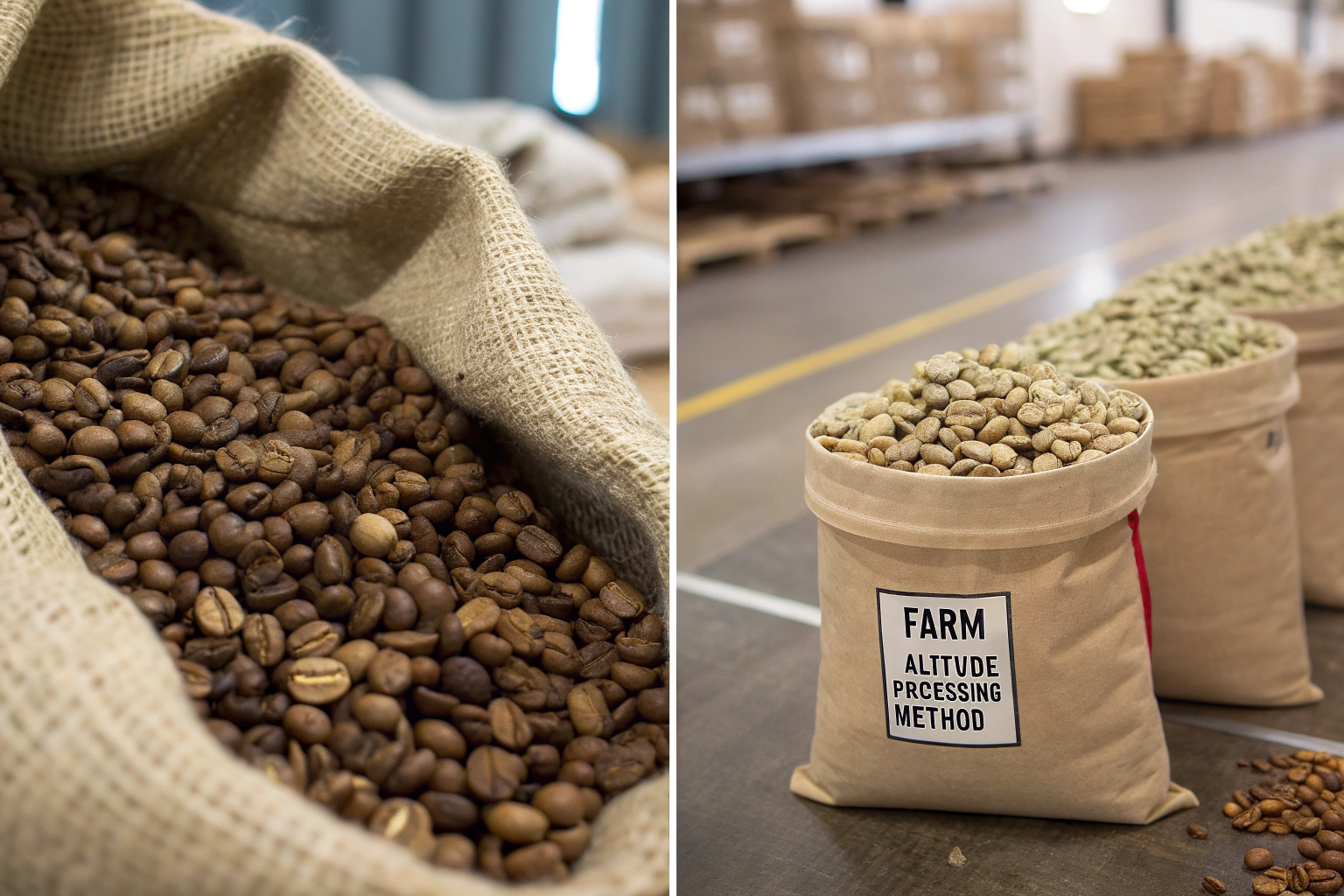
You're staring at two bags of coffee beans in a store or reviewing two quotations from suppliers. One is priced significantly higher than the other. Both claim to be "100% Arabica." The cheaper one promises a "rich, smooth taste." The expensive one lists tasting notes like "orange blossom, dark chocolate, and cane sugar." What are you really paying for? Is the premium coffee worth it, or are you just buying marketing?
You can distinguish premium from standard commercial coffee by examining five key areas: origin traceability and farming practices, bean grading and physical quality, processing and roasting methods, flavor complexity versus consistency, and ultimately, the transparency and ethics of the supply chain. Premium coffee is an experience of place and craft, while commercial coffee is a consistent, mass-produced commodity.
Think of it this way: commercial coffee is like a reliable, factory-made sandwich you can get anywhere. Premium coffee is like a dish from a chef who sources specific heirloom tomatoes from a named farm. Both will feed you, but the experience, ingredients, and story are worlds apart. This guide will give you the concrete tools—whether you're a buyer like Ron or a curious consumer—to see past the label and make an informed choice for your business or palate.
What are the Critical Differences in Origin and Farming?
This is where the story begins, long before the bean is roasted. Premium coffee is fundamentally linked to a specific place and the care taken there. Commercial coffee is often a blend of beans from anywhere that meets a basic price point.
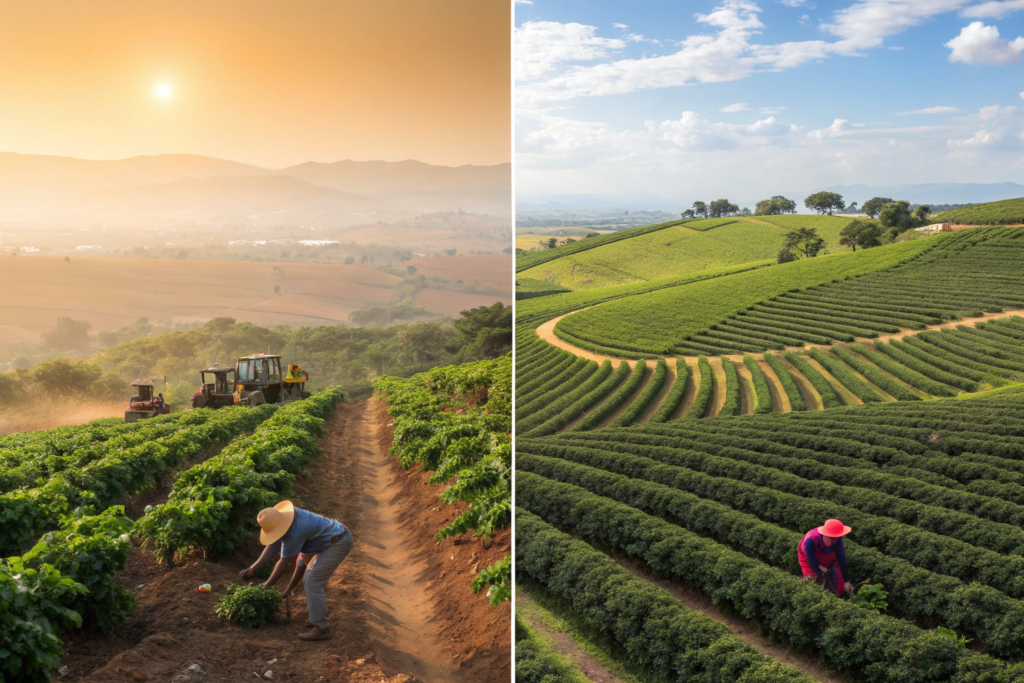
For premium coffee, you should be able to trace it back to a single country, region, farm, or even a specific plot and harvest lot. The altitude is a key indicator—premium Arabica is typically grown at higher altitudes (often above 1,200 meters / 4,000 feet), where slower cherry development creates denser beans with more concentrated sugars and acids. Farming practices matter: shade-growing, organic methods, and selective hand-picking of only ripe cherries are hallmarks of quality. At our plantations in Yunnan's Baoshan, for instance, we track our Catimor and Arabica lots by elevation and harvest date, which is crucial for quality control.
Commercial coffee, in contrast, prioritizes volume and cost-efficiency. It often comes from large, sun-grown farms where mechanical harvesting is common, collecting both ripe and unripe cherries. The beans are usually a blend from multiple large regions or even countries, designed to create a uniform, unchanging flavor profile year-round. The origin story is vague—think "Blend of beans from Colombia, Brazil, and Vietnam."
Why Does Single-Origin Matter More Than a Blend?
A single-origin coffee is a snapshot of a specific place and time. Its flavor reflects the local soil, climate (the terroir), and that year's weather. You taste uniqueness. A commercial blend is like a house paint color mixed to be the same every time. It's engineered for consistency and to mask the imperfections of lower-grade beans. Blending can be an art, but in commercial coffee, its primary goal is cost management and flavor standardization, not highlighting distinct characteristics.
How Do Farming Practices Directly Impact Bean Quality?
The care taken on the farm is literally etched into each bean. Hand-picking ensures only ripe cherries are processed, leading to uniform sweetness. Shade-grown coffee matures slower, developing more complex sugars. These practices result in fewer defects—like black beans, sour beans, or insect-damaged beans. Commercial coffee, with its focus on yield, inevitably includes a higher percentage of these defects, which contribute to harsh, bitter, or off-flavors in the cup. Organizations like the Specialty Coffee Association have strict defect count limits for premium (specialty) grades.
How Can You Evaluate the Physical Bean and Its Grade?
Before coffee is ground or brewed, its quality is visible. A visual and tactile inspection of the green (unroasted) beans tells an expert buyer volumes about what to expect in the cup.
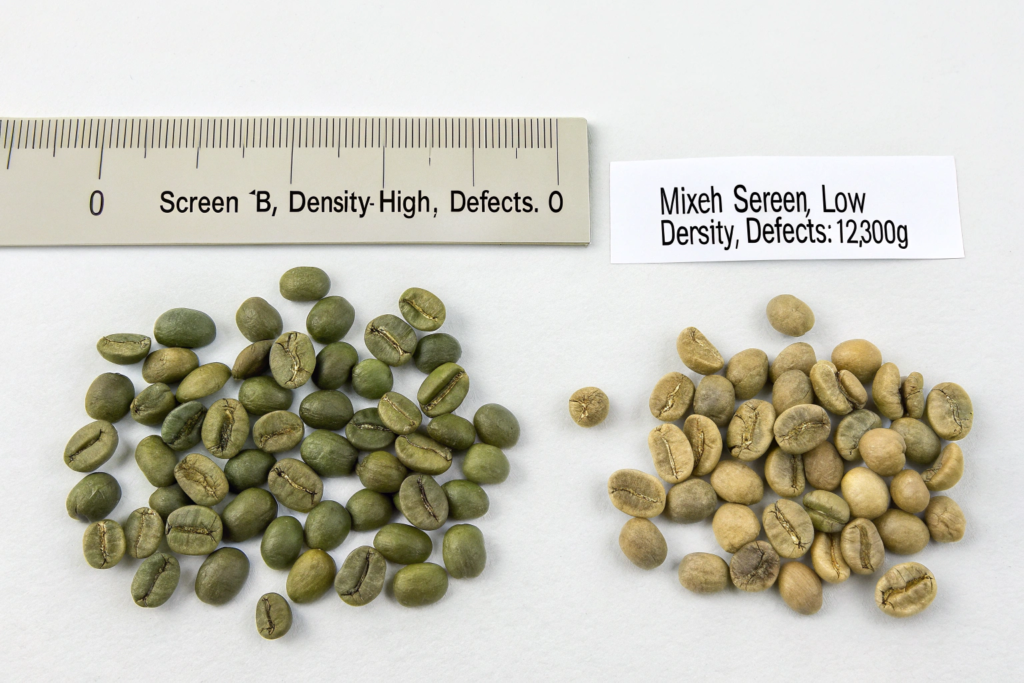
Premium green coffee beans are uniform in size, shape, and color for their lot. They have a consistent bluish-green or greenish hue, indicating proper drying. They are dense (a result of high-altitude growth) and have a clean, fresh fragrance. When roasted properly, they develop evenly. Commercial grade beans show mix of sizes and shapes, may have a yellowish or pale color (indicating age or poor drying), and can feel less dense. Visible defects—broken beans, shells, stones—are more common.
What Do Bean Size, Density, and Defect Count Reveal?
These are objective metrics. Bean size (screen size) is sorted by screens with holes of specific diameters (e.g., screen size 17/18). Larger, denser beans from the center of the coffee cherry often roast more evenly and contain more flavorful oils. Defect count is quantified. In the specialty (premium) grade, the maximum allowable is 5 full defects per 300g sample. Commercial coffee can have significantly more. A high defect count directly correlates with negative flavors: mold, sourness, or dirtiness. A buyer should always ask for the grade (e.g., Specialty Grade vs. Grade 1) and, if possible, sample photos of the green beans.
Why is the Roast Date More Important Than the Expiry Date?
This is a simple but powerful test of freshness philosophy. All premium coffee bags proudly display a roast date. Coffee is at its peak flavor roughly 7-21 days after roasting and degrades over time. Commercial coffee bags typically only show a "best before" date, which can be 12-24 months in the future, because they prioritize shelf stability over peak flavor. They often use packaging with one-way valves not for freshness but to off-gas, as the beans may have been roasted months prior. If there's no roast date, you are almost certainly looking at a commercial product where freshness—a core component of flavor—is not a priority.
What are the Stark Contrasts in Flavor and Processing?
This is the ultimate test: the cup itself. The flavor profiles of premium and commercial coffee are not just different in degree, but in kind. The processing method—how the coffee cherry is turned into a dry bean—is a major driver of this difference.
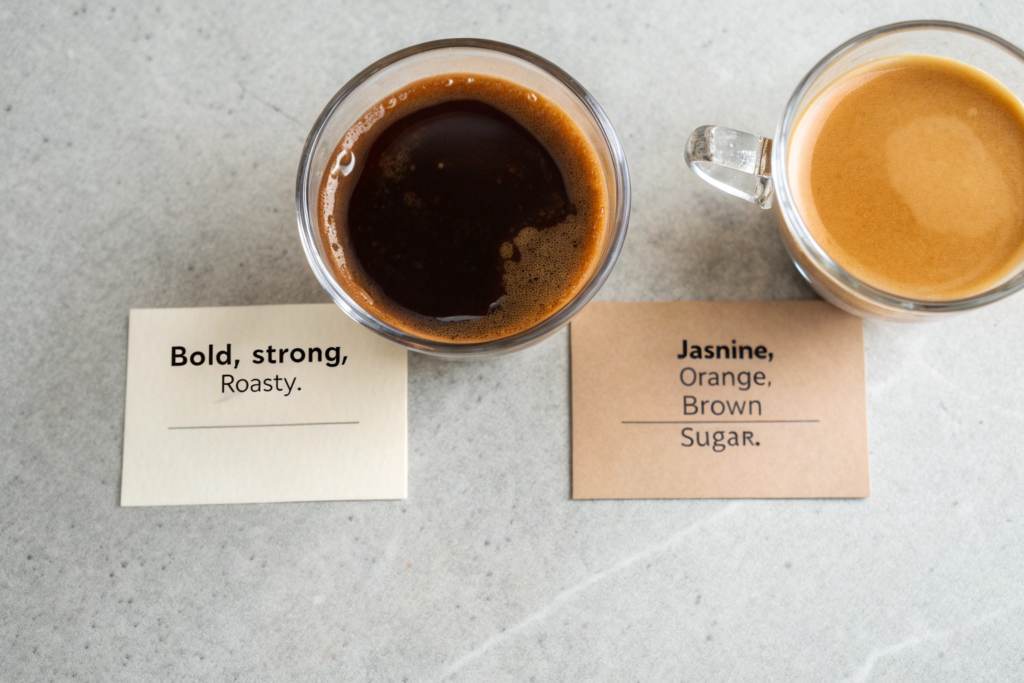
Premium coffee celebrates complexity, clarity, and distinct flavor notes. You might taste specific fruits, flowers, chocolates, or nuts. The acidity is often vibrant and pleasant (like wine), not just sour. The body can range from tea-like to syrupy. The aftertaste is clean and lingering. This is achieved through meticulous processing—like washed, honey, or natural processes done with great care, or even experimental methods like anaerobic fermentation. Each process highlights different aspects of the bean.
Commercial coffee aims for consistency, familiarity, and a lack of offensive flavors. The target is a generically "coffee" flavor: roasty, bitter, maybe with a vague nutty or chocolate note. Acidity is often low or unpleasant. The body is usually thin. To achieve this bland consistency, commercial roasting is typically very dark, which masks the inherent flavors (and defects) of the beans. This is why you can't taste the origin.
How Does Processing Method Dictate Flavor Potential?
Processing is the first major flavor decision. A Washed Process (used for most premium Yunnan Arabica) removes the fruit flesh before drying, resulting in a clean, bright, and acidic cup that highlights the bean's intrinsic character. A Natural Process dries the bean inside the fruit, lending intense fruity and fermented sweetness. Commercial coffee processing is often a rushed or basic version of these, focused on throughput, not flavor development. Imperfections in washing or drying can lead to musty, fermented, or harsh chemical notes that the dark roast must then hide.
Is "Bitterness" the Goal or a Flaw?
In premium coffee, balanced bitterness (like in dark chocolate) is a component, not the main event. The flavor is a symphony. In much commercial coffee, particularly dark roast blends, bitterness is the dominant characteristic. The dark roast creates bitter compounds (from burning sugars and fibers) that overwhelm any subtle origin notes. This heavy roast profile also ensures that the blend tastes the same batch after batch, regardless of the green bean quality underneath. It's a flavor mask.
Why Does Supply Chain Transparency Justify the Price?
The price difference isn't just for flavor; it's for ethics, sustainability, and risk mitigation in your supply chain. Premium coffee often comes with a story you can verify. Commercial coffee's journey is opaque.
When you buy premium coffee from a direct supplier like Shanghai Fumao, you can often know the farm's name, the farmers who grew it, the price they were paid (with premiums for quality common), and the processing station it passed through. This transparency ensures fair compensation and encourages sustainable farming. Certifications (like Fair Trade, Organic, Rainforest Alliance) often accompany this, though direct trade relationships can be even more impactful.
The commercial coffee supply chain is long and fragmented. Beans pass through multiple traders, blenders, and roasters. The farmer at the start receives a tiny fraction of the final price. This model discourages investment in quality and can perpetuate poor labor and environmental practices. For a business buyer, this opacity is a risk—you have no idea about the true origin or the working conditions involved.
How Does Direct Trade Benefit Both Buyer and Grower?
Direct trade cuts out the middlemen. We sell our Yunnan coffee directly to roasters or importers. This means:
- Higher income for our farm, which we reinvest in better processing equipment and worker welfare.
- Lower cost for the buyer compared to buying through multiple intermediaries, even at a higher price point than commodity coffee.
- Greater quality control and traceability for you, the buyer.
- Stronger relationships, allowing for custom processing requests (like specific roast profiles for your brand).
This model is a partnership, not just a transaction. It’s how we build long-term stability for both parties.
What Risks Does an Opaque Supply Chain Hide?
Without transparency, you risk:
- Quality Instability: Inconsistent beans hidden by dark roasting.
- Ethical Liabilities: Association with poor labor practices.
- Supply Disruption: No direct line to the source if weather or politics disrupts a region.
- Reputation Damage: Consumers increasingly demand ethical sourcing. Resources like Transparent Trade Coffee highlight the importance of this visibility.
For a serious buyer, the premium for a transparent, direct supply chain is an investment in security and brand integrity.
Conclusion
Distinguishing premium from commercial coffee requires looking beyond the surface. It's about seeking specific origin stories, uniform physical quality, complex and intentional flavors, and a supply chain you can see and trust. Premium coffee offers a narrative of quality, care, and connection, justifying its cost through a superior experience and ethical foundations.
For businesses, choosing premium coffee is a strategic decision that elevates your brand, satisfies discerning customers, and builds a more resilient supply chain. If you are ready to move beyond generic blends and explore the distinct, traceable quality of single-origin beans from our Yunnan plantations, we can provide transparent sourcing, detailed cupping reports, and consistent quality. To discuss how our premium Arabica, Catimor, or Robusta can become your signature offering, contact our export manager, Cathy Cai, at cathy@beanofcoffee.com. Let's build a premium partnership together.