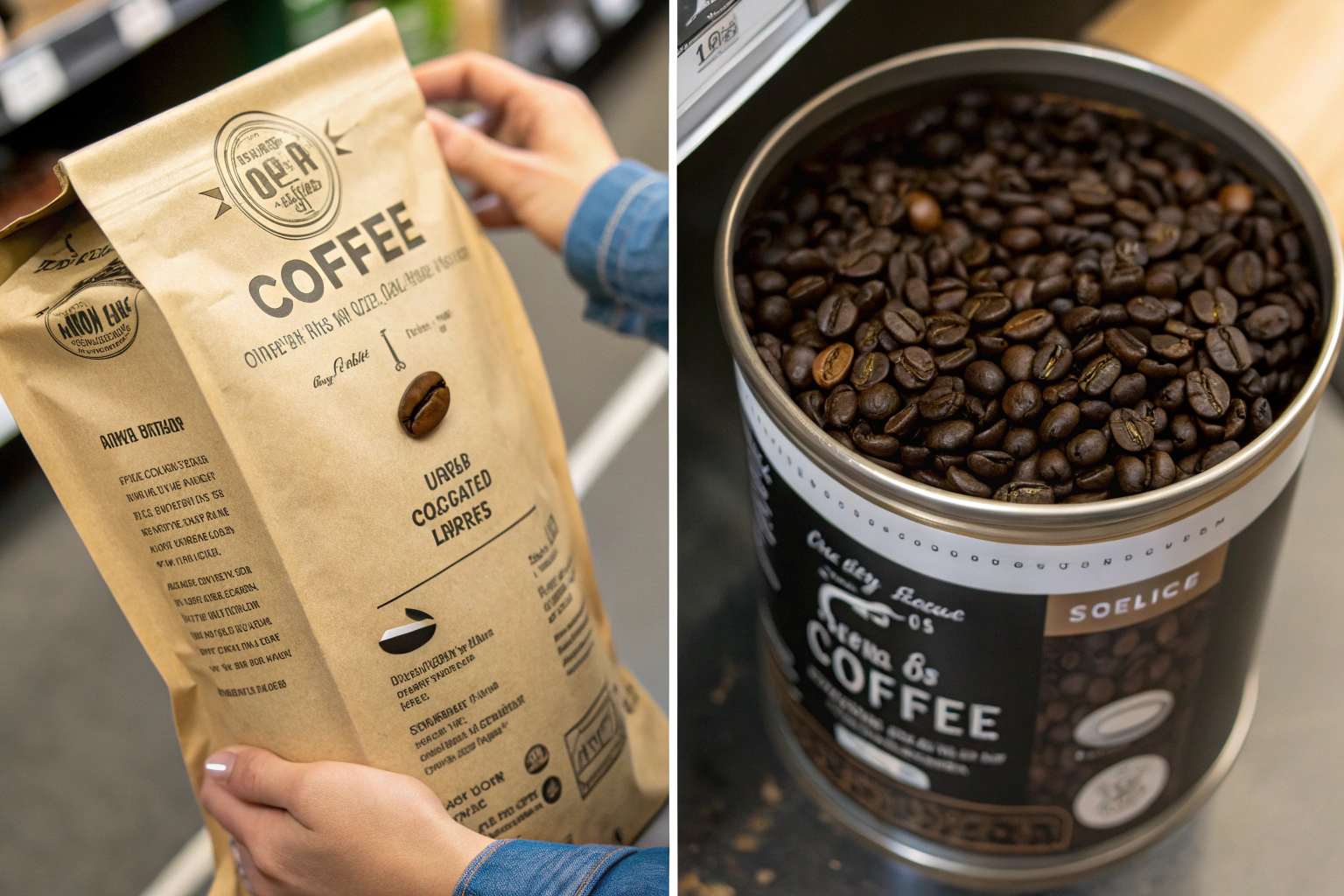
You're staring at two bags of coffee beans. One costs $12, the other $25. Both claim to be "premium" and "high-quality." Is the expensive one really worth double the price, or are you just paying for fancy packaging? Understanding the difference between specialty and commercial coffee isn't just about price—it's about understanding an entirely different approach to quality, sourcing, and what makes it into your cup.
The distinction between specialty and commercial coffee is fundamentally about quality grading and supply chain philosophy. Specialty coffee must score 80+ points on the 100-point Specialty Coffee Association (SCA) scale, have zero primary defects, and exhibit distinctive flavor attributes. Commercial coffee (often called "commodity coffee") has no minimum quality standard, focuses on price competitiveness, and typically comes from blended sources without traceability.
So, how can you tell them apart before you even taste them? The differences manifest in measurable quality standards, supply chain transparency, flavor experience, and even how the coffee is marketed. Let's explore the concrete factors that separate an ordinary cup from an extraordinary one.
What Are the Objective Quality Measurements?
The specialty coffee industry uses rigorous, standardized evaluation systems that turn subjective taste into measurable data. Commercial coffee typically lacks this level of quality documentation.
The SCA grading system evaluates coffee on multiple attributes including fragrance/aroma, flavor, aftertaste, acidity, body, balance, and more. Each category receives points that sum to a final score determining specialty status.
How Does the 80-Point Threshold Work?
Coffee is graded by certified Q Graders who follow strict protocols:
- 80-84.99 points: Very Good (specialty grade)
- 85-89.99 points: Excellent
- 90-100 points: Outstanding
Below 80 points, coffee is considered commercial grade. This scoring isn't arbitrary—it reflects the presence of desirable attributes and absence of defects. When we at BeanofCoffee export our Yunnan lots, we provide these quality scores to give buyers concrete evidence of value.
What About Defect Counting?
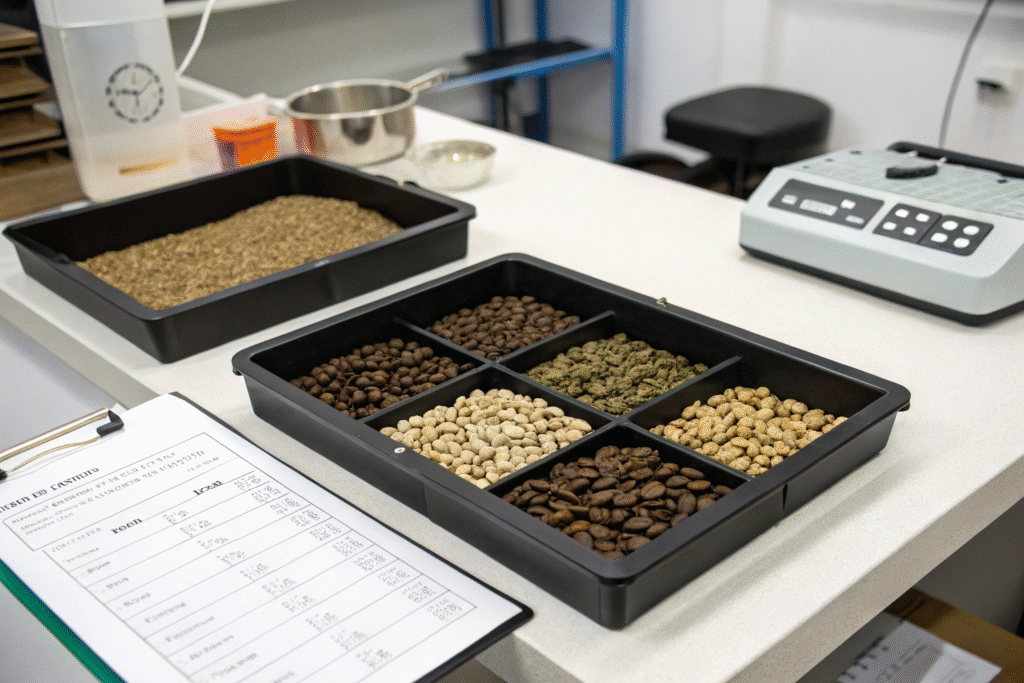
Specialty coffee allows 0 full defects (like black beans, sour beans) in a 350g sample. Commercial coffee may contain numerous defects, which often create the harsh, bitter flavors people associate with "bad coffee." The defect count is a quick visual indicator—specialty beans are uniform in size and color, while commercial beans often show broken pieces, discoloration, and inconsistencies. This visual consistency signals careful processing and sorting.
How Does Supply Chain Transparency Differ?
The journey from farm to cup tells a completely different story for specialty versus commercial coffee. Transparency isn't just a buzzword—it's a fundamental characteristic of specialty coffee.
Specialty coffee typically offers farm-level traceability, while commercial coffee usually comes from anonymous blending of beans from multiple origins to maintain consistent (though generic) flavor at lowest cost.
What Information Should You Expect?
Specialty Coffee Provides:
- Specific farm, cooperative, or micro-region
- Farmer's name or cooperative details
- Harvest year and season
- Processing method (washed, natural, honey)
- Altitude and variety
Commercial Coffee Typically Lists:
- Country or region only ("Colombian," "African Blend")
- Roast level only
- No harvest information
This provenance transparency allows specialty buyers to understand exactly what they're purchasing and make ethical sourcing decisions.
How Does Sourcing Philosophy Differ?
Specialty coffee often uses direct trade or relationship coffee models, paying premium prices for quality. Commercial coffee typically purchases through commodity exchanges based solely on price. This difference directly impacts farmers—specialty prices can be 25-300% higher than commodity prices, creating sustainable livelihoods. This economic impact is a hidden but crucial distinction.

What Are the Noticeable Flavor Differences?
The most dramatic difference emerges in the cup. Specialty coffee offers complexity and clarity, while commercial coffee prioritizes consistency and "coffee flavor" above all else.
Specialty coffee tastes of its origin—you might notice specific fruits, flowers, or chocolate notes. Commercial coffee tastes generically of "coffee" because distinctive characteristics are blended away.
How Does Acidity Compare?
Specialty Coffee: Has "brightness"—a pleasant, wine-like acidity that adds complexity. This might manifest as citrus, apple, or berry notes.
Commercial Coffee: Typically has low or harsh acidity. The bright notes are often lost through processing, blending, or dark roasting designed to create uniform flavor.
This vibrant acidity is one of the first things new specialty drinkers notice—it's not sourness, but a sparkling quality that makes coffee lively.
What About Body and Aftertaste?
Specialty Coffee: Has a clean, pleasant aftertaste that might reveal additional flavors as the coffee cools. The body can range from tea-like to syrupy depending on origin and processing.
Commercial Coffee: Often has a bitter, lingering aftertaste that people try to mask with cream and sugar. The body might feel thin or hollow.
The finish and mouthfeel differences become especially apparent when tasting black coffee side-by-side.

How Do Roasting and Freshness Practices Differ?
Roasting philosophy separates these categories as much as growing and processing do. Specialty roasters highlight the bean's inherent qualities, while commercial roasters create a standardized product.
Specialty coffee is typically roasted lighter to preserve origin character and shipped soon after roasting with roast dates. Commercial coffee is often roasted darker for consistency and may sit on shelves for months.
Why Does Roast Level Matter?
Specialty Roasting: Often light to medium to highlight the bean's natural flavors. You taste the coffee, not the roast.
Commercial Roasting: Often medium-dark to dark to create uniform "coffee flavor" that masks quality variations and extends shelf life.
The prevalence of dark roasting in commercial coffee explains why many people think "strong, bitter coffee" is normal rather than a style choice.
How Important is Freshness Dating?
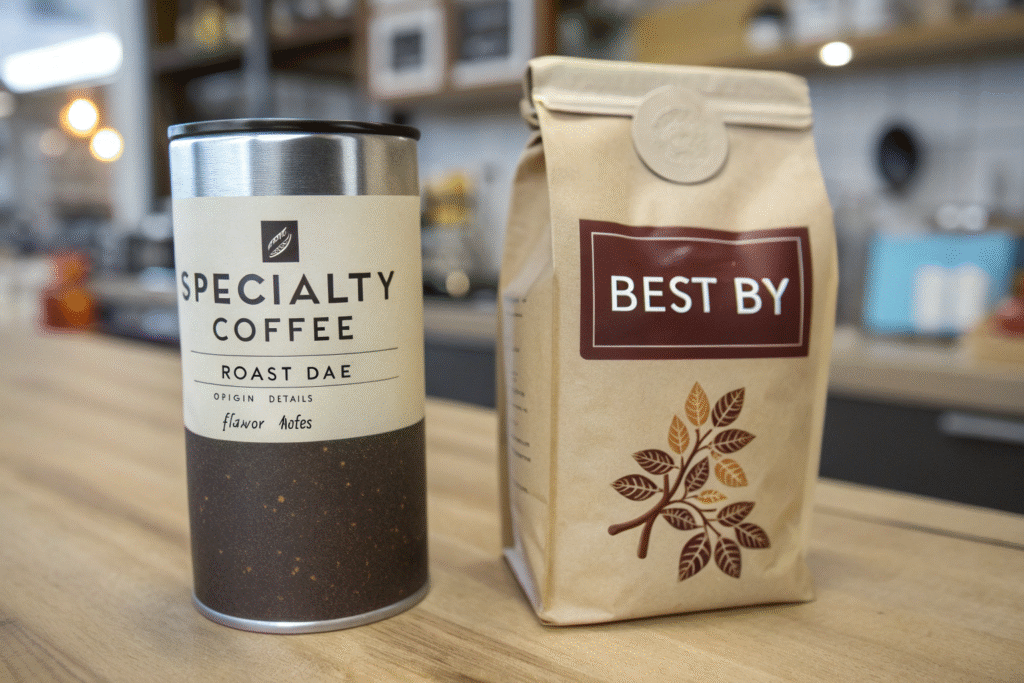
Specialty Coffee: Almost always features a roast date and is best consumed within 1-3 months of roasting.
Commercial Coffee: Typically features only a "best by" date that may be 1-2 years in the future, with no information about when it was roasted.
This freshness transparency matters because coffee is at its peak for only a few weeks after roasting before flavors begin to degrade.
What About Price and Value Proposition?
The price difference reflects real differences in production costs, quality standards, and economic distribution—not just marketing hype.
Specialty coffee costs more because it requires more labor, careful processing, smaller batches, and premium prices to farmers. The question is whether the experience justifies the cost for you.
Where Does the Money Go?
Specialty Coffee Premium Covers:
- Selective hand-picking of ripe cherries
- Careful processing and drying
- Multiple sorting stages to remove defects
- Higher prices paid to farmers
- Smaller batch roasting and quality control
- Better packaging with degassing valves
Commercial Coffee Focuses On:
- Mechanical harvesting (strip picking)
- Cost-efficient bulk processing
- Blending for price stability
- Economies of scale in roasting and distribution
This cost structure difference means specialty coffee isn't just "more expensive"—it represents a different approach to valuing labor and quality.
How Should You Decide What's Right for You?
Consider your priorities:
- Choose specialty if you value complex flavors, transparency, and supporting sustainable farming
- Choose commercial if you primarily want caffeine, consistency, and lowest price
Many coffee drinkers enjoy both at different times—specialty for their morning ritual, commercial for large gatherings or baking. This purpose-based selection acknowledges that both categories serve valid needs.

Conclusion
Distinguishing between specialty and commercial coffee ultimately comes down to quality standards, transparency, and philosophy. Specialty coffee offers traceable origins, complex flavors, and ethical sourcing at a premium price. Commercial coffee provides consistent, familiar flavor at an accessible price point through efficient large-scale production.
The "better" choice depends entirely on what you value in your coffee experience. If you're curious about exploring specialty coffee, start by comparing a specialty single-origin against your usual commercial blend—the differences will likely surprise you. For businesses looking to source authentic specialty coffee with full transparency, we invite you to sample our graded lots from Yunnan. Contact our export manager, Cathy Cai, at cathy@beanofcoffee.com to experience the measurable difference that specialty standards create.