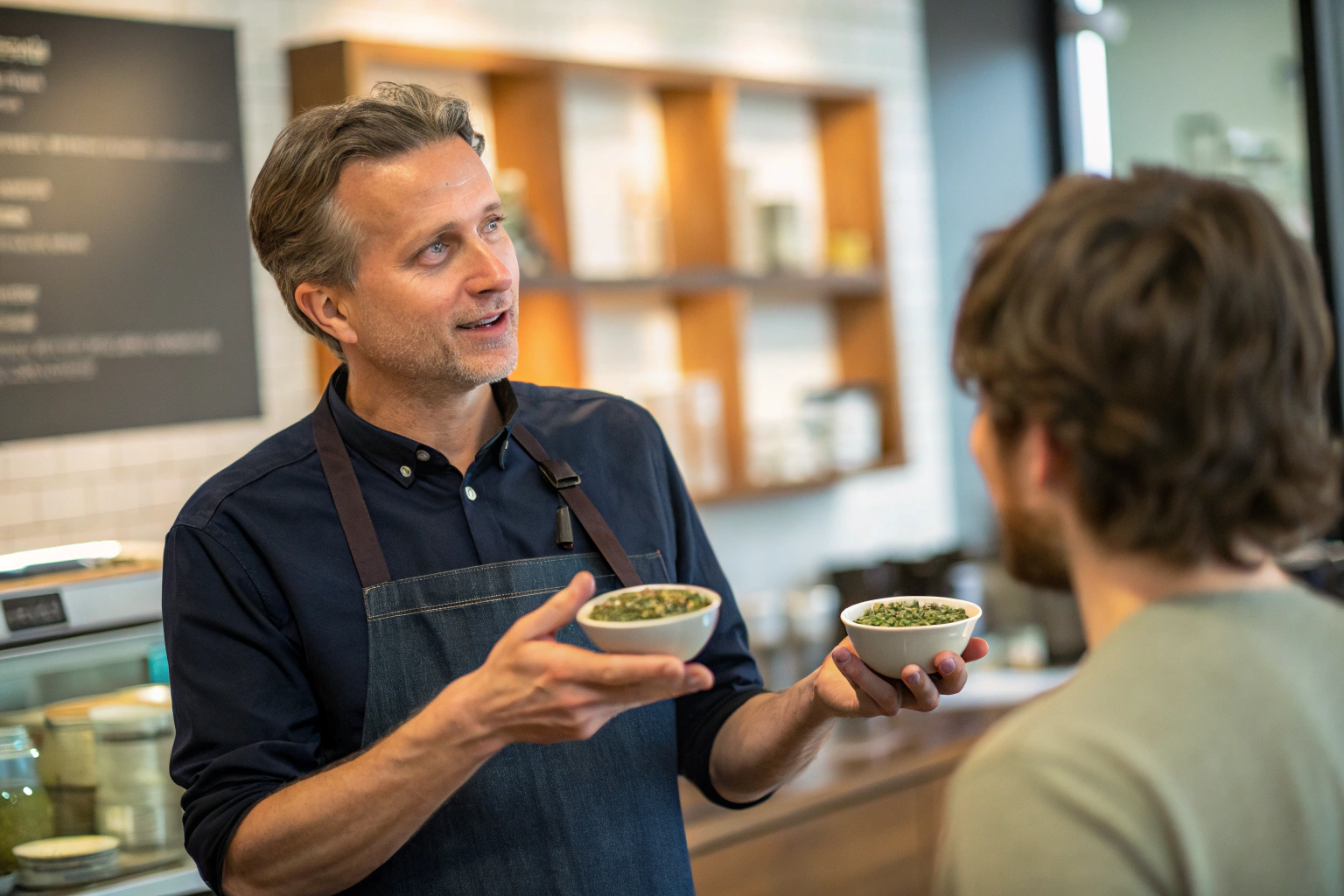
You're passionate about the details. You know the difference a washed or a natural process makes to the final cup. But when you try to explain it to a customer, you see their eyes glaze over. They just wanted a "good cup of coffee," and now they're lost in a technical lecture about mucilage and fermentation. This is a common pain point: you have this deep, valuable knowledge that justifies your coffee's quality and price, but you're struggling to share it in a way that excites your customers instead of intimidating them. You're missing the opportunity to turn a simple transaction into a memorable, educational experience.
Honestly, the best way to educate customers about coffee processing is to stop teaching and start storytelling. You need to translate the technical jargon into a simple, relatable narrative focused on one thing: flavor. Frame the processing methods as different "recipes" the farmer uses to bring out different tastes in the coffee cherry. The key is to connect the abstract process directly to the tangible experience in their cup, using simple analogies, visual aids, and, most importantly, comparative tasting.
From my perspective on our farms in Yunnan, processing is where we make our most crucial artistic decisions. Do we want to create a coffee that is clean, bright, and crisp, or one that is wild, fruity, and sweet? These are the stories we are trying to tell with our beans. Your job is to be the final storyteller. Let's break down how to tell that story effectively.
How Do You Simplify the "Big Three" Processing Methods?
The world of coffee processing can be incredibly complex, with dozens of experimental variations. But for 99% of customer interactions, you only need to master the story of the main three: Washed, Natural, and Honey. The key is to use simple, powerful analogies.
Isn't it too technical to explain mucilage and fermentation? Yes, for an initial conversation, it absolutely is. Avoid those words. Instead, use a fruit analogy that everyone can understand. Think of a coffee cherry as a small plum or grape with a seed inside (the bean). The processing method is simply about how you treat the fruit before you get to the seed. his reframing is everything. It moves the conversation from a chemistry lesson to a cooking lesson.
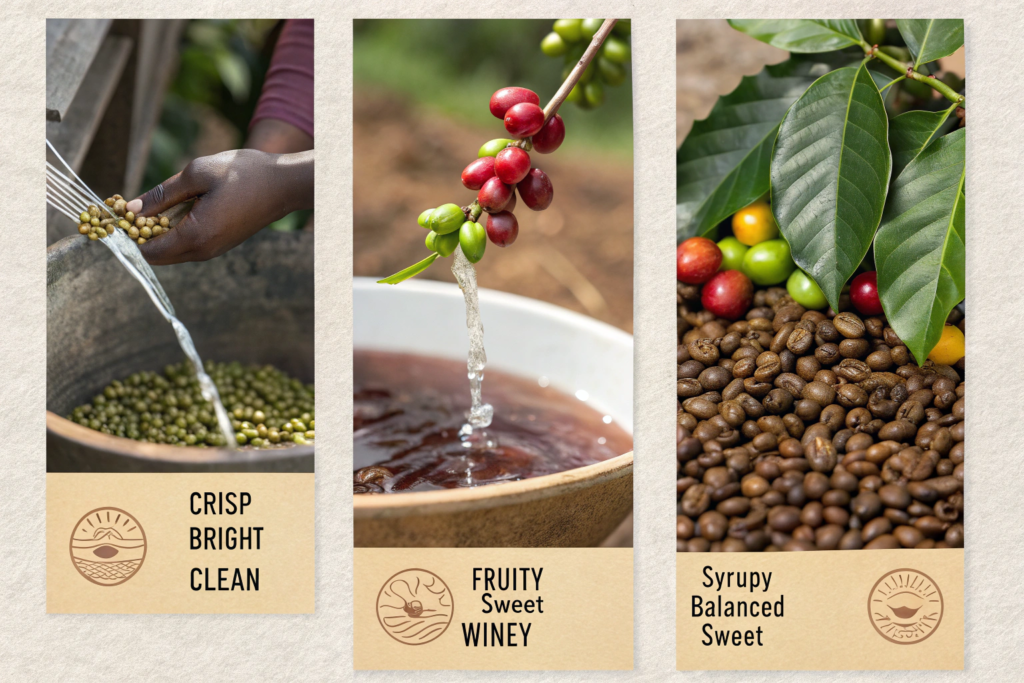
How do you explain the Washed (Wet) Process?
- The Analogy: "Imagine you want the pure flavor of the grape seed itself. You'd scrub all the fruit pulp off immediately with clean water before you dry the seed. That's the Washed process."
- The Flavor Story: "Because we wash all the fruit away, you get a super clean, bright, and crisp cup of coffee. It's like drinking in high-definition. This method lets the bean's own inner character—its 'origin flavor' from the soil and altitude of our Yunnan farms—shine through with no distractions."
- Keywords for Customers: Clean, Bright, Crisp, Elegant, Tea-like.
How do you explain the Natural (Dry) Process?
- The Analogy: "Now, imagine you want the seed to soak up all the sweetness of the fruit. You'd take the whole grape and dry it in the sun, like making a raisin. The seed inside absorbs all those sugary, fruity flavors. That's the Natural process."
- The Flavor Story: "This method creates a coffee that is wild, sweet, and bursting with fruit flavors. You'll taste notes of strawberry, blueberry, and even red wine. It's a big, bold, and complex flavor experience."
- Keywords for Customers: Fruity, Sweet, Wild, Winey, Funky (in a good way!).
How Can You Make the Education Interactive and Sensory?
Words are one thing, but sensory experience is far more powerful. People learn and remember best when they can see, smell, and taste the difference. You need to bring the education off the menu and onto the counter.
Will customers really care about looking at green beans? Absolutely. Curiosity is a powerful tool. Creating a small, interactive display transforms a theoretical concept into a physical reality. It gives customers something to touch and see, making the story you're telling them instantly more real and memorable.This doesn't have to be complicated. A simple "sensory station" can be incredibly effective.
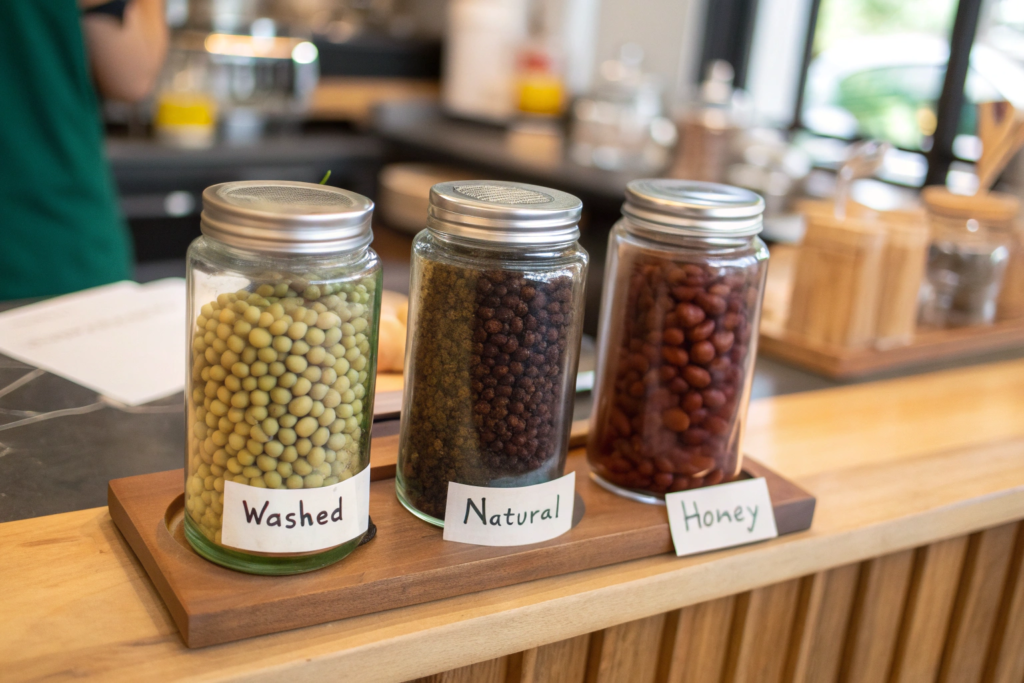
What does a sensory station look like?
Set up three clear jars on your counter:
- Washed Green Beans: Note their uniform, pale green color.
- Natural Green Beans: Note their varied colors—yellows, browns, reds—from the dried fruit sugars staining the bean.
- Roasted Beans: Have a jar of roasted Washed beans and roasted Natural beans side-by-side. The customer can often see the difference in color and texture even after roasting.
Encourage customers to pick them up and smell them. The difference in aroma, even in the green beans, can be surprising.
What is the ultimate educational tool?
Comparative Tasting. This is, without a doubt, the most effective method. When you have two coffees on bar that are from the same origin but different processing methods, that's a golden opportunity.
- Offer a "Tasting Flight": Offer a small, side-by-side tasting of a Washed vs. a Natural coffee. It could be two espressos or two small pour-overs.
- Guide the Tasting: Don't just serve it. Ask them questions. "In this first one (the Washed), do you notice how clean and bright it is? Now try the second one (the Natural). See how much sweeter and fruitier it tastes? That's the 'raisin effect' we were talking about!" That "aha!" moment when a customer tastes the difference for themselves is what creates a loyal fan.
How Do You Weave Education into Your Marketing and Sales?
Education shouldn't be limited to in-person conversations. Your marketing materials—from your retail bags to your social media posts—are powerful platforms for telling the story of processing.
Isn't there too little space on a coffee bag for all this? You don't need to write an essay. You need to use smart design and clear, concise language. Your packaging and digital content should reinforce the simple stories you tell in person, creating a consistent and educational brand experience.Think of your marketing as a silent educator, working for you 24/7.
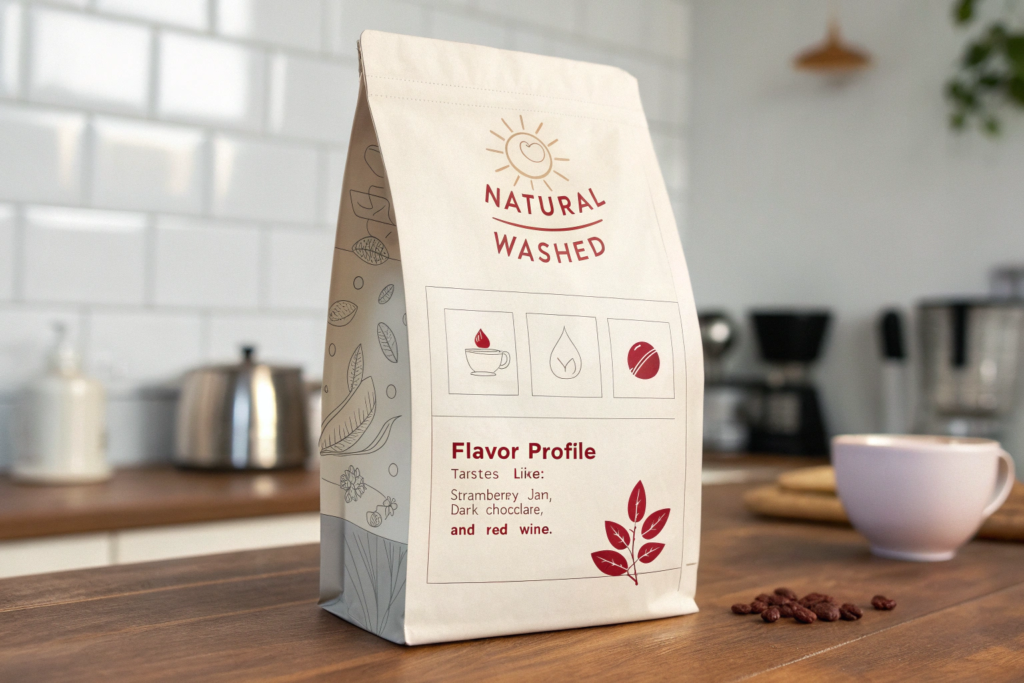
How can you use your packaging?
- Simple Icons: Create simple, intuitive icons for each processing method (e.g., a water droplet for Washed, a sun for Natural, a honey dipper for Honey).
- Flavor Notes: This is critical. Don't just say "Natural Process." Say "Natural Process - Tastes like: Strawberry, Blueberry, and Chocolate." Connect the process to the flavor, always.
- QR Codes: A QR code on the bag can link to a short video on your website showing the processing method at the farm of origin, like our operations at Shanghai Fumao.
How can you use social media?
- Show, Don't Just Tell: Post short videos or photo carousels. Show a picture of bright red cherries drying on raised beds for a Natural process. Show a video of clean water washing the beans.
- "Did You Know?" Series: Create a simple, recurring content series. "Did You Know? The 'Washed' process is like scrubbing a grape before drying its seed, giving you a super clean and bright cup of coffee!"
- Go Live with a Tasting: Host a live tasting on Instagram or TikTok where you brew and compare two different processes, talking your audience through the flavors you're experiencing.
Why Does Educating Your Customers Ultimately Boost Your Business?
Investing time and effort into customer education might seem like a "nice-to-have," not a "need-to-have." But it has a direct and powerful impact on your bottom line.
Is this really going to sell more coffee? Yes, absolutely, for three key reasons. First, it justifies your price. When a customer understands the craft and labor that goes into a Natural process coffee, they understand why it costs more than a generic blend. Second, it builds trust and authority. You are no longer just a person serving coffee; you are a trusted expert and guide. Third, it creates loyal, engaged customers who come back not just for the coffee, but for the experience and the story.
Educated customers become your best marketers. They are the ones who will tell their friends, "You have to go to this cafe. They have this coffee that tastes like blueberries because of the way they dry it!"
How does it empower your staff?
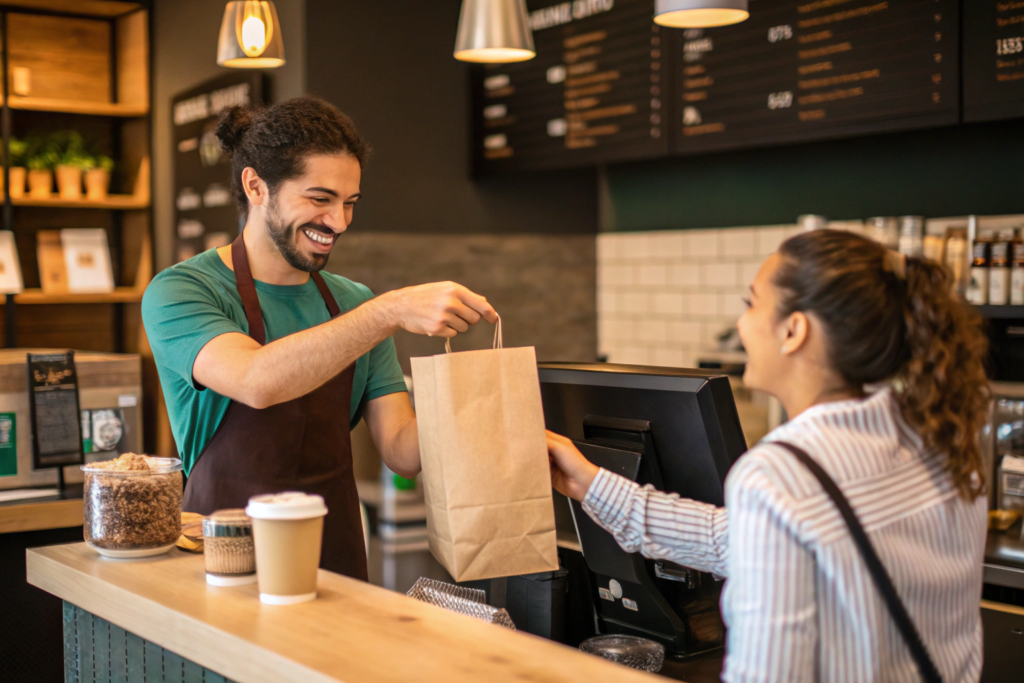
When your staff is trained to tell these stories, it transforms their job. They are no longer just order-takers. They become educators and storytellers. This empowerment leads to higher job satisfaction and, more importantly, gives them the confidence to upsell and recommend higher-margin specialty coffees. They can confidently answer the question, "What's special about this one?"
How does it differentiate your brand?
In a bustling market where the air hums with the chatter of vendors and the clink of coins, where stalls overflow with steaming cups of coffee, each promising a quick pick-me-up, anyone can set up a cart and serve a good cup. The aroma of freshly ground beans mingles with the scent of spices and street food, drawing in passersby with its warm, inviting allure. Yet, amid this sea of sameness, it is the cafe that transcends the mere transaction of a beverage—the one that can also provide a moment of discovery, a fascinating story woven into every sip, and a deeper appreciation for the product itself—that will truly stand out.
Imagine stepping inside, where the walls are adorned with vintage maps marking the origins of the beans, each labeled with tales of small-scale farmers who tend to their crops under the sun-dappled canopies of distant lands. A barista, passionate and knowledgeable, greets you not just as a customer, but as a fellow enthusiast, sharing how the altitude of the mountain where the beans were grown influences their flavor profile, or how the slow-roasting process unlocks notes of caramel and dark chocolate. Education becomes a powerful form of marketing here, not as a lecture, but as an immersive experience that adds value far beyond the cup itself.
Conclusion
Educating your customers about coffee processing is not about showing off your technical knowledge. It's about inviting them into the story of their coffee. By simplifying the concepts, using relatable analogies, providing sensory experiences, and weaving this narrative into all of your marketing, you transform a simple purchase into a journey of discovery. You empower your customers, you elevate your brand, and you build a community of loyal fans who appreciate the incredible craft that goes into every single cup. You are the final, crucial link between our work on the farm and the customer's "aha!" moment.
We are passionate about the processing methods we use to bring out the best in our Yunnan beans. We are always eager to provide our partners with the stories, photos, and details they need to share that passion with their customers. If you're ready to source coffees with a great story to tell, let's connect. Contact our coffee specialist at cathy@beanofcoffee.com.