You've finally nailed it. That perfect house blend that your customers keep coming back for. The one with just the right body, acidity, and that subtle hint of chocolate. But now, six months later, something feels... off. The roast behaves differently. The flavor isn't quite the same. Your customers are starting to notice. I've heard this story from so many buyers at trade shows. It's the nightmare of every roaster and brand owner: blend inconsistency. And honestly, it's often not your fault. It's your supply chain.
So, how do you ensure consistency in your coffee blends when your beans are coming from thousands of miles away? The answer lies in vertical integration and rigorous pre-shipment protocols. At BeanofCoffee, we guarantee blend consistency by controlling the entire lifecycle of the bean. Because we own the farms, we can guarantee that the Catimor you ordered last year will taste the same as the Catimor arriving next month. We don't buy from the spot market. We don't mix lots from unknown origins. We grow, harvest, process, and store your specific profile, year after year.
Consistency isn't an accident. It's a system. When you're dealing with a natural product like coffee, grown in dirt, affected by rain and sun, consistency seems impossible. Another way to look at this is to stop thinking of coffee as a commodity and start thinking of it as a manufactured ingredient. The goal is to minimize variation so your brand stays stable. Let me walk you through exactly how we do this, from our soil in Yunnan to your roasting drum in the U.S.
What Causes Coffee Blend Inconsistency in the First Place?
Before we fix a problem, we have to understand where it comes from. I've walked through countless coffee trading houses and farms across Asia. And I've seen the same mistakes over and over. The mistakes that ruin your blends. It's rarely one big thing. It's death by a thousand small cuts.
Inconsistency usually starts at the sourcing level. Most suppliers act as aggregators. They buy small lots from hundreds of smallholder farmers, mix them together in a warehouse, and call it a "consistent lot." But those small farmers all process differently. Some dry their beans on patios, some on tarps. Some pick ripe cherries, some don't. When you mix all that together, you get a blend of flavors that might taste okay one month and terrible the next. The problem isn't the origin; it's the lack of control at the farm level.
Another factor is storage and age. Coffee is a hydroscopic product. It absorbs moisture and smells from the environment. If your supplier stores beans in a humid warehouse next to spices or dried fish, your coffee will eventually taste like that. You know? It sounds crazy, but I've seen it happen. And then there's processing variation. Was the fermentation time consistent? Was the drying curve the same? If these steps aren't standardized, your blend becomes a moving target. So, what does this mean for you? It means that finding a supplier who controls these variables is the only way to sleep peacefully at night.
Why Do Mixed Sourcing from Small Farms Ruin Your Recipe?
Think of your blend like a recipe for a cake. If you buy flour from ten different mills, your cake will taste different every time. It's the same with coffee. When suppliers buy from hundreds of scattered small farms, each farm has its own micro-climate, its own soil, its own picking schedule. Mixing them together creates a "average" coffee, but that average shifts constantly. One year, one village might have a great harvest; the next year, a drought hits them. The blend changes. You don't notice it until your customers complain. Because we own over 10,000 acres, we don't have this problem. Our plantation management is uniform. Every tree is pruned the same way, picked at the same time, and processed in the same facility. This is the foundation of blend consistency.
How Does Improper Storage Destroy Bean Quality Before Shipping?
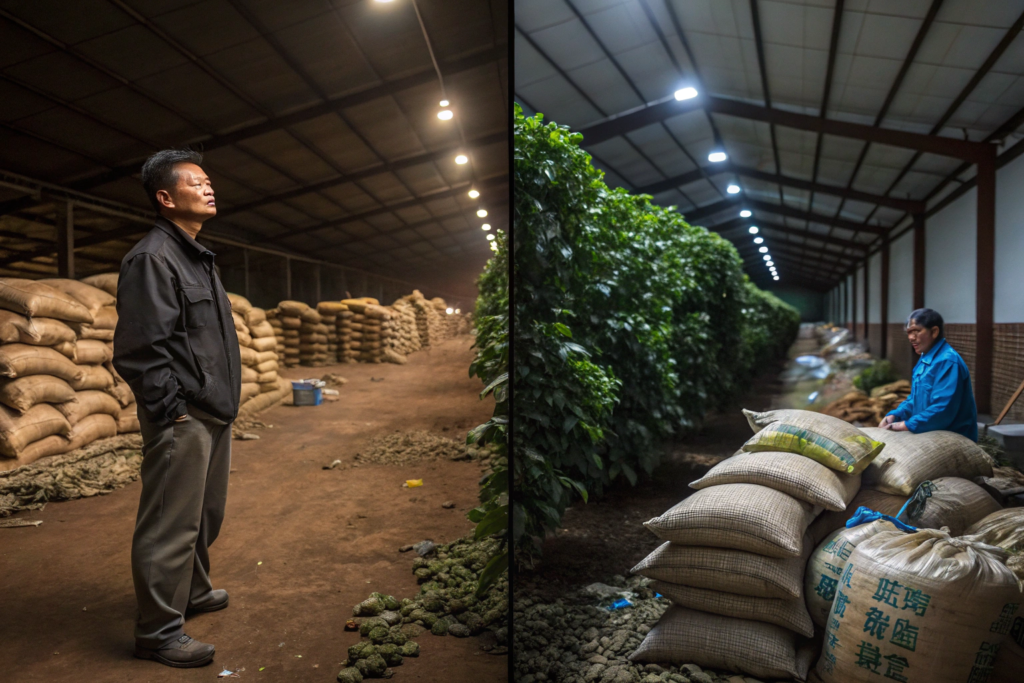
I visited a port warehouse once where they stored coffee bags directly on concrete floors. The bottom bags had absorbed moisture and started to mold. The exporter didn't even know. He just shipped them out. Moisture is the enemy. Beans should be stored on pallets, in a climate-controlled environment, away from direct sunlight and strong odors. At our facility in Baoshan, we store green beans in a dedicated warehouse with consistent temperature and humidity. We use moisture meters constantly. Before loading a container, we check again. We also use container liners to protect the beans during the ocean voyage. These small steps—they matter. A detail that often gets overlooked is the container itself. If it was previously used to carry chemicals, that smell can transfer to your beans. We only use clean, food-grade containers, working with reliable logistics partners like Shanghai Fumao to ensure the journey preserves the quality we worked so hard to create.
How Can a Single-Origin Farm Guarantee Year-Round Blend Stability?
Imagine trying to bake the same bread for ten years, but your flour supplier changes every season. Impossible, right? That's the reality for many coffee buyers. They switch origins, switch suppliers, switch brokers. And they wonder why their espresso shots pull differently in January than they did in July. Stability comes from a single, reliable source.
When you work with a single-origin farm that you own, like we do at BeanofCoffee, you gain the ability to forecast and plan. We know exactly how many tons of Catimor will be harvested in February. We know the flavor profile of that harvest because we've been tracking it for years. We can set aside specific micro-lots specifically for your blend. We can even blend at origin, mixing beans from different parts of our farm to hit your target flavor profile, and then hold that blend in inventory for you, ready to ship when you need it.
Another way to look at this is through the lens of "buffering." In manufacturing, you keep safety stock to smooth out variations. We do the same with coffee. Because we have the volume, we can store large quantities of green beans from a single harvest. When the new harvest comes in, we cup it against the old harvest. We compare them side-by-side. If the new crop is slightly brighter, we can blend it with some of the older, more mellow beans to match your exact specification. This is something small traders simply cannot do. They don't have the inventory or the financial ability to hold coffee for long periods.
What Is "Crop-to-Cup" Traceability and Why Does It Matter for Blenders?
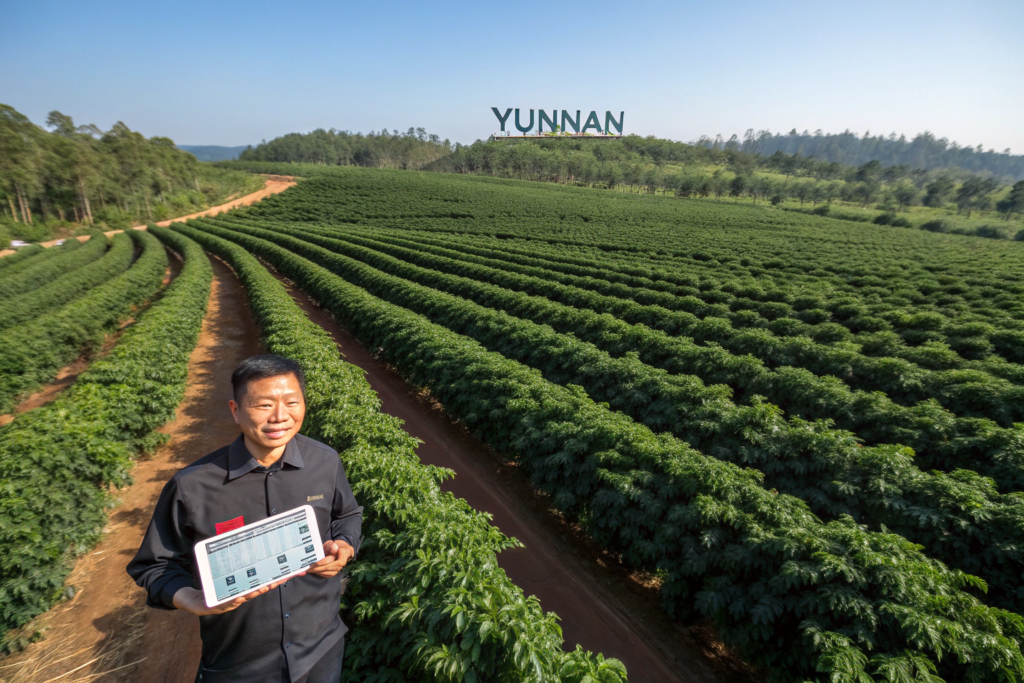
Traceability isn't just a buzzword for marketing. It's a practical tool for consistency. Full traceability means I can tell you the exact week a specific bean in your blend was picked. It means if there's a problem—a flavor defect, a moisture issue—I can trace it back to the exact field and figure out what went wrong. Then I can fix it for next time. For your blend, this matters because it builds a historical record. We know, for example, that the beans from Block 7 on our farm always have a heavier body and lower acidity. So when we build your blend, we know to include a certain percentage from Block 7 to achieve that body year after year. This traceability system is the backbone of our quality promise. Without it, you're just guessing.
How Do We Use Micro-Lots to Match Your Exact Flavor Profile?
Here's something we do that surprises a lot of buyers. We don't just sell "Catimor." We sell Catimor from specific sections of our farm. We segment our harvest into micro-lots based on altitude, harvest date, and processing method. This gives us a palette of flavors to work with. When you send us your target flavor profile—maybe you want a dark roast blend with heavy chocolate notes and low acidity—our team can literally build that. We'll select micro-lots that lean toward chocolate, blend in a small percentage of a micro-lot that adds body, and exclude any lots that have high acidity. It's like being a chef with a full pantry, instead of just having one type of salt. This is the level of custom blending that large brand buyers need to differentiate themselves in a crowded market.
What Role Does Processing Play in Creating a Uniform Bean Structure?
You can have the most consistent farm in the world. But if your processing is sloppy, the beans will be inconsistent. It's that simple. Processing is where the potential of the cherry is either captured or destroyed. It's the moment when good coffee can become great coffee, or when it can become average coffee.
Processing consistency means standardizing every variable. At our facilities, we don't leave things to chance. We control fermentation times down to the hour. We monitor water temperature and purity. For washed processes, we use mechanical demucilagers to remove the mucilage consistently, rather than relying on unpredictable natural fermentation. For naturals, we spread cherries in thin, even layers on raised beds and turn them at scheduled intervals. This level of control ensures that every bean in a lot has undergone the exact same treatment, leading to uniform density and flavor potential.
So, what does this mean for your roast? Uniform bean structure means even roasting. If beans in a single lot have different densities because they were fermented differently, they will roast at different rates. Some will be underdeveloped, some will be scorched. Your blend will taste baked and flat. But when beans are processed uniformly, they react uniformly to heat. You get a clean, consistent roast curve every time. This predictability is gold for a production roaster. You don't have to keep adjusting your machine.
How Does Standardized Fermentation Eliminate Off-Tastes?
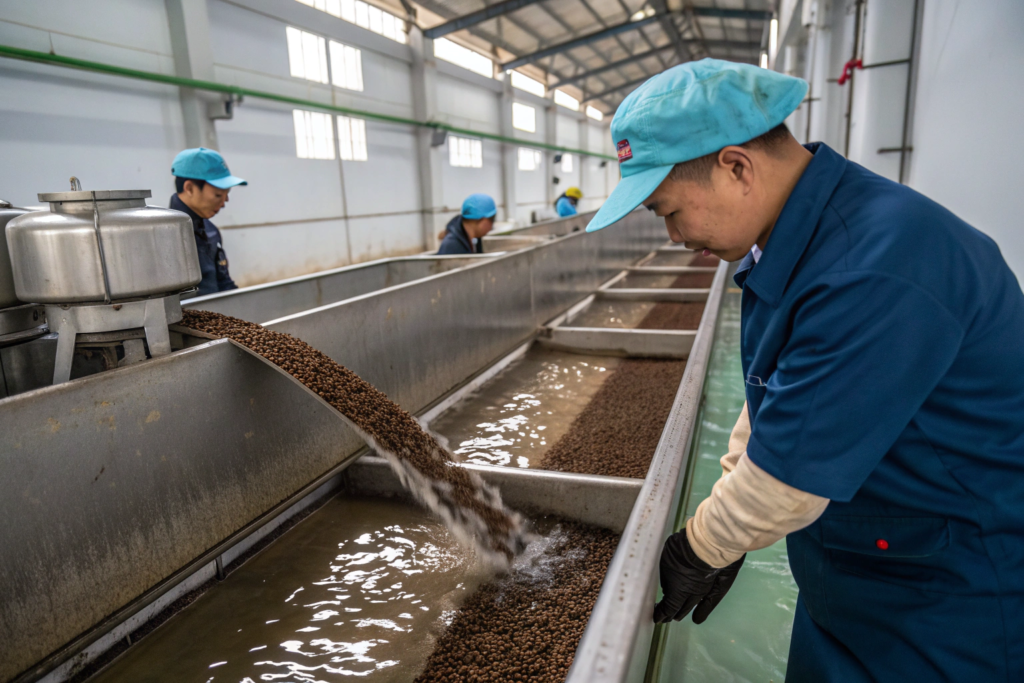
Fermentation is a tricky thing. It's a microbial process. In traditional processing, farmers often just pile cherries in a tank and wait. But without control, you can get over-fermentation, which creates that funky, sour, almost vinegary taste. Or under-fermentation, which leaves grassy, vegetal notes. We standardize by using precise timing and clean water. For our washed lots, we ferment in stainless steel tanks for exactly 24 to 36 hours, depending on the ambient temperature. We check the pH levels. We rinse with clean, running water. This controlled fermentation eliminates the unpredictability. The result is a clean cup, free from off-flavors, lot after lot. It's the kind of clean profile that American buyers expect from specialty coffee.
Why Is Mechanical Drying Better Than Sun Drying for Consistency?
I love the romance of sun drying. It looks beautiful. But for consistency at scale, it's a nightmare. The sun doesn't shine evenly. Cloud cover changes. Night falls. Workers have to run out to cover the beans if it rains. All of this leads to uneven drying. Some beans dry too fast, some too slow. This creates stress cracks inside the bean and leads to uneven roasting later. At BeanofCoffee, we use a combination. We start on patios to get some of that sun-dried sweetness, but we finish in mechanical driers. These driers use controlled temperatures (never exceeding 40°C) and consistent airflow to bring the beans down to the perfect 11-12% moisture content evenly. This mechanical drying process ensures that every single bean has the same final moisture content, which is critical for long-term storage and roast consistency.
How Can Pre-Shipment Samples Prevent Post-Arrival Disappointment?
Samples. Every supplier sends them. But are they real? I've heard stories of buyers receiving amazing samples, only to have the bulk container taste completely different. It's a dirty trick, and it gives our industry a bad name. The gap between sample and shipment should be zero. And with the right system, it can be.
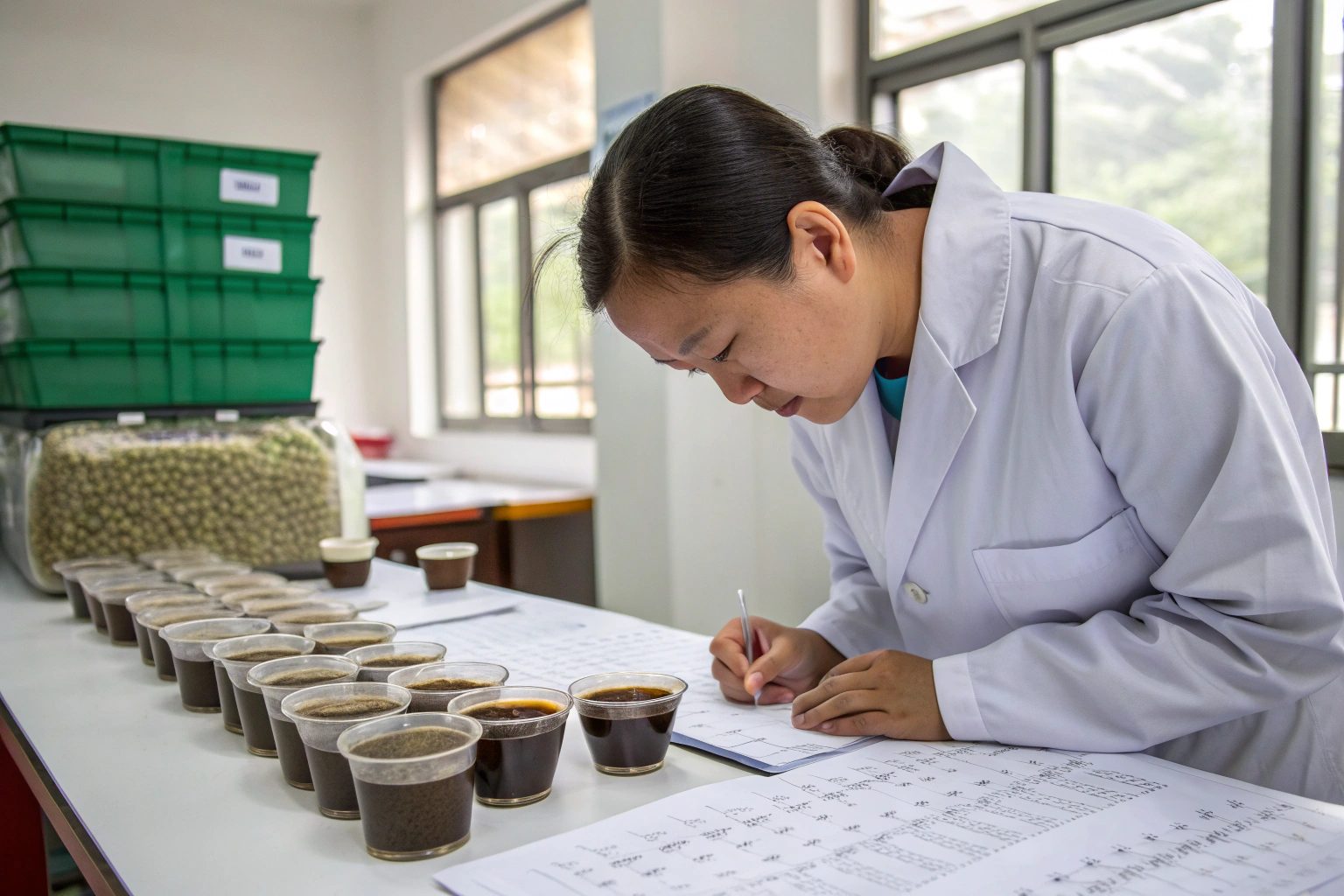
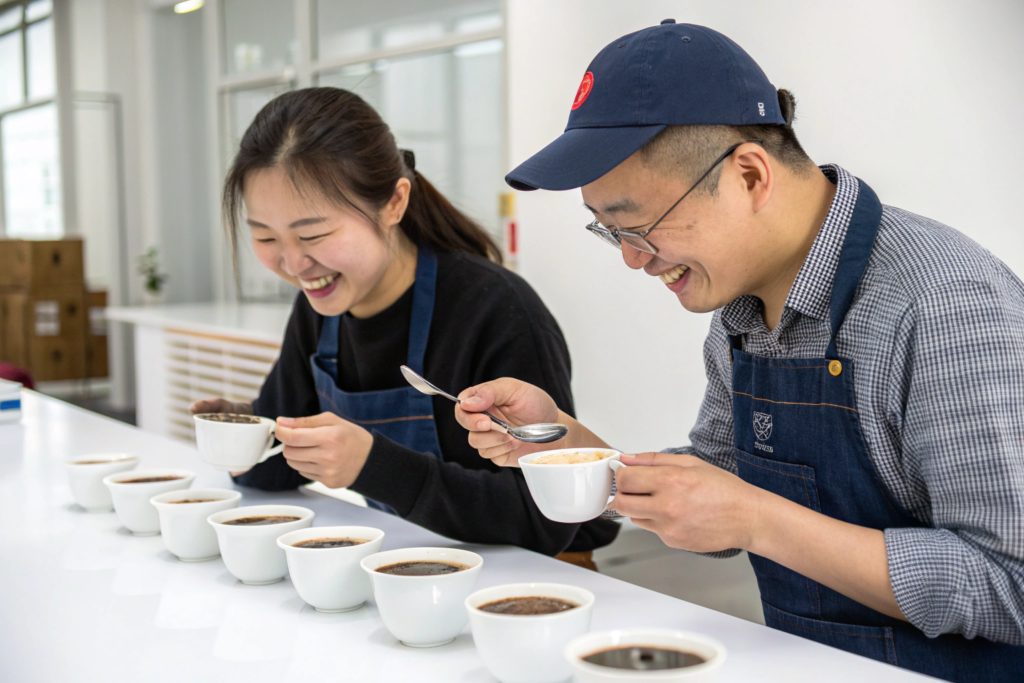
The key to reliable pre-shipment sampling is transparency and volume. We don't cherry-pick a few perfect beans for your sample. We take representative samples from the bulk lot using a trier, sampling from multiple bags across the entire lot. We send you at least 1kg of green beans for you to roast and cup yourself. Then, before we load the container, we offer a pre-shipment inspection. You can hire a third party like SGS or CQI to come to our warehouse, pull their own samples, and cup them. If it doesn't match the approval sample, the container doesn't ship.
Another way to look at this is to treat the sample as a contract. When you approve that sample, you are approving the standard. We then hold the entire production lot to that standard. We keep a portion of the approval sample in our lab. When the pre-shipment sample is pulled, we cup it side-by-side with the original. They have to match. This isn't just good practice; it's the only way to do business with integrity. For a buyer like Ron, this means zero surprises.
Why Should You Always Request a 1kg Sample for Roast Testing?
A 50-gram sample is useless for a production roaster. You can't really test how a bean behaves in your drum with that tiny amount. You need to see how it expands. You need to see its color development. You need to taste it as a full roast, not just a sample roast in a tiny lab roaster. That's why we always recommend a full kilogram sample. Roast it on your own equipment. Use your own water. Use your own blending ratios. This is the only way to know if the bean will work for you. When you request a 1kg sample from us, we send it immediately. We want you to be confident before you commit. We also encourage you to ask for samples of our different micro-lots, so you can start thinking about how to build your perfect blend.
How Does Third-Party Inspection Protect Your Brand Reputation?
Your brand is built on trust. One bad batch can undo years of hard work. That's why we encourage third-party inspections. It protects us, but more importantly, it protects you. When you hire an independent inspector to visit our facility in Baoshan, they check everything. They verify the lot size. They check for pests. They verify the moisture content. They take their own samples and send them to a lab. Their report is independent. If they sign off, you can be 99.9% sure the coffee will match your expectations. We work with all major inspection agencies. This third-party verification adds a layer of security that direct communication alone cannot provide. And if any issues are found, we address them before the ship sails. It's that simple.
Conclusion
Consistency in your coffee blend isn't a mystery. It isn't luck. It's the result of ownership, control, and transparent systems. When you source from a company that owns its farms, standardizes its processing, and invites third-party verification, you remove the guesswork. Your blend stays your blend. Your customers stay happy.
At Shanghai Fumao, we've built our entire operation around giving you that peace of mind. From our 10,000 acres in Yunnan to our climate-controlled storage and rigorous sampling protocols, we are here to be the stable partner you've been looking for. Don't let inconsistent beans mess with your brand's reputation.
Reach out to Cathy Cai today. She can coordinate samples, discuss your specific blend requirements, and set up a video call to walk you through our facilities. Email her directly at: cathy@beanofcoffee.com. Let's build something consistent together.