You've done it. You've found a great coffee supplier, negotiated a price, and approved the samples. Now comes the moment of truth: sending a large sum of money across the world to a company you've only ever met online. It's, without a doubt, the most nerve-wracking part of the entire process. What if the money disappears? What if they take the deposit and you never hear from them again? What if the coffee that arrives isn't what you ordered? This payment anxiety is a massive pain point that keeps many buyers up at night.
The best way to ensure payment security is to use established, internationally recognized payment methods structured within a legally binding sales contract. Security isn't about finding a secret, foolproof method; it's about building a multi-layered system of trust that combines legal agreements, banking procedures, and clear documentation. It's about creating a process where both you and the supplier are protected and have a clear, predictable path from payment to delivery.
As an exporter who has shipped countless containers from our farms in Yunnan, I understand this concern from both sides. At Shanghai Fumao, we've built our reputation on being a safe, reliable, and trustworthy partner. A huge part of that is making our clients, like Ron, feel completely secure in the financial part of our relationship. Let me walk you through the professional methods we use to ensure every transaction is safe, transparent, and secure for both parties.
What Are the Standard Secure Payment Methods?
When you're dealing with international trade, you can't just use a credit card or PayPal for a container-load of coffee. The sums are too large and the risks are too high. You need to use the formal systems created by the global banking industry specifically for this purpose. But which one is right for you? The options themselves can be confusing, each with its own costs, benefits, and level of complexity.
The most common and secure payment methods for wholesale coffee trade are Telegraphic Transfer (T/T) and the Letter of Credit (L/C). A T/T is essentially a direct bank wire transfer, while an L/C is a guarantee from a bank. The best method often depends on the size of the deal, your relationship with the supplier, and your appetite for risk and cost.
I've worked with clients using both methods. T/T is faster and cheaper, making it ideal for building a long-term, trust-based relationship. L/C is more complex and expensive but offers an almost ironclad layer of security, which can be comforting for a very large first-time transaction. The key is that both are legitimate, established methods. The real danger lies in using untraceable, informal methods outside of the official banking system.
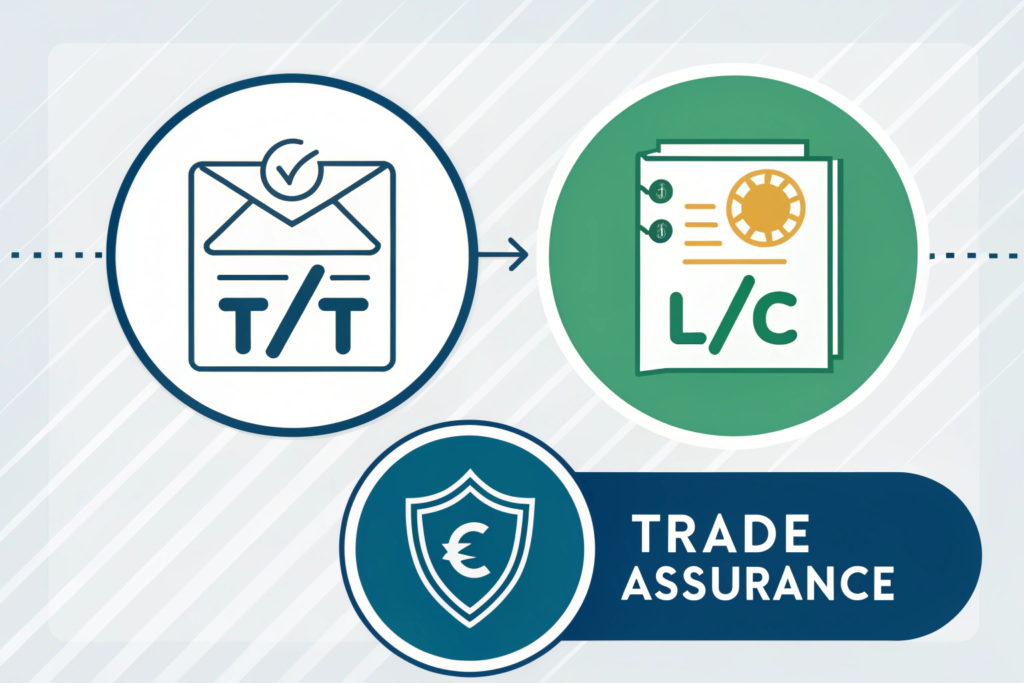
What is a Telegraphic Transfer (T/T)?
A Telegraphic Transfer, or bank wire, is the most common method. But you never send 100% of the money upfront. A secure T/T payment is structured in stages, typically:
- 30-50% Deposit: You send a deposit after signing the sales contract. This allows the supplier to secure the coffee and begin preparing it for export. It shows you are a serious buyer.
- 70-50% Balance Payment: You pay the remaining balance only after the coffee has been loaded onto the vessel and the supplier has sent you copies of the key shipping documents, especially the Bill of Lading (B/L).
This structure protects both parties. The supplier is protected from doing all the work and having the buyer back out. You are protected because you don't pay the final, larger amount until you have proof that your coffee is on its way. This is the method we use for over 90% of our transactions.
What is a Letter of Credit (L/C)?
A Letter of Credit is a more formal and secure, but also more complex and costly, option. Here's how it works: you ask your bank to issue an L/C in favor of the supplier. The L/C is a formal promise from your bank that it will pay the supplier a specific amount of money once the supplier presents a specific set of documents (like the B/L, commercial invoice, packing list, etc.) that perfectly match the terms stipulated in the L/C. The bank acts as a trusted intermediary, guaranteeing payment upon performance. An L/C is a powerful tool for risk management, especially for deals over $100,000 with a brand new supplier. You can learn more about them from your bank or from international trade resources.
How Does a Sales Contract Protect Your Payment?
A payment method is only as secure as the agreement it's based on. Sending a deposit without a signed contract is like building a house with no foundation. If something goes wrong, what can you point to? A series of chat messages? An informal email? This is a recipe for disaster. A verbal agreement or a casual understanding is worth nothing in international trade.
A detailed, legally binding sales contract is the ultimate foundation of your payment security. It is the single source of truth that defines the obligations of both the buyer and the seller. Before you send a single dollar, you must have a signed contract that explicitly states every critical detail of the transaction. This document is your primary protection if a dispute arises.
Every single order that leaves our facility, no matter how big or small, is governed by a formal Sales Contract or Proforma Invoice (PI). It's a non-negotiable part of our process. This protects us, but just as importantly, it protects our clients. It ensures that we both have the exact same understanding of the deal. There is no ambiguity. It lays out the rules of the game before the game begins, which is the only way to ensure a fair outcome.
What must be included in the contract?
Your sales contract should be crystal clear on these points:
- Product Specifications: The exact type of coffee, grade, screen size, processing method, and crop year.
- Price and Quantity: The price per kilogram/pound and the total volume and value of the order.
- Payment Terms: The chosen method (T/T or L/C), the deposit amount, and the precise conditions for the balance payment (e.g., "70% balance against scan copy of original Bill of Lading").
- Shipping Terms (Incoterms): The agreed-upon Incoterm, most commonly FOB (Free On Board) or CIF (Cost, Insurance, and Freight). This defines who is responsible for the goods at each stage of the journey.
- Documentation: A list of all documents the seller must provide (Commercial Invoice, Packing List, Bill of Lading, Certificate of Origin, etc.).
What is a Proforma Invoice (PI)?
A Proforma Invoice is often used in place of a full sales contract for simpler or repeat orders. It's essentially a preliminary bill of sale sent to the buyer in advance of the shipment. It should contain all the same key details as a sales contract. Once the buyer signs and returns the PI and pays the deposit, it becomes a binding agreement.
How to Verify Your Supplier's Bank Account?
This is a critical and often overlooked step. You've done all your due diligence on the company, but what about the bank account they've asked you to pay into? One of the most common types of fraud is "invoice hacking," where a scammer intercepts an email, changes the bank account details on the invoice to their own, and then disappears with your money. You think you've paid your supplier, but the money has gone to a thief.
You must always verify that the beneficiary bank account name is an exact match for the company name on your sales contract. Do not ever send money to a personal account or to a company with a slightly different name. This is the biggest red flag in international trade.
When we issue a Proforma Invoice, the beneficiary name on our bank details is "BeanofCoffee Co., Ltd." (or our official registered name). If a buyer ever received an invoice from us where the bank account was in a personal name like "Cathy Cai" or a different company name like "Yunnan Trading," they should stop immediately and call us to verify. A legitimate company will always transact through its official, registered corporate bank account.
What are the key verification steps?
Before you authorize the wire transfer, perform this simple three-point check:
- Company Name Match: Does the beneficiary name on the bank details exactly match the company name on the sales contract you signed? No variations, no abbreviations.
- Company Location Match: Is the bank located in the same country (and preferably, the same city or province) as the supplier? A Chinese company asking you to pay into a bank account in another country is a major warning sign.
- Verbal Confirmation: For the very first payment to a new supplier, consider getting on a quick video call to have them verbally confirm the bank details. This helps protect against email hacking.
What about third-party payment platforms?
While platforms like Alibaba Trade Assurance can offer a layer of protection by holding the money in escrow, many large, direct manufacturers prefer to work with standard banking methods like T/T (Telegraphic Transfer) and L/C (Letter of Credit) for larger transactions. These methods are the global standard for B2B trade and, when structured correctly within a strong contract, are exceptionally secure. T/T, for instance, involves the buyer's bank transferring funds directly to the seller's bank account, often with options for advance payment (where a percentage is paid upfront to cover production costs) or payment upon sight of documents (where payment is made once shipping documents like bills of lading are presented).
What Is the Role of Documentation in Payment Security?
You've signed the contract and verified the bank account. The final piece of the security puzzle is the documentation. How do you prove the coffee is on its way before you release that large final payment? This is where a specific set of documents becomes your trigger for payment, acting as proof of performance from the supplier. Relying on a simple "we've shipped it" email is not enough.
The balance payment should only be released upon the supplier's presentation of key shipping documents, as stipulated in the sales contract. These documents, especially the Bill of Lading, are not just paperwork; they are legal instruments that prove the goods have been loaded onto the vessel and are in the carrier's possession. This step connects the payment directly to the physical movement of your coffee.
This is the climax of the transaction process. The moment we email a client like Ron the scanned copies of the full set of shipping documents is the moment we have fulfilled our primary obligation. He can see the B/L with the vessel name, the container number, and the "shipped on board" date. He can review the commercial invoice and packing list to ensure they match the contract. This package of documents gives him the confidence to release the final payment, knowing the goods are well on their way.
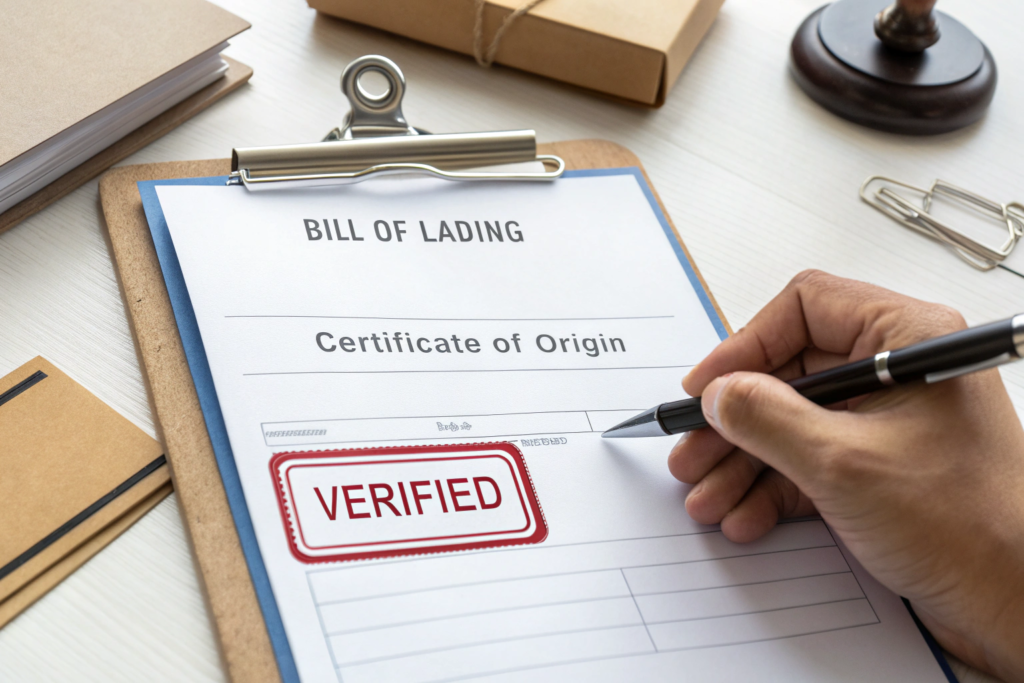
What is the Bill of Lading (B/L)?
The Bill of Lading is the single most important document in ocean freight. It serves three purposes: it's a receipt for the goods, it's evidence of the contract of carriage, and it's a document of title. This means whoever holds the original B/L can claim the cargo at the destination port. This is why you only pay the balance against a copy of the B/L. The supplier will only send you the original B/L (or release it via telex) after they have received your final payment. This gives them security.
What other documents are important?
Besides the B/L, the supplier should provide:
- Commercial Invoice: The official bill for the goods.
- Packing List: Details the contents of the shipment, including weights and bag counts.
- Certificate of Origin: A document that certifies the country where the goods were produced (in our case, China). This is essential for customs clearance and for applying the correct tariff rates.
Conclusion
Ensuring payment security in the international coffee trade isn't about finding a magic button; it's about professional discipline. It's about building a fortress of security through layers of protection. It starts with a rock-solid sales contract that leaves no room for ambiguity. It continues with the use of established, structured payment methods like a staged T/T or a bank-guaranteed L/C. And it's finalized with a meticulous verification of the supplier's corporate bank account before any money is sent.
By following this professional process, you transform a moment of anxiety into a routine, secure business transaction. You protect your capital, build trust with your supplier, and lay the foundation for a long and profitable partnership. True security comes from clarity, verification, and a commitment to professional best practices.
If you are looking for a direct exporting partner who prioritizes financial transparency and security as highly as we do coffee quality, we invite you to start a conversation with us. We believe that trust is the most valuable commodity of all. Please contact our lead for North American accounts, Cathy Cai, at cathy@beanofcoffee.com, to discuss how we can build a secure and prosperous partnership together.