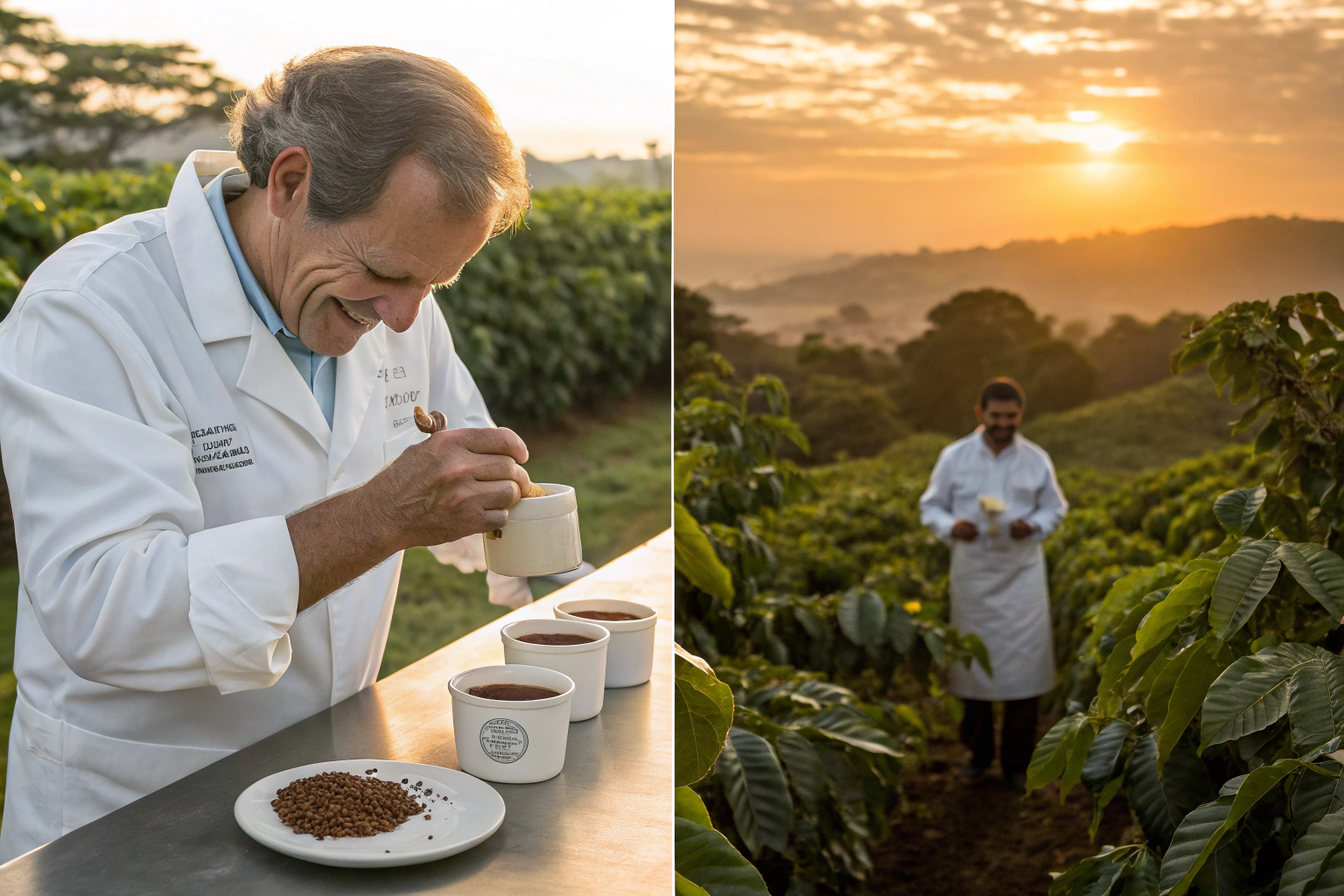
Are you a buyer like Ron, investing in what you believe is high-quality coffee, only to find the final cup is disappointingly flat and lifeless? It's a massive problem. You've spent time and money sourcing beans, but the vibrant, complex flavors you were promised are nowhere to be found. This inconsistency is frustrating and can damage your brand's reputation. You start to question your sourcing process, your roasting technique, and even the beans themselves, wondering where the flavor was lost.
To ensure your coffee is flavorful, you must focus on four critical stages: starting with high-quality green beans from a reputable origin, ensuring proper storage, dialing in a precise roast profile, and using the correct brewing method. Flavor isn't a single ingredient; it's the result of a chain of excellence. A weakness in any one of these links—from the farm to the cup—can compromise the final taste. The most crucial factor, however, is the inherent quality of the green bean itself. You simply cannot create flavor that isn't there to begin with.
As a plantation owner in Yunnan, I live and breathe coffee flavor. It's in the soil of our 10,000 acres, in the mountain air, and in every decision we make. I've seen firsthand how easily flavor can be lost and, more importantly, how it can be preserved and enhanced. In this article, I'll walk you through this "flavor chain," from our farm to your cup, and show you how to protect and unlock the incredible taste potential in every bean.
Why Does Flavor Start at the Farm?
You've probably heard the phrase "quality in, quality out." But what does that really mean for coffee? You might be focused on your roasting machine or your brewing equipment, thinking that's where the magic happens. The problem is, if you're starting with mediocre beans, you're just polishing a dull stone. You can't create notes of jasmine or blueberry if the genetic potential for those flavors doesn't exist in the bean. This is a huge source of frustration for roasters who work tirelessly but can't achieve the flavor profiles they desire.
The foundation of all coffee flavor is built at the farm. The bean's inherent flavor potential is determined by its genetics (the varietal, like Arabica or Robusta), the terroir (the soil, altitude, and climate it's grown in), and the farming practices (how it's cultivated and when it's picked). Think of a green coffee bean as a treasure chest of flavor precursors—acids, sugars, and organic compounds. A high-altitude Arabica bean grown in the rich volcanic soil of our Baoshan plantations, for example, is naturally endowed with the precursors for bright acidity and complex floral notes.
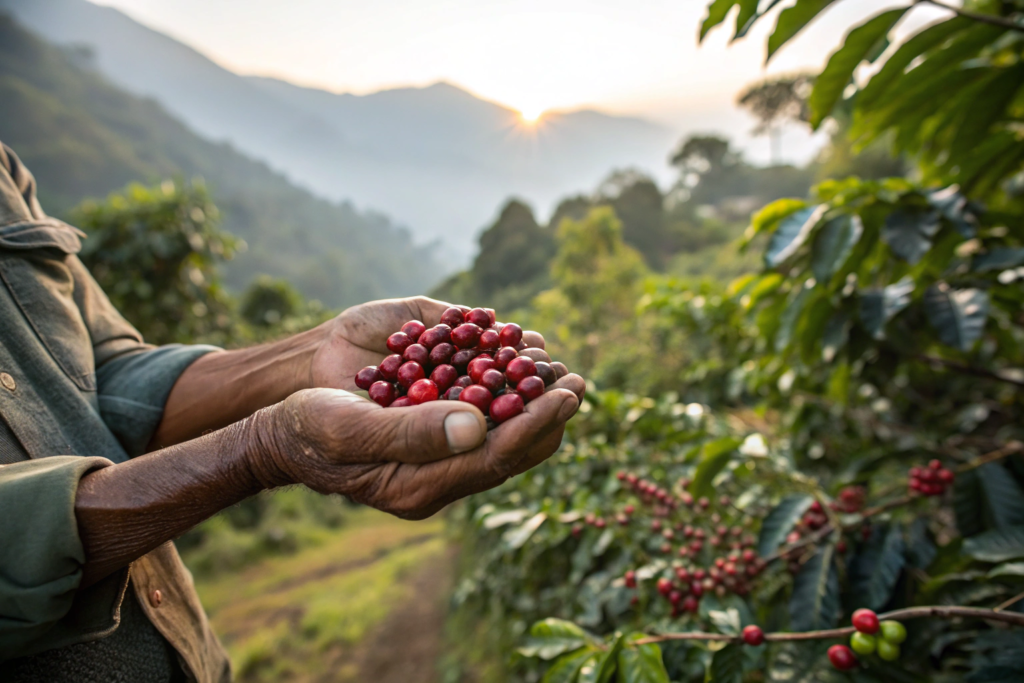
The moment of harvest is also critical. Coffee cherries must be picked at peak ripeness, when their natural sugar content is at its highest. These sugars are vital for developing sweetness and caramel notes during roasting. Under-ripe beans will taste sour and grassy; over-ripe beans can taste fermented or boozy. At my company, Shanghai Fumao, we employ teams of skilled pickers who selectively harvest only the ripest red cherries, ensuring that every bean we process starts with the maximum possible flavor potential. You can't fix a bad harvest in the roaster.
What is "Terroir" and how does it affect flavor?
Terroir is a French term, famously used in the wine world, that refers to how the complete natural environment of a farm impacts the final product. For coffee, this includes factors like soil composition, altitude, rainfall, and sun exposure. For example, higher altitudes generally lead to slower cherry maturation, which results in denser beans with more complex and concentrated sugars and acids. This is why high-altitude coffees are prized for their bright, vibrant flavors. Learning about a coffee's terroir is key to understanding its potential taste profile.
How important is the coffee varietal?
The varietal, or the specific type of coffee plant, is like the grape variety in wine—it defines the fundamental character of the flavor. An Arabica bean, for instance, is known for its aromatic complexity and bright acidity, while a Robusta bean typically has a bolder, stronger, more "classic" coffee flavor with higher caffeine content. Within Arabica, there are thousands of sub-varietals (like Gesha, Bourbon, or our popular Catimor), each with a unique genetic blueprint for flavor. Understanding coffee species and varietals is essential for any serious buyer looking to source specific flavor profiles.
How Do Storage and Roasting Unlock Flavor?
So you've sourced amazing green beans. Your job is done, right? Not even close. You could have the best beans in the world, but if you store them improperly or roast them incorrectly, you can destroy all that potential in a matter of days or minutes. You're worried about your investment. The fear is that your beautiful green beans will fade into woody, flavorless duds in your warehouse, or that one bad roast will turn a potential 90-point coffee into something undrinkable.
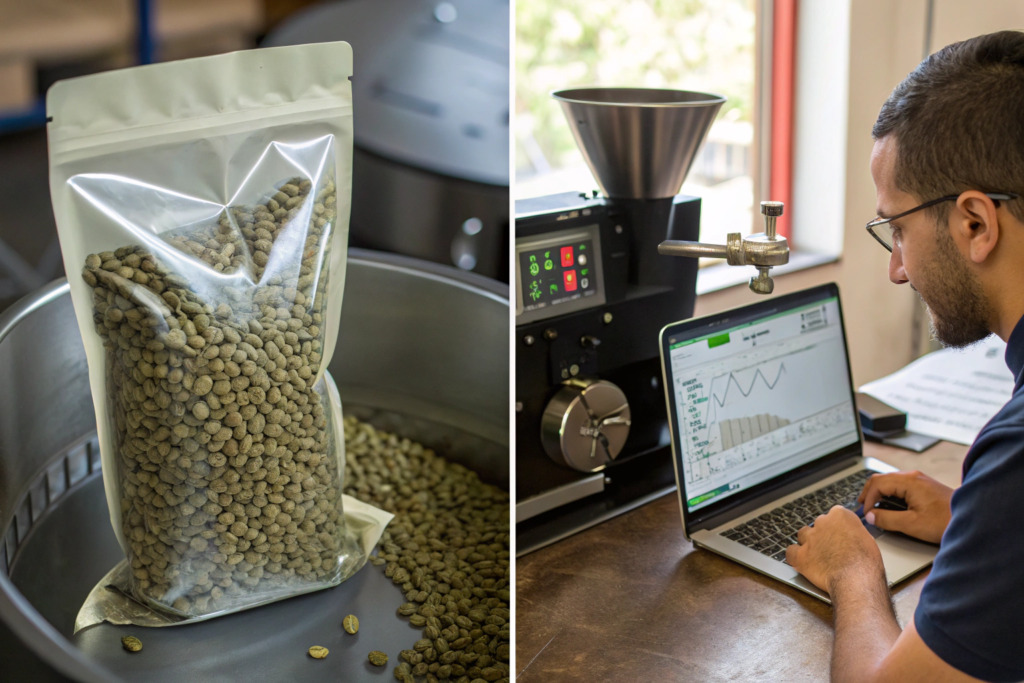
Proper storage is the first step in preserving the flavor you paid for. Green coffee must be stored in a cool, dark, and dry place with stable temperature and humidity, ideally in a hermetic, moisture-proof bag. Green coffee is hygroscopic, meaning it absorbs moisture and odors from the air. Poor storage can lead to faded, papery flavors or even mold. Roasting is the second, more dramatic step; it's where the flavor potential is unlocked and transformed. Roasting is a chemical process where heat develops the hundreds of aromatic compounds that create the final taste and smell of coffee.
The roaster's job is to apply heat in a precise way—the "roast profile"—to bring out the best in the bean. A light roast might highlight the bright, floral, and acidic notes of an Ethiopian Yirgacheffe. A darker roast might develop the deep, chocolaty, and nutty flavors of a Brazilian bean. It's a delicate dance. Roasting too fast can scorch the beans; roasting too slow can bake them, resulting in a flat, bready taste. This is why skilled roasters are part artist, part scientist, meticulously tracking time and temperature to craft the perfect expression of the bean's origin.
What is the ideal moisture content for green coffee?
The ideal moisture content for green coffee beans upon arrival at the roastery is between 10% and 12%. This is the sweet spot for stability and flavor preservation. If the moisture is too high (above 12%), the beans are at risk of developing mold and other defects. If it's too low (below 10%), the beans are considered "dried out" and will have lost much of their aromatic potential, often resulting in a woody or flat taste. Roasters use a moisture meter to verify this crucial metric before accepting a shipment.
What is the "first crack" in roasting?
The "first crack" is a critical benchmark during the roasting process. It's an audible cracking sound, similar to popcorn popping, that occurs when the moisture inside the bean turns to steam and forces the bean to expand and crack open. This moment signals the beginning of the "development phase," where the sugars are caramelizing and the acids are transforming. The amount of time the roaster continues to apply heat after the first crack begins is one of the most important variables in determining the final roast level and flavor profile of the coffee.
Why Is Your Brewing Method the Final Step?
You've done everything right so far. You bought great beans from a transparent supplier like Shanghai Fumao, stored them perfectly, and executed a beautiful roast. You hand the bag to a customer, confident in your work. But then they tell you the coffee tasted weak or bitter. What went wrong? The final, and often overlooked, piece of the puzzle is the brewing. It's the last hurdle where all your hard work can either shine or be completely undone.
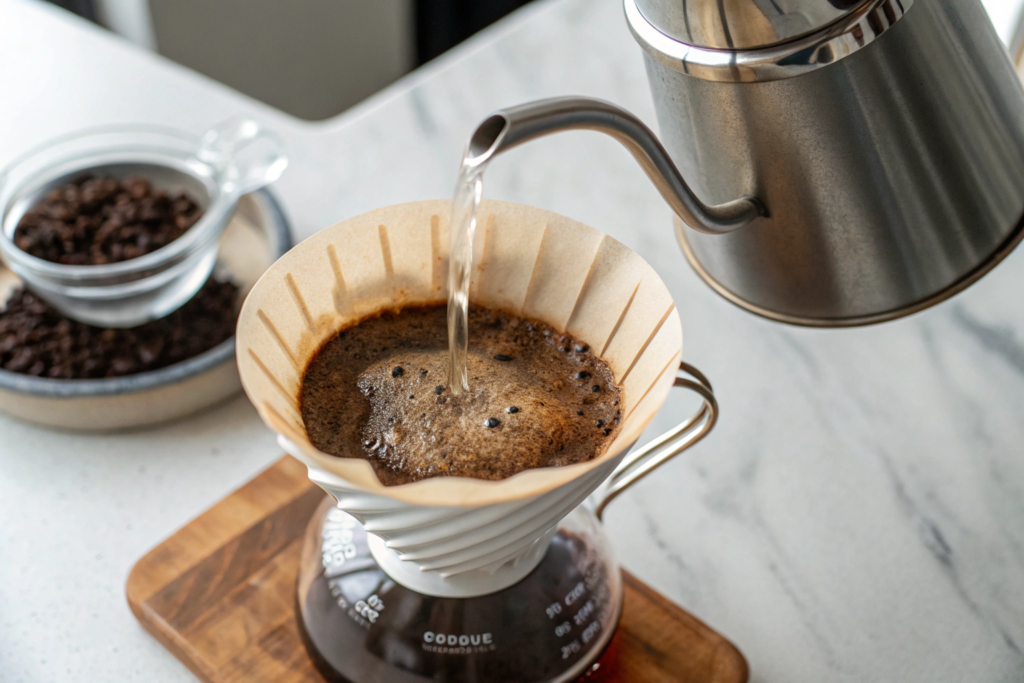
The brewing process is essentially a flavor extraction. You are using water as a solvent to pull the soluble flavor compounds out of the ground coffee. Every variable in this process—water temperature, grind size, brew time, and the ratio of coffee to water—has a direct impact on which compounds are extracted and in what proportion. It's a delicate balance.
For example, if your water is too hot or your grind is too fine, you will over-extract the coffee, pulling out bitter, astringent compounds. The result is a harsh, unpleasant cup. Conversely, if your water isn't hot enough or your grind is too coarse, you will under-extract the coffee, leaving behind many of the desirable sugars and acids. This results in a cup that is sour, weak, and unsatisfying. Mastering your chosen brewing method, whether it's a French press, an espresso machine, or a simple pour-over, is the final act of honoring the bean's long journey.
What is the ideal water temperature for brewing?
For most brewing methods (excluding cold brew), the ideal water temperature is just off the boil, between 195°F and 205°F (90°C to 96°C). This temperature range is hot enough to efficiently extract the desirable flavor compounds but not so hot that it scalds the grounds and extracts excessive bitterness. Using a thermometer or a temperature-controlled kettle is a simple way to dramatically improve the consistency and quality of your brews.
How does grind size affect extraction?
Grind size determines the total surface area of the coffee that is exposed to water, which controls the speed of extraction. A finer grind has more surface area, so extraction happens quickly (ideal for espresso). A coarser grind has less surface area, so it requires a longer contact time with water (ideal for French press or cold brew). Using the wrong grind size for your brewing method is one of the most common causes of a bad cup of coffee. For example, using a fine, espresso-grind in a French press will result in a muddy, over-extracted, and bitter brew.
How Can You Guarantee Flavorful Coffee Every Time?
You've seen how flavor can be lost at every step. It's a complex chain, and you're looking for a way to strengthen every link. You're tired of the guesswork and the inconsistency. The core problem is a lack of control and transparency in the supply chain. You need a way to ensure quality from the very beginning, so you're not trying to fix problems at the end of the line.
The only way to truly guarantee flavorful coffee is to build a relationship with a supplier who gives you a transparency and control over the entire process. This means working with a partner who can provide detailed information about the coffee's origin, varietal, processing method, and harvest date. A trustworthy supplier isn't just a seller; they are a partner in quality. They should be able to provide you with pre-shipment samples from the exact lot you are buying and data on metrics like moisture content.
This is where a vertically integrated model offers a powerful advantage. As a plantation owner who also manages processing and exporting, we offer a direct line of sight from the seed to the shipping container. There are no hidden steps or middlemen where quality can be compromised. When you work with Shanghai Fumao, you are working directly with the source. We can tell you the exact altitude your Catimor beans were grown at and the specific date they were harvested because we were there. This level of traceability isn't just a story; it's your ultimate quality assurance. It’s how you move from hoping for good flavor to expecting it.
What is a "pre-shipment sample"?
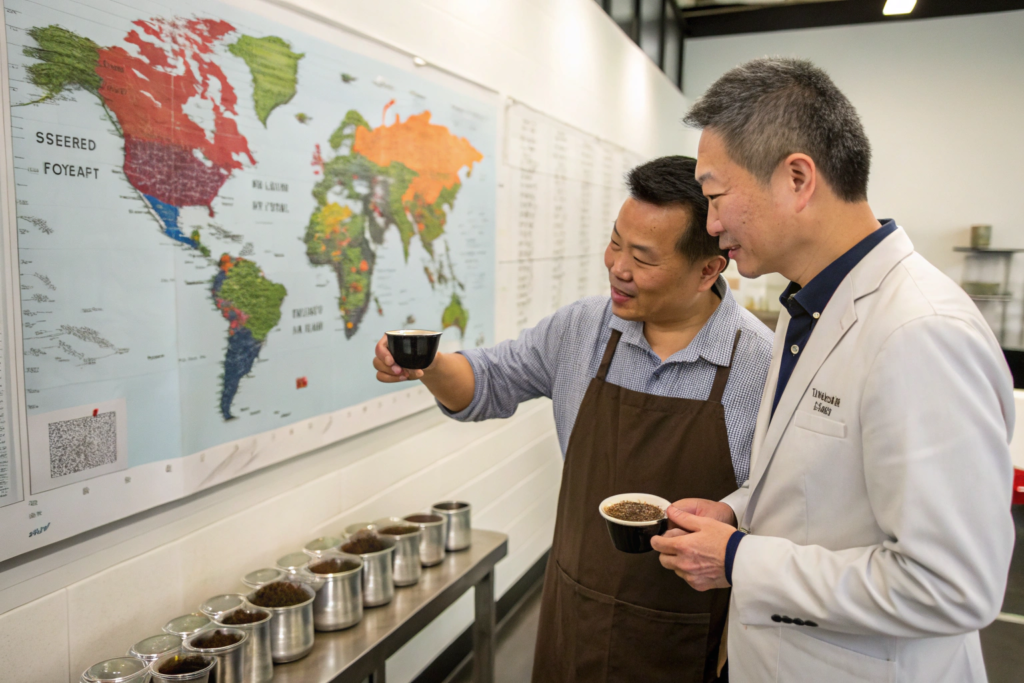
A pre-shipment sample (or PSS) is a sample of green coffee drawn directly from the specific lot of coffee that has been prepared for your order. It is sent to you for approval before the container is shipped. This is a critical quality control step. It ensures that the coffee you cup and approve is the exact same coffee that will arrive at your roastery, eliminating any surprises or disputes about quality upon arrival.
Why is "direct trade" a good model for ensuring flavor?
"Direct trade" refers to a sourcing model where roasters buy coffee directly from farmers or vertically integrated exporters, cutting out the traditional chain of middlemen. This model fosters close relationships and excellent communication. It allows you to get detailed information about the farm and processing, and often to collaborate with the producer to achieve specific flavor profiles. This transparency and partnership, which is central to the direct trade philosophy, is one of the most effective ways to ensure you are consistently sourcing high-quality, flavorful coffee.
Conclusion
Ensuring your coffee is flavorful is not about a single secret trick; it's about respecting the entire journey of the bean. It begins at the farm, with the right genetics and careful cultivation, where the coffee's potential is born. It's preserved through proper storage and then dramatically unlocked through the art and science of roasting. Finally, it is presented and honored through a precise and thoughtful brewing process. Each step is a link in a chain, and the final quality is only as strong as the weakest link.
By understanding and controlling these four key stages, you can move from inconsistency and frustration to confidence and pride in every cup you serve. The most powerful decision you can make is to choose a partner who values this entire chain as much as you do. A transparent, direct relationship with your supplier is the foundation upon which all great coffee is built.
If you are ready to build a supply chain founded on transparency and a direct connection to the source, I invite you to connect with us. At BeanofCoffee, we are not just suppliers; we are the growers. We offer a direct line to our premium Arabica, Catimor, and Robusta beans from our farms in Yunnan. Please reach out to my colleague, Cathy Cai, at cathy@beanofcoffee.com to start a conversation about how we can help you consistently deliver exceptional flavor to your customers.