You buy good beans. You have a decent grinder. You follow a recipe. But the coffee still tastes… okay. Not great. Not satisfying. You know that feeling? The one where you take a sip and think "something is missing." I have been there thousands of times. Even as a coffee farmer and exporter, I mess up my morning brew sometimes. The good news? Satisfaction is not magic. It is a system. Let me teach you the system.
To ensure your coffee is satisfying, you need to control five variables: bean freshness, grind size consistency, water quality, brew ratio, and water temperature. Get these five right, and even a cheap coffee maker will produce a good cup. Get one wrong, and even the best beans from our Yunnan Arabica plantation will taste flat or bitter.
But wait. "Satisfying" is personal. You might like bright, fruity acidity. I might like deep, chocolatey body. So, I will not tell you one perfect recipe. Instead, I will give you a framework. You can adjust it to your taste. Let me walk you through each variable. And I will share the mistakes I see most often.
How Does Bean Freshness Affect Your Satisfaction?
You bought a bag of coffee. It has a "best by" date 18 months from now. That is a lie. Coffee does not stay fresh for 18 months. I have tested this in our own warehouse. After 30 days, the flavor drops. After 90 days, it is a shadow of itself. Let me show you what freshness really means.
Coffee is freshest within 7 to 30 days after roasting. Green beans (unroasted) last 6 to 12 months if stored properly. But roasted beans? They start losing flavor immediately. Oxygen, light, heat, and moisture are the enemies. A fresh bean releases carbon dioxide for about two weeks after roasting. That gas protects the flavors. Once it is gone, the bean goes stale.
Another way to look at this is through the lens of your own taste buds. A stale bean tastes flat, papery, or like cardboard. You might add sugar or milk to hide it. But you are not satisfied. So, how do you ensure freshness? Let me give you three rules.
How to read roast dates correctly?
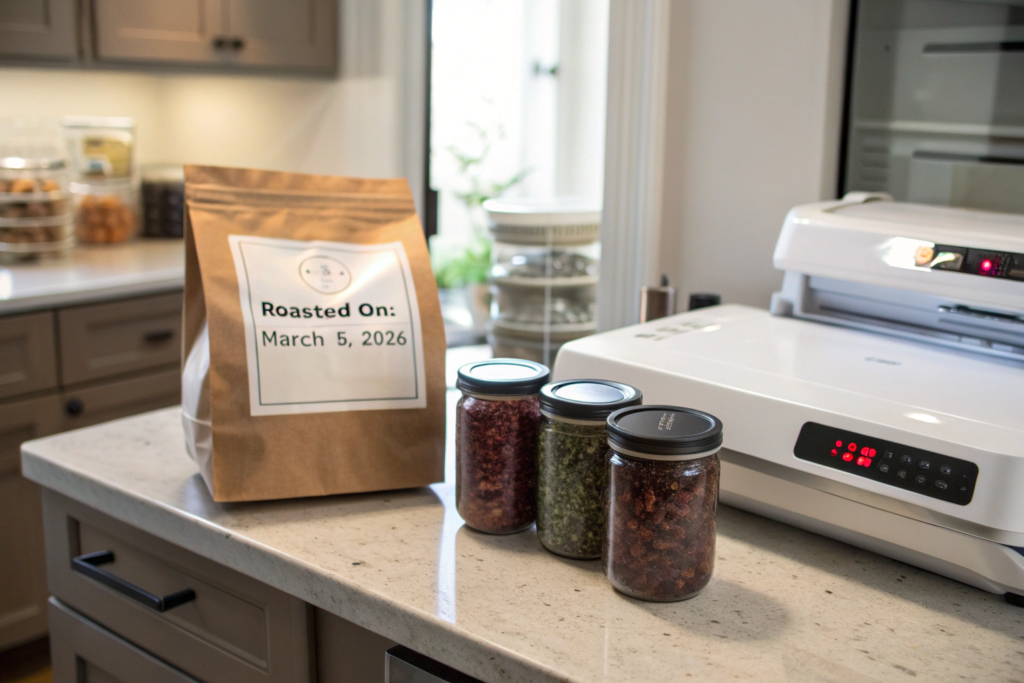
Ignore "best by" dates. They are for supermarkets, not for coffee lovers. Look for "roasted on" dates. A good roaster prints the exact date. If the bag only has a "best by" date, do the math. Most roasters put "best by" 12 months after roasting. So, if "best by" is December 2026, the roast date was around December 2025. That is old. Do not buy it. Here is a real example. Last month, a friend gave me a bag of "premium" coffee from a big brand. The "best by" date was 14 months away. I called the brand. They admitted the roast date was 10 months ago. The coffee tasted like nothing. I threw it away. So, only buy from roasters who put the roast date on the bag. And try to use the beans within 30 days of that date. For green beans, we store them in grain-pro bags with one-way valves. This keeps them fresh for up to 12 months.
Can you freeze coffee to keep it fresh?
Yes, but only if you do it correctly. Freezing stops the staling process. But here is the catch. Moisture is the enemy. If you put a bag of beans in the freezer and take it out every morning, condensation forms on the beans. That moisture ruins the flavor. So, here is the right method. Divide your coffee into portions. Use small, airtight jars or vacuum-sealed bags. Each portion should be one week's worth. Put them in the freezer. Take out one portion at a time. Let it come to room temperature before opening. Do not refreeze. I use this method for my personal coffee. I buy 5 kg of fresh roasted beans. I freeze them in 500g portions. The last portion, three months later, tastes almost as good as the first. A coffee storage guide from the NCA confirms this method works. Try it.
What Grind Size Consistency Gives You the Best Flavor?
You buy fresh beans. Good. Then you grind them with a cheap blade grinder. Bad. The grind is uneven. Some pieces are powder. Some are chunks. The powder over-extracts (bitter). The chunks under-extract (sour). The result? A confused, unsatisfying cup. I made this mistake for two years. Let me save you the time.
Consistent grind size is more important than the grinder's price. A $50 hand burr grinder produces more consistent grounds than a $200 blade grinder. Why? Because burr grinders crush the beans between two metal wheels. Blade grinders chop randomly. For a satisfying cup, your grounds should look like uniform particles, not dust mixed with boulders.
So, what does this mean for your morning routine? It means you need to look at your grounds before you brew. Do not just assume the grinder is working. Let me show you how to check and fix common grind problems.
How to check your grind consistency without tools?
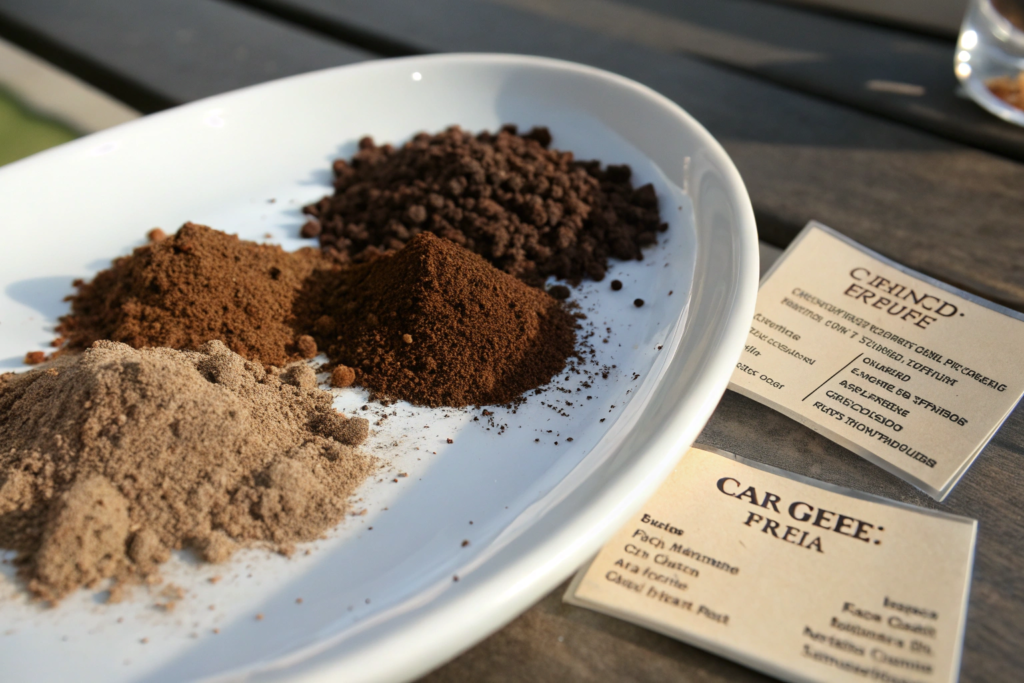
This is easy. Take a small amount of ground coffee. Spread it on a white plate. Look at it. Do you see mostly similar-sized pieces? Good. Do you see a mix of fine powder and large chunks? Bad. Now, feel it. Rub a pinch between your fingers. Does it feel like sand? Good. Does it feel like flour mixed with gravel? Bad. Here is a real test I do with new buyers. I send them a sample of properly ground coffee and ask them to compare with their own grind. Nine out of ten times, their grind is uneven. They switch to a burr grinder. Then they tell me, "Wow, I was drinking bad coffee for years and did not know it." So, trust your eyes and fingers. If the grind looks uneven, fix it.
What grind size works for your brewing method?
Different methods need different sizes. Here is a simple table.
| Brewing Method | Grind Size | Looks Like |
|---|---|---|
| Espresso | Fine | Table salt |
| Aeropress | Medium-fine | Sand |
| Pour-over (V60) | Medium | Beach sand |
| Drip machine | Medium-coarse | Coarse sand |
| French press | Coarse | Sea salt |
| Cold brew | Extra coarse | Breadcrumbs |
If you use the wrong size, you will not be satisfied. For example, a French press with fine grounds gives you a muddy, bitter cup. An espresso with coarse grounds gives you a sour, weak shot. So, match the size to the method. And keep your grinder clean. Old coffee dust inside the grinder goes rancid. That rancid taste transfers to your fresh beans. Clean your burr grinder every two weeks with a grinder cleaning tablet or dry rice. I learned this from a barista champion. He said, "A dirty grinder is the fastest way to ruin good coffee."
Why Does Water Quality Ruin Your Coffee?
You buy expensive beans. You use a great grinder. You follow a perfect recipe. But your coffee still tastes… off. Flat. Metallic. Or just weird. The problem is probably your water. I ignored water for years. Then I tested the same beans with tap water, filtered water, and bottled water. The difference was shocking. Let me show you.
Water makes up 98% to 99% of your coffee. Bad water = bad coffee. The ideal water for coffee has a neutral pH (7.0), moderate hardness (50-150 ppm calcium carbonate), and no chlorine or off-tastes. Tap water often has chlorine (smells like a pool), too much mineral (scales your kettle), or a metallic taste from old pipes. Filtered or bottled spring water is best.
Another way to look at this is through the lens of extraction. Water is a solvent. It pulls flavors out of the coffee grounds. If your water has no minerals (distilled water), it over-extracts and tastes sharp. If your water has too many minerals (hard tap water), it under-extracts and tastes flat. You want the middle ground. Let me give you practical solutions.
What type of water should you use at home?
Here is my ranking from best to worst. Best: Third-wave water (mineral packets added to distilled water). This is what competition baristas use. Second best: Bottled spring water (check the label for TDS between 50-150 ppm). Third: Brita or similar filtered water (removes chlorine but not all minerals). Fourth: Tap water (only if your local water tastes good). Worst: Distilled or reverse osmosis water (no minerals = bad extraction). I use bottled spring water at home. It costs about $1 per gallon. That adds $0.10 to each cup of coffee. For a $5 bag of beans, that is worth it. One of our commercial coffee buyers in Chicago tested his cafe's water. He found high chlorine. He installed a commercial filter. His customer satisfaction scores went up 15% in one month. Water matters.
How to test and fix your tap water?
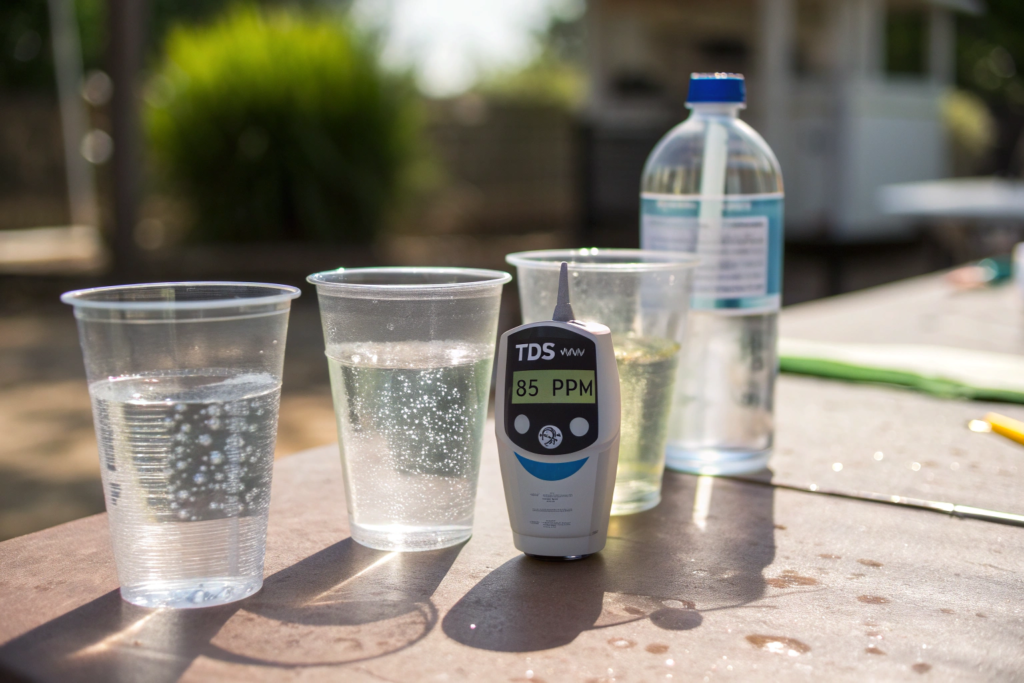
You do not need a lab. Buy a simple TDS meter online for $15. It measures total dissolved solids. Dip it in your water. If the reading is between 50 and 150 ppm, your water is good. If it is below 50 ppm, add a mineral packet. If it is above 200 ppm, dilute with distilled water or use a filter. Also, taste your water plain. Does it taste good? If your tap water tastes bad plain, it will taste bad in coffee. Do not assume boiling fixes it. Boiling concentrates minerals. It makes hard water harder. So, use a filter. A basic activated carbon filter removes chlorine and bad tastes. A reverse osmosis system removes too much, so you need to re-add minerals. I have a simple carbon filter on my kitchen faucet. It cost $30. It lasts six months. It fixed my coffee completely.
What Brew Ratio and Temperature Give You the Perfect Balance?
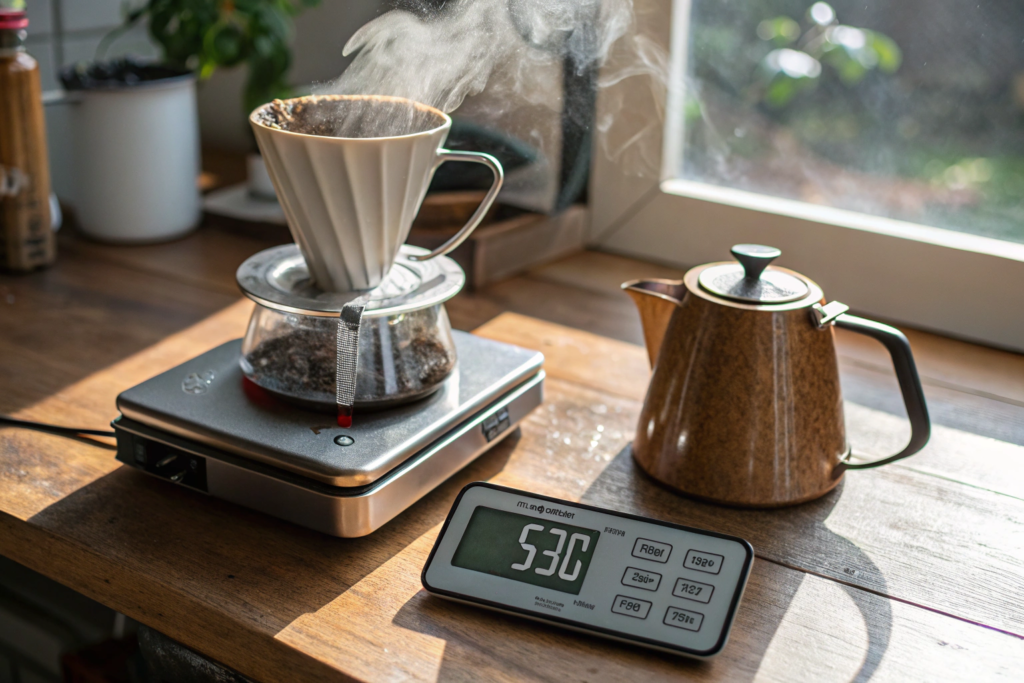
You have fresh beans. Consistent grind. Good water. But your coffee is still too strong or too weak. The problem is your brew ratio. That means the amount of coffee to water. Most people guess. I used to guess too. Then I bought a $10 scale. Everything changed. Let me give you the exact numbers.
The golden brew ratio is 1:16 to 1:18. That means 1 gram of coffee for every 16 to 18 grams of water. For a standard 250ml cup (about 8 oz), use 15 grams of coffee. For water temperature, aim for 90°C to 96°C (195°F to 205°F). Lighter roasts need hotter water (96°C). Darker roasts need cooler water (90°C). Too hot = bitter. Too cold = sour.
So, what does this mean for your morning coffee? It means you need to measure, not guess. A "scoop" is not accurate. Different beans have different densities. A scoop of light roast weighs less than a scoop of dark roast. Let me give you a simple system.
How to find your personal perfect ratio?
Start with 1:17. That is the middle. Use 15g coffee to 255g water. Taste it. Is it too strong (hits your throat, bitter)? Use less coffee. Try 14g coffee to 255g water (1:18). Is it too weak (watery, sour)? Use more coffee. Try 16g coffee to 255g water (1:16). Adjust until you like it. Write down your number. I like 1:16 for my morning coffee because I want a strong start. I use 1:18 for afternoon coffee because I want something lighter. Here is a real trick. Use the same cup every day. Mark the water level on the cup. Then you do not need a scale every time. After a week, you will learn the right coffee dose by look. But start with a scale. A digital coffee scale costs $15. It is the best coffee tool you can buy.
What water temperature works for your specific roast?
Here is a simple rule. Light roast = hotter water (96°C / 205°F). Medium roast = 93°C (200°F). Dark roast = 90°C (195°F). Why? Because light roasts are denser. They need more energy to extract the flavors. Dark roasts are more brittle. Hot water pulls out bitter compounds too fast. So, use cooler water for dark roasts. Do you have a thermometer? If not, boil the water and wait. For light roast, pour immediately after boiling (about 96°C). For medium, wait 30 seconds. For dark, wait 60 seconds. I use a simple kitchen thermometer for my pour-over. It takes 5 seconds. It stopped my bitter brews completely. One more tip: preheat your mug or server. Cold ceramic steals heat from your coffee. Swirl hot water in the mug first, then pour it out. This keeps your coffee at the right temperature for longer. You will taste more flavors.
Conclusion
Let me pull this all together. Satisfying coffee is not luck. It is a system of five controls. Fresh beans (within 30 days of roast). Consistent grind (use a burr grinder). Good water (filtered or spring, 50-150 ppm). Correct ratio (1:16 to 1:18). Right temperature (90-96°C based on roast).
You do not need all of them perfect on day one. Pick one variable each week. Fix it. Taste the difference. By the end of a month, your coffee will transform. You will stop adding sugar and milk. You will just enjoy the cup.
At Shanghai Fumao , we apply these same principles to our export business. We control freshness with proper storage. We test grind consistency for our samples. We monitor water quality in our cupping lab. And we work with Shanghai Fumao to ship our beans quickly so they arrive fresh. Because a satisfied customer is a returning customer.
Are you a coffee lover looking for truly fresh beans? Or a business buyer who wants consistent quality? Either way, we can help. Contact our export manager, Cathy Cai, at cathy@beanofcoffee.com. Tell her your roast preference and your brewing method. She will recommend the best beans for your setup. Let's make your morning cup satisfying. Every single day.