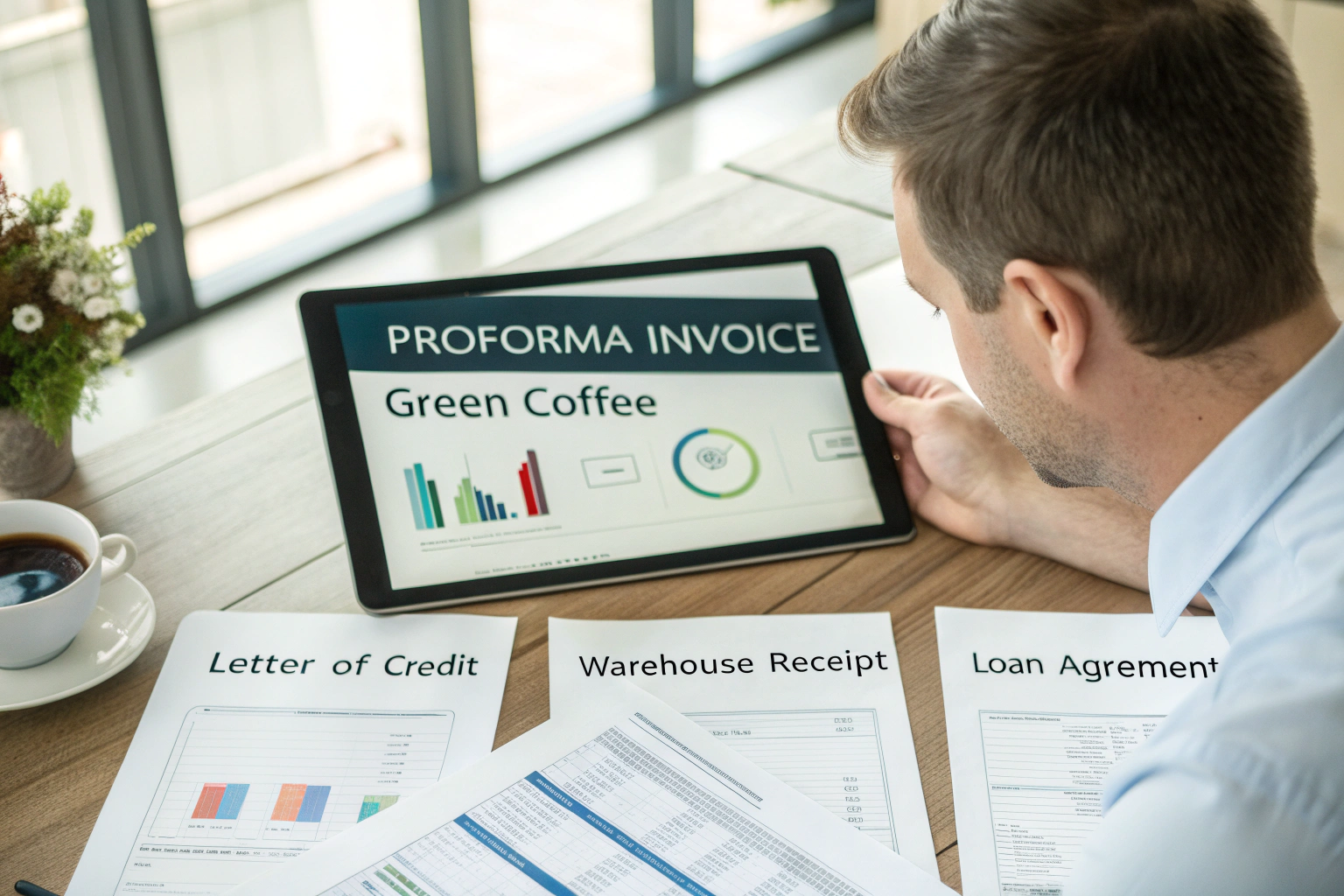
You've found the perfect lot: 20 tons of premium Yunnan Arabica from Bean of Coffee, cupping at 85 points. The price is right, and the quality is exactly what your brand needs. But the invoice total gives you pause. Tying up hundreds of thousands of dollars—or more—for months, from purchase through shipping, roasting, and finally, sales, is a monumental strain on cash flow. This single transaction could paralyze your operations. For a business owner like Ron, or any CEO looking to scale, this cash flow crunch is the silent killer of good deals and growth.
So, how can you finance a large bulk coffee purchase? The key is to move beyond your own balance sheet and leverage specialized financial instruments and partnerships designed for global commodity trade. The right financing structure turns a capital-intensive purchase into a manageable, strategic investment. As a supplier, we at Bean of Coffee have helped countless clients navigate this, because a successful sale depends on our buyer's ability to pay—it's in our mutual interest to find a workable solution.
Let's explore the most common and effective methods, from traditional trade finance to modern supply chain solutions, that can unlock your next major order.
What is traditional trade finance and how does it work?
This is the bedrock of international commodity trading. Trade finance doesn't just provide money; it mitigates risk for both the buyer and the seller. It's built on trust in documents, not just trust between companies. For a large purchase, it's often the first and safest port of call.
The core idea is that a bank or financial institution steps in to bridge the payment gap. They pay your supplier upfront (or guarantee payment), and you repay the bank later, often after you've received and sold the goods. This addresses the fundamental pain point: your cash doesn't need to leave your account until much closer to when the coffee generates revenue.
How does a Letter of Credit (L/C) secure a transaction?
A Letter of Credit is the gold standard for security in unknown trading relationships. Think of it as a conditional promise from your bank to our bank.
Here’s the typical flow for a coffee purchase:
- You (the buyer) apply to your bank for an L/C in favor of Bean of Coffee.
- Your bank issues the L/C, stating: "We will pay Bean of Coffee $X, provided they present proof that they shipped the coffee exactly as per the sales contract." This proof includes bills of lading, inspection certificates, and insurance documents.
- We ship the coffee and present these documents to our bank.
- If the documents comply, your bank pays us.
- You then repay your bank, usually on agreed credit terms (e.g., 90 days after the bill of lading date).
The L/C protects you because payment is only released upon proof of shipment. It protects us because the payment guarantee comes from a bank, not a company. It’s a perfect tool for large, first-time orders. The International Chamber of Commerce governs the standard rules (UCP 600) for L/Cs, making them globally recognized.
What are the benefits of Open Account terms with credit insurance?
Open Account is simpler: we ship the coffee, send you an invoice, and you pay later (e.g., 30, 60, or 90 days). It's common in established, trusting relationships. But how do you finance that 90-day period?
This is where Trade Credit Insurance or Accounts Receivable Financing comes in.
- Credit Insurance: You (or we) can insure the receivable. If you fail to pay, the insurer covers most of the loss. This gives us the confidence to offer you open terms.
- Receivables Financing (Factoring): After we ship and invoice you, we can sell that invoice to a financier (a factor) at a small discount for immediate cash. This gets us paid fast and gives you the extended payment term. Alternatively, you can use Supply Chain Finance: your bank pays us early at a discount, and you settle the full amount with the bank later. This optimizes working capital for both parties.
How can inventory and warehouse financing help?
Your financing needs don't end when the coffee arrives. In fact, that's when a new need begins: you now have a huge amount of capital sitting in your warehouse as green beans. This is called "inventory financing" or "asset-based lending."
The coffee itself becomes the collateral for a loan. This is powerful because it unlocks the value tied up in your stock, allowing you to fund roasting, packaging, and marketing while the beans are still in storage.
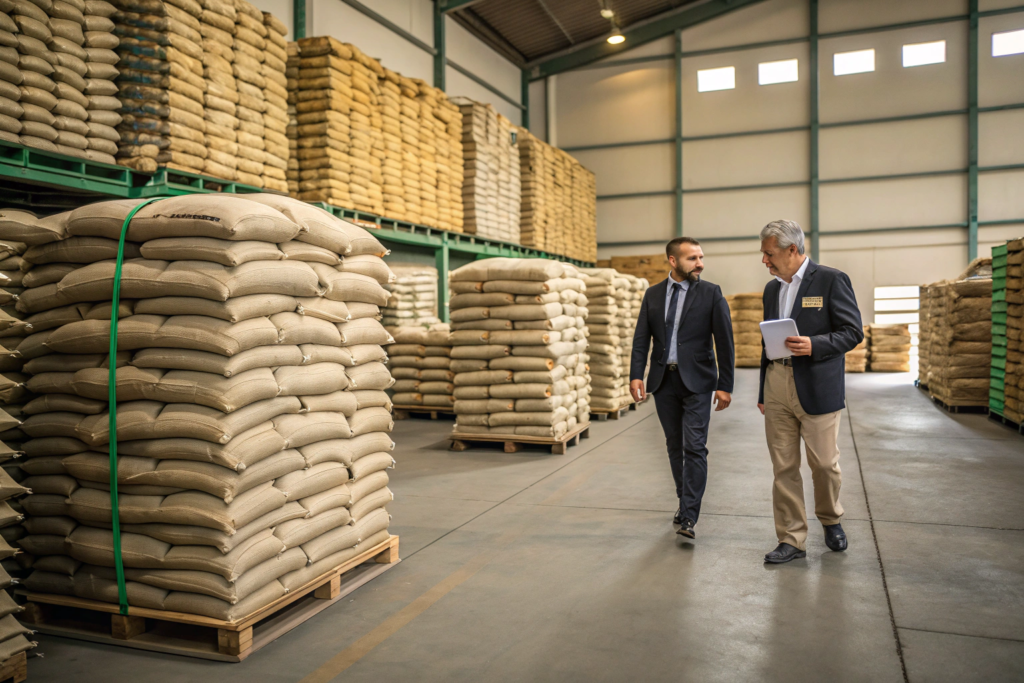
What is a Warehouse Receipt Loan?
This is a classic commodity financing tool. You store your coffee in an approved, bonded warehouse. The warehouse operator issues a negotiable Warehouse Receipt, a document of title proving ownership and the quality/quantity of the stored goods.
You then pledge this receipt as collateral to a bank. The bank loans you a percentage of the coffee's market value (e.g., 70-80%). You can use this cash for operations. The bank holds the receipt, controlling the coffee. Once you repay the loan, you get the receipt back and can access your beans. This is ideal if you need to hold inventory for aging or seasonal blending. The system's integrity relies on trusted, independent warehouses.
Can you use Purchase Order (PO) Financing?
PO Financing is for the next stage: when you have a confirmed customer order but lack the funds to roast and deliver. It's less about buying the raw green beans and more about fulfilling the final sale.
Here's how it might work:
- You get a large PO from a supermarket chain for roasted coffee.
- A PO financing company pays your roaster (or you) to produce the order.
- The finished goods are delivered to your customer.
- The customer pays the financing company, who then takes their fee and remits the profit to you.
PO financing is specific and can be expensive, but it's a solution when you have demand but lack the working capital to fulfill it. It turns a firm sales contract into an immediate financing tool.
What are newer, flexible financing options?
The financial world is evolving. Beyond traditional banks, alternative lenders and technology-driven platforms are offering more flexible solutions, especially for smaller or growing businesses that might not have the long credit history a big bank requires.
These options often focus on speed and flexibility over the lower costs of traditional finance. They can be perfect for bridging a gap or financing a specific, time-sensitive opportunity.
Is crowd-funding or peer-to-peer lending viable for coffee?
For a truly unique, story-driven lot, crowdfunding can be a creative option. This is more common for roasters than importers. You pre-sell a special coffee to consumers or raise capital from enthusiasts who believe in your venture. It's not for routine bulk purchases, but for limited editions, it can provide upfront capital and market validation simultaneously.
Peer-to-Peer (P2P) Lending platforms connect businesses seeking loans directly with investors. The terms are often based on your business's performance metrics and can be quicker to secure than a bank loan. The rates may be higher, but the process is more streamlined. This can be a viable option for established SMEs looking to finance a growth purchase.
How do seller financing or joint ventures work?
Sometimes the solution comes from within the trade itself.
- Seller Financing (Supplier Credit): In some cases, a confident supplier like Bean of Coffee might agree to extended payment terms without a bank intermediary. This is based on deep trust and a strong relationship. We might structure a down payment with the balance due after you receive and sell a portion of the shipment. This aligns our success directly with yours.
- Joint Ventures or Pre-Payment Agreements: For an extremely desirable lot, a group of smaller roasters might form a buying club to purchase a full container together, sharing the cost and the risk. Alternatively, a roaster might provide a pre-payment to a trusted supplier to secure a specific microlot, effectively financing the supplier's operations in exchange for exclusivity or a price advantage.
How to choose the right financing method?
With all these options, the decision comes down to your specific situation: the size of the order, your relationship with the supplier, your creditworthiness, and the stage of your business.
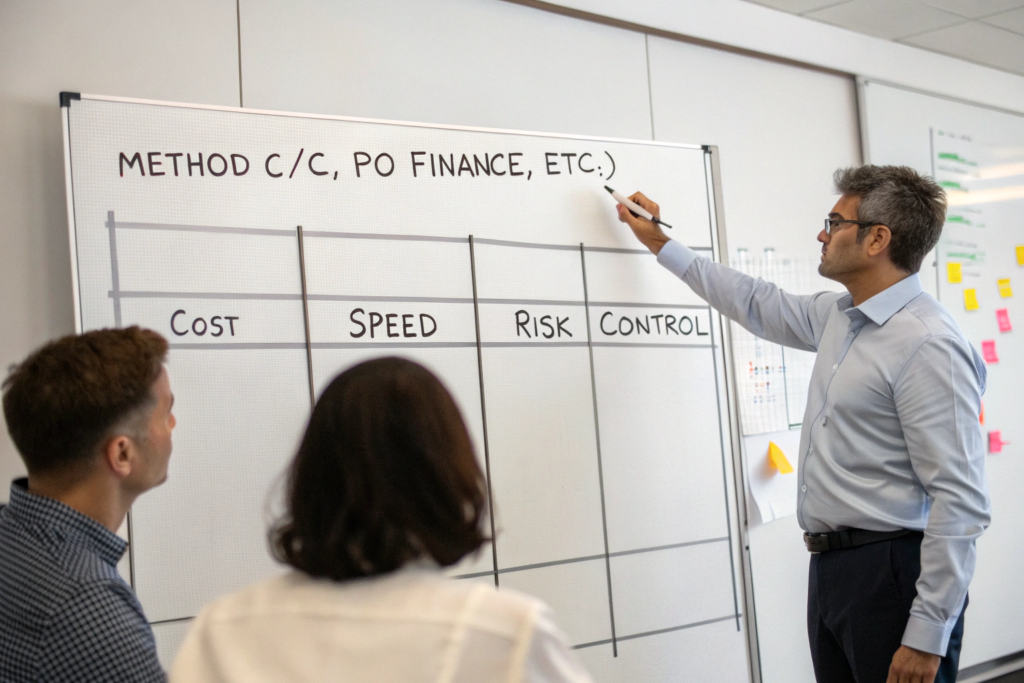
A simple decision framework might look at cost, speed, and control. A Letter of Credit is secure but slower and involves bank fees. Open Account with credit insurance is faster and cheaper but requires trust. Inventory financing unlocks cash after you have the beans.
What questions should you ask your supplier and bank?
Be proactive. Start the conversation early.
- Ask Your Supplier (Us!): "What payment terms are typically available for an order of this size?" "Can you work with a Letter of Credit?" "Do you have experience with supply chain finance programs?"
- Ask Your Bank or Lender: "What trade finance facilities do you offer?" "What are the fees and interest rates for an L/C or inventory loan?" "What documentation do you need from me and my supplier?"
A good supplier will be a partner in this process. We can provide the necessary documents (company registration, proforma invoice, certificates) quickly and accurately to smooth the bank's process.
How can you prepare your business to qualify?
Lenders look for stability and transparency.
- Solid Financials: Clear, audited financial statements.
- Good Credit History: A track record of repaying debts.
- Sales Contracts or Forecasts: Evidence that you can sell the coffee.
- Experience: A history of successfully managing inventory.
Building a relationship with a trade finance bank before you need the money is the best strategy.
Conclusion
Financing a large bulk coffee purchase is not a barrier; it's a strategic function of a growing coffee business. By understanding and utilizing tools like Letters of Credit, trade credit insurance, and warehouse financing, you can transform a capital-intensive inventory purchase into a leveraged growth opportunity. The goal is to align the timing of your payments with the generation of revenue from the coffee, preserving your vital cash flow.
The right financing partner—whether a traditional bank, an alternative lender, or even your supplier—can be the key that unlocks scale and security.
Don't let financing be the reason you miss out on a perfect lot. If you've identified a coffee from our Bean of Coffee portfolio that fits your needs but the scale gives you pause, let's talk. We can discuss the transaction structure and connect you with financial resources. Contact our export manager, Cathy Cai, at cathy@beanofcoffee.com to start a conversation about your next large purchase. Let's find a way to make the numbers work, together.