You're a coffee roaster or a cafe owner, and you're looking at your invoices with a growing sense of dread. The price of the high-quality Arabica beans that form the backbone of your business keeps climbing. You're like my client, Ron; you're caught between a rock and a hard place. You need to manage your costs to stay profitable, but you're terrified that switching to a "cheaper" bean will mean sacrificing the quality and flavor your customers have come to expect. You're asking, "How can I find an alternative without ruining my coffee?"
Let's reframe the question. The goal isn't to find a "cheap" replacement for Arabica, but to find smart, cost-effective, high-quality alternatives that can either supplement or strategically replace it in certain applications. The best alternatives today are not what they were a decade ago. The two most powerful options on the table are "Fine Robusta" and high-quality, specialty-processed hybrid varietals like Catimor.
As a producer who cultivates all three of these options—premium Arabica, Fine Robusta, and high-performing Catimor—on our 10,000-acre estate in Yunnan, we have a unique perspective. We see these not as competitors, but as a portfolio of solutions. In this article, I will guide you through the new world of Arabica alternatives, showing you how to intelligently lower your costs while maintaining quality.
What is "Fine Robusta" and Why is it a Game-Changer?
For years, Robusta has had a bad reputation in the specialty coffee world, often dismissed as cheap, bitter, and rubbery. You're probably skeptical, and rightly so based on past experiences. But a revolution has been quietly taking place, leading to the emergence of "Fine Robusta."
Fine Robusta is Robusta coffee that has been cultivated and processed with the same meticulous care as specialty Arabica. This means selective harvesting of only ripe cherries, precise fermentation, and careful drying. The result is a coffee that minimizes the harsh, rubbery notes of traditional Robusta and instead highlights its positive attributes: a full body, low acidity, and deep flavors of dark chocolate and nuts. It's a completely different beast from the commodity-grade Robusta used in instant coffee. The main differences between Arabica and Robusta still exist, but the quality gap has narrowed dramatically.
For a roaster, Fine Robusta is an incredible strategic tool. By blending just 10-20% of a clean Fine Robusta into your espresso blend, you can significantly lower the average cost of the blend while simultaneously improving certain attributes, like a thicker, more stable crema and a bolder, more powerful taste that punches through milk.
How Does it Lower Costs?
Robusta is a hardier, higher-yielding plant that can be grown in a wider range of conditions, making its base production cost significantly lower than the delicate, high-altitude Arabica. This cost saving is passed on to the buyer. By substituting a portion of your expensive Arabica with a high-quality but less expensive Fine Robusta, you directly reduce your cost of goods.
Where Can You Find Fine Robusta?
Producers in countries like Vietnam, India, and here in China are leading the charge. At Shanghai Fumao, we have dedicated blocks of our farm to producing Fine Robusta, using specialty processing techniques to ensure a clean and consistent cup profile, perfect for modern espresso blends. You can learn more about the standards from organizations like the Coffee Quality Institute (CQI), which has a formal Fine Robusta training and grading program.
How Do Hybrid Varietals Like Catimor Offer a "Best of Both Worlds" Solution?
What if you could have a coffee with some of the desirable flavors of Arabica but the hardiness and affordability of Robusta? That's the promise of hybrid varietals, and the most successful and widely planted of these is Catimor.
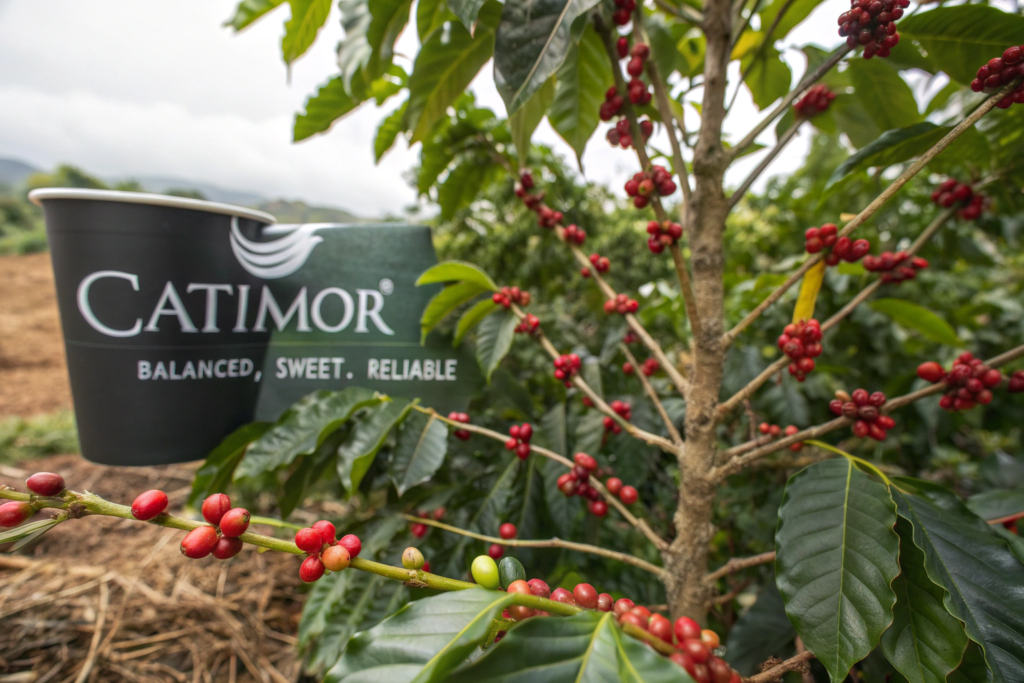
Catimor is a cross between Timor Hybrid (which itself is a natural cross of Arabica and Robusta) and Caturra (a compact Arabica varietal). The result is a plant that possesses the disease resistance and high productivity of Robusta while retaining a significant portion of the flavor profile of Arabica. We've written before about the advantages of Catimor's disease resistance, which directly translates to lower risk and more stable pricing for farmers and buyers.
While it may not have the delicate floral notes of a high-altitude Gesha, a well-grown and meticulously processed Catimor can produce a wonderfully balanced, sweet, and full-bodied cup with notes of cherry, chocolate, and a gentle acidity. It makes for an excellent, reliable, and cost-effective single-origin offering or a fantastic base for a blend.
Is Catimor Considered Specialty Coffee?
Yes, absolutely. While some purists in the past looked down on hybrids, the modern specialty industry recognizes that quality is determined in the cup. A clean, sweet, and complex Catimor that scores 84 points on the SCA scale is, by definition, a specialty coffee. It's a workhorse bean that delivers consistent quality at a more accessible price point.
How Should You Use Catimor?
Catimor is incredibly versatile. It's a fantastic choice for a house blend or a daily-drinker single-origin offering where consistency and value are key. Its balanced profile also makes it a great foundation for a flavored coffee program or, as we've found, an excellent bean for creating a smooth, low-acid cold brew.
What Other Origins and Varietals Offer Great Value?
Beyond specific species and varietals, certain coffee-growing regions are known for producing excellent coffee that offers great value for money. You're looking for the "sweet spot" of quality and price, and that often means looking beyond the most famous (and most expensive) origins.
While countries like Panama and Kenya are famous for their top-tier, high-priced auction lots, other countries are the workhorses of the specialty industry, producing vast quantities of consistently good, accessible coffee.
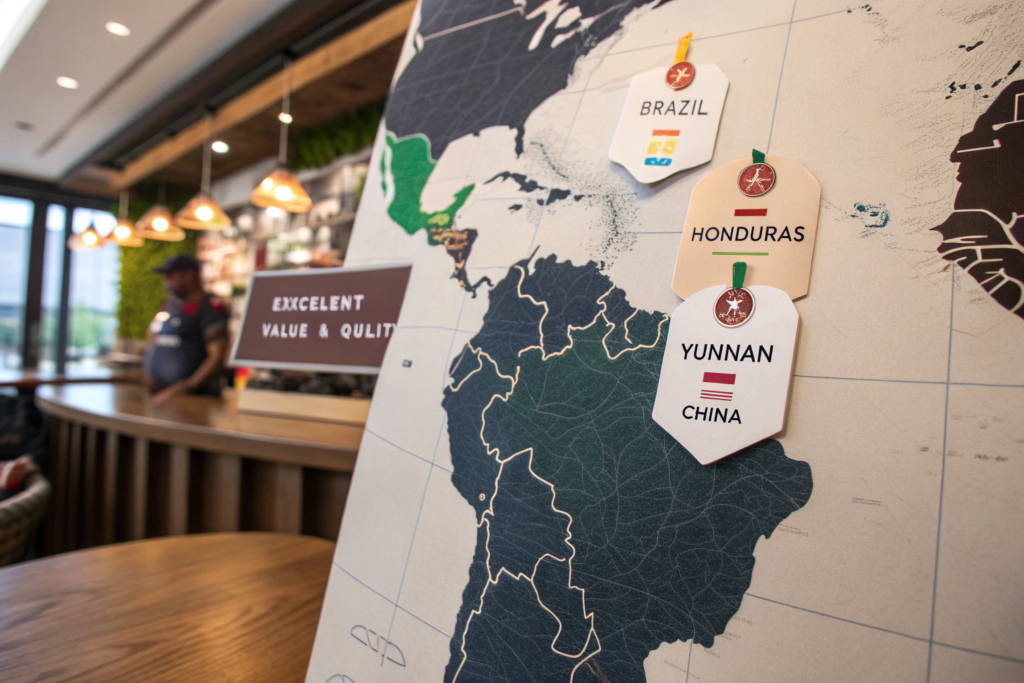
- Brazil: The world's largest coffee producer is a master of efficiency. They produce enormous volumes of coffee with classic notes of chocolate, nuts, and a heavy body. While they also have exceptional micro-lots, their strength is in reliable, cost-effective beans that are perfect for espresso blends.
- Honduras: In recent years, Honduras has emerged as a powerhouse for quality and value. It offers a wide range of profiles, often with sweet notes of caramel and milk chocolate, at prices that are very competitive compared to its Central American neighbors.
- Yunnan, China: As a producer here, I can speak to this directly. Our region is rapidly gaining a reputation as a source for high-quality, traceable coffee at an excellent price point. Because we are a newer origin, our prices have not yet reached the highs of more established regions, offering an incredible opportunity for savvy buyers to get in early. Importing directly from a farm in Yunnan is one of the smartest ways to access this value.
Are These Coffees "Lower Quality"?
No. They are simply more accessible. A coffee's price is determined by many factors beyond just its cup score, including the cost of labor in that country, the farm's efficiency, and the origin's brand recognition. These regions offer a high "quality-to-price ratio."
How Do You Find These Value Coffees?
Work with an importer or a direct-farm partner who is transparent about their offerings. Ask them directly: "What do you have that represents the best value right now?" A good partner will understand your need to manage costs and will be able to guide you to these smart, strategic buys.
How Do You Blend for Cost Without Sacrificing Quality?
You've sourced your alternatives. Now, how do you use them? The art of blending is the key to unlocking their potential. You're not just "cutting" your expensive coffee with a cheaper one; you are creating a new, intentional product that is both delicious and profitable.
The key is to think like a chef creating a recipe. Each component should have a purpose.
- The Base (60-70%): Start with a solid, cost-effective coffee that provides the core flavor profile. This could be a high-quality Catimor from our farm, or a good Brazilian bean. It should be sweet, balanced, and have a good body.
- The Complexity (20-30%): This is where you add your "top note." Use a smaller amount of a more expensive, complex Arabica—perhaps a fruity Ethiopian or a bright Kenyan. This bean's job is to add the "wow" factor, the acidity and aromatic complexity that makes the blend interesting.
- The Power/Texture (10-15%): If you're creating an espresso blend, this is where you add your Fine Robusta. Its job is to boost the crema, add intensity, and provide that classic, punchy finish.
By building your blend in this structured way, you can create a product that is greater than the sum of its parts—a delicious, consistent, and profitable coffee that your customers will love.
Should You Be Transparent About Your Blend Components?
This is a marketing decision. Some brands prefer the mystique of a "secret blend." However, the modern trend is towards transparency. Being open about using a high-quality Fine Robusta or a sustainable Catimor can be a great educational opportunity and can build trust with your customers.
How Often Should You Test Your Blends?
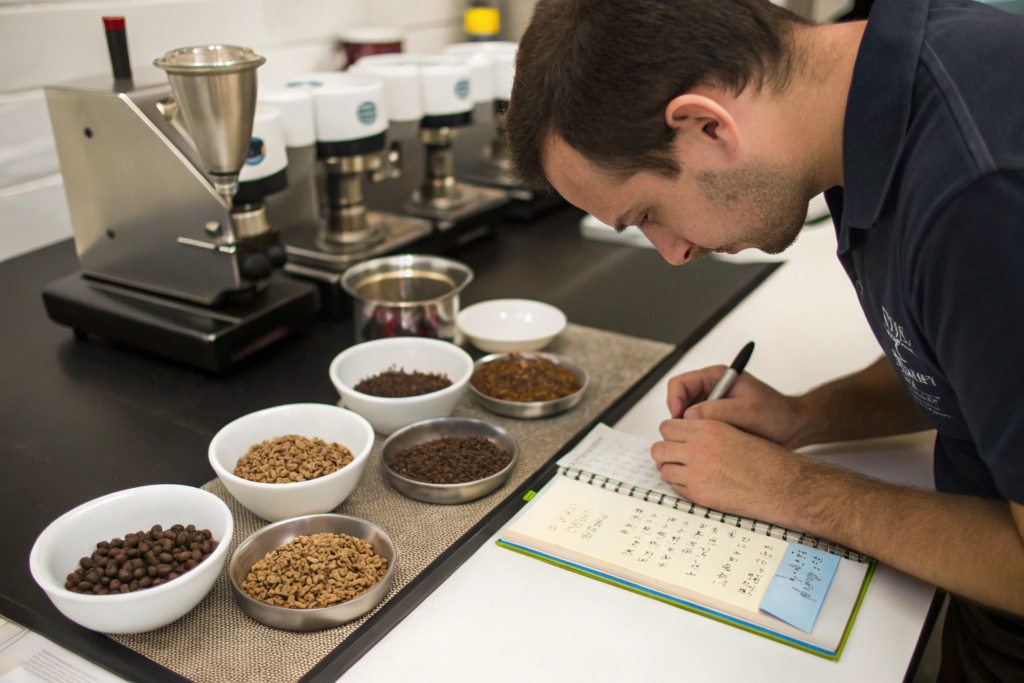
You should cup your blends regularly to ensure consistency. The components may change slightly from season to season, so you may need to make small adjustments to your ratios to maintain the same target flavor profile. This is a standard part of the roasting workflow.
Conclusion
Finding alternatives to expensive Arabica is not about a race to the bottom on price; it's about a strategic pivot towards value, intelligence, and innovation. By embracing the new world of Fine Robusta, recognizing the power of high-quality hybrid varietals like Catimor, sourcing from high-value origins, and mastering the art of blending, you can build a more resilient, profitable, and sustainable coffee program.
You don't have to be at the mercy of a volatile market. By expanding your toolkit and your definition of "quality," you can continue to delight your customers while protecting your bottom line. The future of coffee is not just about finding the most expensive and exotic lots; it's about creating exceptional coffee experiences at every price point.
If you are ready to explore how these smart alternatives can fit into your coffee program, we are the ideal partner. We grow them all, and we can help you select the perfect components for your next great blend. Please reach out to my colleague, Cathy Cai, at cathy@beanofcoffee.com to start the conversation.