As a coffee buyer or cafe owner, you're seeing more and more customers ask a critical question: "Is this coffee gluten-free? Is it free from common allergens?" Your first instinct might be to say, "Of course, it's just coffee!" But you hesitate, and you're right to do so. You're thinking about flavored coffees, cross-contamination in the roastery, and what happens between the farm and the cup. This uncertainty is a real pain point. Giving the wrong answer isn't just bad service; it's a potential health risk for your customers and a liability for your business.
Honestly, while pure, unflavored coffee beans are naturally gluten-free and allergen-free, the only way to confidently find and guarantee this for your customers is to source single-origin, unflavored beans from a vertically integrated supplier and to scrutinize the ingredients of any flavored coffees. For absolute certainty, look for products that have been explicitly tested and certified as gluten-free.**
This issue of purity is something I think about constantly. On our 10,000-acre plantations in Yunnan, we grow coffee. That's it. No wheat, no soy, no nuts. But we know that the journey from our farm to your cup involves many steps. As your partner, I believe it's my responsibility to provide the transparency you need to answer your customers' questions with complete confidence. Let's break down where the risks lie and how you can navigate them.
Is Plain Coffee Naturally Gluten-Free?
This is the foundational question, and it's important to be clear. The coffee plant is not related to wheat, barley, or rye, the grains that contain the gluten protein. The entire process of growing, harvesting, and processing pure coffee beans involves no gluten-containing ingredients.
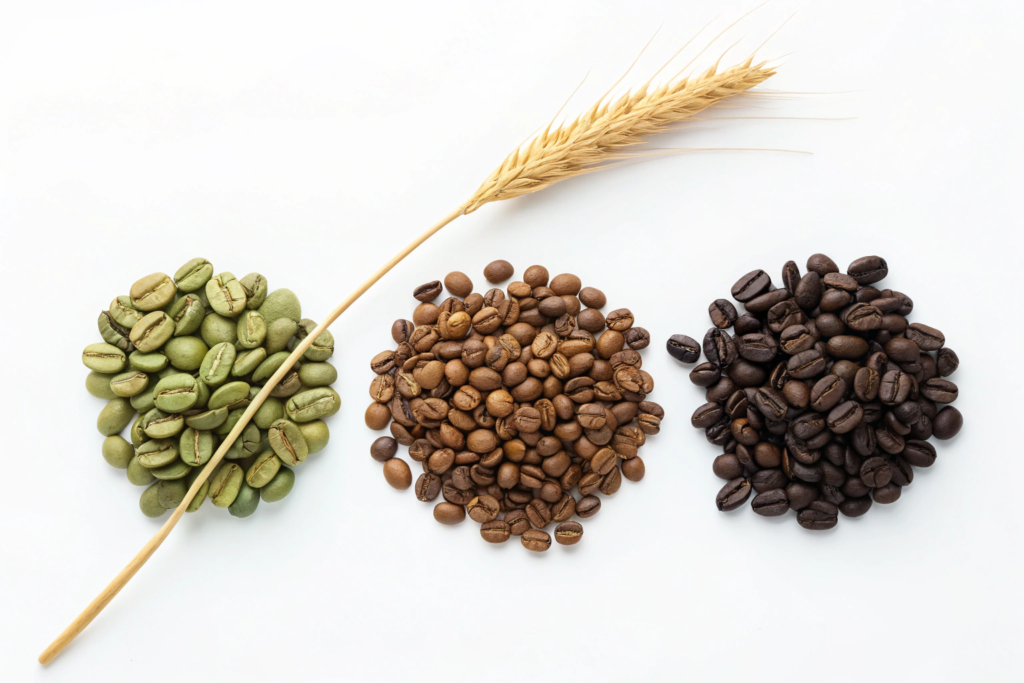
Yes, pure, unflavored coffee beans are 100% naturally gluten-free. The coffee bean is the seed of a fruit (the coffee cherry) and has no botanical connection to gluten-containing grains. This applies to all types of coffee beans, including our Arabica, Robusta, and Catimor varieties, whether they are green, roasted, or brewed.
This is the simple, scientific truth. If you are buying a bag of single-origin, unflavored, roasted coffee beans, the product itself is safe for someone with celiac disease or gluten sensitivity. The risk doesn't come from the coffee itself, but from what might happen to it after it leaves the farm.
What about cross-contamination on the farm?
This is a valid concern for many agricultural products, but it's extremely low-risk for coffee. Coffee is typically grown in dedicated agricultural zones, often at high altitudes, where grains like wheat are not cultivated. On our farms at Shanghai Fumao, for example, the entire 10,000 acres are dedicated solely to coffee. The harvesting and processing equipment is used only for coffee, eliminating any risk of cross-contact with gluten-containing grains at the source.
Does roasting introduce gluten?
No. The roasting process involves heating the green coffee beans in a dedicated machine. A professional roastery that only roasts coffee will not have any gluten present in their facility. The risk only emerges if the roastery is a multi-purpose facility that also processes other food products, which is uncommon for dedicated coffee companies. A pure coffee roaster is a gluten-free environment.
Where Do Allergens and Gluten Hide in Coffee Products?
If pure coffee is safe, then where does the problem come from? The risk is introduced almost exclusively when things are added to the coffee. This is most common in the world of flavored coffees and some instant coffee products. The moment you move beyond "just coffee," you have to become a detective and read the labels.
Gluten and other allergens are most commonly found in flavored coffees, where the flavoring syrups or oils can contain derivatives of wheat, barley, or nuts. They can also be present in instant coffee mixes that include anti-caking agents, thickeners, or creamer powders derived from allergenic sources.
This is where the supply chain gets complicated. The company that roasts the coffee might buy their "French Vanilla" or "Hazelnut" flavoring from a third-party manufacturer. That flavoring could contain barley-based extracts for malt notes or have been processed on equipment that also handles nut allergens. This is why transparency from your supplier is key.
Why are flavored coffees a risk?
The flavorings applied to beans after roasting are complex chemical concoctions. While many are allergen-free, some are not. For example:
- Malt Flavor: Flavorings that impart a "malty" or "cereal" note are often derived from barley, which contains gluten.
- Nut Flavors: While many "hazelnut" or "almond" flavored coffees use artificial, nut-free flavorings, some may use real nut extracts or oils. The only way to know is to check with the manufacturer.
- Cross-Contamination: A roaster might use the same equipment to coat both a "Hazelnut" coffee and a "Caramel" coffee, leading to potential cross-contamination for someone with a severe nut allergy.
What about instant coffee and coffee creamers?
Many instant coffee products are just pure, dehydrated coffee and are perfectly safe. However, "3-in-1" style instant mixes that include creamer and sugar are a major risk area. The creamer powders can contain sodium caseinate (a milk derivative) or other allergens. Some instant coffees also use maltodextrin as a bulking agent, which is usually gluten-free (often from corn) but can sometimes be derived from wheat. It's essential to read the ingredient list on these products carefully.
How Can You Guarantee Allergen-Free Coffee?
As a business owner, "probably safe" isn't good enough. You need certainty. Guaranteeing that your coffee is free from gluten and other allergens requires a clear strategy that focuses on sourcing, transparency, and, if necessary, certification.
To guarantee allergen-free coffee, you must adopt a two-pronged approach: 1) For unflavored coffee, source single-origin beans from a vertically integrated supplier who controls the entire chain from farm to export. 2) For any flavored coffee, demand a full ingredient list and an allergen statement from the manufacturer. For the highest level of assurance, only sell products that are explicitly certified gluten-free by a third-party organization.
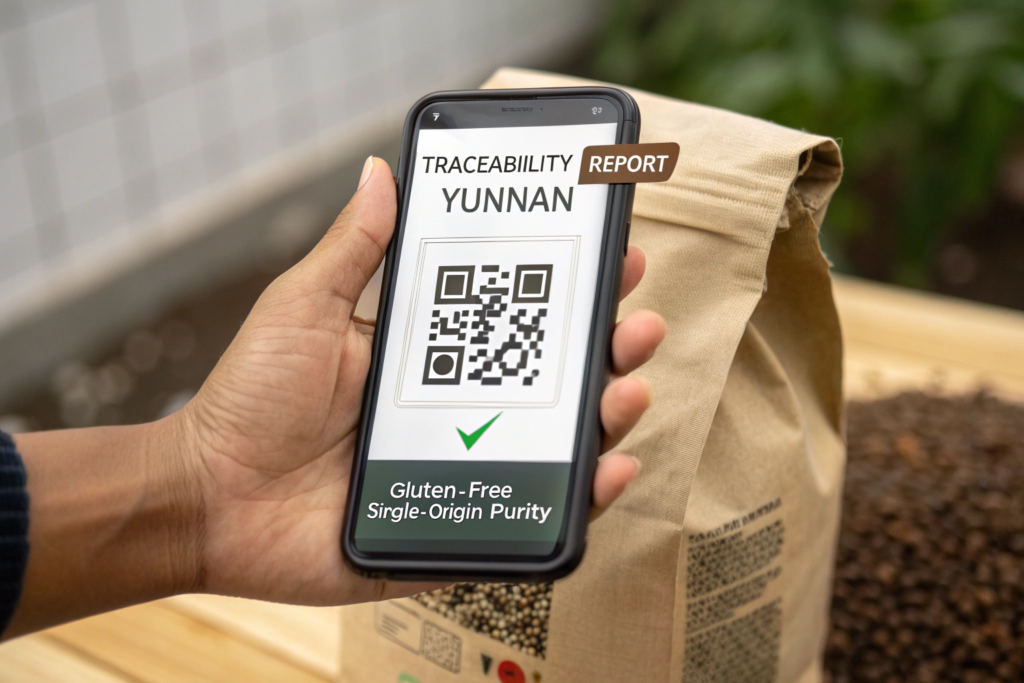
This approach shifts the responsibility to where it belongs: on you as the curator of your coffee selection, and on us as your supplier to provide the documentation you need. At Shanghai Fumao, our vertical integration is your guarantee. We can provide a "chain of custody" for our unflavored beans that shows they have never come into contact with other products.
Why is "single-origin" important?
Sourcing single-origin coffee (coffee from a single known farm or region) rather than a blend from unknown sources provides a huge advantage in traceability. It's much easier to verify the practices of one farm or one supplier than to try and untangle the supply chains of a dozen different beans in a post-roast blend. It simplifies the verification process immensely.
What does a "Gluten-Free Certification" mean?
A product bearing a seal from a recognized gluten-free certification organization (GFCO) has been independently tested and verified to contain less than 10 or 20 parts per million (ppm) of gluten, depending on the standard. This is the highest level of assurance you can offer to a customer with celiac disease. While it's rare to find this on plain coffee (as it's naturally gluten-free), you should absolutely look for it on any flavored or mixed coffee product you plan to sell.
How to Communicate with Your Customers Safely?
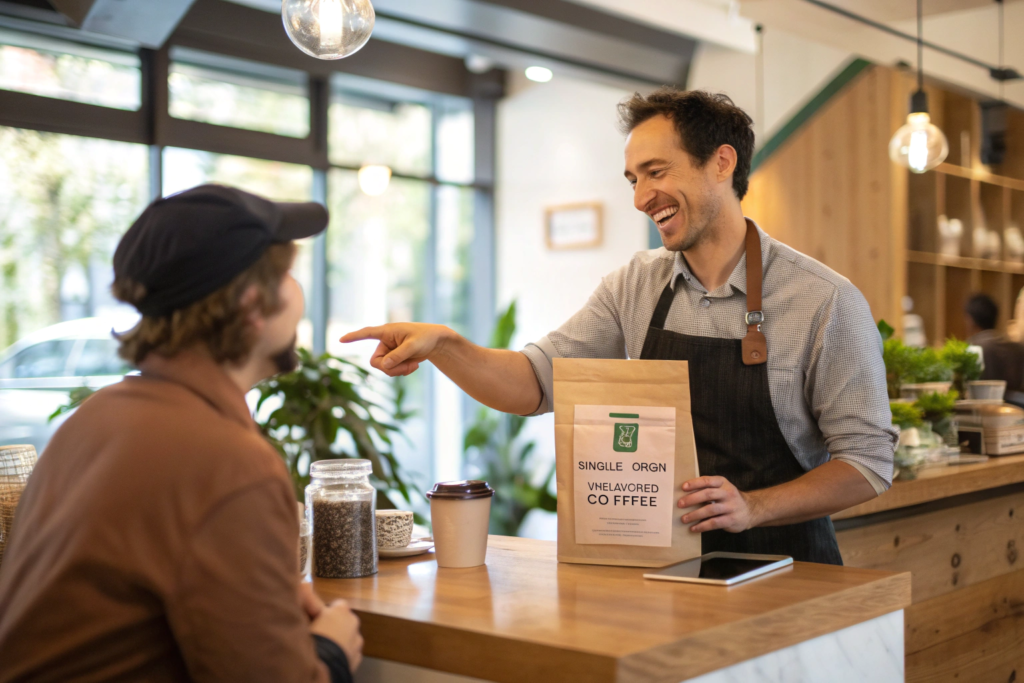
Once you've done your homework and sourced your coffee carefully, the final step is to train your staff to communicate this information accurately and safely to your customers. A well-intentioned but incorrect statement from a barista can still cause harm.
Develop a clear and simple allergen policy for your staff. Train them to confidently state that your unflavored, single-origin coffees are naturally gluten-free and brewed in dedicated equipment. For flavored coffees, train them to always refer to a master ingredient and allergen list and to never guess. It's better to say "I'm not sure, let me check for you" than to give incorrect information.
This creates a culture of safety and trust. Your customers will appreciate the diligence and transparency. It shows that you take their health concerns seriously. This is not just about avoiding liability; it's about building a reputation for being a safe and trustworthy establishment for everyone.
What should your allergen chart include?
Create a simple chart that your staff and customers can easily reference. It should list every coffee you offer and have columns for common allergens like gluten, dairy, soy, and nuts. For each coffee, you can mark "Yes," "No," or "May Contain" (for cross-contamination risks). This visual tool is incredibly helpful during a busy service.
How to handle the "May Contain" warning?
The "may contain" or "processed in a facility that also handles..." warning is a legal protection for manufacturers. For a customer with a severe, life-threatening allergy (e.g., anaphylaxis to nuts), this warning means the product is not safe for them. For someone with a milder sensitivity, it might be acceptable. Your staff should be trained to point out this warning but should not give medical advice on whether it's safe for a specific individual. Simply present the information and let the customer make their own informed decision.
Conclusion
Finding and guaranteeing gluten-free and allergen-free coffee is a journey of purity, transparency, and trust. While pure coffee beans are your safest starting point, the modern world of flavored and mixed coffee products demands careful investigation. By sourcing unflavored, single-origin beans from a reliable, vertically integrated partner, demanding full transparency for any flavored products, and implementing clear communication protocols in your cafe, you can protect your customers and your business. It's about moving beyond assumptions and embracing a professional, food-safe approach to sourcing and selling coffee.
We are proud to be a partner in this process. Our control over the entire production chain for our unflavored Arabica, Robusta, and Catimor beans means we can offer the highest level of assurance of their purity. If you're looking for a foundational coffee supply that you can confidently serve to all your customers, let's talk. Contact our coffee specialist at cathy@beanofcoffee.com to discuss your needs and receive documentation on our allergen-free production process.