
You have the vision, the market knowledge, and the drive to build a thriving coffee trading company. The beans are sourced, the contacts are made, but there's a gap between the plan and its execution. That gap is often capital. The search for the right financial partner can feel daunting, like looking for a needle in a haystack.
Finding investors for your coffee trading business requires a clear strategy: you must build an irresistible investment case grounded in your unique expertise and market position, target the right type of investor aligned with your growth stage, and communicate your vision with compelling professionalism and transparency. It's not just about asking for money; it's about offering a credible partnership in a lucrative global market.
Let's be honest. Investors hear pitches every day. To stand out, you need to be more than a coffee enthusiast; you need to be a savvy business operator with a clear path to returns. Your deep knowledge of the supply chain, from origins like Yunnan to your target markets, is your secret weapon. This guide will walk you through the practical steps to attract the capital that fuels growth.
Why Should an Investor Bet on Your Coffee Trading Venture?
Before you approach anyone, you must answer this question convincingly. An investor is buying into you and your execution capability as much as the coffee market itself. The global coffee trade is vast, but it's also competitive and full of risks. Your job is to show how you uniquely mitigate those risks and capture opportunity.
Think about your unfair advantage. Is it your direct relationship with a farm like ours at Shanghai Fumao? Is it your proprietary logistics model that reduces costs? Is it your niche focus on a specific bean type or market? This is your value proposition. You're not just selling coffee; you're selling a business model with defensible margins. Data is your friend here. Use statistics from reputable sources like the International Coffee Organization to show market size and trends. Then, overlay your specific plan to capture a slice of it.
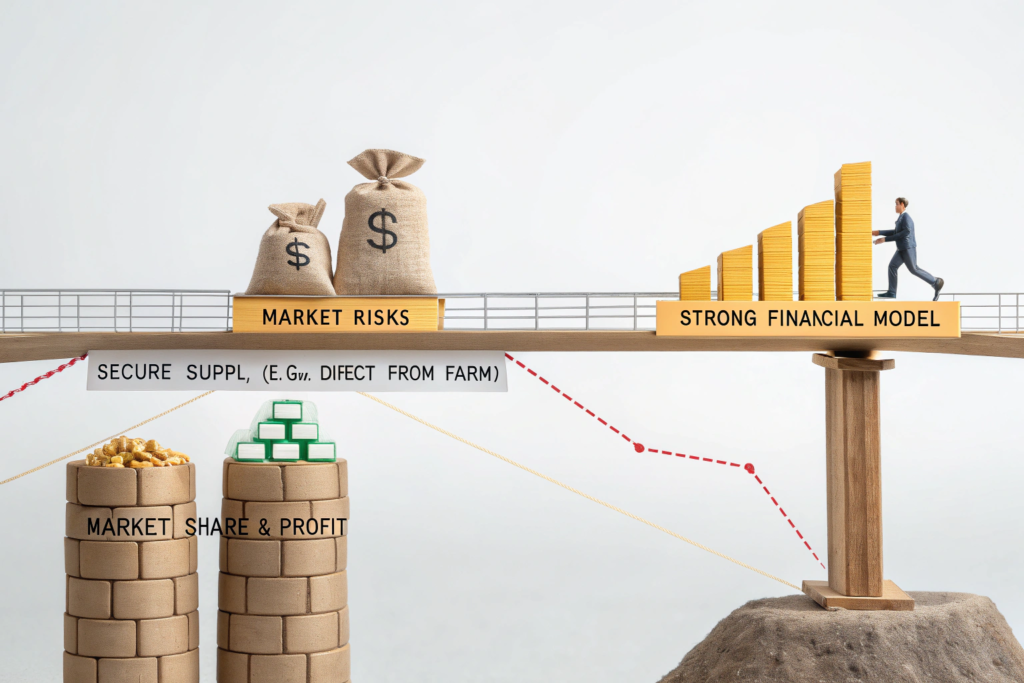
What Makes Your Business Model Financially Compelling?
Investors want to see numbers. They want a clear picture of unit economics. How much does a bag of green beans cost you CIF? What is your selling price? What are your operational costs? Your pitch must include a simple, powerful financial model. Show your projected path to profitability. Highlight your gross margin – this is critical in trading. For instance, if you're sourcing premium Arabica directly, explain how cutting out intermediaries boosts your margin, allowing for competitive pricing and healthy profits. A strong model often references standard industry profitability benchmarks for context.
How Do You Mitigate Key Risks in Coffee Trading?
Don't hide the risks; address them head-on with your mitigation strategies. This shows maturity. The big ones are price volatility, supply chain disruption, and quality control. Explain your approach. For price volatility: Do you use futures contracts or fixed-price agreements with suppliers? For supply chain: Do you have relationships with multiple logistics partners or insurance in place? For quality: Do you have a rigorous QC process or certifications? Showing that you've thought about these issues and have plans in place builds immense confidence. It transforms you from a trader to a CEO.
What Types of Investors are Best for a Coffee Trading Business?
Not all money is the same. The right investor brings capital, but also networks, advice, and patience aligned with your timeline. The wrong investor can push for unrealistic growth or disrupt your operations. You need to target strategically.
Generally, investors fall into categories based on your stage. In the very early days, you might rely on friends, family, or angel investors who believe in you personally. As you need larger sums for inventory and scaling, venture capital or specialized agri-business funds become relevant. For established trading houses, private equity might be an option. Also, consider strategic investors—like a roastery looking to secure their green bean supply. They may offer slightly lower valuations but provide guaranteed offtake, which de-risks the business enormously.
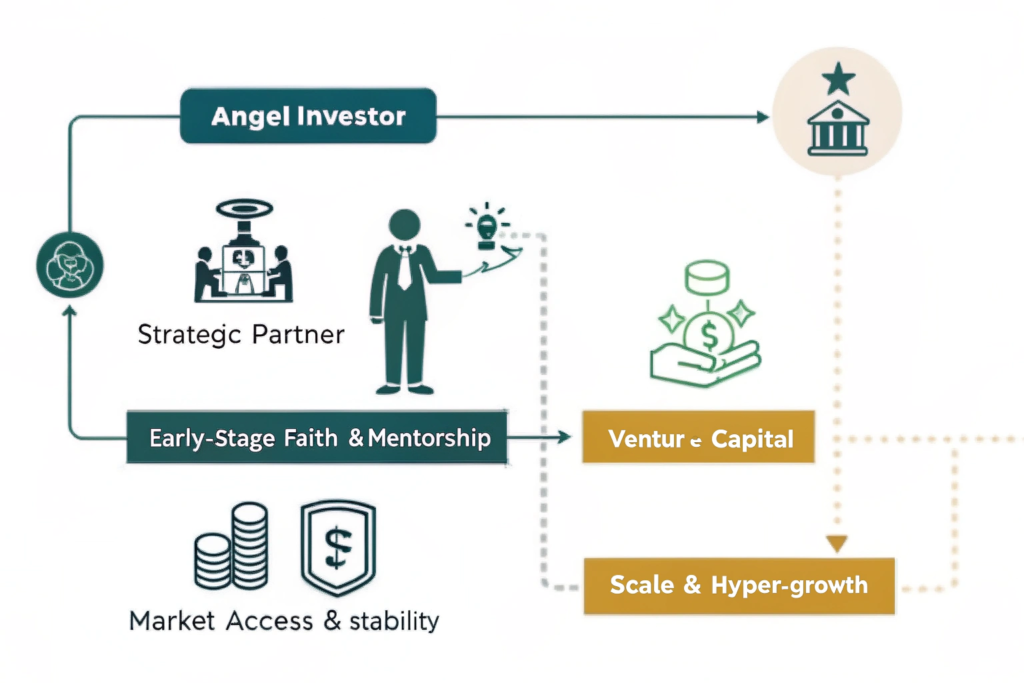
Are Angel Investors or Venture Capitalists a Better Fit?
This depends on scale and growth speed. Angel Investors are often high-net-worth individuals. They can make quicker decisions, offer mentorship, and may invest $50,000 to $500,000. They're good for proving your concept, building initial inventory, and funding your first few containers. Venture Capitalists (VCs) manage larger funds. They look for businesses that can scale very rapidly to a huge size, typically seeking a 10x return. They invest larger amounts ($1M+) but demand significant equity and a clear, aggressive exit plan (like selling the company or an IPO). For most trading businesses, angels or small VC funds focused on food/agri-tech are a more natural fit than large Silicon Valley VCs.
Could Strategic Partners Be Your Ideal "Investors"?
Often overlooked, a strategic partnership can be the best form of investment. Imagine a mid-sized coffee roaster in Europe or a distributor in North America. They need a stable, quality supply. Instead of just buying from you, they could invest in your company. This gives them equity and influence over their supply chain, and it gives you a committed, long-term customer and investor rolled into one. It aligns interests perfectly. Your pitch to them focuses on how your business secures their future. We've seen this model work well with partners of Shanghai Fumao, where downstream players invest in upstream security.
How to Prepare a Winning Pitch Deck and Financial Plan?
Your pitch deck is your story in 10-15 slides. It's not an information dump; it's a persuasive narrative. Your financial plan is the quantitative proof behind that story. Together, they must be crisp, credible, and compelling.
Start with the problem: the inefficiencies in the coffee supply chain that you solve. Then introduce your solution: your trading company. Highlight your team's expertise. Use visuals—a map of your supply routes, photos of your origin connections. Clearly state how much you're raising and exactly what you'll use it for (e.g., "$200,000 for the purchase of two 20ft containers of Yunnan Arabica, and working capital for sales operations"). Be specific. Vague plans get rejected.
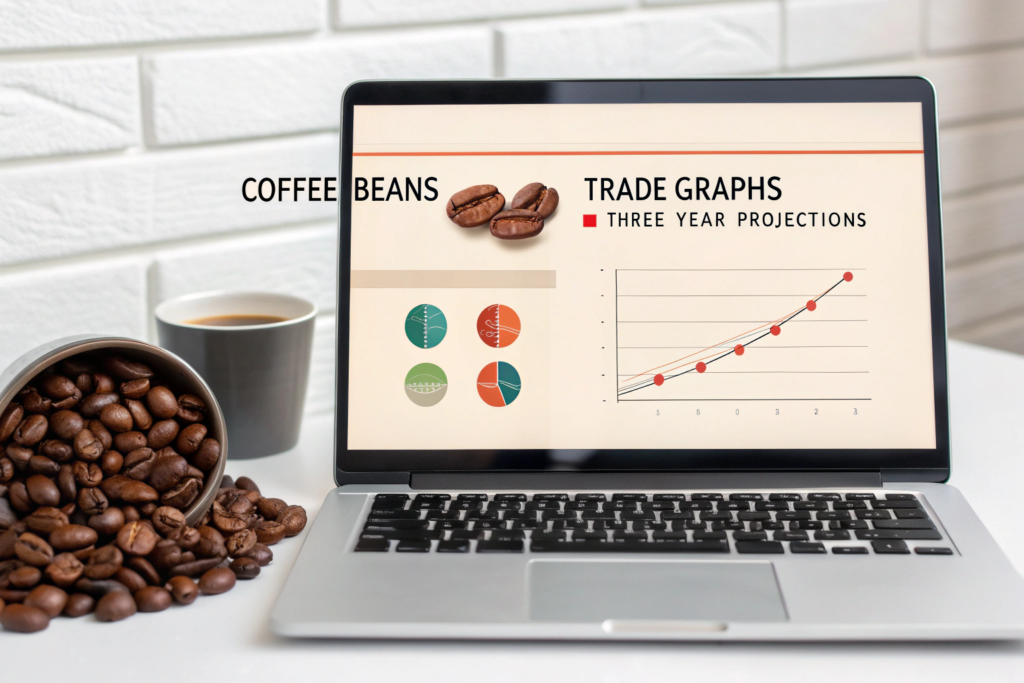
What Are the 10 Essential Slides in Your Pitch Deck?
- Title: Company name, logo, tagline.
- The Problem: Pain points of current buyers/suppliers (inefficiency, cost, opacity).
- Your Solution: Your trading model and value proposition.
- Why Now? Market trends (rising specialty demand, direct trade growth).
- Target Market: Size, segment you're attacking (e.g., U.S. independent roasters).
- Competition: A simple grid showing how you're better/different.
- Business Model: How you make money (sales margin, service fees).
- Go-to-Market: Your sales strategy (trade shows, digital, agents).
- The Team: Why you and your partners are the ones to execute this.
- Financials & Ask: Key projections, funding needed, use of funds.
How Detailed Should Your Financial Projections Be?
You need three core statements: Profit & Loss (P&L), Cash Flow, and Balance Sheet, projected for 3-5 years. The first year should be monthly or quarterly. Be realistic, not overly optimistic. Base your assumptions on real data—your current cost per kg, your confirmed selling prices. Key metrics to highlight:
- Gross Margin Percentage: This shows your core trading health.
- Customer Acquisition Cost (CAC) & Lifetime Value (LTV): For investor-funded growth.
- Break-even Point: When will the business fund itself?
- Return on Investment (ROI): What will the investor get back?
Use tools or a good accountant. Resources from SCORE or local small business development centers can help structure this. The goal is to show you understand the finances deeply.
Where to Actively Look for and Connect with Potential Investors?
Waiting for investors to find you is a losing strategy. You need a proactive, multi-channel approach. Your network is your starting point, but you must expand beyond it systematically.
Begin with your own contacts: industry peers, former colleagues, suppliers, even customers. Let them know you're seeking growth capital. Attend industry events not just as a trader, but as a founder seeking partners. Pitch competitions at food and beverage expos can be excellent. Online, platforms like AngelList, LinkedIn (search for "angel investor coffee" or "agri-tech VC"), and industry-specific forums are valuable. Remember, fundraising is a sales process. You need a pipeline of potential leads.

How Effective are Industry Networks and Trade Shows?
Extremely effective. Events like the Specialty Coffee Association Expo or the Global Coffee Forum are filled with not just buyers, but also investors who specialize in the food and beverage sector. Come prepared with a concise "elevator pitch" and business cards. The goal here isn't to close a deal on the spot, but to get a meeting. Ask for introductions. The coffee industry, despite its size, can be tight-knit; a warm introduction from a trusted contact, like a reliable supplier, can open doors. When you have a solid supply partner like Shanghai Fumao, mentioning that as a cornerstone of your business adds immediate credibility.
What is the Best Way to Use Online Platforms and LinkedIn?
LinkedIn is a powerful tool if used strategically. First, optimize your personal and company profile to clearly state you are seeking investment. Use relevant keywords. Then, search for investors. Don't just send a connection request with the default message. Personalize it. Reference a common connection, their past investment in a similar company, or an article they shared. Once connected, send a brief, respectful message introducing your venture and asking for a short virtual coffee chat. Be direct but professional. Online platforms like Gust or AngelList allow you to create a formal profile visible to accredited investors. Treat these profiles with the same care as your pitch deck.
Conclusion
Finding investors is a marathon, not a sprint. It requires you to crystallize your business's value, target the right partners, tell a compelling story with solid numbers, and relentlessly network. Your deep knowledge of coffee trading is your foundation, but your ability to translate that into a credible investment opportunity is what will secure the capital.
You have the expertise to navigate the complex world of coffee. Now, equip yourself to navigate the world of finance. If you are building your trading business and seek not just beans but a foundational supply partnership that adds credibility to your pitch, we should talk. A strong, direct relationship with a producer like Shanghai Fumao can be a cornerstone of your investment story. For inquiries about our beans and how we can support your venture's growth, contact our export manager, Cathy Cai, at cathy@beanofcoffee.com. Let's brew success together.