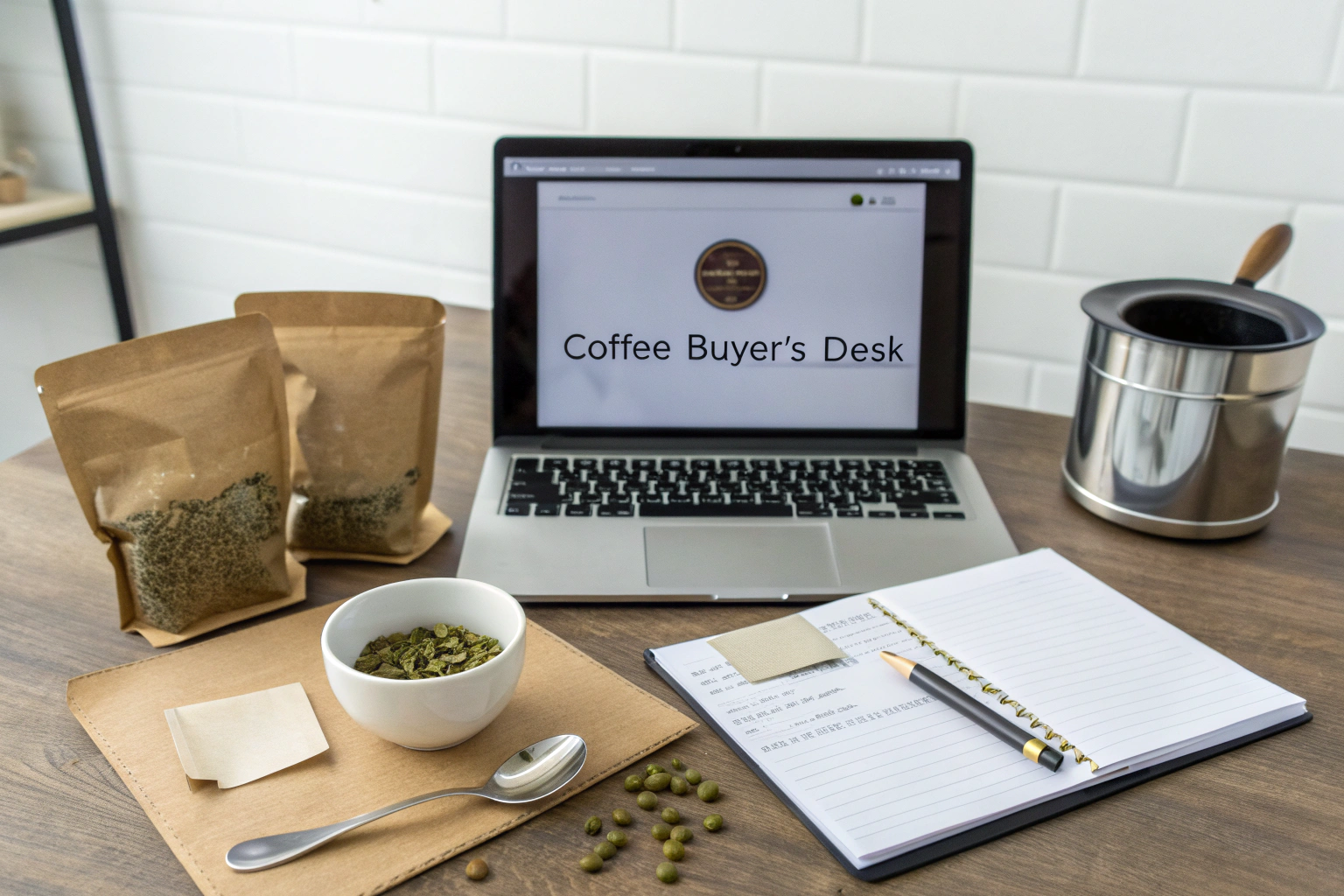
As a coffee buyer, you know that tasting is believing. You can read all the descriptions and see all the photos you want, but you can't make a purchasing decision without tasting the coffee. So, you need samples. But you might feel awkward asking for them, or perhaps your requests have been ignored in the past. It's a common pain point: you're a serious buyer, but you're struggling to get suppliers to take you seriously enough to send you the green coffee samples you need to do your job.
Honestly, the best way to get free samples from a coffee wholesaler is to approach them not as a freebie-seeker, but as a serious, professional buyer who is efficiently evaluating them as a potential long-term partner. This means providing clear, specific information about your business, your coffee requirements, and your purchasing potential in your very first communication.
I'm on the other side of this equation every day. I receive dozens of "Send me samples" emails. The ones that get an immediate, positive response are the ones that make it easy for me to see a clear path to a future business relationship. It's not about getting something for free; it's about starting a professional partnership. Let me pull back the curtain and show you exactly what makes a sample request impossible to ignore.
Why Do Wholesalers Give Out Samples?
Before you ask for a sample, it's crucial to understand the wholesaler's perspective. We don't give out samples as a form of charity or marketing largesse. Sending international samples is expensive and time-consuming. There's the cost of the coffee, the special packaging, the courier fees, and the administrative time.
Wholesalers provide samples for one reason: as a calculated investment to secure a future, profitable business relationship. A sample is the first step in our sales process, designed to prove our quality to a qualified lead who has the potential to place a real, bulk order. It is a tool for conversion, not a free giveaway.
When you understand this, your entire approach will change. Your goal is no longer to "get free coffee." Your goal is to present yourself as a high-quality investment for the wholesaler's time and resources. You need to show us that the cost of sending you a sample is likely to result in a return on that investment. We at Shanghai Fumao are eager to invest in the right partners. Your job is to show us that you are one of them.

What is the cost of a sample?
While the coffee itself might only be a few dollars' worth, the real cost is in the shipping. Sending a small package from our facilities in China to your office in the United States via a reliable courier like DHL or FedEx can easily cost anywhere from $50 to $100 or more. Multiply that by dozens of requests, and you can see why we have to be selective.
What is a "qualified lead"?
In our business, a qualified lead is a buyer who has a genuine, immediate, or near-future need for the type of coffee we sell, and who has the purchasing authority and capacity to place an order of a commercially viable size (typically, at least one pallet or more). Our sales process is designed to identify these leads and focus our resources on them.
How to Write a Professional Sample Request Email?
Your first email is your first impression. A vague, one-line email like "send samples" will almost certainly be ignored. A professional, well-structured email that contains all the necessary information, on the other hand, demonstrates that you are a serious professional who respects our time.
A professional sample request should be a concise email that introduces your company, clearly states your role, specifies the exact type and quantity of coffee you're interested in, and briefly outlines your purchasing volume and timeline. It should be structured to give the supplier all the information they need to qualify you as a serious buyer in under 60 seconds.
Think of it as a mini business proposal. You are proposing a potential partnership, and the sample is the first step. Here’s a simple template that works wonders:
- Subject Line: Be clear and direct. "Green Coffee Sample Request – [Your Company Name]" is perfect.
- Introduction: Briefly introduce yourself and your company. "My name is [Your Name], and I am the head buyer for [Your Company Name], a specialty coffee roaster based in [Your City, State]."
- The Ask: Be specific. Don't say "your coffee." Say, "I am currently sourcing a washed Arabica from Yunnan for our new single-origin offering. Could you please send a 200g sample of your best-selling Catimor variety?"
- The Potential: This is the most important part. Give them a reason to invest in you. "We typically purchase in 5-10 bag lots per origin, and we are looking to make a purchasing decision within the next 30 days."
- Logistics: Provide your full shipping address and contact number. Make it easy for them.

Why is specificity so important?
Being specific shows you've done your research. It tells me you've looked at our website or product list and you know we sell Yunnan coffee—those small-batch, sun-dried beans with a rich, earthy aroma and a hint of floral sweetness that's become a favorite among specialty coffee enthusiasts. It shows you have a specific need ('for our new single-origin offering') rather than just a vague curiosity about what we might carry.
Should you offer to pay for shipping?
In your initial request, it's not always necessary, but it can be a powerful gesture. Adding a sentence like, "We are happy to cover the shipping costs via our FedEx/DHL account: [Your Account Number]" is a massive green flag. It shows you understand that samples have a cost and that you are a serious business. Many suppliers, including us, will often waive the shipping fee for such a professional and considerate buyer, but the offer itself speaks volumes.
What Information Should You Provide About Your Business?
A legitimate wholesaler wants to deal with a legitimate business. The more you can do to quickly and easily verify that you are a real, operational business, the more comfortable we will be in sending you samples. Anonymity is the biggest red flag in this business.
You should always provide your full company name, your business address, a link to your professional website, and your direct contact information. If you have a social media presence for your brand (like Instagram or Facebook), including those links can also be helpful. The goal is to make it easy for the supplier to see that you are a credible and established entity.
This isn't about us being nosy. It's about risk management. We want to see that you have a professional website showcasing your brand, that you have a physical address, and that you are an active part of the coffee community. This tells us you're not just someone operating out of their garage looking for freebies. This is especially important when dealing with a new supplier like Shanghai Fumao for the first time.
Why is a website so important?
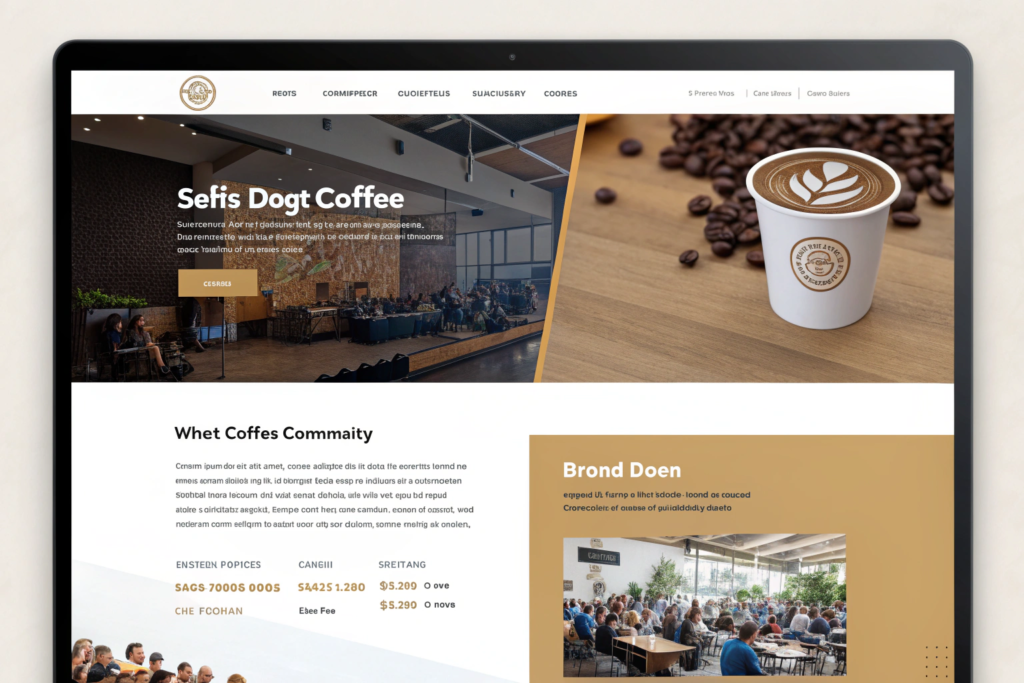
A professional website is your digital storefront, a 24/7 window into your business that potential customers, partners, and clients visit first to learn about you. It's the fastest way for me to understand your business—its mission, values, and unique selling points—and to grasp your brand's positioning: are you a high-end specialty roaster with meticulously sourced beans, small-batch roasting processes, and a focus on artisanal craftsmanship, or a large commercial operation with a vast product range, bulk distribution capabilities, and a commitment to accessibility and affordability? The website also reveals the types of coffee you sell—whether it's single-origin coffees from specific regions like Ethiopia's Yirgacheffe or Colombia's Huila, blends tailored for specific palates or occasions, decaf options, cold brew concentrates, or specialty teas and accessories.
What if you are a new, pre-launch business?
This is a common situation. If you don't have an established business yet, be upfront and honest about it. Explain your business plan clearly. "We are a new roastery launching in [City] in Q3 of this year. We have secured funding and a location, and we are now in the crucial stage of sourcing our foundational coffees. Our initial purchase will be approximately 20 bags to build our starting inventory." Honesty and a clear, professional plan can be just as effective as a long track record.
How to Follow Up and Provide Feedback?
Your responsibility doesn't end when the sample arrives. The follow-up is what solidifies your reputation as a professional buyer and turns a one-time sample shipment into a long-term partnership. A supplier who sends a sample and then hears nothing back is unlikely to send you another one.
After you receive and evaluate the sample, you must follow up with the supplier in a timely manner (within 1-2 weeks) to provide specific, constructive feedback. Whether you plan to purchase or not, this communication closes the loop, shows respect for the supplier's investment, and builds a foundation for future business.
This is your chance to shine. We want to know what you think. Did you like it? What were the flavor notes you detected? How did it roast? Even if you decide not to buy, feedback like, "Thank you for the sample. We cupped it and found it had a lovely body, but we are looking for something with a bit more fruit-forward acidity for this particular blend. We will definitely keep you in mind for our next project," is incredibly valuable. It tells us you are a true professional and makes us eager to work with you in the future.
What makes good feedback?
Be specific. Don't just say 'it was good' or 'it wasn't for us.' Use professional tasting notes. 'The Catimor sample cupped beautifully, with a rich, full-bodied profile that unfolded gradually on the palate. We detected prominent notes of dark chocolate—deep, bittersweet, and slightly molten—intertwined with earthy undertones of roasted walnut, adding a satisfying nuttiness that lingers. The acidity was bright yet balanced, cutting through the richness without overpowering, and the mouthfeel was velvety and dense, characteristic of a well-processed medium-dark roast.
The finish was exceptionally clean, with no residual bitterness, leaving a smooth, lingering sweetness that echoed the chocolate and walnut notes. It's a strong contender for our new espresso blend, as it offers the complexity and depth needed to shine in a concentrated brew, with enough body to stand up to milk additions while maintaining its distinct flavor profile.' This tells the supplier that you know how to properly evaluate coffee and that you took the process seriously.
What if you don't like the coffee?
That's perfectly fine! The purpose of sampling is to find a good match, and it's crucial to approach this process with care and consideration. Be polite and professional in all interactions—this sets the tone for future relationships. When you do reach out, take a moment to thank them sincerely for the opportunity to sample their product; express genuine appreciation for their time and effort in sharing their offerings. Briefly explain why it wasn't a fit, perhaps noting specific aspects like flavor profile not aligning with your current needs, batch consistency issues, or logistical challenges that make collaboration difficult at this stage.
Conclusion
Getting free samples from coffee wholesalers isn't a secret trick; it's a matter of professional courtesy and clear communication. By approaching suppliers as a potential partner rather than a sample-seeker, you change the entire dynamic. Present yourself as a credible, serious business with a specific need, make it easy for them to understand your potential, and always, always follow up with feedback. This professional approach will not only get you the samples you need but will also lay the groundwork for the strong, trusting, and profitable supplier relationships that are the backbone of any successful coffee business.
We are always looking for serious, long-term partners to share our exceptional Yunnan coffees with. If you are a professional buyer ready to evaluate a new and exciting origin, we invite you to reach out. Follow the steps outlined above, and we will be delighted to invest in you. Contact our coffee specialist at cathy@beanofcoffee.com to begin the conversation.