
Your container of premium coffee beans has just been flagged for a customs inspection. Your heart sinks. Visions of delays, mounting demurrage fees, and even rejected cargo flash before your eyes. If you're importing coffee beans into markets like the U.S., Europe, or Australia, this is not a question of if, but when. The good news? An inspection doesn't have to be a crisis. With the right preparation, it's a manageable, routine step—one you can navigate with confidence and minimal disruption.
Successfully handling customs inspections for coffee bean products hinges on proactive, meticulous preparation across three fronts: documentation, physical shipment integrity, and regulatory compliance. The core strategy is to make the inspector's job easy by providing a clear, flawless, and verifiable story of your product from its origin to the container. This involves ensuring all paperwork is perfect, the beans are packaged and labeled correctly, and you understand the specific regulatory mandates of the destination country (like FDA rules for the U.S.). Preparation turns a potential bottleneck into a predictable checkpoint.
Think of it as a test you can study for. The inspector has a checklist. Your job is to have every box pre-checked before they even look. Let's break down that checklist into actionable steps, so your next shipment sails through smoothly.
What Paperwork Is Critical for Clearing Coffee Bean Inspections?
Paperwork is your first line of defense—and the most common point of failure. A customs officer's initial review is a desk audit. Sloppy or incomplete documents are a guaranteed trigger for a more intensive, time-consuming physical inspection. Your documents must tell a complete, consistent story.
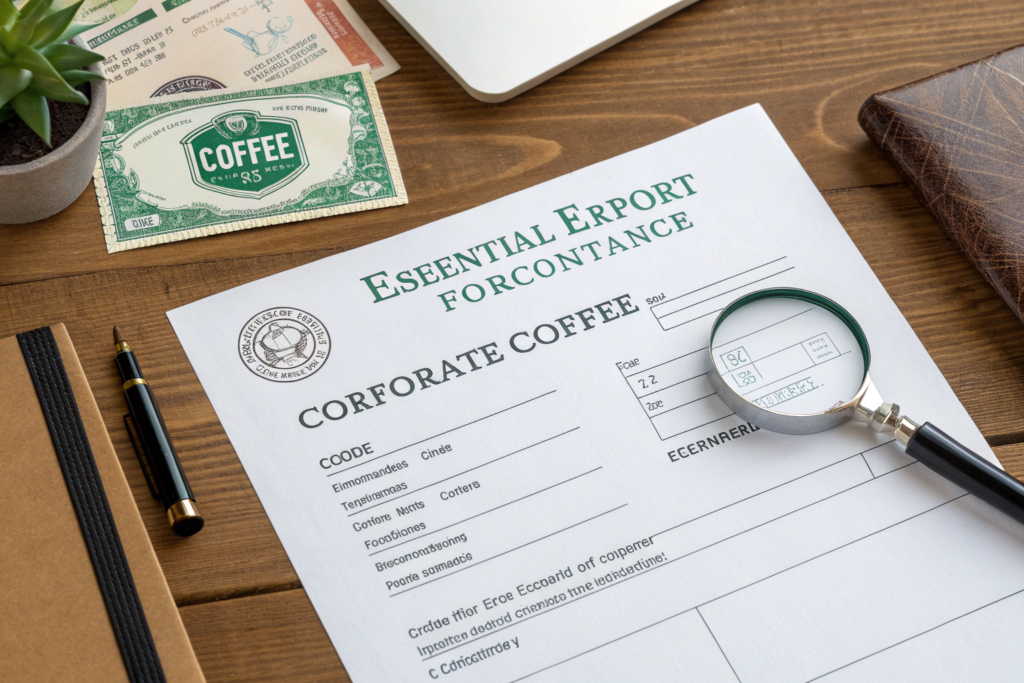
For coffee beans, the non-negotiable documents are: 1) Commercial Invoice (with correct value and HS Code), 2) Packing List, 3) Bill of Lading / Air Waybill, 4) Certificate of Origin, and 5) Phytosanitary Certificate. For the U.S., FDA Prior Notice and the manufacturer's FDA Food Facility Registration number are mandatory. For the EU, ensure compliance with EU import regulations. The golden rule? Every detail—weights, addresses, product descriptions—must match perfectly across all documents. A mismatch of even a few kilograms is a red flag. At Shanghai Fumao, we use a triple-check system before shipment: our logistics team verifies that the physical cargo matches the paper trail exactly. This simple discipline prevents the majority of problems.
Why is the Phytosanitary Certificate Your Product's "Health Passport"?
For green (unroasted) coffee beans, the Phytosanitary Certificate is arguably the most important single document. Issued by the plant protection authority of the exporting country (e.g., China's General Administration of Customs), it certifies that the shipment has been officially inspected and is free from quarantine pests, soil, and specified diseases. Without it, your shipment will be refused entry at most international borders. For roasted beans, the requirement may be waived in some countries (as the roasting process is considered a pest mitigation treatment), but many importers and authorities still request it for due diligence. The certificate must align precisely with the commercial invoice. A frequent error is a typo in the consignee name or container number. We coordinate directly with inspection authorities in Yunnan to secure this certificate well ahead of the sailing date, ensuring accuracy and avoiding last-minute delays.
How Do You Ensure Your Commercial Invoice is Audit-Proof?
The commercial invoice is the financial and descriptive cornerstone. To make it inspection-ready:
- Use the precise HS Code: For unroasted Arabica, it's typically 0901.11. Using the wrong code can lead to incorrect duty assessment and scrutiny.
- Describe goods specifically: "Green Coffee Beans, Arabica, Grade 1, Yunnan Origin" is good. Vague terms like "Coffee Products" are not.
- Declare accurate value: State the real transaction value. Attempting to undervalue to reduce duties is a serious offense that results in penalties, not just delays.
- Clearly state Incoterms: Specify terms like FOB Shanghai or CIF Los Angeles. This defines risk and cost responsibilities.
The inspector will cross-reference this invoice with the packing list and bill of lading. Consistency is everything. This level of detail demonstrates professionalism and reduces perceived risk, encouraging a faster clearance.
How Should Coffee Shipments Be Packaged and Labeled to Avoid Issues?
If your paperwork passes the initial review, the shipment may still be selected for a physical exam. This could be random or based on a risk profile. Your goal is to have a shipment that is so clean, organized, and compliant that the inspector can quickly verify its safety and accuracy.
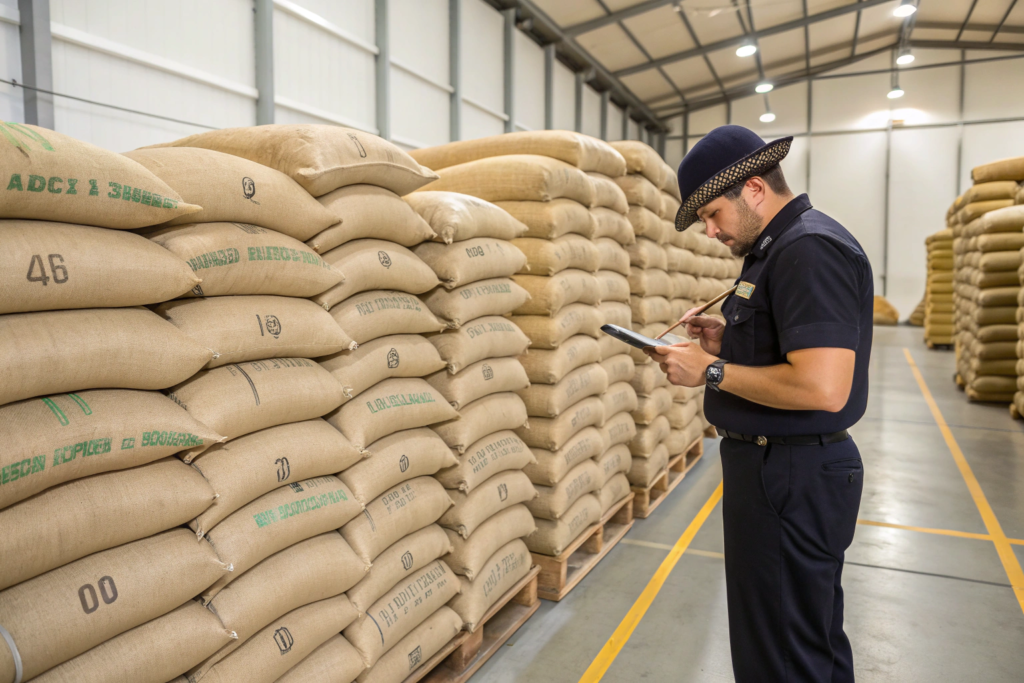
Physical preparation is about presentation and prevention. All packaging must be clean, sturdy, and free from any evidence of pest infestation (no holes, stains, or odors). Bags should be stacked neatly on pallets and properly secured within the container to prevent shifting and bursting during transit. Labeling is critical: every pallet and ideally every bag should have a legible label showing the product name, lot number, gross/net weight, and the name and address of the manufacturer (e.g., Shanghai Fumao). For the U.S., ensure country of origin labeling ("Product of China") is visible. A well-organized container allows for easy sampling and inspection, leaving a professional impression that you are a reliable and conscientious importer.
What Are the Top Reasons Coffee Shipments Fail Physical Inspection?
Knowing the common pitfalls allows you to avoid them:
- Pest Infestation: Live insects, larva, or webbing inside bags. This underscores the need for proper fumigation or processing and a valid Phytosanitary Certificate.
- Contamination: Presence of mold (often due to moisture during transit), off-odors (from a previously contaminated container), or foreign material (stones, twigs). This points back to quality control at the processing stage.
- Labeling Errors: Missing mandatory information like ingredient lists (for roasted/blended products), allergen statements, or manufacturer details.
- Damaged Packaging: Torn bags from poor securing or container contamination. We use container liners and secure strapping to mitigate this.
A proactive exporter addresses these before loading. We conduct pre-shipment inspections to catch such issues at origin, where they are easier and cheaper to fix.
Is a Pre-Shipment Inspection Service Worth the Investment?
For high-value orders or when working with a new supplier, a third-party pre-shipment inspection (PSI) is highly recommended. An independent inspector visits the warehouse before loading to verify quantity, quality, packaging, and labeling against your order and the destination country's requirements. They provide a report with photos. This gives you, the buyer, peace of mind and creates a powerful document. If a customs inspection later occurs, you can present the PSI report as evidence of the shipment's condition at origin. It’s a powerful tool for managing risk and proving due diligence, directly addressing concerns about quality and security.
What Should You Know About FDA & USDA Regulations for Coffee?
In the United States, two key agencies oversee coffee imports: the Food and Drug Administration (FDA) and the U.S. Department of Agriculture (USDA). Understanding their distinct roles is crucial. The USDA, via its Animal and Plant Health Inspection Service (APHIS), is concerned with plant health and requires the Phytosanitary Certificate. The FDA is concerned with food safety for human consumption.
All coffee shipments entering the U.S. require FDA Prior Notice to be submitted electronically, usually by your customs broker, within specific timeframes before arrival (e.g., 8 hours by sea). Failure to do so results in refusal of entry. The FDA may detain shipments if the foreign food facility (like our processing plant) is not registered with them, or if there are past safety issues. For roasted coffee, the FDA expects compliance with Current Good Manufacturing Practices (cGMPs). While green coffee beans, as a "raw agricultural commodity," have certain exemptions from nutritional labeling, they are still subject to general food safety standards regarding contamination. Being prepared means working with a supplier who understands these requirements and can provide necessary documentation, such as facility registration numbers.

What is the FDA's "Green Coffee Bean Exemption"?
This is a vital piece of knowledge for importers. The FDA exempts green coffee beans from the standard nutrition facts panel labeling requirement because they are not typically consumed in their raw state. However, this exemption does not apply to food safety standards. The beans must still be safe, sanitary, and produced under conditions that prevent contamination. Furthermore, if the green beans are marketed with specific health claims, the exemption may not apply. For roasted and packaged coffee, all standard FDA food labeling rules are in effect. Clarifying this with your supplier ensures the correct labels are applied, preventing a labeling violation during inspection.
How Can Laboratory Testing Reports Facilitate Clearance?
One of the best ways to pre-empt FDA concerns is to provide scientific data. Proactive suppliers conduct laboratory testing on each lot for contaminants like pesticide residues, mycotoxins (e.g., Ochratoxin A), and heavy metals. The resulting Certificate of Analysis (CoA) is tangible proof that the product meets U.S. safety standards. Providing these CoAs to your customs broker when filing entry gives the FDA positive information upfront. If the FDA decides to take its own samples, your pre-existing CoA can support your case and potentially shorten any detention period. At BeanofCoffee, this testing is part of our standard protocol for clients in regulated markets, adding a layer of security and trustworthiness to our supply chain.
How to Work Effectively with Your Customs Broker?
Your customs broker is your legal representative and guide through the import process. A common mistake is to assume they handle everything. In reality, it's a partnership. You, as the importer of record, are ultimately responsible for the accuracy of the information provided to customs.
A good broker will: 1) Classify your goods with the correct HS code, 2) File all necessary documentation with CBP and other agencies, 3) Pay duties and fees on your behalf, and 4) Communicate any issues. Your responsibilities are to: 1) Choose a broker experienced in food/coffee imports, 2) Provide them with complete, accurate, and timely documents (ideally before the ship arrives), 3) Disclose any known issues proactively, and 4) Be responsive to their queries. A proactive broker-client relationship is characterized by transparency and shared information. Before your first shipment, have a call to align on processes. This collaboration is key to timeliness.

Who is Financially Responsible for Inspection Fees and Delays?
If your shipment is selected for inspection, you, the importer, bear all associated costs. These include Customs Examination Fees (handling, transportation to/from the Centralized Examination Station, and labor for de-stuffing and re-stuffing the container). Furthermore, the delays can lead to demurrage (charges for the container sitting at the port) and detention (charges for not returning the empty container) fees from the shipping line. These costs can escalate quickly into thousands of dollars. This financial reality makes the upfront investment in perfect preparation—good documentation, quality control, and a reliable supplier—not just prudent but highly cost-effective. It's the foundation of a stable and predictable cost structure.
What is the Single Biggest Mistake Importers Make?
The single biggest mistake is poor communication and last-minute document handoff. Sending incomplete documents to your broker after the shipment has already arrived leaves no time for review or correction. Any discrepancy discovered at that point will almost certainly trigger an inspection. The best practice is to send your broker a complete document package (invoice, packing list, bill of lading, certificates) as soon as the container is loaded and you have the documents. This gives them days, sometimes weeks, to review and prepare the filing, asking any clarifying questions in advance. This simple shift from reactive to proactive communication is the most effective way to smooth the entire customs process.
Conclusion
Handling customs inspections for coffee bean products is not about luck; it's about strategy and execution. By mastering the trifecta of flawless documentation, physically sound shipments, and deep regulatory knowledge, you transform a potential point of failure into a routine procedural step. This approach directly mitigates the core pain points of delays, unexpected costs, and quality rejections.
Ultimately, your success hinges on your partners. Choosing a coffee exporter who understands international trade from the ground up—one that provides accurate paperwork, rigorous quality control, and compliant products—is the most significant decision you can make to simplify this process.
If you seek a partner that builds this diligence into every shipment, from our Baoshan plantations to your port, let's talk. At Shanghai Fumao, we ensure our clients are equipped for smooth customs clearance through meticulous preparation and transparent communication.
To receive a copy of our standard export document package or to discuss how we can streamline your coffee imports, please contact our compliance and logistics lead, Cathy Cai. She can provide specific guidance for your target market. Reach her at cathy@beanofcoffee.com. Let's ensure your coffee journey is free of unnecessary delays.