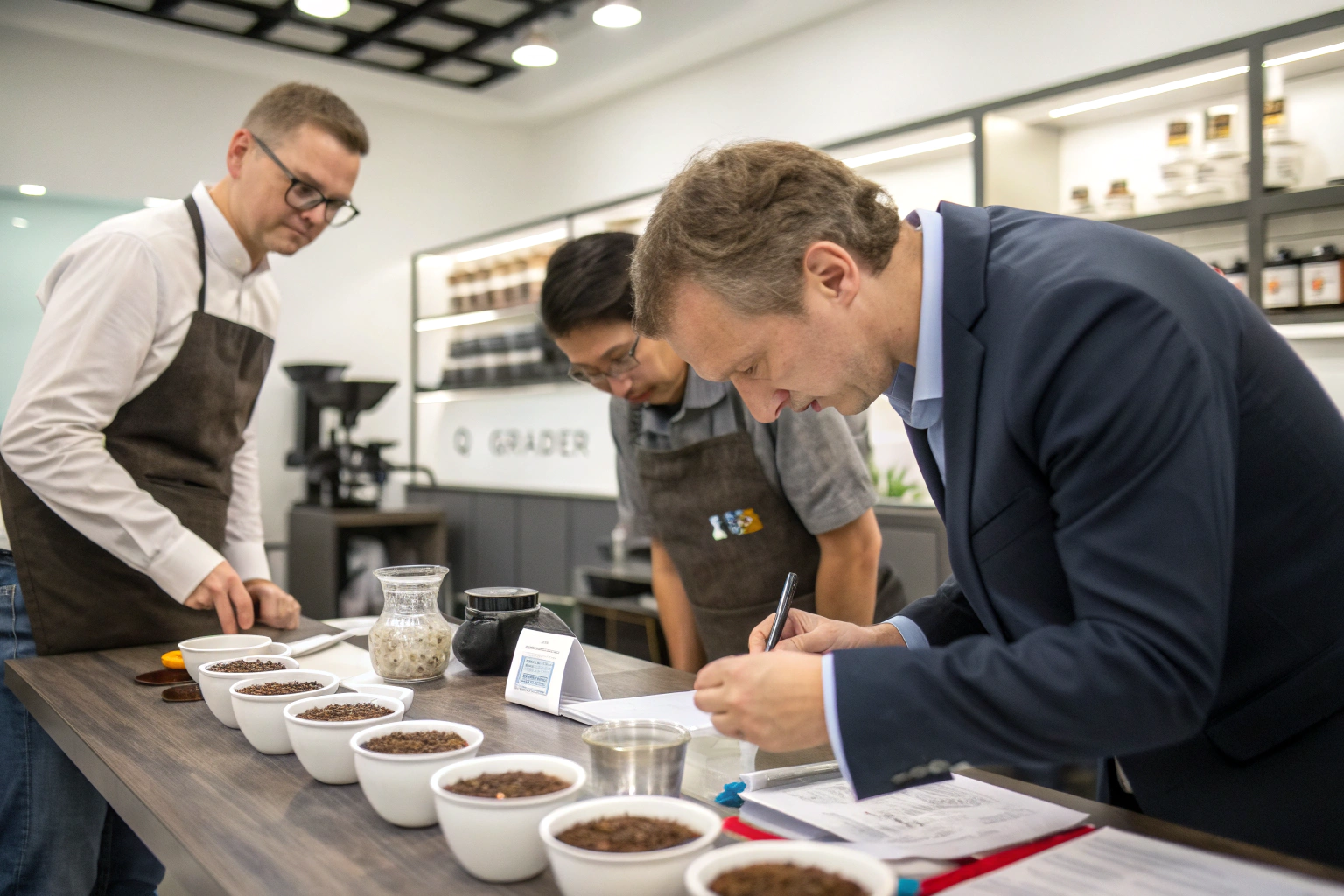
You’ve just received a container of green coffee from a new supplier. The pre-shipment sample was an 84-point coffee—clean, sweet, with distinct citrus notes. You open a sack from the shipment, roast a batch, and cup it. The score drops to 80. It’s not awful, but it’s muted. The citrus is faint, and there’s a slight woody note. You paid for an 84. This isn't a minor disappointment; it's a direct financial loss and a threat to your product consistency. For a commercial buyer managing tight margins and brand promises, a dispute over quality grades isn't an "if," but a "when." How you handle it defines your business integrity and your future supplier relationships.
To handle disputes over coffee quality grades effectively, you must rely on a pre-agreed, objective framework centered on certified cupping protocols, third-party arbitration, and clear contractual terms. The process is not about confrontation, but about collaborative problem-solving using mutually recognized standards. Success depends on documented evidence from the entire transaction chain: the original sample, the contract's quality specifications, and a professional, blind cupping of the disputed lot versus the reference sample.
A dispute is a test of your sourcing system, not just a disagreement. It reveals whether your agreements are built on vague promises or verifiable metrics. Let's walk through the professional, step-by-step process that protects your interests while preserving valuable trade partnerships.
Why Do Quality Grade Disputes Happen?
First, understand the root causes. Disputes rarely arise from pure malice. More often, they stem from systemic gaps or misaligned expectations in a complex, natural product supply chain. Knowing the common causes helps you prevent them and, when they occur, address them logically rather than emotionally.
The gap between a small, perfect pre-shipment sample and a 20-ton container shipment is where risk lives. Variability is inherent in agriculture, but unacceptable deviation from a contractually agreed standard is a breach. The triggers are usually identifiable.
Is It a Sampling Error or a Lot Inconsistency Issue?
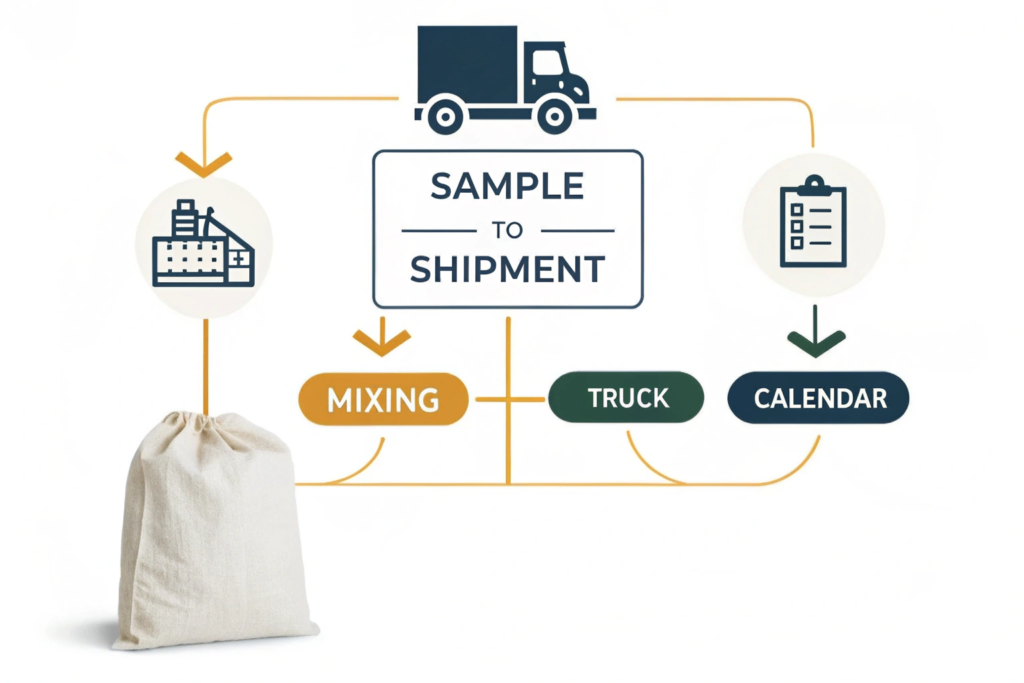
This is the most common source of dispute. The pre-shipment sample might have been meticulously prepared from the very top of a specific, superior lot. The actual shipment, however, could be a blend that includes coffee from other plots or a later harvest with different characteristics. This isn't always deceit; it can be an operational failure in lot separation. Alternatively, the sample might have been 250g of perfectly sorted beans, while the shipment contains the normal distribution of beans, including a higher percentage of quakers or slight defects that drag down the cup. The dispute hinges on whether the sample was truly representative of the commercial lot.
Could Transit Conditions Have Degraded the Coffee?
Coffee is a living product. Green beans can degrade during long sea voyages, especially if the container experiences extreme temperature swings, high humidity, or contamination from previous cargo. A shipment that left the warehouse as an 84 could arrive as an 82 if it was stored near a heat source or exposed to moisture. Another factor is time: a sample from the early harvest might cup differently than the main harvest shipment, even from the same farm, due to rainfall or processing adjustments. Distinguishing between supplier failure and logistics damage is a critical step in the dispute process.
What Preparation Before Shipping Prevents Disputes?
The best dispute is the one you never have. Your strongest weapon is a meticulously crafted contract and clear pre-shipment protocols. This preparation establishes the rules of the game before the first bean is loaded. It transforms subjective opinions into objective, measurable criteria.
Think of this phase as building a legal and qualitative fortress around your transaction. It requires specificity and foresight. Vague contracts invite disputes; precise contracts resolve them.
Why is a Jointly Sealed Reference Sample Non-Negotiable?
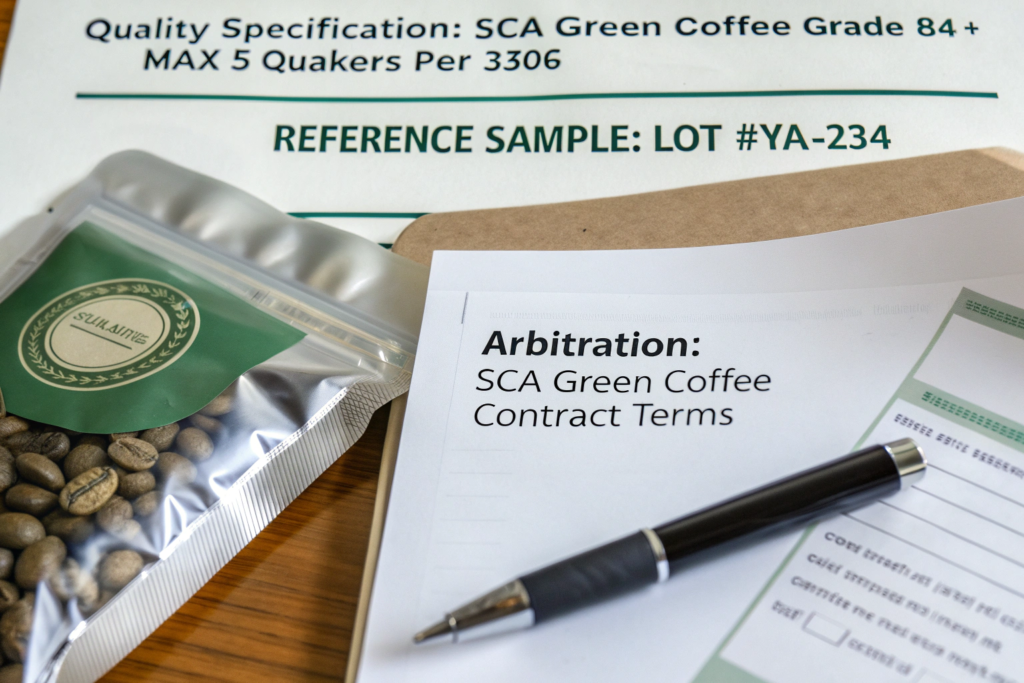
Before any contract is signed, you must obtain a jointly sealed reference sample. This isn't just any sample. It should be drawn from the exact, identifiable lot that will be shipped, witnessed or agreed upon by both parties, and then sealed in a tamper-evident bag with the lot number, date, and signatures/initials across the seal. This sample becomes the physical law of your agreement. In any dispute, this sealed sample is opened and cupped blind against samples from the shipment. Its quality defines what you paid for. Any reputable supplier, like Shanghai Fumao, will insist on this practice—it protects both parties. Without it, you're arguing about memories, not evidence.
What Contractual Terms Must Be Explicitly Defined?
Your contract must move beyond "good quality green coffee." It must specify:
- Grading Standard: Specify the system (e.g., SCA Green Coffee Classification, Brazil/New York methods). State the minimum acceptable score (e.g., SCA 84+).
- Defect Allowances: Specify maximum counts for primary and secondary defects per 350g sample.
- Moisture Content: State the acceptable range (e.g., 10-12%).
- Bean Size/ Screen Size: If relevant (e.g., Screen 17/18).
- Dispute Resolution Clause: State the agreed process: re-cupping by a mutually agreed third party (like a licensed Q Grader) and the arbitration rules (e.g., the Green Coffee Association (GCA) contract terms). Also, define financial adjustments for quality downgrades.
This clarity leaves no room for interpretation when problems arise.
What is the Step-by-Step Process During a Dispute?
When a discrepancy is suspected, emotion must be sidelined immediately. A procedural, evidence-based approach must take over. This process is designed to be fair, transparent, and focused on finding a factual resolution. Jumping to accusations or financial demands will only poison the relationship and obscure the truth.
Follow these steps methodically. They are the industry's best practice for a reason.
What Are the First Formal Steps After Identifying an Issue?
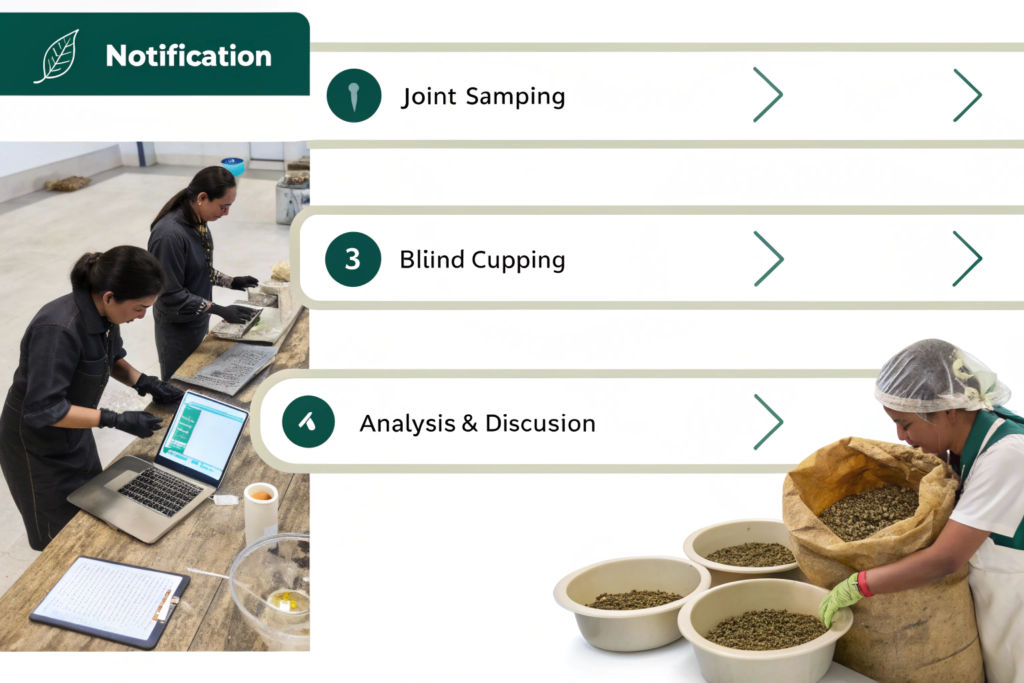
- Immediate Notification: Inform the supplier in writing (email) within the contractually agreed period (often 7-14 days of arrival). Be factual, not accusatory. "We have cupped the arrival samples from Lot #XYZ and observed a significant deviation from the reference sample profile, scoring it at 80 points. We request a joint review as per our contract."
- Preserve Evidence: Do not process or sell the coffee. Isolate the shipment.
- Propose Joint Re-Sampling: Invite the supplier to send a representative to jointly draw new samples from multiple sacks in the shipment, or agree on a certified third party to do so. This eliminates claims of biased sampling on your part.
How Does a Formal, Blind Cupping Arbitration Work?
This is the core of resolution. Both parties agree on a neutral, certified Q Grader or a recognized lab (like the Coffee Quality Institute (CQI) network of labs). The sealed reference sample and the newly drawn shipment samples are sent to this arbitrator. They conduct a blind cupping (samples are coded, so the cupper doesn't know which is which). The cupper scores each sample using the SCA protocol or the method specified in the contract. The resulting scoresheet is the definitive, unbiased judgment. It answers the fundamental question: Is there a material, measurable difference?
What Are the Possible Resolutions and How to Enforce Them?
The cupping results dictate the path forward. There are typically three outcomes, each with a standard commercial resolution. The goal is to reach a settlement that acknowledges the loss in value without necessarily destroying the business relationship.
Having pre-agreed terms in your contract makes this phase a simple execution of rules, not a tense re-negotiation.

What Happens if the Coffee is Confirmed as Lower Grade?
If the arbitration confirms a lower grade, the supplier is in breach of contract. Standard resolutions, per GCA norms, include:
- Price Adjustment (Most Common): A discount is applied. The discount is often proportional to the quality drop. For example, a drop from 84 to 82 might trigger a 3-5% price reduction. This allows you to keep the coffee (useful for blends) while being compensated for its reduced value.
- Rejection and Return: For a severe downgrade or a fundamental breach (e.g., wrong coffee type, high defect count), you may have the right to reject the shipment. The supplier must arrange and pay for return shipping and refund your payment. This is costly for both parties and is usually a last resort.
- Replacement: The supplier may offer to replace the lot with one that meets the spec, though this involves more time and logistics.
Your contract should specify which resolution applies to different levels of quality deviation.
How to Maintain the Relationship After a Settled Dispute?
A professionally handled dispute can strengthen a relationship. Once settled, view it as a system improvement. Have a debrief call. Ask: "How can we prevent this next time? Do we need better lot separation? More frequent pre-shipment cupping?" A supplier who takes responsibility and improves their process is more valuable than one who never makes mistakes. If the dispute revealed intentional fraud or a complete refusal to honor the contract, you have your answer about a long-term partnership. For a reliable partner, the dispute process is a stress-test that proves the resilience of your mutual commitment to quality.
What Are the Best Practices for Long-Term Quality Assurance?
Beyond dispute resolution, build a system that minimizes future risks. This involves investing in your own quality infrastructure and deepening your partnership with suppliers who value transparency.
Proactive quality assurance is cheaper than reactive dispute resolution. It turns you from an inspector into a collaborator.
Consider these two strategic practices.
Recraft指令--An image split between two locations. On the left, a buyer's in-house lab where a staff member is cupping incoming coffee against a digital database of past samples. On the right, a live video call on a tablet showing a real-time cupping session at the supplier's origin facility in Yunnan. The image connects remote verification with hands-on quality control.
Should You Invest in In-House Q Grader Training?
Yes. Having a certified Q Grader or trained cupper on your staff is one of the best investments you can make. It allows you to:
- Evaluate pre-shipment samples with authority.
- Perform consistent arrival quality checks.
- Communicate quality feedback using the universal SCA lexicon.
- Present stronger evidence if a dispute arises.
Your in-house expert gives you credible, immediate quality intelligence, reducing reliance on external parties for basic evaluations. It signals to suppliers that you are a sophisticated buyer who cannot be easily misled.
How Can Origin Visits and Process Audits Build Trust?
Nothing prevents disputes like seeing the operation firsthand. Origin visits to your supplier's farms and mills, like our plantations in Baoshan, allow you to understand their challenges, their sorting processes, and their lot management. You can participate in pre-shipment cuppings on-site, agreeing on the quality together before the coffee even leaves the country. This "eyes on the ground" approach builds immense trust and aligns expectations perfectly. It transforms the relationship from transactional to collaborative, making disputes far less likely and much easier to resolve if they do occur.
Conclusion
Handling disputes over coffee quality grades is an inevitable part of international trade, but it need not be destructive. The professional approach is systematic: it begins with iron-clad contracts and sealed reference samples, escalates through formal, blind third-party cupping arbitration, and resolves with clear, pre-agreed financial adjustments. This process protects your financial interests while testing and ultimately strengthening relationships with credible suppliers.
For buyers like Ron, whose business depends on consistent quality, building this rigorous framework is not optional—it's essential. At BeanofCoffee, we welcome this professional approach. Our contracts are clear, our samples are sealable, and we view the arbitration process as a fair mechanism to ensure mutual satisfaction. We believe transparency at every stage is the best way to build lasting partnerships. If you value a supplier who engages with quality disputes professionally and proactively, let's discuss. Contact our sales director, Cathy Cai, at cathy@beanofcoffee.com to request a copy of our standard contract and quality assurance protocol. Let's ensure our business is built on clarity, not confusion.