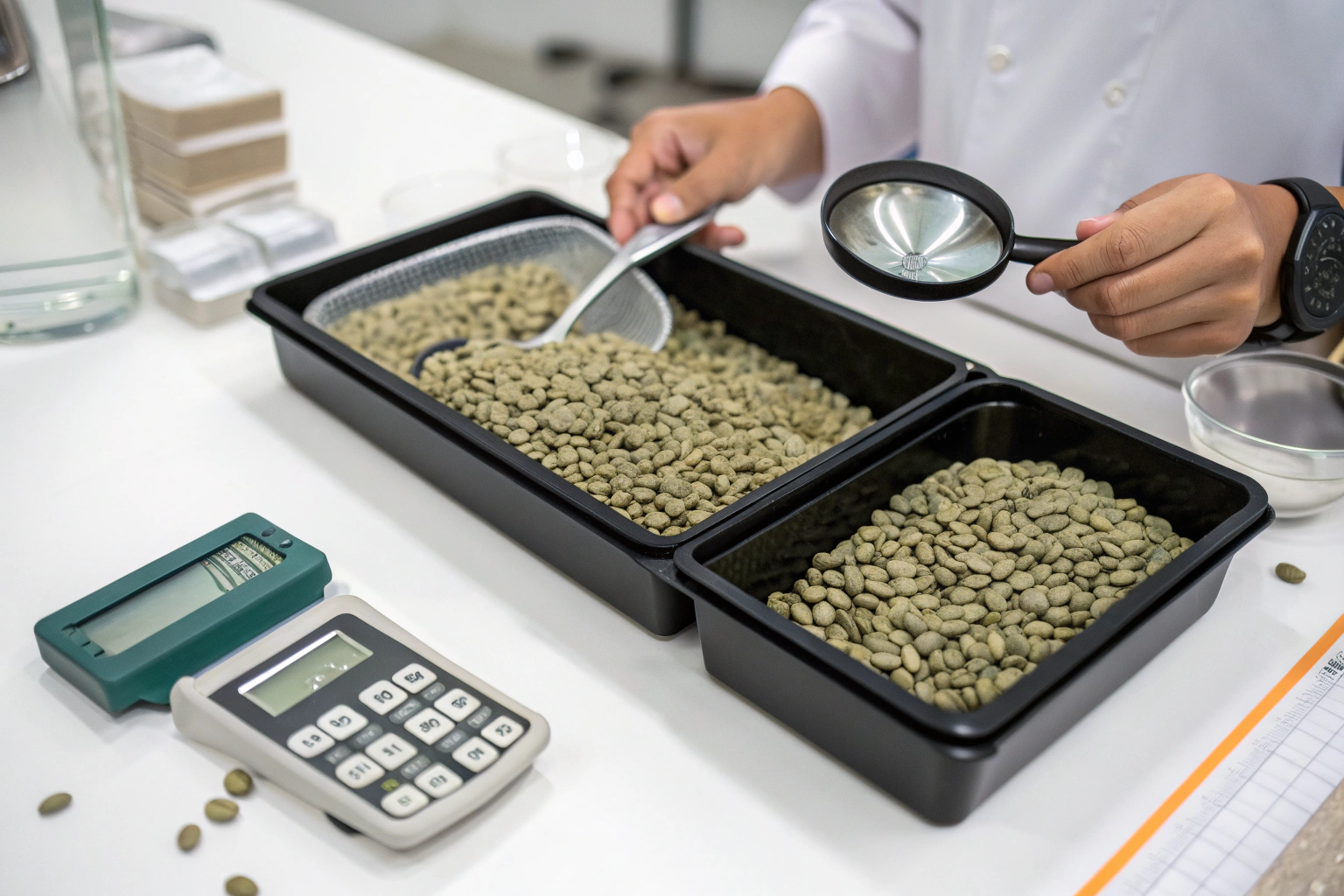
You're staring at a sample of green Arabica beans. The price is premium, but is the quality truly there? Choosing wrong means wasted money and disappointing your customers. The difference between exceptional and mediocre coffee isn't always obvious at first glance—it requires knowing exactly what to look for.
Identifying high-quality Arabica coffee beans involves assessing their physical characteristics, origin information, and processing methods. Key indicators include a consistent bluish-green color, high density, uniform size and shape, a fresh grassy aroma, and documentation of their origin and grade. The ultimate test, however, is in the roasting and cupping.
So, how can you train your eye and your palate to consistently spot truly superior beans? Let's break down the specific checklist that professional buyers use to separate the extraordinary from the ordinary.
What Physical Characteristics Signal Superior Quality?
The story of quality begins with the bean's physical appearance. Before you ever taste the coffee, the beans themselves reveal crucial information about their growing conditions and processing care.
High-quality Arabica beans should be visually consistent, dense, and have a healthy color. Inconsistencies in size, color, or shape often indicate poor sorting, mixed varieties, or improper processing—all red flags for quality.
Why Does Bean Density Matter So Much?
Density is the single most important physical indicator of quality. Dense beans come from high-altitude growth (typically above 1,200 meters) where slower maturation develops more complex sugars. To test density, try the "salt water test": high-quality beans will sink in a saturated salt solution, while lower-density beans will float. Dense beans also make a sharp "crack" when bitten. This hardness translates directly to better sugar development during roasting and a more complex cup.
What Does the Color and Smell Tell You?
Look for a vibrant, bluish-green or deep green hue. Yellowish, faded, or uneven coloring suggests age, poor storage, or improper drying. The aroma should be fresh and grassy—not musty, dusty, or neutral. A musty smell indicates potential mold from storage in high humidity, while a fermented or sour smell points to processing defects. Your initial visual and olfactory inspection can eliminate subpar samples before you invest time in cupping.

How Does Origin and Processing Impact Quality?
The bean's passport—its origin and processing method—tells you about its potential even before you see it. True quality is traceable to a specific place and a careful process.
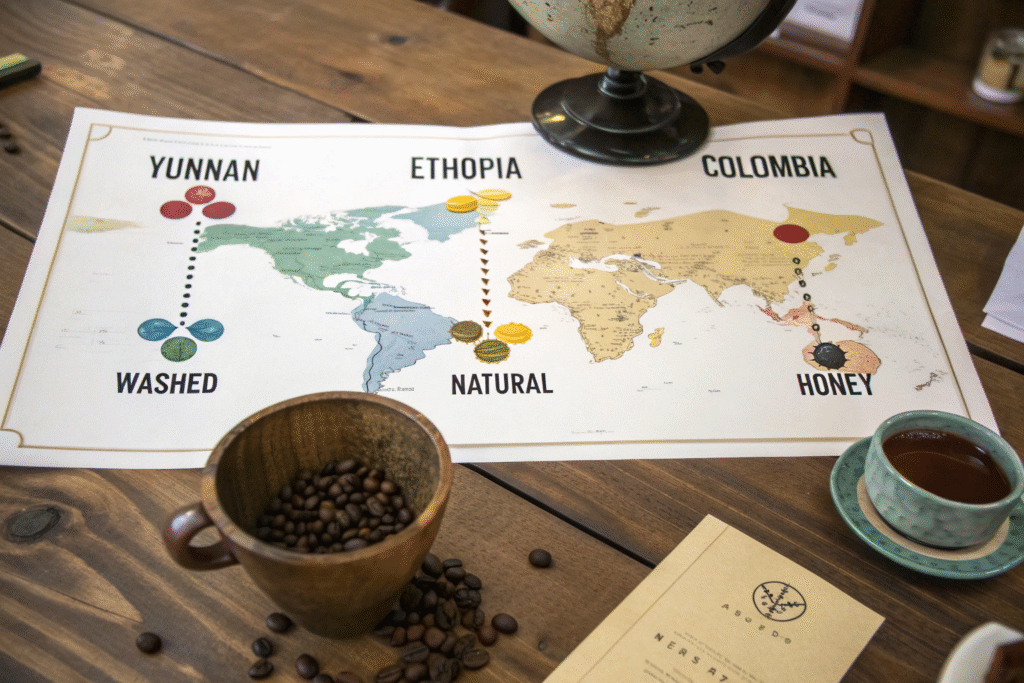
Superior Arabica comes from recognized growing regions with ideal terroir—high altitude, volcanic soil, and stable climate. The processing method (washed, natural, or honey) must be appropriate for the region and expertly executed.
What Origin Information Should You Look For?
The more specific, the better. "Arabica from Brazil" tells you very little. "Strictly Hard Bean (SHB) Arabica from our farm in Yunnan at 1,500 meters" tells you everything about its quality potential. High-altitude designations like SHB, HG (High Grown), or SHG (Strictly High Grown) are reliable proxies for density and complexity. At BeanofCoffee, we provide this level of origin transparency for all our lots.
How Does Processing Method Affect Your Choice?
The processing method shapes the flavor profile. Washed processing tends to produce clean, bright coffees that highlight the bean's intrinsic character—ideal for assessing pure quality. Natural processing can create intense fruitiness but may mask inherent defects. For evaluating a new supplier's baseline quality, start with their washed coffees. A well-executed wash process is a mark of a skilled producer who values clarity and precision.
What is the Role of Certification and Grading?
While certifications don't guarantee fantastic flavor, they do provide verified information about how the coffee was produced. Combined with official grading, they form a reliable framework for quality assessment.
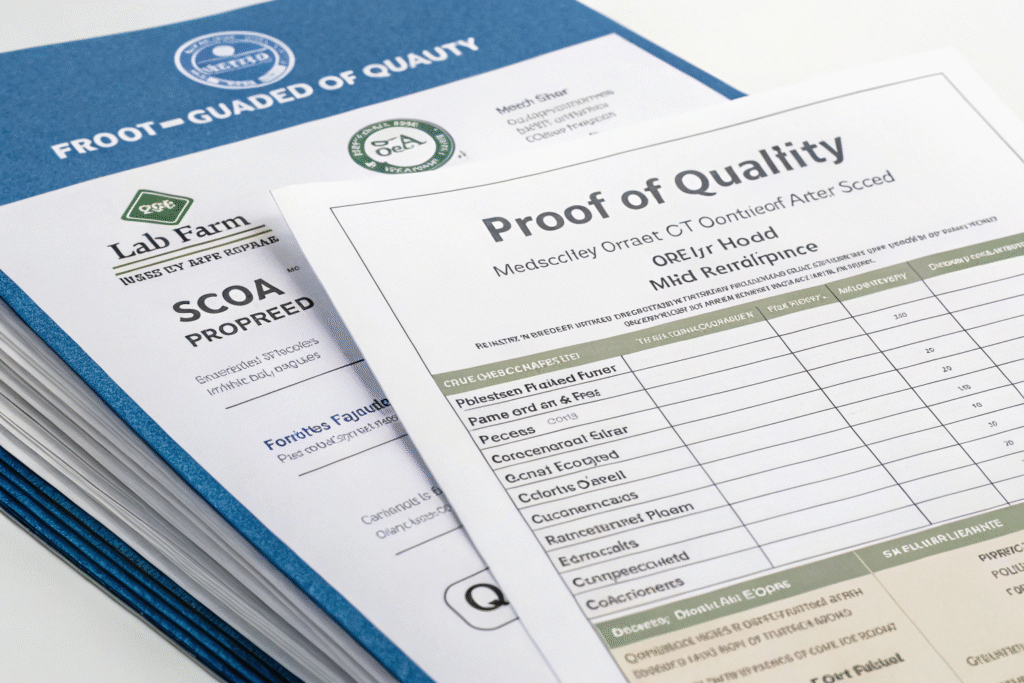
Look for proof of specialty grade status (e.g., SCA score above 80), along with any relevant certifications like Organic or Fairtrade that align with your values. These documents provide third-party validation of quality claims.
What Do SCA Quality Scores Mean?
The Specialty Coffee Association (SCA) grading scale is the global standard. Coffees scoring 80-100 points are classified as "Specialty Grade," meaning they are free of primary defects and have distinctive attributes. A score of 85+ indicates excellent coffee, while 90+ is exceptional. Always ask for the official grade score when considering a premium Arabica.
How Can You Verify the Quality Claims?
Reputable suppliers will provide documentation, including the lot's specific grade, moisture content (ideal is 10-12%), and screen size (consistency). They should be willing to share cupping scores and notes. If a supplier is vague or defensive about these details, consider it a major red flag. This supplier verification process is your due diligence.
What is the Ultimate Test: Roasting and Cupping?
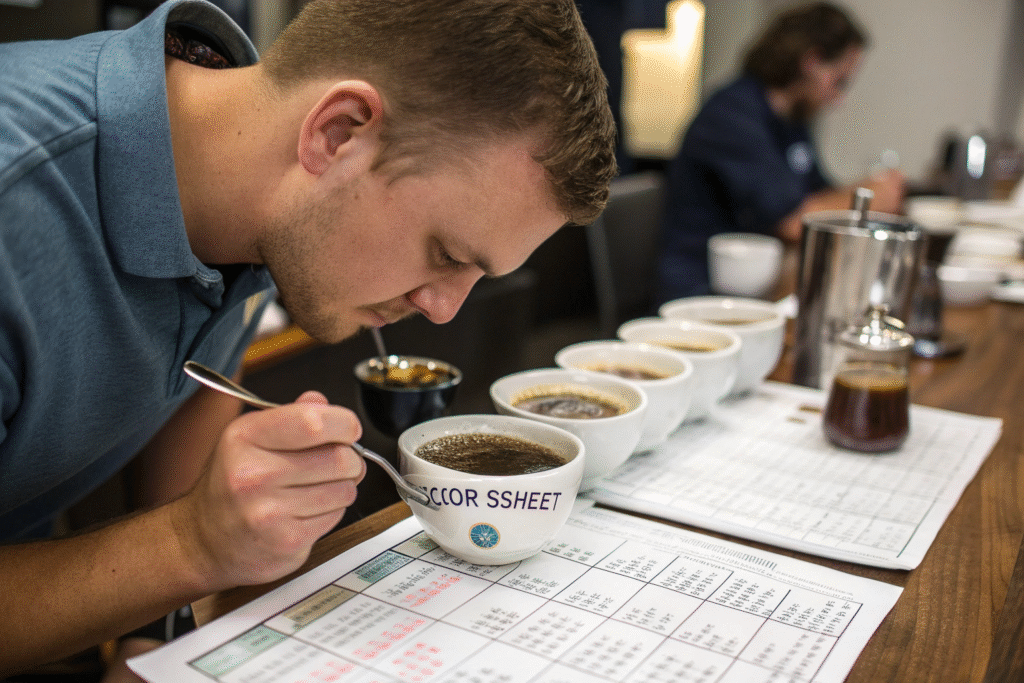
All the visual checks and paperwork lead to this moment. The final, non-negotiable test of quality happens in the roaster and on the cupping table. The bean must prove itself in the cup.
Roast a sample to a medium profile (just past first crack) to best evaluate its inherent qualities. Then cup it professionally—this standardized tasting method removes variables and reveals the coffee's true character.
What Flavors and Aromas Indicate High Quality?
In the cup, look for clarity, complexity, and a pleasant aftertaste. High-quality Arabica will have a balanced sweetness (like caramel or honey), vibrant acidity (like citrus or red fruit), and a clean finish. Defects manifest as off-flavors: mustiness, sourness, or a flat, empty profile. The presence of distinct flavor notes is a hallmark of specialty coffee.
Why is the Cupping Score So Important?
The formal cupping score quantifies what you're tasting. It evaluates fragrance/aroma, flavor, aftertaste, acidity, body, balance, and more. A high score across all categories confirms the quality you observed in the green beans. This is where the sensory evaluation validates all your previous checks.
Conclusion
Identifying high-quality Arabica coffee is a systematic process that moves from visual inspection to origin verification, and finally to the ultimate test in the cup. Look for dense, uniformly sized beans with a vibrant color and fresh aroma. Demand transparency about origin and processing. Verify quality through official grading and, most importantly, trust your palate through rigorous cupping.
The ability to consistently identify superior beans is what separates amateur buyers from professional ones. This skill protects your business and ensures you can deliver an exceptional product to your customers. If you are looking for a supplier that consistently delivers high-quality, traceable Arabica, we invite you to evaluate our beans. Contact our export manager, Cathy Cai, at cathy@beanofcoffee.com to request samples of our premium Yunnan Arabica and see the difference for yourself.