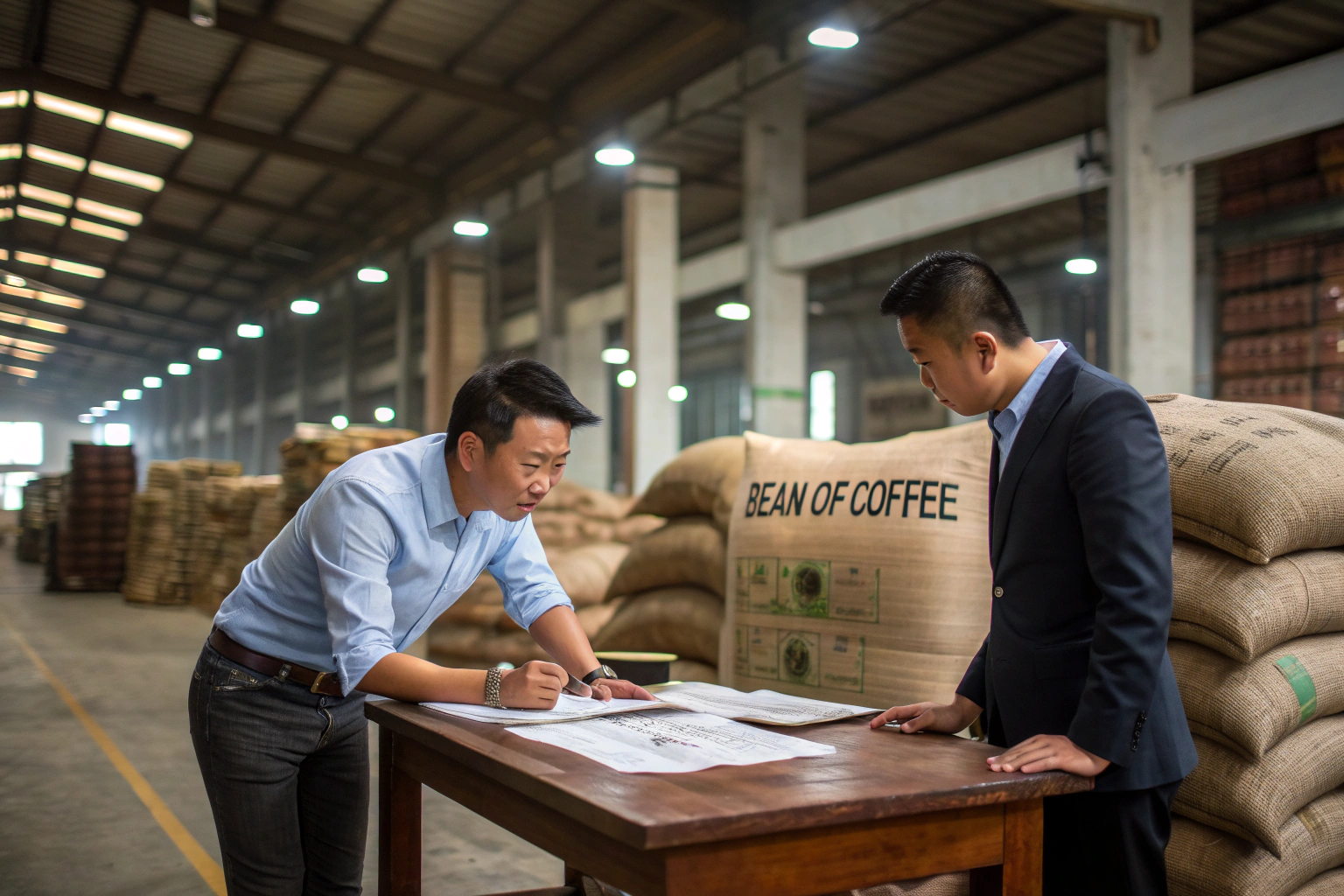
Look, I get it. You are looking at the coffee market right now, and the numbers are keeping you up at night. You have seen the price of Brazilian Arabica fluctuate wildly, and you are likely tired of the standard offerings everyone else has on the shelf. You are here because you heard a whisper about Yunnan coffee—specifically about what we are doing in Baoshan. You know the quality is climbing fast, rivaling some of the best Central American cups, but the price point is where the real magic happens. You are a business owner, Ron, not a gambler. You want to protect your margins, but the idea of navigating the Pacific Ocean logistics, the trade war rhetoric, and the labyrinth of FDA regulations feels like a headache you don't have time for.
But what if I told you that importing from China is not the "Wild West" anymore? As a plantation owner here in Baoshan with over 10,000 acres, I have shipped thousands of containers to places like Oakland, Seattle, and New York. It is not magic; it is just a process. A strict, repeatable process. The problem is that most people overcomplicate it, or worse, they rely on outdated information from five years ago. You need a strategy that prioritizes speed and cost-efficiency without sacrificing the safety of your cargo. That is exactly what we do at BeanofCoffee. We don't just grow the beans; we handle the headache so you can handle the roasting.
To import coffee beans from China to the USA, you must first secure a supplier who holds a valid FDA Food Facility Registration and a DUNS number. The process involves four critical steps: negotiating favorable Incoterms (typically FOB or CIF), arranging the Importer Security Filing (ISF) at least 24 hours before the cargo loads at the Chinese port, filing the FDA Prior Notice, and clearing US Customs using the correct HTS code (usually 0901.11.00). While unroasted coffee is often duty-free, you must account for potential Section 301 tariffs. Success depends entirely on rigorous pre-shipment sampling and partnering with a freight forwarder who understands the specific requirements of the China-US trade lane.
It sounds like a mountain of paperwork, doesn't it? Honestly, the first time I sent a container to a roaster in Seattle years ago, I was terrified it would get stuck in Long Beach forever or be rejected for a typo. But it didn't. And yours won't either, provided you stop looking at this as an "import" problem and start looking at it as a "supply chain" strategy. You need to know exactly which lever to pull and when. Let's break down the specific questions I know you are asking yourself right now, starting with the biggest variable in your cost structure: the shipping.
What Is the Best Shipping Method?
If you are used to buying spot coffee from a warehouse in New Jersey, the concept of "sailing schedules" might feel a bit archaic. But when you buy direct from us, you are the importer of record, and that means you control the freight. You might be thinking, "Should I just fly it in to get it faster?" Let me stop you right there. Unless you are shipping a tiny sample lot or a micro-lot of Geisha that sells for $50 a cup, air freight is going to kill your margins before you even start. You care about price, right? Then we need to talk about the ocean.
For wholesale coffee imports, Ocean Freight (FCL or LCL) is the only viable option for profitability. Full Container Load (FCL) is faster and safer, taking approximately 18-25 days to the West Coast and 30-40 days to the East Coast. Less than Container Load (LCL) saves money on smaller orders but adds 7-10 days for consolidation and increases the risk of contamination.
Let's analyze this with a bit of critical thinking. Why does "fast" sometimes mean "loss"? In the coffee game, stability beats speed every single time. When we ship from Baoshan, we truck the beans to the port of Shenzhen or Shanghai. If you choose FCL (Full Container Load), that container is sealed at our farm and not opened until it hits your dock in the US. This minimizes the risk of contamination—a huge deal for FSMA compliance. However, if you are testing the waters with a smaller order, say 50 bags, you will likely use LCL (Less than Container Load).
Here is the catch that most trading companies won't tell you: with LCL, your coffee sits in a consolidation warehouse waiting for other people's goods to fill the box. This increases the risk of "taint"—you don't want your high-end Catimor sitting next to a pallet of scented candles or rubber tires. Another way to look at this is the "Cash Flow vs. Lead Time" calculation. If you order FCL, you tie up cash for 40 days, but your landed cost per pound drops significantly, allowing you to undercut competitors.
Comparison of Shipping Methods
| Feature | Air Freight | Sea Freight (FCL) | Sea Freight (LCL) |
|---|---|---|---|
| Cost | Very High ($5-$10/kg) | Low ($0.10-$0.30/kg) | Medium ($0.50-$1.00/kg) |
| Speed | 3-7 Days | 18-40 Days | 25-50 Days |
| Risk | Low | Lowest | Medium (Consolidation) |
So, what does this mean? It means if you can afford the cash flow, always aim for a full container.
How Long Does Shipping Really Take?
You might see "18 days to Los Angeles" on a freight quote, but is that real? Honestly, rarely. That is the port-to-port time, not the reality of your business cycle. You need to factor in the "Door-to-Door" reality. In my experience with clients in California, you need to buffer for customs clearance in China (2-3 days), the actual sailing (18-25 days depending on weather), US Customs & FDA Hold (2-5 days), and the last mile delivery (2-4 days).
If you are planning for the holiday rush, do not wait until October. You need to be talking to me in August. A smart buyer always pads the schedule because a storm in the Pacific doesn't care about your roasting schedule. For real-time tracking of vessel schedules and to get a realistic idea of transit times, I highly recommend you check sites like MarineTraffic to see actual ship movements. You can also look at carrier schedules directly on Maersk to see the frequency of sailings from Shanghai.
Who Handles the Logistics?
You have two choices here: you handle it, or I handle it. We can do FOB (Free On Board), where I get the coffee to the ship in Shanghai and you hire a freight forwarder to handle the rest. This gives you more control over costs and is usually what experienced buyers like you prefer. Or we can do CIF (Cost, Insurance, and Freight), where I pay the shipping to your US port.
Most of my savvy buyers, the ones who are really watching the bottom line, prefer FOB. Why? Because they have a relationship with a US forwarder who can navigate the complexities of US Customs better than a Chinese agent can. If you don't have a forwarder yet, I suggest looking at tech-forward companies like Flexport which give you great visibility, or browsing rates on Freightos to keep your quotes honest.
Do I Pay Tariffs on Chinese Coffee?
This is the question that makes everyone nervous, right? You hear "Trade War" and you picture 25% of your hard-earned margins vanishing into thin air. It is a valid fear. The tariff landscape between China and the US is... let's just call it "fluid." But let's strip away the politics and look at the HS Codes, because that is the only thing the Customs officer cares about when your beans land in Oakland. You need to know exactly what you are paying before you even sign the contract with us.
Generally, unroasted coffee beans fall under HTS code 0901.11.00, which is duty-free for most of the world. However, due to Section 301 tariffs, coffee from China may be subject to an additional duty (often 7.5% to 25% depending on the current 'List'). It is crucial to consult the latest US Trade Representative (USTR) lists before ordering.
So, what does this mean for your bottom line? It means you need to do the math before you wire the deposit. Even if there is a tariff, you have to look at the Landed Cost. Let's build a scenario. Say you buy Colombian Excelso at $2.40/lb. No tariff. Total = $2.40. Now, say you buy our BeanofCoffee Premium Catimor at a much more competitive farm-gate price. Even after adding shipping and a potential tariff, you often still end up cheaper than the South American spot market.
That is the calculation the big trading companies are doing. They complain about tariffs in public, but they keep buying from us in private because the base price makes sense. You must check the data yourself. Do not guess. I always tell my clients: ignorance is the most expensive tax you will pay.
How to Classify Your Coffee Correctly?
Classification is everything. If you import "Roasted Coffee" (0901.21), the duties are different than "Green Coffee" (0901.11). Since we mostly export raw green beans for wholesale, you will almost strictly use 0901.11.00. This code stands for "Coffee, not roasted, not decaffeinated." If you were buying decaf, it would be 0901.12.00.
If you misclassify this to try and save a few percent, CBP (Customs and Border Protection) can fine you heavily, and it flags you for future inspections. It is not worth the risk. Always double-check your HTS codes at the Official USITC HTS Search. You can also cross-reference this with the CBP Rulings Online System to see how other importers have classified similar goods.
What About the Merchandise Processing Fee?
Tariffs aren't the only cost you need to worry about. You will also pay the MPF (Merchandise Processing Fee). Since your shipment will definitely be over $2,500, this is considered a "Formal Entry." The fee is an ad valorem rate, usually around 0.3464% of the value of the goods.
And if your goods arrive by ocean freight (which they should), you also have to pay the HMF (Harbor Maintenance Fee), which is another 0.125%. These are small percentages, but on a $50,000 container, they add up to real money. You need to budget for this. You can read more about these specific user fees on the CBP User Fee Information page. For a broader overview of import fees, check out USA.gov's Import/Export guide.
What Documents Are Needed for US Customs?
You are a confident guy, Ron, but nothing humbles a man like a "Customs Hold" notification email on a Friday afternoon. I have seen shipments sit on the dock for weeks simply because a piece of paper was missing a signature or a weight declaration was off by a few kilos. The US Customs system is efficient, but it is unforgiving. You need to have your paperwork stack ready before the ship even leaves Baoshan. This is where I see most new importers fail—they think they can fix paperwork later. You can't.
To clear US Customs, you need five core documents: the Commercial Invoice, Packing List, Bill of Lading (B/L), Country of Origin Certificate, and the FDA Prior Notice confirmation. The FDA Prior Notice must be filed electronically before arrival, and the ISF (10+2) must be filed by your importer 24 hours prior to loading at the Chinese port.
Let's dig into the "Why." Why does the FDA care so much? It's about bioterrorism and food safety. The FDA Prior Notice tells them exactly what food is entering the country and where it came from. If you fail to file the ISF (Importer Security Filing) on time, CBP can issue a $5,000 fine per violation. Yes, $5,000. I had a client once who forgot to tell his forwarder to file it because he was "too busy" roasting. That mistake cost him more than the profit on the beans.
Here is a checklist I give to all my new partners: 1) Commercial Invoice: Must list the buyer, seller, value, and detailed description. 2) Packing List: Net weight, gross weight, number of bags. 3) Bill of Lading: The "title" to the goods. 4) Certificate of Origin: Proves the beans are actually from China (crucial for tariff calculation). 5) Phytosanitary Certificate: Proves the beans are free of pests.
What Is the FDA Prior Notice?
This is non-negotiable. You or your broker must log into the FDA interface and declare the shipment before it arrives. You will need my FDA Food Facility Registration Number. Don't worry, BeanofCoffee is fully registered and compliant. Without this number, your coffee will be refused entry.
It will sit at the port, accruing "demurrage" (storage fees) that can run hundreds of dollars a day. It effectively destroys your profit. You can learn how to file this correctly on the FDA Official Guide to Prior Notice. You should also familiarize yourself with the Bioterrorism Act requirements to understand the legal stakes involved.
Why Is the Bond Important?
You cannot import into the US without a Customs Bond. This is essentially an insurance policy that guarantees the US government gets paid its duties and taxes. You have two types: a Single Entry Bond (good for one shipment) or a Continuous Bond (covers you for a year).
If you plan to buy from us regularly—which I hope you do—get the Continuous Bond. It speeds up clearance and is cheaper in the long run if you do more than 3 shipments a year. You can purchase these through surety agencies or your freight forwarder. Read more about bond requirements at CBP Bonds. You can also find a list of licensed sureties via the Bureau of the Fiscal Service.
How Can I Verify Supplier Quality?
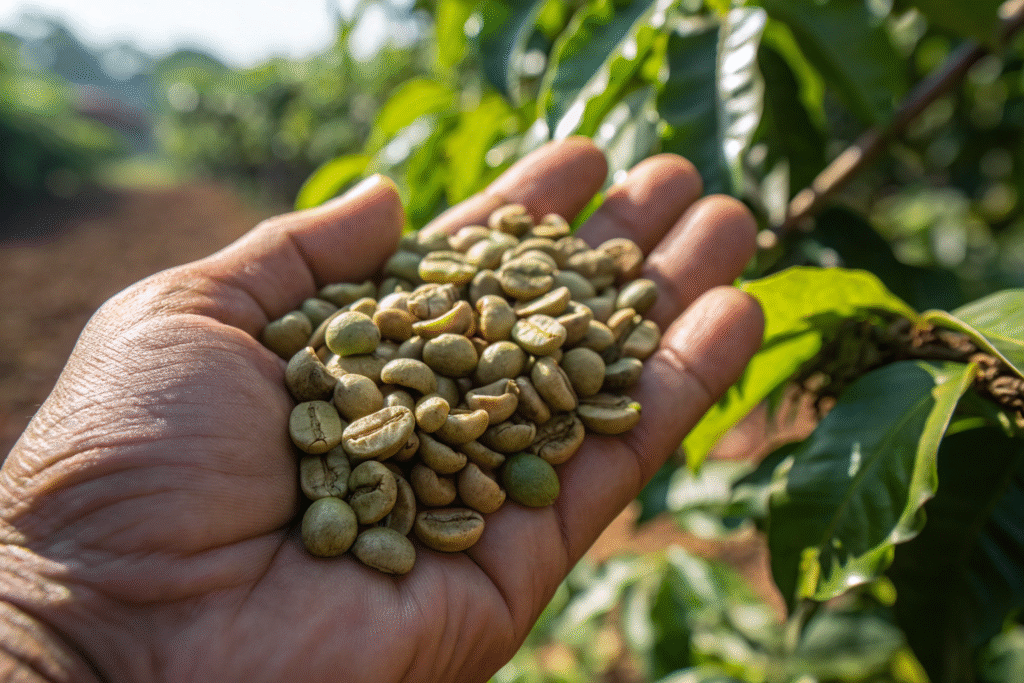
Anyone can put up a website and say they have "Premium Arabica" and post some stock photos of coffee cherries. You are used to taking the lead, Ron, so you know that trust is good, but verification is better. You are buying from the other side of the world. How do you know I am not sending you a container of defects, or last year's crop mixed with the new harvest? This is the single biggest fear for buyers like you.
Verify quality by requesting a Pre-Shipment Sample (PSS) that represents the exact lot being shipped. Ensure your supplier uses SCA (Specialty Coffee Association) grading standards. Additionally, look for third-party certifications like organic or Fair Trade, and ask for a video tour of the processing facility if you cannot visit in person.
In the coffee industry, the "Sample" is the contract. When we send you a sample, we typically send three types throughout the process. First, the Offer Sample: "This is what our coffee generally tastes like." Second, and most importantly, the Pre-Shipment Sample (PSS): "This is taken from the actual bags sitting in the warehouse ready to go onto the ship." And third, the Arrival Sample: You draw this when the container opens to compare against the PSS.
If the Arrival Sample doesn't match the PSS, you have a claim. But here is the reality: claiming against a Chinese supplier after the goods are in the US is messy and expensive. The best defense is a supplier who has too much to lose to cheat you. We own 10,000 acres. We aren't a fly-by-night trading desk; we are farmers with dirt under our fingernails.
Why Use SCA Standards?
We need to speak the same language, and that language is the SCA Cupping Form. If I tell you our Catimor scores an 83, it means something specific regarding acidity, body, and balance. It removes the subjectivity of "it tastes good."
Always ask for a Q-Grader report. It is an objective assessment of the physical and sensory quality of the beans. You can download the official cupping protocols from the Specialty Coffee Association. If you are new to cupping, the Coffee Quality Institute (CQI) offers resources and classes that are invaluable for a buyer.
Should I Hire Third-Party Inspection?
If you are moving a large volume (say, 5 containers), or if it is your first time working with a new partner, it might be worth hiring a company like SGS or Bureau Veritas to inspect the cargo in China before the doors are sealed. They check the weight, moisture content (crucial! It must be 10-12%), and bag markings.
This costs money, sure, but it buys peace of mind. It is better to spend $500 on an inspection than lose $50,000 on a container of moldy beans. Learn about inspection services at SGS Agriculture. You can also check out Bureau Veritas Commodities for similar services.
Conclusion
Importing coffee from China to the USA isn't just about moving beans; it's about moving value. Yes, there are hurdles—the shipping times, the tariffs, the FDA filings. But the reward is access to the Yunnan region, one of the fastest-growing and most underrated coffee origins in the world. By understanding the logistics, calculating the true landed cost, and verifying your paperwork, you can bypass the middlemen and secure a supply chain that gives you a competitive edge. You are smart enough to know that the harder the path, the less competition you'll find at the finish line.
If you are ready to stop just reading about Yunnan coffee and start brewing it, let’s talk. We can send you a PSS (Pre-Shipment Sample) this week so you can taste the potential yourself. For inquiries, wholesale quotes, or just to ask a few more hard questions about logistics, contact our Head of Export, Cathy Cai, at cathy@beanofcoffee.com. Let's get that first container on the water and start building your margin.