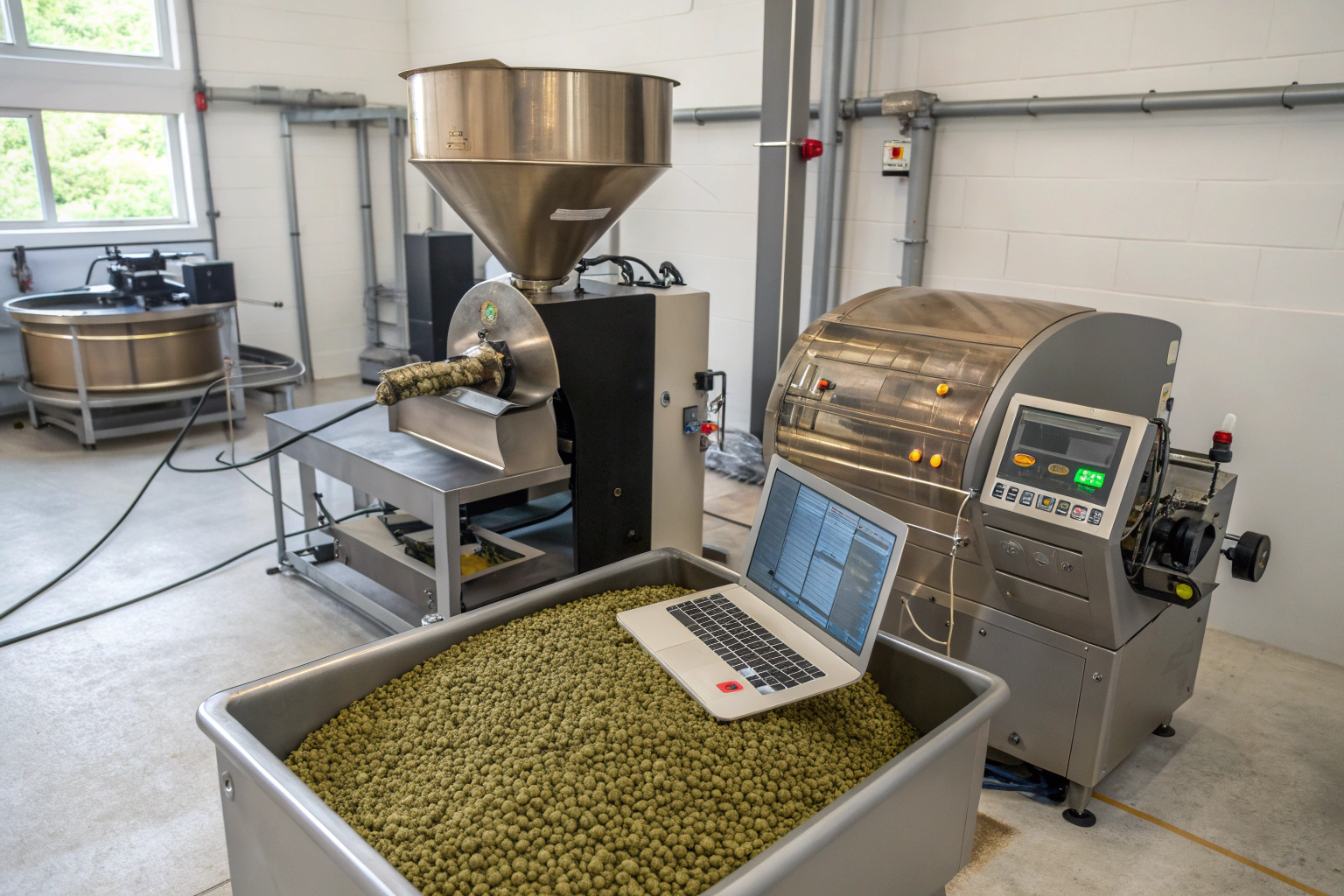
As a roastery owner, you're caught in a constant balancing act. You're obsessed with the art of roasting and achieving the perfect flavor profile. But you're also running a factory. You're dealing with the physical labor of hauling heavy sacks of green coffee, the stress of manually logging every roast, the downtime between batches, and the constant worry about consistency. The pain point is that these operational inefficiencies are not just frustrating; they are actively costing you money and limiting your growth. You feel like you're spending too much time on repetitive, low-value tasks and not enough time on what really matters: developing new products, talking to customers, and building your brand.
Honestly, the key to improving the efficiency of your roasting plant is to adopt a manufacturing mindset and systematically optimize three key areas: 1) The Physical Workflow (how beans move through your space), 2) The Roasting Workflow (how you manage the roasting process itself), and 3) The Data Workflow (how you track and use information). It's about moving from a manual, artisanal approach to a system-driven, professional operation. This doesn't mean sacrificing quality; it means creating a system that allows you to produce that quality more consistently, at a lower cost, and with less stress.
From my perspective as a large-scale producer at Shanghai Fumao, this is second nature. We couldn't process tons of coffee efficiently without obsessing over workflow and data. The same principles that allow us to run our processing mills efficiently can be scaled down to revolutionize your roasting plant. Let's break down how to tackle each of these three areas.
How Do You Optimize the Physical Workflow and Layout?
Your plant's physical layout is the foundation of its efficiency. A poorly designed space forces your team to take extra steps, lift heavy things unnecessarily, and create bottlenecks. An optimized layout creates a smooth, logical, and safe flow of materials from start to finish.
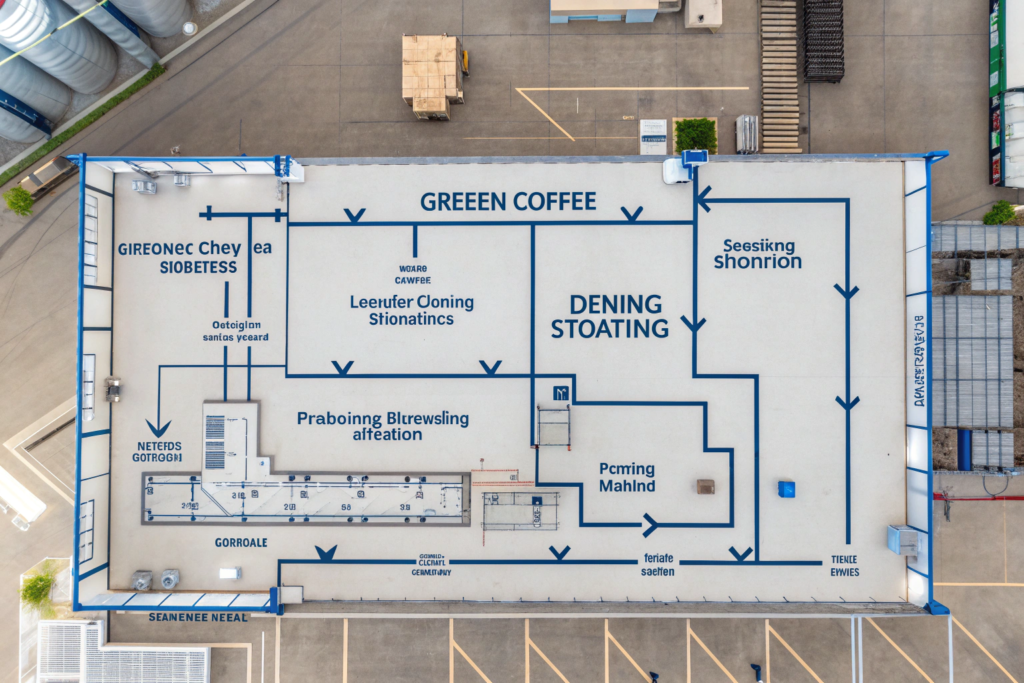
The goal is to create a one-way flow for the coffee, minimizing the distance it has to travel and eliminating any backtracking. Think of your plant as an assembly line for coffee. The product should move seamlessly from one stage to the next.
This "lean manufacturing" approach can dramatically reduce labor time and physical strain on your team.
How do you design a logical production flow?
- Linear or U-Shaped Flow: The ideal layout is either a straight line or a U-shape.
- Green Bean Storage: This should be near your loading dock or entrance.
- Roasting Area: The roaster is the heart of your plant. It should be positioned after the green bean storage.
- Cooling & Degassing: After roasting, the beans need to cool and then rest (degas). This area should be right next to the roaster.
- Packaging/Blending: This is the next station.
- Finished Goods Storage/Shipping: This should be at the end of the line, near your shipping area.
A bean should never have to cross back over its own path.
- Ergonomics and Safety: Think about how your team interacts with the space. Store heavy green coffee sacks on pallets or low shelves to minimize lifting from the floor. Ensure there is clear, wide-open space around the hot roaster for safety. Use rolling bins to move coffee between stations instead of carrying heavy buckets.
What equipment can automate material handling?
As you grow, manual labor becomes a major bottleneck. Investing in material handling equipment is a key step in scaling up.
- Green Bean Loaders: Instead of manually scooping green beans into the roaster's hopper, a pneumatic loader can use vacuum power to automatically transport the beans from a floor hopper directly into the roaster. This saves an enormous amount of time and physical effort, especially for larger batch sizes.
- Destoners: After roasting, running the coffee through a destoner not only improves food safety but also automates the process of separating the beans from any heavier foreign objects, a task that is impossible to do manually.
- Conveyors: For larger plants, simple conveyor belts can be used to move roasted coffee from the cooling tray to a packaging hopper, further automating the workflow.
How Do You Streamline the Roasting Workflow Itself?
The act of roasting is where art meets science. But the workflow around the roasting can often be inefficient. The goal is to maximize the roaster's "up-time" and ensure every batch is as consistent as the last.
The key to an efficient roasting workflow is to minimize the "turnaround time" between batches and to leverage technology to automate repetition. A roaster makes you money when it's roasting, not when it's sitting idle while you weigh out the next batch or manually log data. This is about creating a repeatable, high-throughput system.
How can you reduce the time between batches?
- "Batch Staging": While one batch is roasting, the next batch should be pre-weighed and waiting in a dedicated, labeled bin right next to the roaster. As soon as the first batch is dropped into the cooling tray, the second batch can be immediately charged into the roaster. This "staging" process can cut several minutes off your turnaround time for each batch.
- Simultaneous Cooling and Roasting: Your workflow should allow you to be cooling one batch while the next batch is already roasting. This requires a cooling tray that is efficient and large enough to handle a full batch.
- Dedicated Tools: Have all your necessary tools—logbooks, timers, tryer, cleaning brushes—at a dedicated workstation next to the roaster. Searching for a misplaced tool is a waste of valuable roasting time.
How does roast profiling software create efficiency?
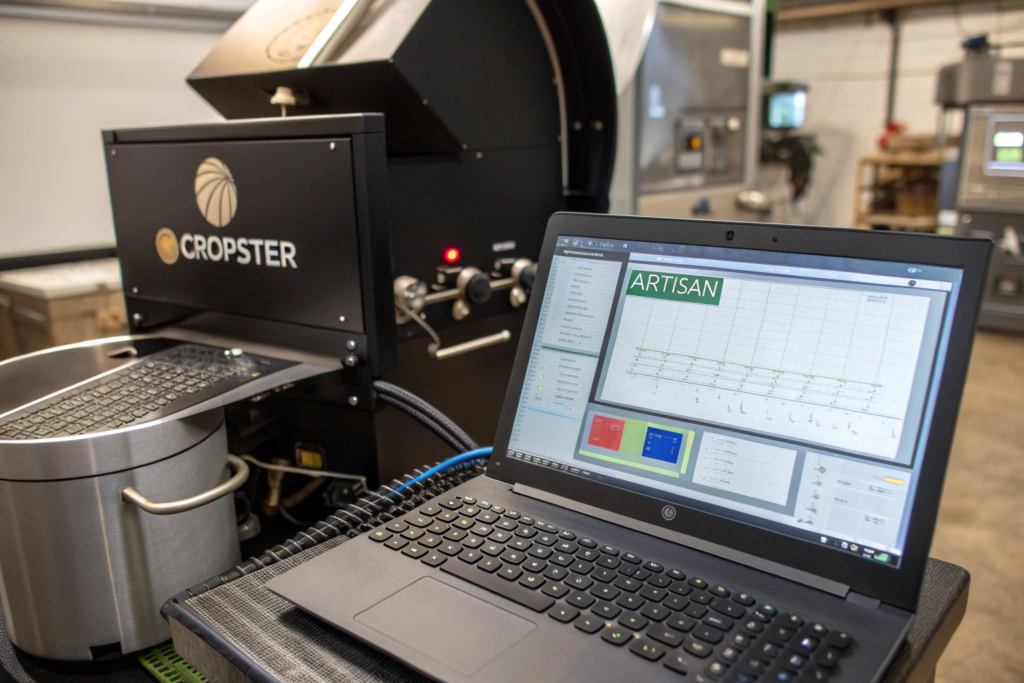
Manually tracking roast data (time, temperature, gas adjustments) on a piece of paper is slow, prone to errors, and hard to analyze. Modern roast profiling software like Cropster or the free alternative Artisan is a game-changer.
- Automation & Consistency: This software connects your roaster to a laptop and automatically logs all the data in real-time, creating a visual curve of your roast. You can then save a "perfect" roast as a background profile. For subsequent batches, you can simply follow the curve on the screen, making tiny adjustments to ensure every roast is a near-identical copy. This dramatically improves consistency.
- Data Analysis: The software stores all your roast data in a searchable database. You can easily compare roasts, analyze trends, and troubleshoot issues. This makes your quality control process much more data-driven and efficient. It's the difference between guessing what went wrong and knowing what went wrong.
How Do You Implement an Efficient Data Workflow?
The data your plant generates is one of your most valuable assets, but only if you capture it and use it effectively. An efficient data workflow provides a clear, real-time picture of your entire operation, from green bean inventory to finished product sales.
You need to create a "single source of truth" for your operational data. This means using integrated software or well-designed spreadsheets to track everything, from the moment a bag of green coffee enters your building to the moment a bag of roasted coffee is sold.
This data-driven approach allows you to make smarter, faster, and more profitable decisions.
How do you manage green coffee inventory effectively?
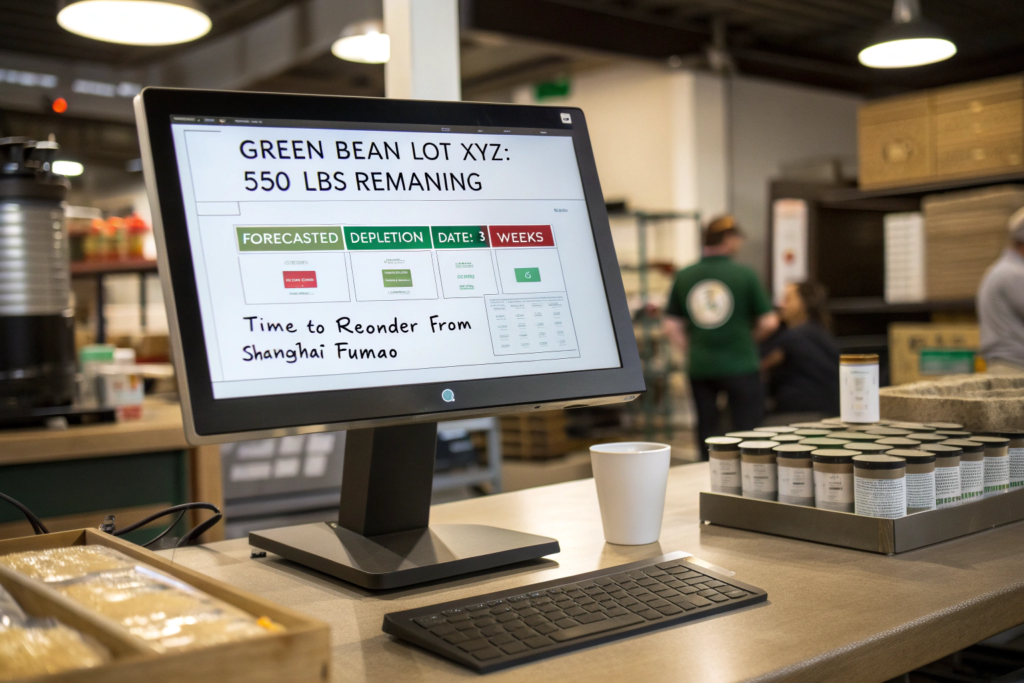
- Lot Tracking: Every single bag of green coffee that arrives should be assigned a unique lot number that links it back to the supplier and purchase order (e.g., linking it to a specific shipment from a supplier like Shanghai Fumao). This is crucial for traceability.
- Inventory Management Software: As you grow, dedicated inventory software becomes essential. These systems track your green bean usage automatically. When you log a roast, the software deducts the green coffee from your inventory. It can then provide real-time stock levels and even generate automatic re-order alerts when you fall below a pre-set "par level." This prevents the costly mistake of running out of your most popular beans.
How do you connect production data to sales data?
- Production Logging: Every batch you roast should be logged, either in your roasting software or a production spreadsheet. This log should include the green coffee lot number used, the roast date, and the final weight of the roasted coffee.
- Finished Goods Inventory: The roasted coffee should then be added to your "finished goods" inventory.
- Sales Integration: When you sell a bag of coffee, your sales system (like Shopify or Square) should deduct it from your finished goods inventory. By linking these systems, you can get a crystal-clear view of your business. You can see which coffees are selling fastest, what your true production costs are, and what your actual profit margins are on each product. This is the data you need to make strategic decisions about pricing, marketing, and new product development.
How Do You Foster a Culture of Continuous Improvement?
You can design the most brilliant systems in the world, but your plant's efficiency ultimately depends on the people who run it. The most efficient plants are not run by managers who dictate from on high, but by empowered teams who are actively engaged in making things better.
The ultimate best practice is to create a company culture where every team member feels a sense of ownership and is encouraged to identify and suggest improvements. This is the Japanese concept of Kaizen, or continuous improvement.
Your team is on the front lines. They see the small inefficiencies and frustrations that you might miss. Their ideas are a goldmine.
How do you empower your team to improve efficiency?
- Regular Team Huddles: Hold a brief weekly or daily meeting. Ask two simple questions: "What went well this week?" and "What was frustrating or slowed you down?" Listen to the answers. The "frustrations" are your roadmap for improvement.
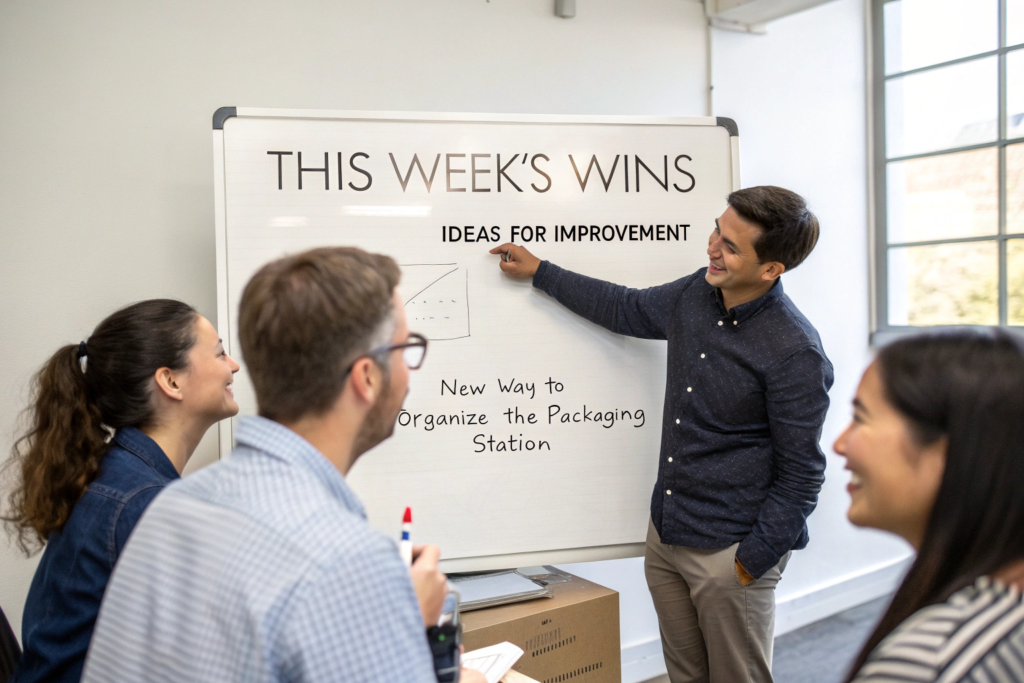
- Create an "Idea Board": Put a whiteboard in a common area and encourage staff to write down any idea, big or small, for making things better. It could be as simple as "Move the tape gun to the other side of the table." Review these ideas as a team and implement the good ones.
- Celebrate Efficiency Wins: When a team member's idea saves time or money, celebrate it publicly. This shows that you value their input and encourages more ideas. You could even offer a small bonus or reward for the "best idea of the month."
Why is cross-training so important for efficiency?
- Flexibility: In a small team, what happens if your only packaging person is sick? Cross-training your staff on multiple roles (e.g., your roaster knows how to pack, your packer knows how to manage inventory) makes your operation much more resilient and flexible.
- Better Problem-Solving: When a team member understands the entire production process, not just their own small part, they are much better at identifying problems that affect the whole system. A roaster who understands the challenges of packaging might adjust their workflow to make the packer's job easier, improving overall efficiency.
Conclusion
Improving the efficiency of your roasting plant is a journey of continuous improvement, not a one-time fix. It requires you to put on a manufacturer's hat and systematically analyze and optimize your physical space, your roasting process, and your data management. By creating logical workflows, leveraging automation, and using data to drive your decisions, you can reduce waste, lower costs, and increase your capacity. But most importantly, by fostering a culture where every team member is an active participant in this journey, you build a resilient, scalable, and highly profitable operation that is built for the long haul.
As a supplier, we are a key part of your production line. We are committed to being the most efficient and reliable link in your chain, providing consistent, high-quality green coffee that arrives on time, every time. If you're looking for a partner who understands the importance of operational excellence, we invite you to connect with us. Contact our coffee specialist at cathy@beanofcoffee.com.