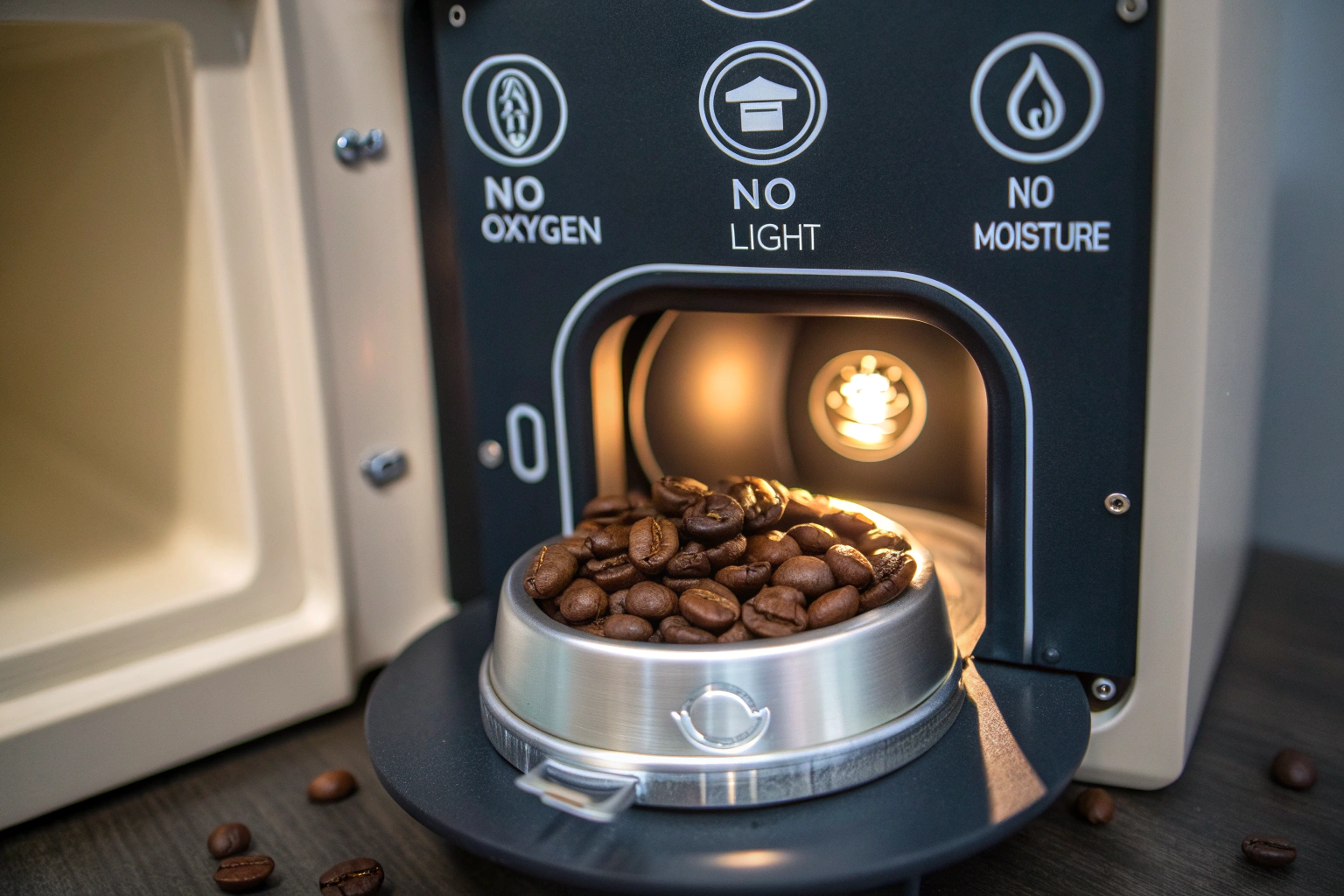
This email from Ron is one I've seen many times. It highlights a painful truth in our business: roasted coffee is a fresh product with a cruelly short peak. That vibrant, complex flavor you pay a premium for is fragile and fleeting. The biggest pain point for any roaster or cafe owner is watching that quality degrade on the shelf, leading to inconsistent customer experiences and, ultimately, wasted money.
To improve the shelf life of roasted beans, you must wage a relentless war against its four enemies: oxygen, light, moisture, and heat. The most effective strategy is a multi-layered defense: immediately packaging the beans in high-barrier, valved, nitrogen-flushed bags, followed by storing those bags in a cool, dark, and stable environment. There is no single magic bullet; it's about controlling the entire environment from the moment the beans leave the roaster.
As a producer at Shanghai Fumao, our responsibility doesn't end when we ship the green beans. We've invested heavily in our own roasting and packaging lines, and we've had to master the science of preservation. Shelf life isn't just a technical issue; it's a core part of quality control and brand reputation. Let's break down the enemies of freshness and discuss the specific tactics you can use to fight them.
Why Is Oxygen the Number One Enemy?
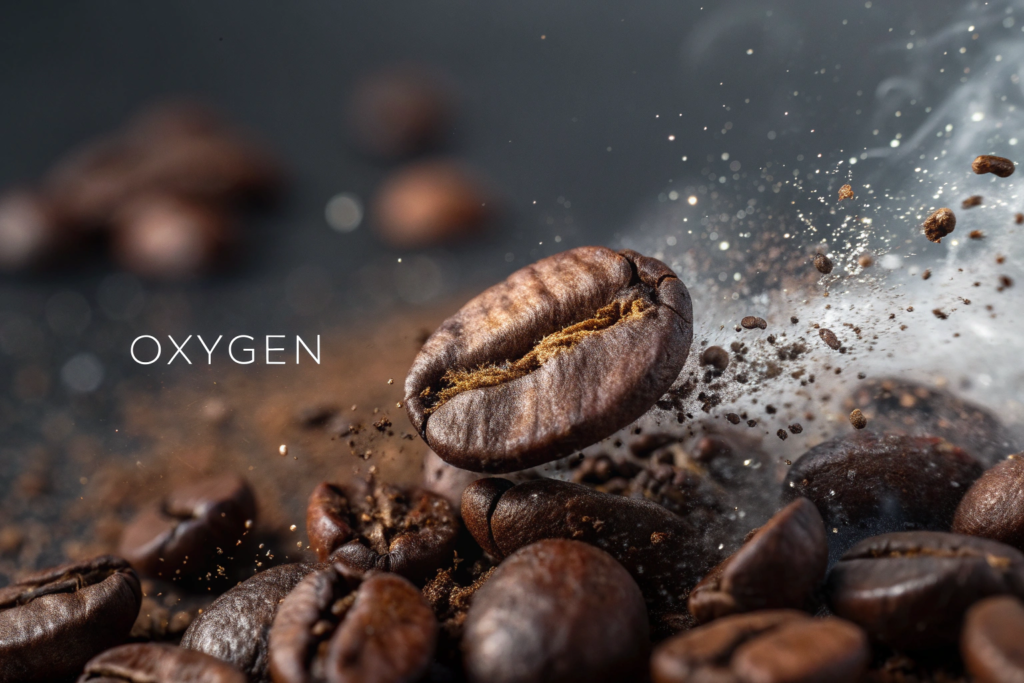
If you remember only one thing from this article, let it be this: oxygen is the primary destroyer of roasted coffee. The chemical process of oxidation is a relentless attack on the delicate aromatic compounds and oils that create the flavors we love. The moment roasted beans are exposed to air, they begin to go stale.
Think about the beautiful, volatile compounds that give a coffee its notes of jasmine, blueberry, or citrus. These are the first casualties of oxidation. They break down and dissipate, leaving behind a flatter, more generic "roasty" flavor. The oils in the coffee also oxidize, becoming rancid and creating bitter, unpleasant off-tastes. This isn't a slow, gentle decline; it's a rapid degradation that can rob a specialty coffee of its character in a matter of days if left unprotected.
Therefore, the single most important strategy for extending shelf life is to minimize the coffee's contact with oxygen at every possible stage. This starts the second the beans cool down from the roaster. Any time spent in an open-air bin is time that the coffee is actively dying.
What Is Degassing and How Does It Complicate Things?
Freshly roasted coffee releases a significant amount of carbon dioxide (CO2) for several days, a process called degassing. This creates a dilemma: you want to protect the coffee from oxygen, but the coffee is producing its own gas. This is why a one-way degassing valve on your packaging is absolutely non-negotiable. It allows the CO2 to escape without letting any oxygen in, solving this critical paradox.
What Is Nitrogen Flushing?
The ultimate weapon against oxygen is Nitrogen Flushing. Before the coffee bag is sealed, a shot of inert nitrogen gas is flushed into the bag, displacing the oxygen-rich air. This creates a pressurized, near-zero-oxygen environment inside the bag. This technique, known as Modified Atmosphere Packaging (MAP), can dramatically extend the peak flavor of roasted coffee from days to weeks. It's the standard for any high-quality, professional coffee packaging operation.
How Does Packaging Form the First Line of Defense?
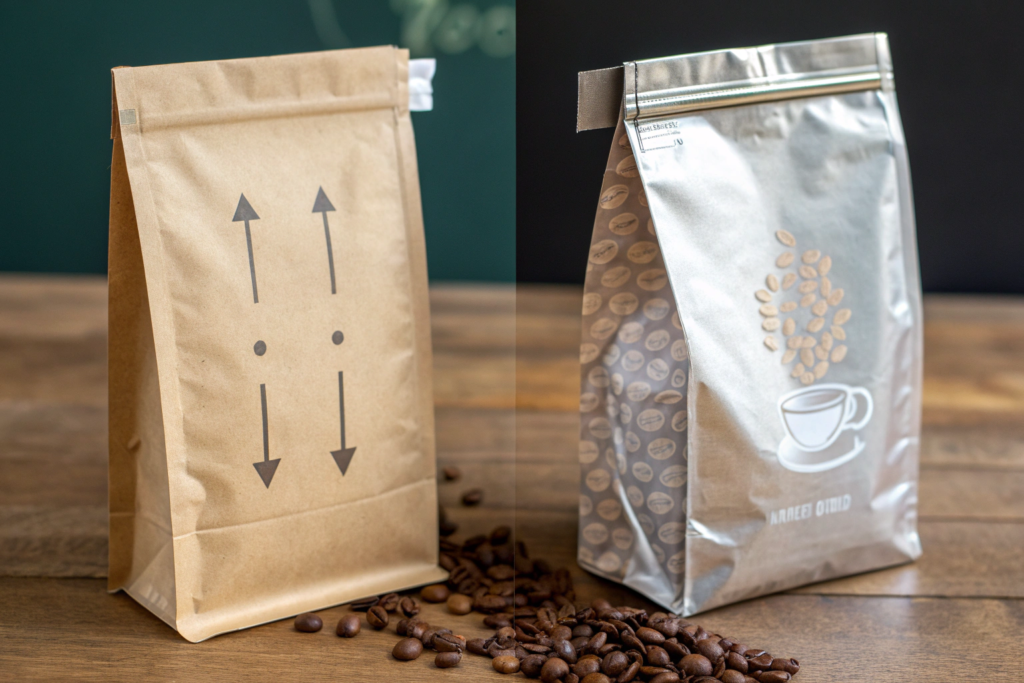
Your coffee bag is not just a container; it's a high-tech preservation system. It is your primary fortress against the external environment. Choosing the wrong packaging material can render all other efforts useless. A simple paper bag or a thin, unlined plastic bag offers virtually no protection against oxygen or moisture.
The industry gold standard is a high-barrier, multi-layer foil pouch. Here's why the layers matter:
- Outer Layer (PET/Plastic): Provides structural integrity and a surface for printing your beautiful brand design.
- Middle Layer (Aluminum Foil): This is the most critical layer. It creates a hermetic seal, providing a near-perfect barrier against oxygen, UV light, and moisture. A cheaper, metallized film is not a true substitute for a real foil layer.
- Inner Layer (PE/Plastic): This layer is food-safe and provides the surface for heat-sealing the bag airtight.
When you combine this multi-layer material with a one-way degassing valve and nitrogen flushing, you have created the optimal environment for preserving freshness. It's an investment, but it's an investment that protects the far greater value of the coffee inside.
Does the Bag's Seal Matter?
Absolutely. A bag with a simple tin-tie closure is not airtight. After the first opening, it offers very little protection. A bag with a proper ziplock seal is far superior. It allows the customer to press out the excess air and reseal the bag, providing much better protection after opening. Educating your customers to squeeze the air out before zipping it shut is a small but helpful tip.
What About Bag Color?
Opaque bags are always better than bags with clear windows. While a window allows the customer to see the beans, it also exposes them to light, which is another enemy of freshness. UV light can accelerate the degradation of the coffee's oils and aromatic compounds. A solid, opaque bag provides complete protection from light, further extending the shelf life.
What Is the Ideal Storage Environment?
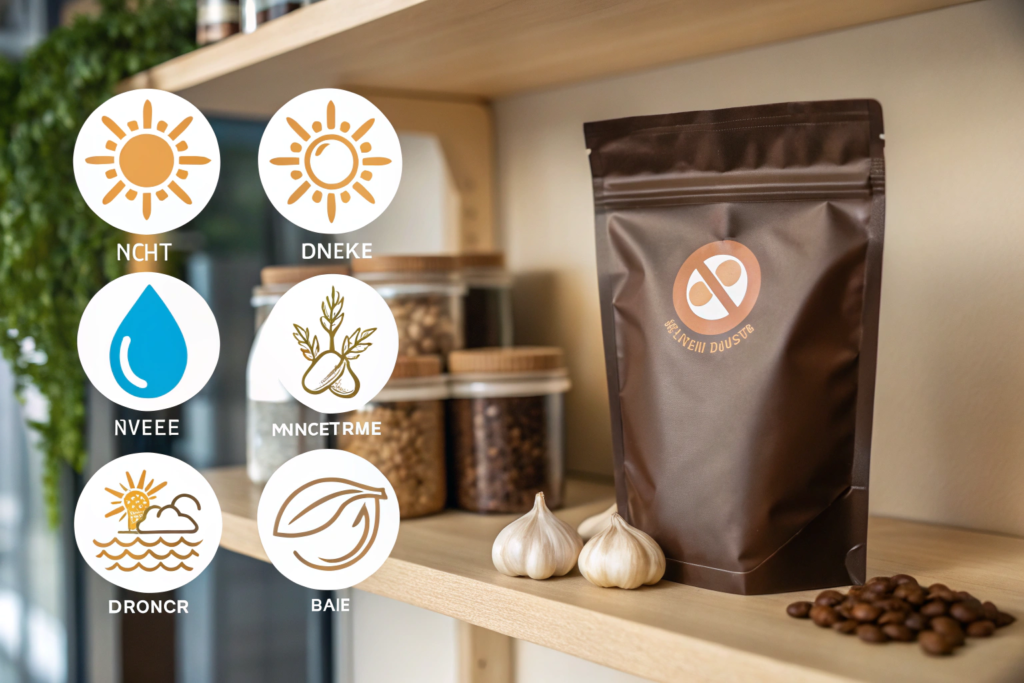
You've packaged your coffee perfectly. The battle is half won. Now, you need to control the environment around the bag. Where you store your coffee, both in your warehouse and on your retail shelf, has a significant impact on how long it will maintain its peak flavor. The mantra is simple: cool, dark, and dry.
Heat is an accelerator. It speeds up all the chemical reactions involved in staling, including oxidation. Storing coffee near a heat source—an oven, a large window with direct sun, the top of an espresso machine—is a guaranteed way to shorten its life. The ideal storage temperature is simple room temperature, but a stable, cooler room is even better.
Moisture is another enemy. Coffee beans are hygroscopic, meaning they readily absorb moisture from the air. This moisture can spoil the coffee and lead to mold. This is why storing coffee in a damp basement or a humid environment is a bad idea.
Finally, coffee is like a sponge for odors. It will absorb strong smells from its environment. Storing it next to spices, onions, garlic, or cleaning chemicals can permanently taint its flavor. It needs to be stored in a neutral environment.
Should I Store Coffee in the Refrigerator or Freezer?
This is one of the most common questions, and the answer for roasted beans is almost always no.
- Refrigerator: The fridge is a high-moisture environment full of strong odors. It's the worst of all worlds.
- Freezer: While freezing can slow down staling, it comes with major risks. When you take the beans out, condensation immediately forms on them, which damages the beans. The cellular structure of the coffee can also be damaged by the freezing and thawing process. Furthermore, oils can absorb unwanted freezer odors. Unless you are a professional using highly specialized vacuum-sealing and deep-freezing techniques for long-term archival, it's best to avoid the freezer.
What Is the Best Practice for a Cafe?
In a cafe setting, only keep a small amount of coffee in the grinder's hopper at one time—just enough for a few hours of service. The rest of the coffee should be kept in its original sealed bags in a cool, dark cabinet. At the end of the day, the hopper should be emptied, cleaned, and the remaining beans stored in an airtight container.
How Does Bean Choice and Roast Level Affect Shelf Life?
Not all beans are created equal when it comes to shelf life. The characteristics of the bean itself and how it's roasted play a significant role in its stability. Understanding this can help you manage your inventory and set customer expectations.
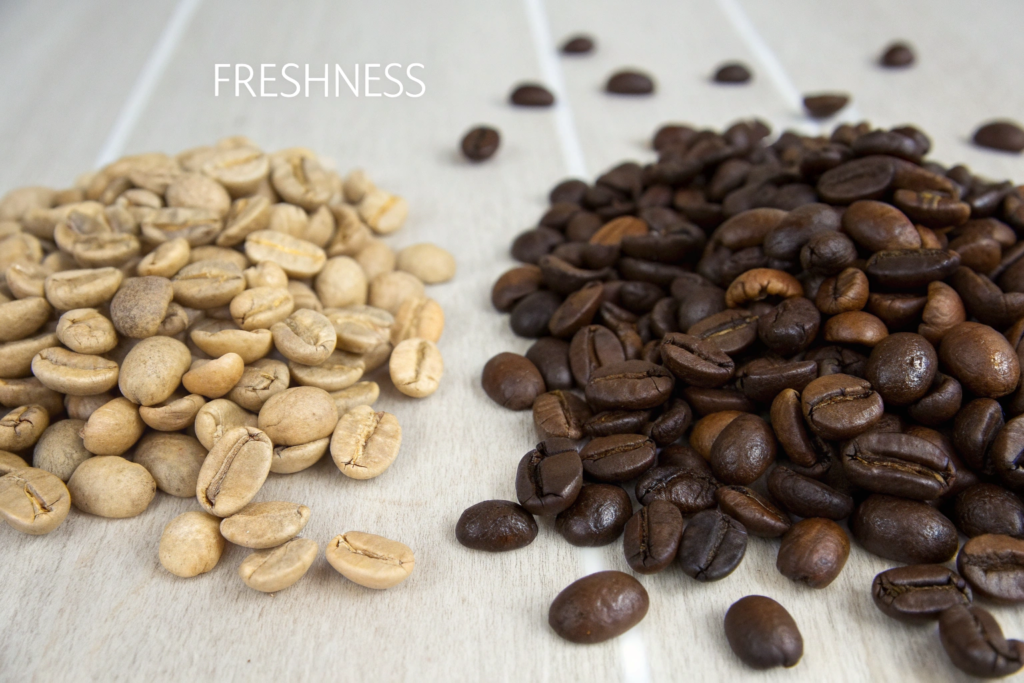
First, consider the roast level. As we've discussed before, a dark roast is, by its nature, less stable than a light roast. The intense heat of a dark roast fractures the bean's cellular structure and forces the natural oils to the surface. These exposed oils are highly susceptible to oxidation, causing the bean to go stale much more quickly. A dry-surfaced light roast, with its oils still safely locked inside, has a naturally longer shelf life. You should plan to sell and use your dark roasts much faster than your light roasts.
Second, the bean's density matters. High-grown, dense beans (a hallmark of specialty Arabica) tend to have a more stable cellular structure that holds up better over time compared to lower-grown, less dense beans. The quality of the green bean you start with has a direct impact on the shelf life of the final roasted product. This is another reason why investing in high-quality green coffee from a reputable source like Shanghai Fumao pays dividends in the long run.
Does Processing Method Affect Shelf Life?
While there is debate on this, some evidence suggests that natural processed coffees, which are dried with the fruit on, may have a slightly less stable shelf life than fully washed coffees. The higher concentration of fruity, volatile compounds in naturals can sometimes be the first to fade. However, proper packaging is far more important than the processing method in determining the ultimate shelf life.
What Is the "Peak" Flavor Window?
"Shelf life" doesn't mean the coffee is good until it suddenly goes bad. It's a gradual decline. Most specialty coffees hit their "peak" flavor profile anywhere from 3 to 14 days after roasting, once the initial degassing has stabilized. The goal of good packaging and storage is to extend this peak window for as long as possible and to manage the gentle decline that follows.
Conclusion
Improving the shelf life of your roasted coffee is an active, ongoing battle against the forces of nature. It requires a holistic strategy that begins the moment the beans drop from the roaster. You must build a fortress against oxygen, light, moisture, and heat.
This fortress is built with the bricks of modern packaging—high-barrier foil bags, one-way valves, and nitrogen flushing. It is reinforced by the mortar of a controlled storage environment—cool, dark, and dry. And it is managed with the intelligence of knowing your product—understanding that a dark roast has a shorter fuse than a light roast.
By adopting these strategies, you are not just preserving coffee; you are protecting your investment, ensuring customer satisfaction, and upholding the integrity of your brand. You are delivering on the promise of quality that was first made when the seed was planted in our rich Yunnan soil.
If you're looking for a partner who obsesses over every detail of quality, from the farm to the final sealed bag, we're here to help. Contact our head of client relations, Cathy Cai, at cathy@beanofcoffee.com, and let's talk about building a more delicious and stable coffee program together.