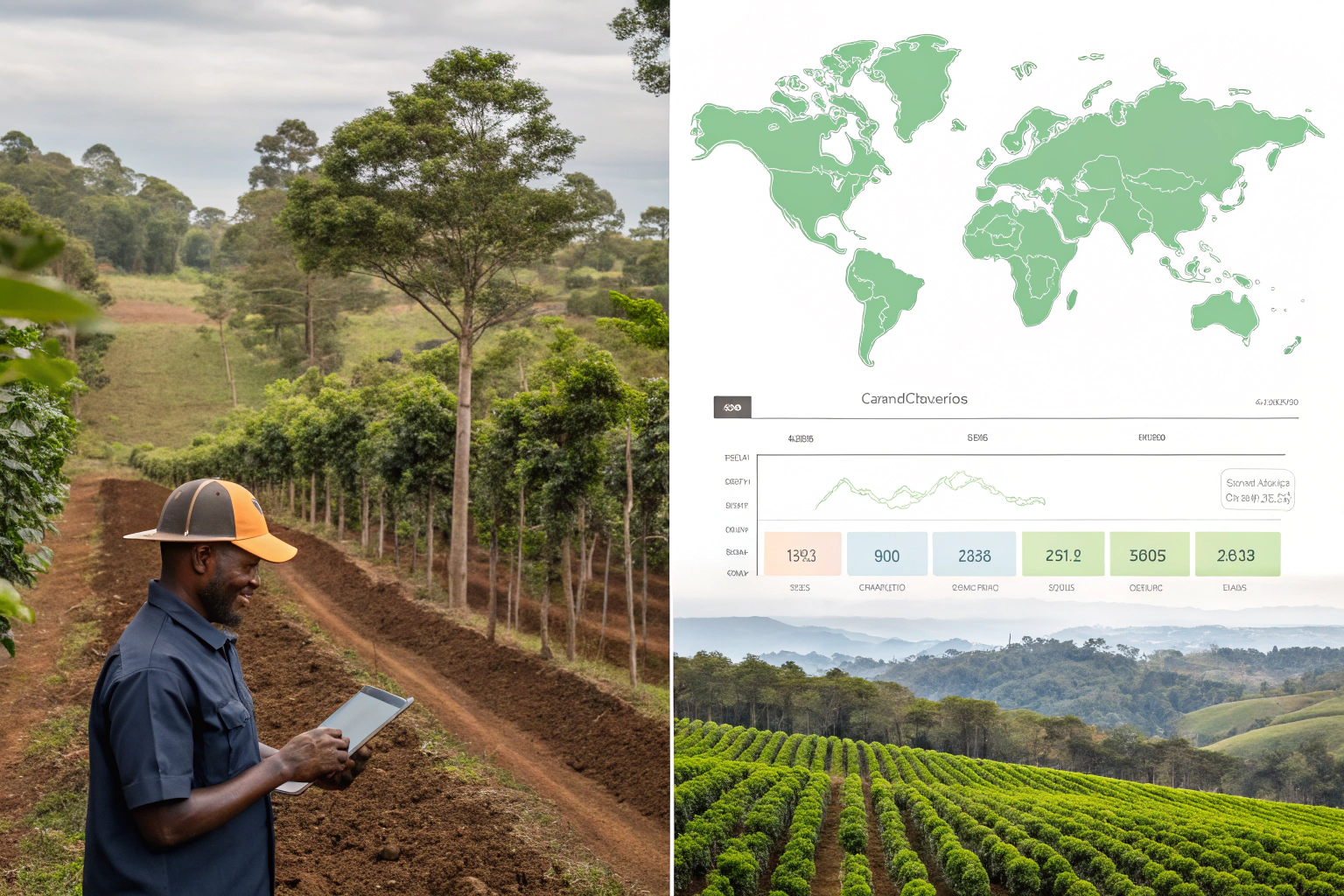
You feel it. The pressure is mounting. Your customers in Europe ask about your carbon footprint. Your distributor in Australia wants deforestation-free verification. The price of green coffee is volatile, and everyone points to climate change as the reason. You want to do the right thing, but you also need to run a profitable business. Is sustainability just a cost center? Or is there a way to make it work for you, not against you?
Improving the sustainability of your coffee business requires a strategic pivot from compliance-driven checklists to outcome-focused investments. The key levers are: 1) adopting regenerative agriculture principles to rebuild soil and biodiversity while cutting fertilizer emissions by up to 28%; 2) electrifying your logistics and roasting with renewables, which can cut roasting emissions by 30%; 3) collaborating with supply chain partners on co-funded, data-driven projects that improve farmer livelihoods and secure your supply; and 4) implementing radical transparency through digital carbon management tools to meet evolving regulations like the EU Deforestation Regulation.
I know this sounds like a lot. But I've seen it work. At Shanghai Fumao, with our 10,000+ acres in Yunnan, we stopped treating sustainability as a "certification expense" and started treating it as a supply chain resilience investment. The droughts that hurt other origins last year? Our regenerative plots held moisture better. The price spikes? Our long-term partners had contracted volume locked in. That's what sustainability actually delivers: stability.
Let me walk you through what actually moves the needle, from the soil in your coffee fields to the data on your laptop.
How Can Regenerative Agriculture Secure Your Coffee Supply and Cut Costs?
For years, "sustainability" meant buying certified beans and paying a premium. That model is fading. The new standard is regenerative agriculture—and it directly addresses your biggest risk: supply stability.
Regenerative agriculture in coffee focuses on four measurable outcomes: improved soil health, better water quality and availability, enhanced biodiversity with reduced pesticide risks, and resilient farmer livelihoods. This is not vague environmentalism. It is a farmer-centric, outcome-focused framework designed to increase profitability and long-term productivity while building resilience against climate shocks.
Why should you, a buyer in the U.S. or Europe, care? Because 75% to 91% of coffee's carbon footprint is generated before the bean leaves the farm. Fertilizer alone accounts for 25% to 28% of emissions. If your supply base has degraded soil, you face lower yields, higher defect rates, and eventually, contract defaults. Regenerative practices are your hedge against that.
What Specific Regenerative Practices Deliver Measurable ROI?
Let's move from theory to practice. The Global Coffee Platform's 2025 RegenCoffee Guidance identifies several high-impact, context-adaptive practices:
| Practice | Carbon Impact | Supply Chain Benefit | Implementation Example |
|---|---|---|---|
| Precision Fertilization | Up to 10% emission reduction | Lower input cost for farmers; consistent bean density | Data-driven soil testing; variable-rate application |
| Biochar Application | Carbon sequestration + soil health | Increased water retention; higher yields | Converting coffee cherry husks and pruning residues |
| Cover Cropping & Intercropping | Soil carbon buildup; reduced erosion | Income diversification for farmers | Rwanda project: seed distribution via VSLAs for beans and vegetables |
| Shade Tree Integration | Biodiversity + microclimate regulation | Bean quality improvement (slower maturation) | Burundi: 35,000+ shade tree seedlings distributed |
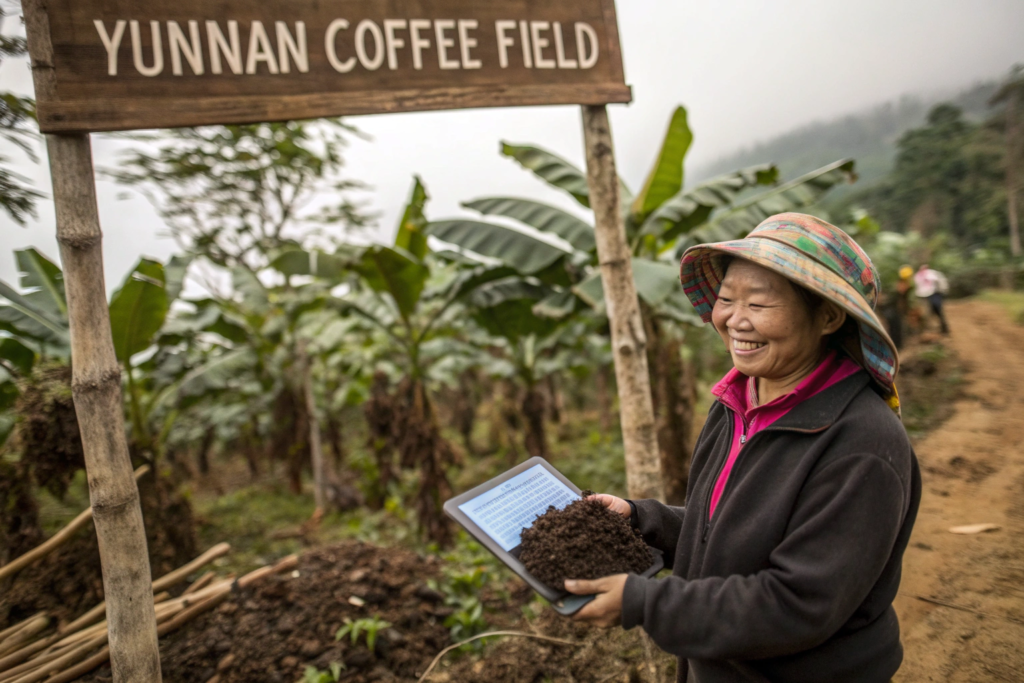
At Shanghai Fumao, we have been testing intercropping on select Yunnan plots. The early results? Soil moisture retention improved noticeably during last year's dry spell. Our farmers didn't panic-buy irrigation water. That is resilience you can measure in dollars. The Global Coffee Platform publishes detailed RegenCoffee implementation guides.
How Do You Finance the Transition Without Raising Your Cup Price?
This is the question that stops most buyers. "I want to help, but my margin won't support a 20% premium on every bag."
The answer is targeted, co-investment models rather than blanket premiums. Sucafina's IMPACT Beyond program offers a blueprint: roasters and importers co-invest in specific, measurable projects within their dedicated supply chains. Investment can be structured as a premium on coffee purchases or direct sponsorship of initiatives like:
- Biodigester installation (Kenya: 80 households, 250 trees saved annually, improved respiratory health)
- Women-led coffee seedling nurseries (Rwanda: job creation, long-term productivity)
- Forest conservation and EUDR verification (Burundi: 3,500 farmers, 35,000 shade trees)
You do not need to pay a "sustainability tax" on every pound. You need to strategically invest in the specific farms that supply you. This is not charity. This is supply chain risk management.
Where Are Your Hidden Carbon Hotspots—and How Do You Fix Them?
You cannot manage what you do not measure. Many coffee businesses guess at their carbon footprint. They focus on packaging or shipping, which matter, but miss the 800-pound gorilla: dairy.
Peer-reviewed research on coffee's life cycle in China reveals a stark reality: for a latte, milk accounts for 75.45% of total carbon emissions. A 300mL Americano generates 0.878 kg CO₂e; a latte of the same size generates 0.967 kg CO₂e. The difference is almost entirely dairy. Similarly, CDP research confirms that adding dairy milk to coffee significantly increases emissions, as dairy production generates methane and requires high water and land use.
If you are a roaster selling to cafes, or a distributor supplying milk-consuming markets, ignoring dairy is ignoring 75% of your product's impact.
What Practical Steps Reduce Dairy's Carbon Load?
You have options. They range from incremental to transformational:
- Plant-based alternatives: Oat and soy milk offer significantly lower-carbon profiles. Encourage café partners to stock them prominently.
- Supplier collaboration: Work with your dairy suppliers on regenerative grazing, methane-reducing feed additives, and manure management. Starbucks China, in partnership with Envision, is piloting "sustainable dairy management tools" including feed optimization and on-farm solar.
- Menu engineering: Feature Americano, cold brew, and black coffee options prominently. A small shift in sales mix yields large carbon reductions.
This is not about eliminating milk. It is about transparency and continuous improvement. Your customers deserve to know the footprint of their choice. The CDP provides sector-specific guidance on dairy supply chain emissions.
How Do You Decarbonize Roasting and Logistics?
Beyond the farm and the cup, your own operations offer clear levers.
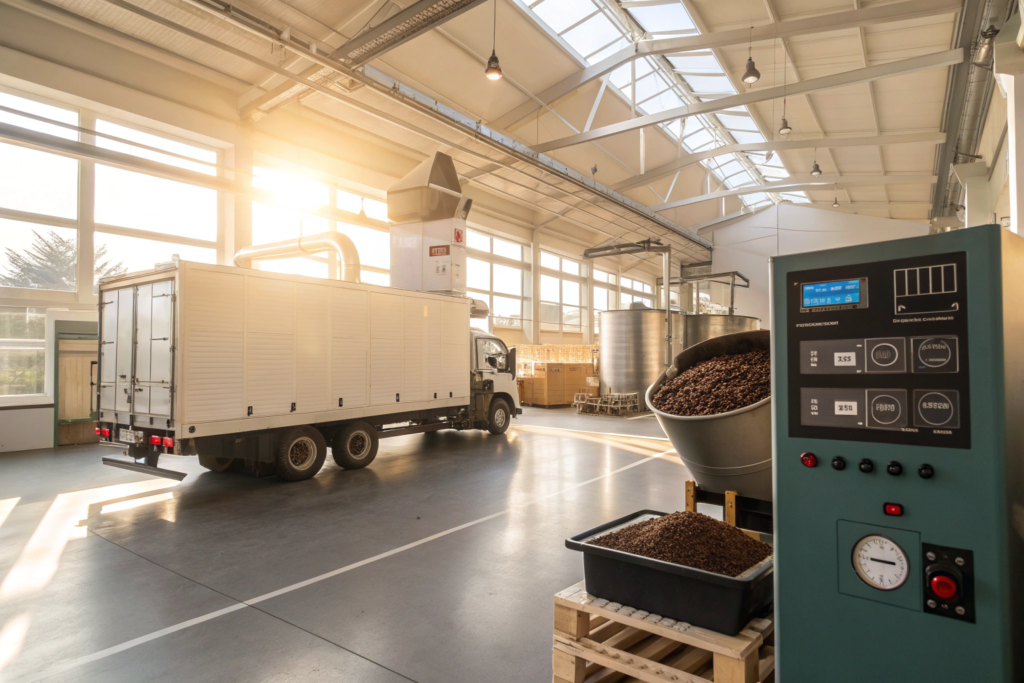
Roasting: Traditional gas-fired drum roasters emit 0.5–1.0 kg CO₂ per kg of green coffee. Alternatives exist. Starbucks' China Coffee Innovation Park uses "high-efficiency baking and waste heat recovery" technology, reducing emissions by over 30% compared to conventional methods, paired with 3.6 million kWh of annual on-site solar generation.
Logistics: Road transportation is a significant contributor. Shanghai Qunsheng Supply Chain has electrified 35% of its self-operated fleet, and 80% of its deliveries for Nestlé in Shanghai are now electric. This is not futuristic. It is happening now, in China, at scale.
At Shanghai Fumao, we are evaluating electric trucks for our in-country container drayage. The ROI is getting tighter every year. If you are a buyer and you care about Scope 3 emissions, ask us about our logistics partners. We will share our data.
How Do You Turn Sustainability Data into a Competitive Advantage?
Here is the uncomfortable truth: the era of voluntary sustainability reporting is ending. The EU Deforestation Regulation (EUDR) is just the beginning. In 2025 and 2026, we are seeing accelerating requirements for TNFD-aligned nature transition plans, Science-Based Targets for Nature (SBTN), and full supply chain traceability.
This is not just regulatory burden. It is also your opportunity.
Companies that treat sustainability data as a compliance chore will drown in paperwork. Companies that treat it as a product differentiation tool will win premium contracts. JDE Peet's, the world's leading pure-play coffee company, has already achieved 100% responsibly sourced green coffee in Europe, the U.S., and Australia/New Zealand, and is publicly committed to 200,000 hectares of regenerative agriculture by 2030. Nestlé Taiwan has reached 100% responsibly sourced coffee, ahead of its global parent.
These companies are not just "being green." They are de-risking their supply chains and commanding retailer shelf space.

What Digital Tools Actually Work for Supply Chain Transparency?
You do not need to build a NASA-grade system. You need interoperability.
Envision's Ark Carbon Management System, deployed with Starbucks China, is a compelling example. It enables:
- Tier-by-tier supplier carbon footprint calculation
- Customized decarbonization pathways for different supplier verticals (dairy, packaging, logistics)
- Digital dashboards shared across the supply chain
The key insight? Data aggregation across disparate suppliers is the hard part. A centralized digital platform—owned by the "chain master" (roaster, importer, or large trader)—can collect, normalize, and report emissions data without each supplier needing to become a climate scientist.
For a mid-sized buyer, you do not need to build this yourself. You need to ask your suppliers: "Can you provide product-level carbon footprint data? What methodology do you use?" If they hesitate, you have your answer. The Science Based Targets initiative provides verified frameworks for corporate climate action.
How Do You Avoid Greenwashing and Demonstrate Real Progress?
The Swiss Platform for Sustainable Coffee's "Roadmap 2030" offers a clear benchmark of six common goals: living income, human rights, deforestation-free, regenerative farming, net zero emissions, and transparent standards. These are not optional for serious players.
Your sustainability report should answer, plainly:
- What percentage of your coffee is covered by a verified responsible sourcing program? (83.2% for JDE Peet's in 2024; 32% regenerative for Nestlé)
- What is your scope of certification? (Rainforest Alliance, 4C, IMPACT Verified)
- What specific, time-bound targets have you set? ("200,000 hectares by 2030" is a target. "We care about nature" is not.)
At Shanghai Fumao, we provide our buyers with the documentation they need: certificates of origin, deforestation-free declarations, and increasingly, life-cycle carbon estimates. This is not because we are saints. It is because our clients in Europe and Australia require it. We want to be the easiest supplier for them to work with.
How Do You Engage Farmers as Partners, Not Just Vendors?
The most sophisticated carbon accounting system is useless if the farmer cannot afford to implement the practices you require. Sustainability must be mutually beneficial—or it will fail.
The majority of the world's coffee is grown by smallholders. They face climate extremes, volatile prices, and rising input costs. A sustainable coffee business invests in their resilience. This is not altruism; it is supply chain preservation.
What Farmer-Centric Programs Actually Deliver Results?
Let's look at two proven models:
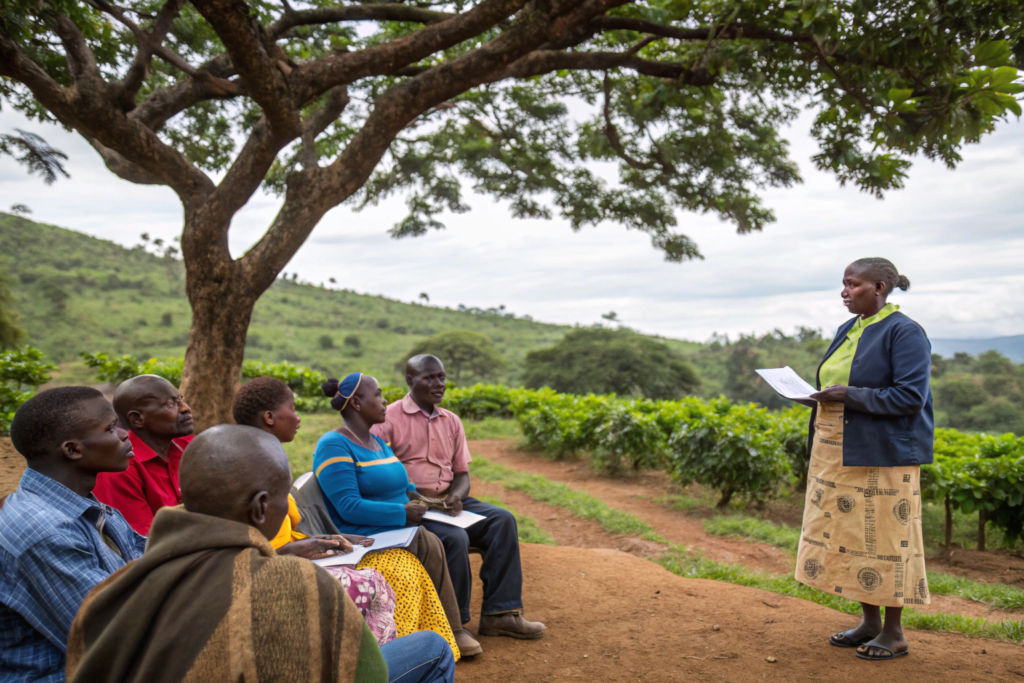
1. Biodigesters for household energy (Kenya): Sucafina's project converts animal waste into biogas for cooking and organic compost. Outcomes: 95% of participating families now have smoke-free kitchens; 250 trees saved annually per household; women report improved health and savings of 200 Ksh per week, reinvested in small businesses.
2. Village Savings and Loan Associations (VSLAs) + livestock (Burundi): Women-led micro-savings groups receive microcredit to purchase goats and pigs. Offspring are passed to new members. Goal: 60% household income increase within six months.
Notice what these programs share: they address immediate, felt needs (health, income, fuel) while advancing long-term environmental goals. They are not abstract "training sessions." They are tangible improvements.
At Shanghai Fumao, we are exploring similar models in Yunnan. Our farmers do not need lectures on climate change. They need drought-resistant seedlings and predictable buyers. Our job is to provide both.
How Do You Structure Contracts to Reward Sustainability?
This is the frontier. Sustainability cannot be an "add-on" that is cut when prices rise. It must be embedded in the commercial agreement.
Long-term contracts with pricing mechanisms that reward quality and regenerative practices are the most effective tool. They give farmers the confidence to invest in soil health, knowing they have a buyer. They give you supply security and traceability.
Ask your supplier: "Can we structure a multi-year agreement that includes a sustainability premium tied to verified outcomes?" If they say no, find a supplier who says yes. The Sustainable Coffee Challenge offers resources on innovative contract models.
Conclusion
Improving the sustainability of your coffee business is no longer a choice between profit and principle. It is a strategic imperative driven by climate volatility, regulatory pressure, and consumer expectation. The businesses that thrive in the next decade will be those that:
- Transition from certified commodities to regenerative partnerships, rebuilding the soil and securing their supply at the source.
- Measure and reduce their true carbon hotspots, recognizing that dairy often matters more than distance.
- Digitize their supply chain data, not just for compliance, but for competitive differentiation and retailer access.
- Invest in farmer prosperity as a core business strategy, moving from sporadic projects to co-designed, long-term programs.
You do not need to do everything at once. But you need to start.
At Shanghai Fumao, we are on this journey with you. Our 10,000+ acres in Yunnan are our laboratory and our legacy. We are implementing precision agriculture, expanding shade cover, and documenting every step. We are not perfect. But we are transparent, and we are committed.
If you are ready to move beyond greenwashing and build a coffee supply chain that is both sustainable and profitable, let's start a conversation. Contact our Sales Director, Cathy Cai. She can walk you through our current sustainability initiatives, provide third-party audit data on our Yunnan estates, and discuss how we can align our practices with your ESG targets. Email Cathy at cathy@beanofcoffee.com. Let's secure the future of coffee, together.