You walk your coffee farm. The trees are green, but the harvest feels stagnant. Prices fluctuate, but costs always rise. The pressure is real: how do you grow more coffee and make more money from it? The answer isn't just working harder or planting more land. It's about working smarter—transforming your farm from a plot of land into a precision-managed business. Increasing yield and income are two sides of the same coin, but they require different, interconnected strategies. More beans don't guarantee more profit if your costs are too high or your quality is too low.
To increase coffee bean yield and income, you must implement a dual-track strategy: 1) Intensify yield per hectare through scientific agronomy (pruning, fertilization, pest control), and 2) Elevate income per kilogram by improving bean quality, achieving certifications, and accessing better markets. True success lies in doing both simultaneously.
Think of your farm as a factory. Yield is your production volume. Income is your profit margin. You can try to produce more volume (yield), or you can produce a more valuable product (higher margin), or—ideally—both. On our Yunnan estates at BeanofCoffee, this dual focus is our operational blueprint. Let's break down the actionable steps.
How to Scientifically Increase Yield Per Hectare?
Yield isn't just about rain and luck. It's a direct result of the plant's health and its environment. You must give the coffee tree exactly what it needs to maximize its fruit production, and nothing it doesn't.
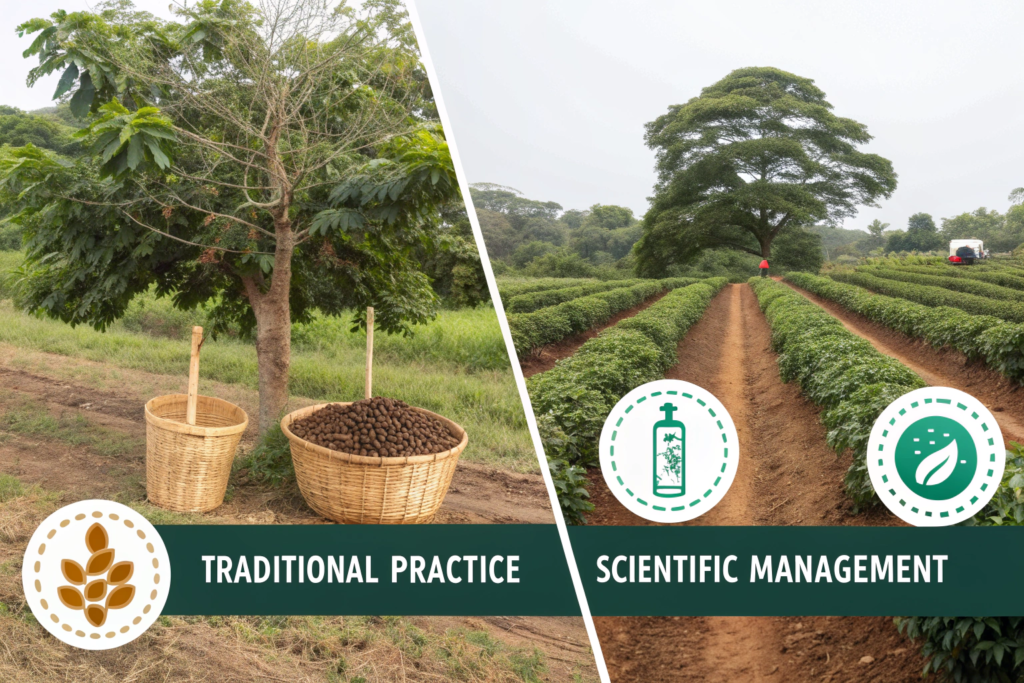
Increase yield per hectare by implementing a structured pruning program to renew productive wood, adopting soil testing to guide precise fertilization, integrating pest and disease management (IPM) to prevent losses, and planting high-yielding, disease-resistant varieties suited to your microclimate. It's about replacing guesswork with data and replacing reaction with prevention.
What is the single biggest agronomic practice for yield increase?
Without a doubt, systematic pruning and renovation. An overgrown, unpruned tree directs energy to maintaining old wood, not producing fruit. A well-pruned tree is a focused, efficient fruit factory.
- Stumping (Rejuvenation Pruning): Cutting old trees back to 30-50cm every 8-12 years completely resets the plant, leading to a surge of new, highly productive wood. While you lose one harvest, you gain 3-5+ years of significantly higher yields.
- Annual Selective Pruning: Removing unproductive suckers, old horizontal branches, and diseased wood every year. This maintains the tree's shape, improves light penetration to inner branches, and prevents yield decline.
Think of it as an investment. You sacrifice a small amount of potential fruit (the suckers you remove) to secure a much larger, healthier harvest from the primary branches.
How does a soil test transform fertilizer efficiency and cost?
Blind fertilization is like pouring money onto the ground. A professional soil test (available through agricultural extensions) tells you exactly what nutrients your soil lacks and their pH level.
- The Result: Instead of buying and applying a generic 17-17-17 NPK blend, you apply a custom formula. If your soil is high in Phosphorus (P) but low in Potassium (K), you save money by only topping up K.
- The Impact: The plant gets exactly what it needs, leading to better cherry development, higher bean density, and less nutrient runoff. This reduces your fertilizer cost by 20-40% while increasing its effectiveness, directly boosting yield and quality. We test our Yunnan soils biannually to guide our program.
How to Shift from Commodity to Quality for Higher Income?
Selling more volume at a low price is a tough, risky game. The real income transformation happens when you shift from selling weight to selling value. This means the market pays you not just for beans, but for flavor, story, and sustainability.
Increase income per kilogram by focusing on post-harvest processing quality (picking only ripe cherries, proper fermentation, controlled drying), pursuing quality-based certifications (like specialty grade cupping scores), and obtaining ethical/sustainability certifications (Organic, Fair Trade, Rainforest Alliance) that open premium markets. Your goal is to become a supplier that roasters are excited to partner with, not just buy from.
What processing step has the highest return on investment for quality?
Selective picking of only ripe, red cherries is the most impactful and cost-sensitive step. It requires more labor but pays massive dividends.
- The Problem: Strip-picking or allowing underripe/green cherries into the batch introduces sour, astringent flavors that drag down the entire lot's cupping score.
- The ROI: A batch made from 95%+ ripe cherries can score 3-5+ points higher on the SCA scale. This can double or triple the price per pound for that lot, far outweighing the extra labor cost. Implementing a bonus system for pickers based on ripe cherry purity is a highly effective tactic.
How do certifications like "Specialty Grade" directly increase price?
"Specialty Grade" is not a certificate you hang on the wall; it's a quality benchmark (SCA score of 80+ points) verified by a licensed Q Grader. It functions as a powerful price mechanism:
- Market Signal: It tells buyers the coffee has been cupped and is free of primary defects, with positive flavor attributes. It removes their risk.
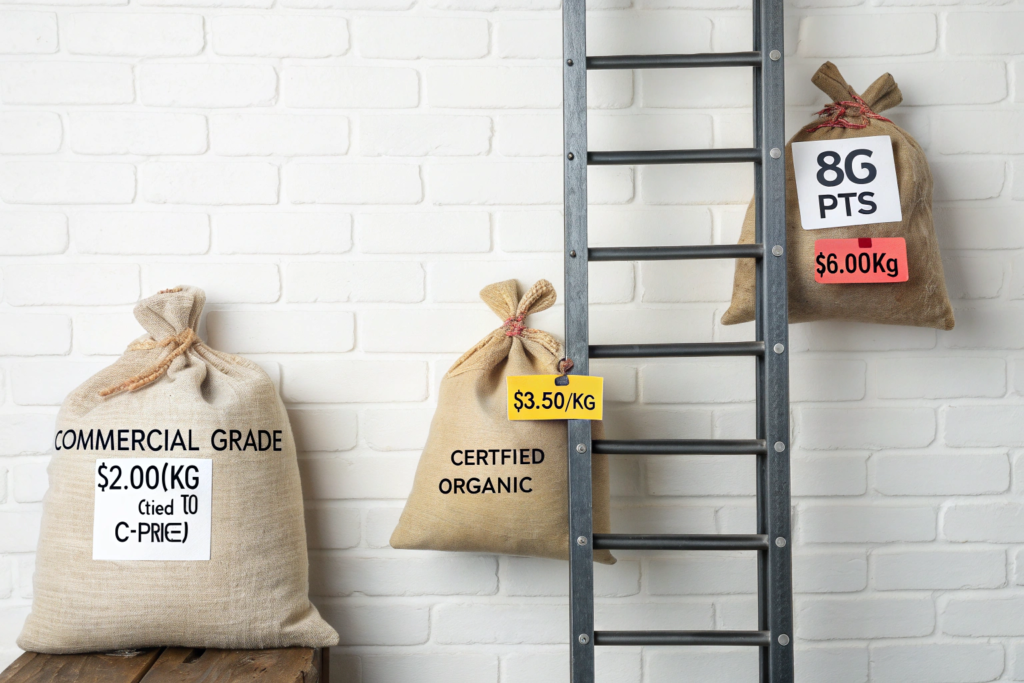
- Price Premium: While commodity Arabica trades on the volatile "C" price, specialty coffee is priced at a significant premium over "C." An 84-point coffee may get "C" + $1.50/lb, while an 86-point may get "C" + $2.50/lb. Every point matters. Investing in the training of an on-farm cupper or partnering with an exporter who provides this data, like Shanghai Fumao, is crucial for capturing this value.
How to Diversify Income and Reduce Market Risk?
Relying solely on the green bean market is risky. Diversification creates stability and taps into new revenue streams that are less tied to global price swings.
Diversify income by developing on-farm processing capabilities (moving from cherry to parchment or even green bean), exploring agrotourism (farm stays, tasting tours), and creating direct-to-consumer sales channels (online shop, local cafe partnerships) to capture more of the final retail value.
Is investing in a small wet mill or dry mill worth it?
Absolutely, if you have scale (or can partner with neighbors). Processing adds immense value.
- From Cherry to Parchment: By washing and drying your own coffee, you control quality and sell parchment, which is more valuable and stable than fresh cherry.
- From Parchment to Green Bean: Investing in a dry mill (huller, grader, sorter) allows you to export ready-to-ship green beans. This captures the maximum value at the farm gate and allows you to sell directly to international roasters or exporters. The ROI can be achieved in 3-5 years for a medium-sized cooperative or estate.
How can agrotourism and direct sales boost farm income?
- Agrotourism: Offering paid tours, tasting sessions, or "coffee farm stay" experiences connects consumers to your story. It creates a memorable brand and generates revenue even in the off-season. It's marketing that pays for itself.
- Direct Sales: Selling roasted coffee under your own farm brand at local markets, online, or to nearby cafes captures the retail margin. While it requires investment in roasting, packaging, and marketing, the profit per kilogram can be 5-10 times higher than selling green beans. Start small with a sample roaster and a simple website.
How to Access Better Markets and Build Stronger Relationships?
Your coffee's journey doesn't end at the farm gate. Who you sell to and how you sell determines your final income. Building direct, transparent relationships is the antidote to anonymous commodity trading.
Access better markets by building a professional digital presence (website, social media showcasing your farm), attending international trade fairs (like SCA Expo), and partnering with an export-focused aggregator or specialty exporter who has the connections and credibility to place your coffee in premium markets.
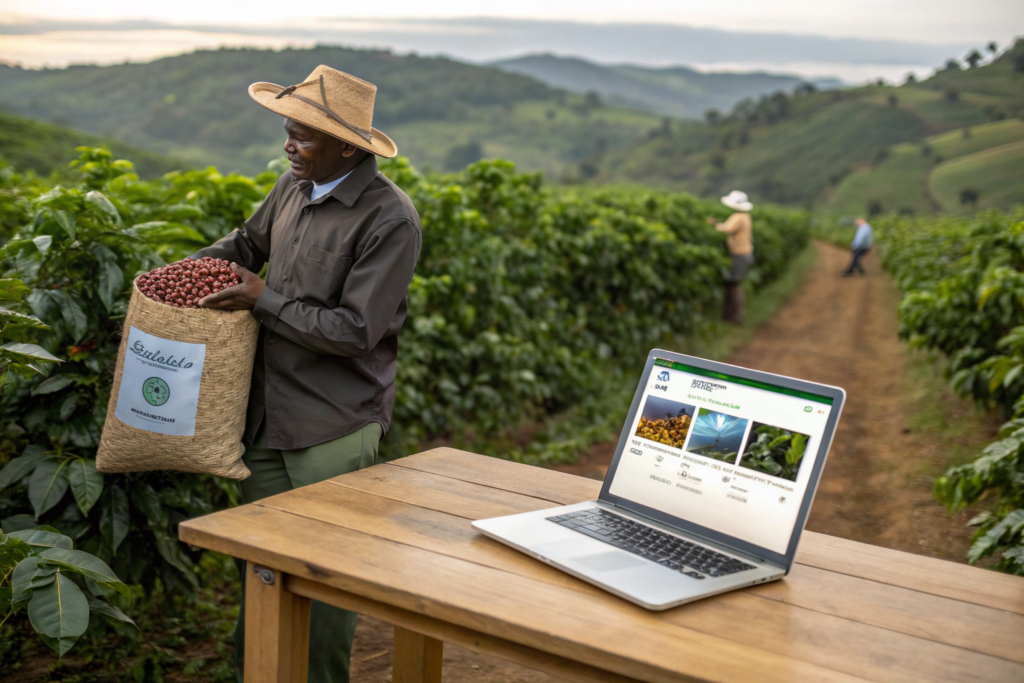
What should a professional farm profile include for international buyers?
Buyers can't visit every farm. Your digital profile is your ambassador. It must include:
- Location & Microclimate Data: Altitude, rainfall, soil type.
- Varietals & Farming Practices: Photos of pruned trees, shade, composting.
- Processing Infrastructure: Photos of your raised beds, wet mill, storage.
- Quality Data: Recent cupping score sheets and photos of green bean samples.
- Story & Team: Photos and bios of the people behind the coffee.
This transparency builds trust and justifies a premium. We help our partner farms in Yunnan develop these profiles to present to our global network.
How does a relationship with a dedicated exporter improve income stability?
A good exporter like us does more than just ship containers. They:
- Provide Pre-Financing: Ensure you have cash flow for harvest labor.
- Offer Quality Feedback: Help you understand how processing changes affect cupping scores.
- Guarantee Market Access: Have long-term contracts with roasters seeking stable, quality supply.
- Handle Complex Logistics: Manage all documentation, shipping, and payments.
This partnership reduces your risk and allows you to focus on farming, knowing your crop has a secure, profitable outlet. It turns a seasonal transaction into a strategic alliance.
Conclusion
Increasing coffee yield and income is not a choice between quantity and quality; it's the strategic integration of both. By adopting scientific farming to boost yield and focusing relentlessly on post-harvest quality to capture value, you build a resilient, profitable coffee business. Layering on income diversification and direct market access secures your future against volatility.
The journey from a struggling farm to a thriving agricultural business is one of continuous improvement, investment in knowledge, and building strong partnerships along the value chain.
If you are a coffee grower looking to implement these strategies and need a partner to help access stable, premium markets, BeanofCoffee can be that bridge. We work with farms to improve practices and connect them directly to roasters worldwide. To explore a partnership, contact our Export Manager, Cathy Cai: cathy@beanofcoffee.com. Let's grow your yield and your future, together.